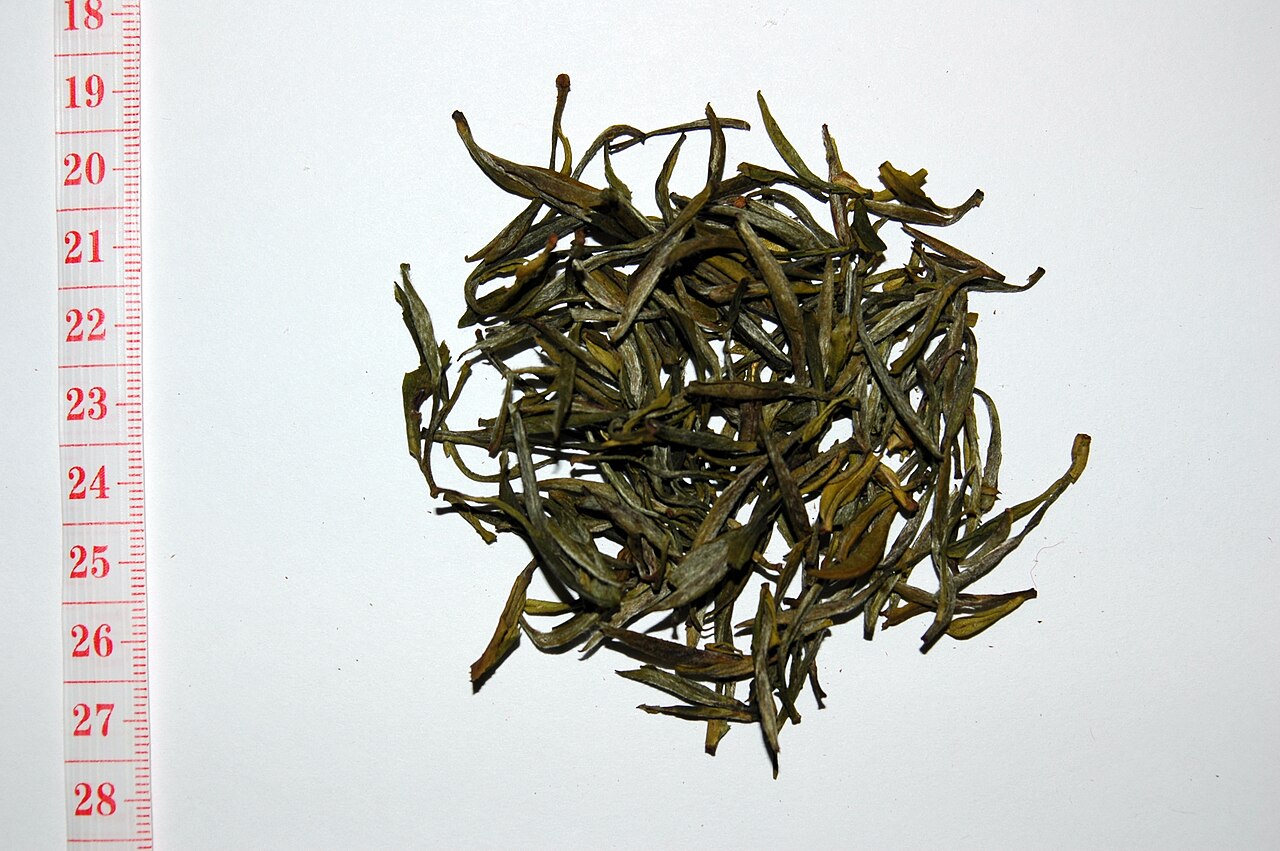
TEA ENCYCLOPEDIAA little closer to the world of tea.
TEA ENCYCLOPEDIA / Teas

Teas.

From green to dark tea, find a tea by type, origin or name.

109entriesPage 2 of 3
Sorted by name
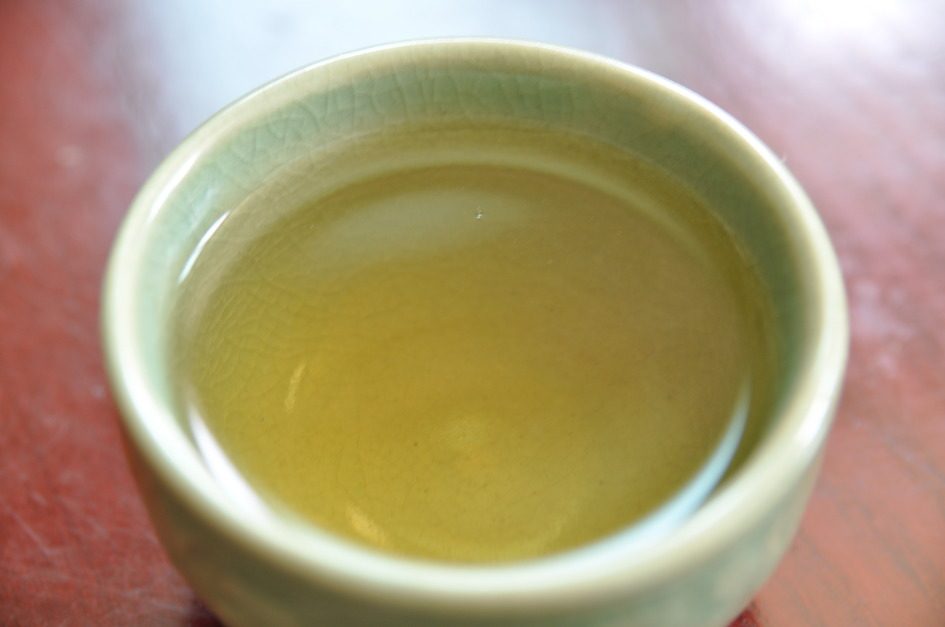
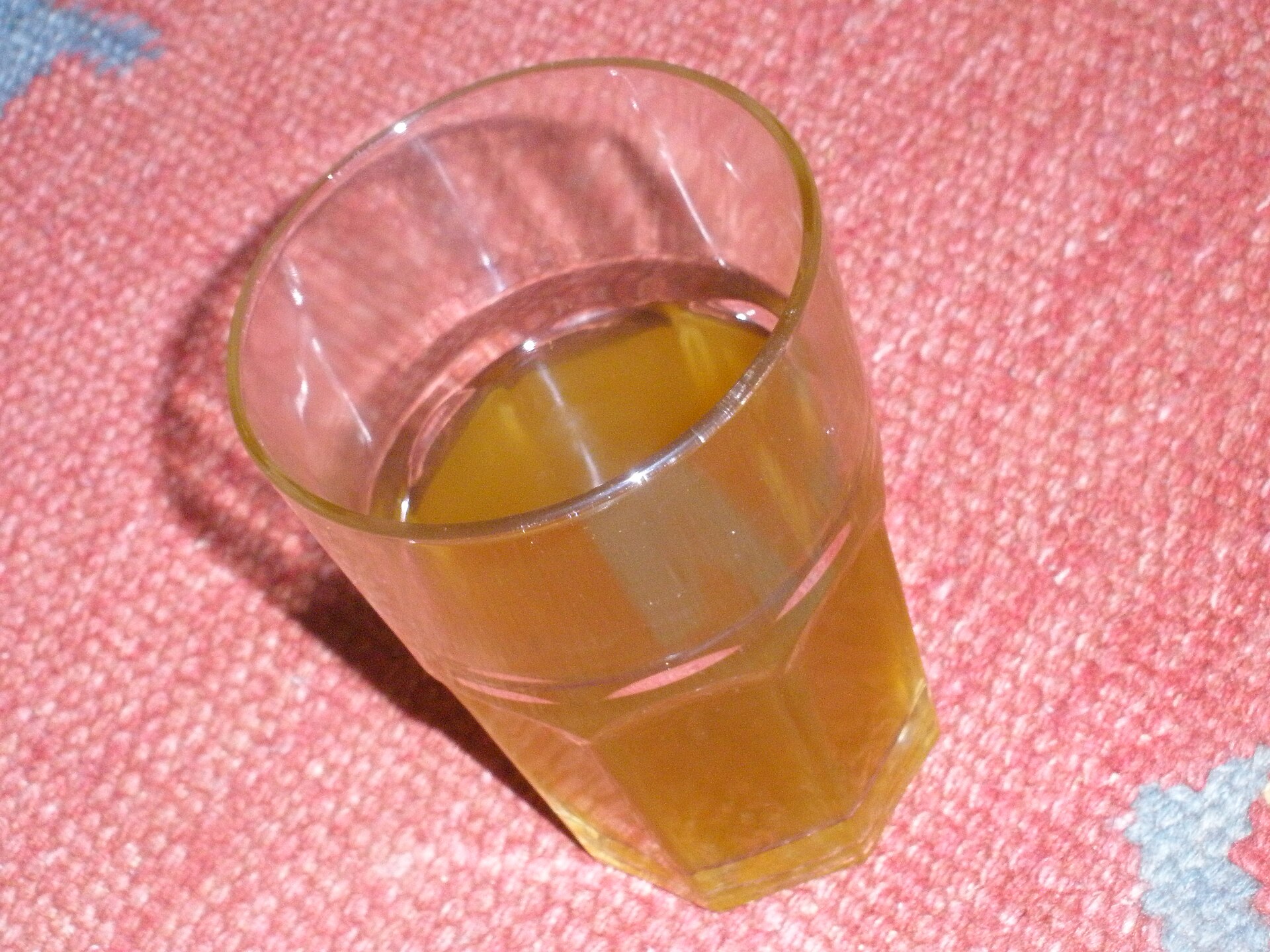
TeaAmber-coloured Korean hwangcha tea liquor in a celadon cup삼장 / Wikimedia Commons · CC BY 2.0 KR
South Korea

Hwangcha (Korean Partially Oxidised Tea)

Hwangcha (황차) is a Korean partially oxidised tea, not a synonym for Chinese yellow tea and its menhuang / sealed-yellow process. Hankook Tea's official tea guide puts hwangcha at roughly 50–80% oxidation and describes it as pan-fired, with a production cycle of about two to three days. Its Hwang Cha Gold product is an early-spring, Sejak-grade tea from the company's Honam gardens, made from traditional jae-rae-jong seed-grown material; the liquor is amber and smooth, sitting between green tea and black tea. The name “yellow tea” describes colour and market usage, not the Chinese yellow-tea process.

Yellow tea
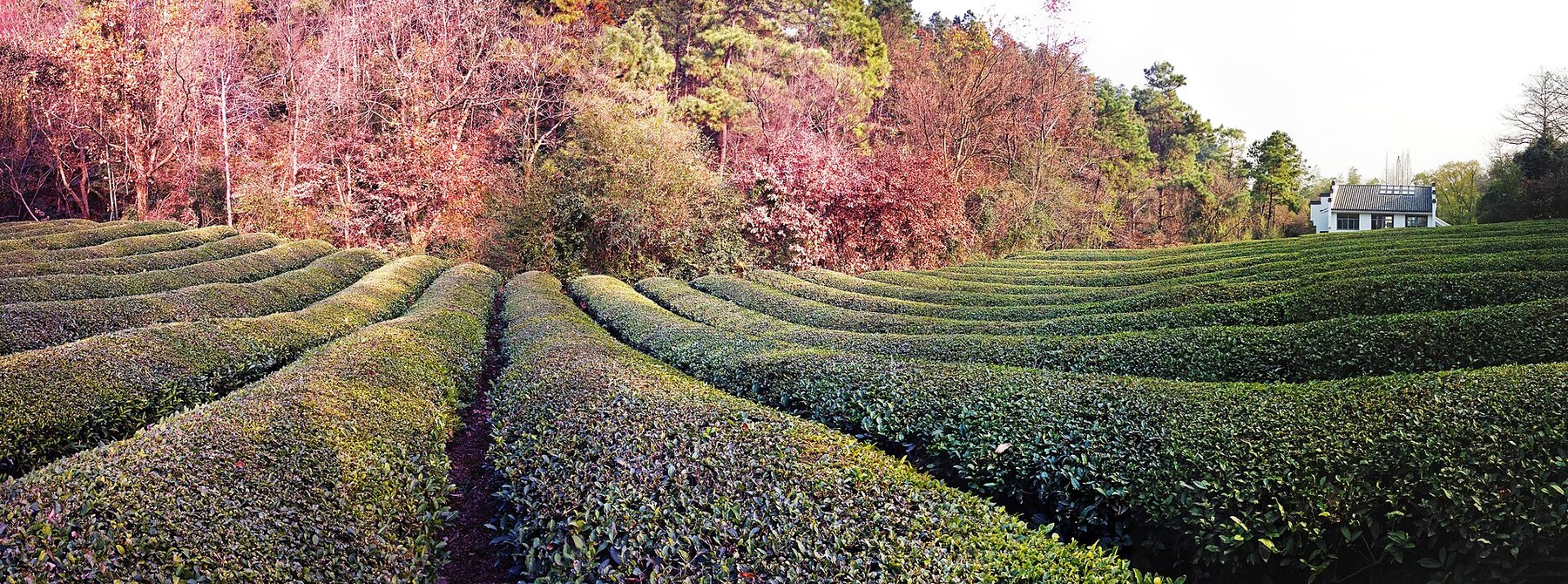
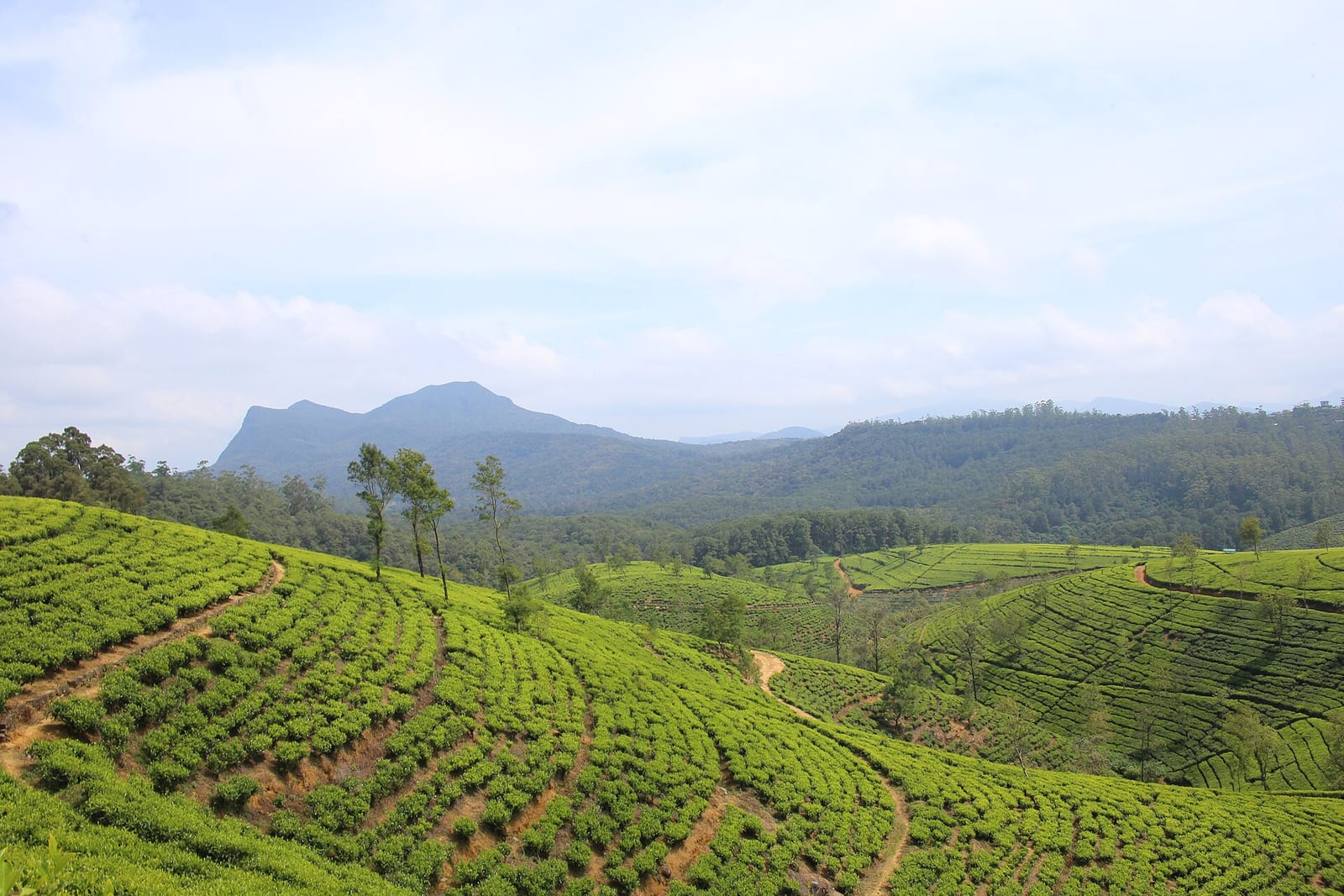
TeaTerraced tea rows below Jingting Mountain in Xuancheng, Anhui, with woodland behind (regional Anhui tea image, not a photo of Jinshan village)fish4fish / Wikimedia Commons · CC BY-SA 3.0
China

Jinshan Green Tea (Jinshan Shiyu)

Jinshan green tea usually refers to Jinshan Shiyu, a historical green tea from Jixi county in Anhui, China. Its core village sits at about 500–900 m, and the tea is picked around Guyu, when the tightly rolled strips are said to resemble rain threads. It received national geographical indication product recognition in 2025. The old machine draft placed it in a Chinese village in Pai, Thailand, and invented a “Veteran Duan” origin story; that claim has no reliable source and has been corrected.

Green tea
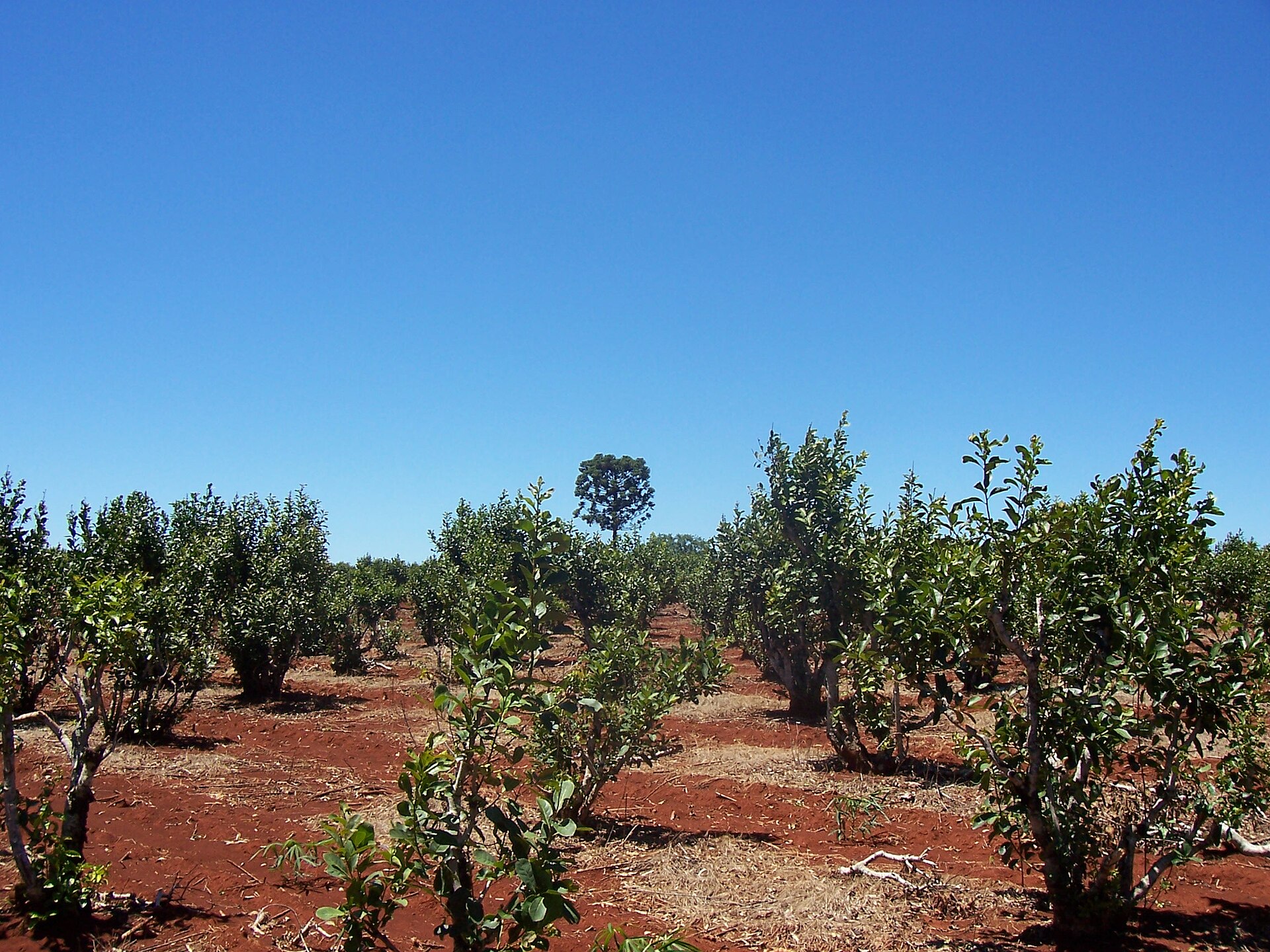
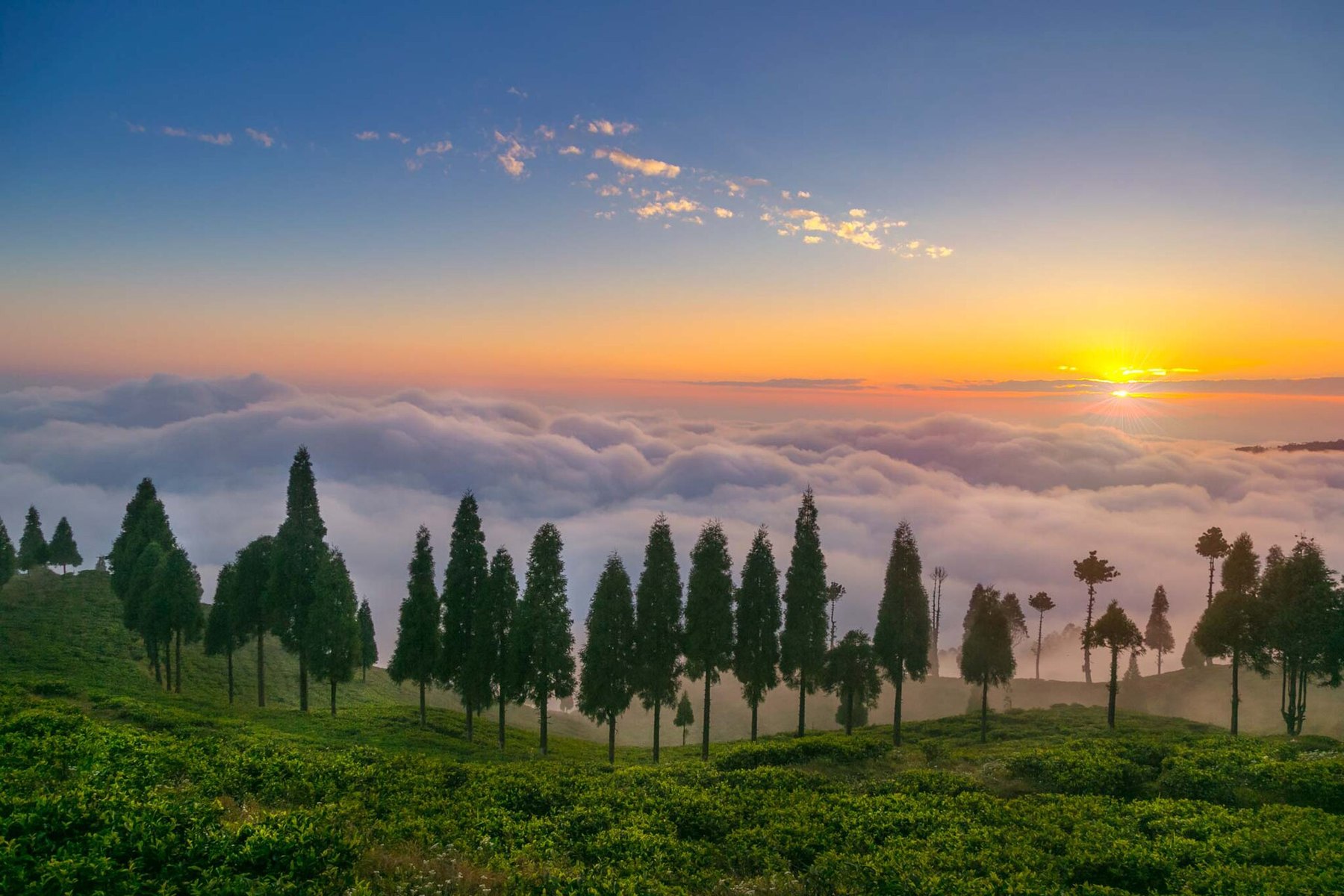
TeaSunset over tea gardens in Hile, Dhankuta, with cloud and cypress (regional image, not a verified Jun Chiyabari estate photo)Ameet Ranjit Photography / Wikimedia Commons · CC BY-SA 4.0
Nepal

Jun Chiyabari (Moon-lit Tea Garden)

Jun Chiyabari is a family-owned organic tea garden and brand in Hile, Dhankuta, eastern Nepal. It was established in 2000, bought its first land in 2001, and now farms about 90 ha at roughly 1,650–2,200 m. The name means “Moon-lit Tea Garden” in Nepali. The founders are Bachan and Lochan Gyawali, not the “Japanese designer Toshi Bhandari” of the old draft. The garden has been organic since first planting and received IMO Switzerland certification in August 2012. It makes black, white, oolong and green tea; Himalayan Bouquet is its East Asian oolong style. The old draft’s Japanese-designer, Paris-gold-medal and “June tea garden” claims are not supported by the garden’s own timeline or published interviews and have been removed.

Black tea
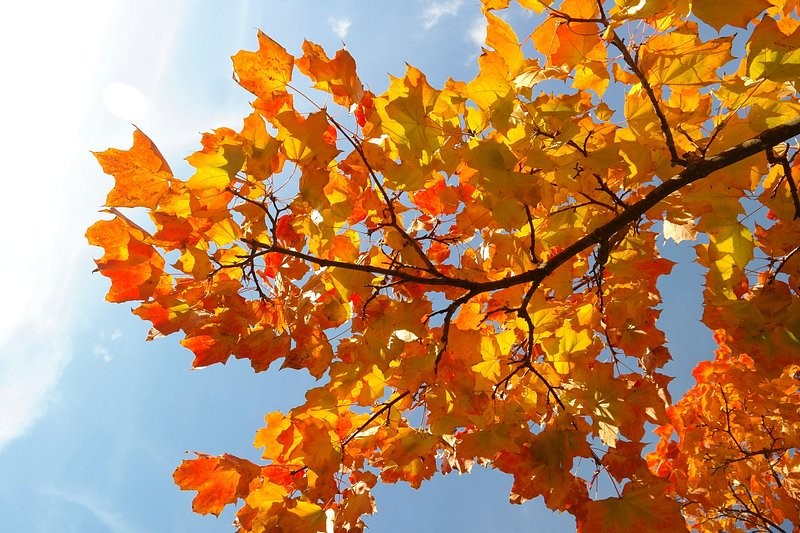
TeaAutumn maple leaves, an illustrative image of the flavouring source, not the JusTea product packRawpixel / CC0 · CC0 1.0
Canada

JusTea Canadian Maple Tea

JusTea Canadian Maple is a maple-flavoured black tea from JusTea, a Vancouver tea company. Its base is Rainforest Alliance-certified Kenyan black tea, blended with real Quebec maple syrup flakes, safflower petals and natural maple flavour. The point is that the maple is real: the blend uses maple flakes rather than an artificial maple extract, and the official brewing advice is one teaspoon, 175°F water, three minutes, about 50 mg caffeine per cup, hot, iced or with milk. The old draft's claims about Canada's “most classic” maple tea, a 1980s Toronto or Montreal origin story and a 2017 Canada 150 edition have no source and are gone.

Flavored tea
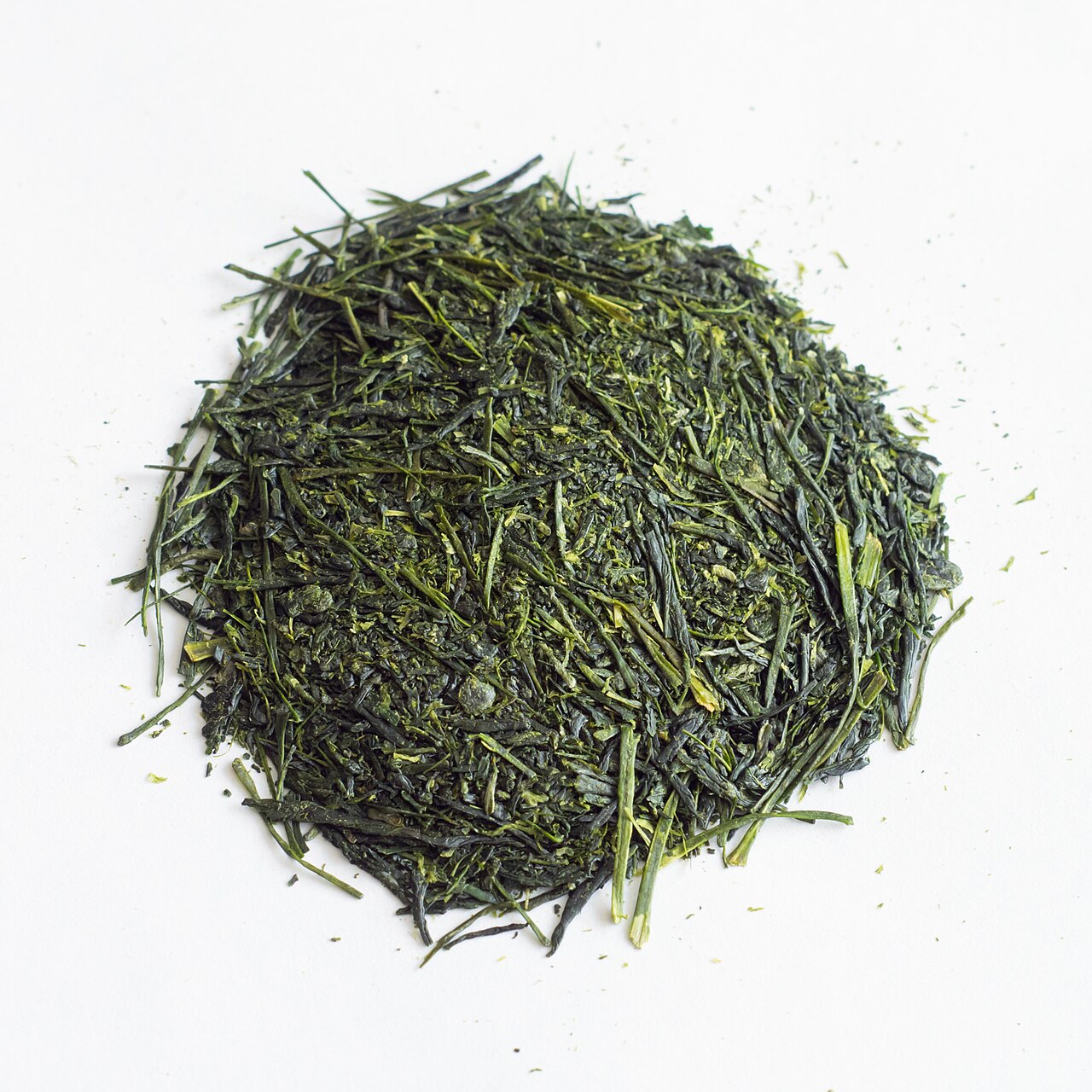
TeaPan-fired kamairicha dry leaves from Miyazaki, Japan, curled into magatama-like shapesDifference engine / Wikimedia Commons · CC BY-SA 4.0
Japan

Kamairicha

Kamairicha is a Japanese green-tea category defined by pan-firing rather than steaming. Fresh leaves are tossed in a hot iron kettle or pan at about 300–400°C, then rolled and dried; because the leaves are not given the final needle-straightening pass, the finished tea often curls into a magatama-like shape. The main producing areas are Miyazaki, Saga, Oita and Kumamoto. The Japan Tea Central Association's 2026 data puts Miyazaki first in kamairicha output, with 1,110 ha of tea and 2,880 tonnes of aracha; nationally there are 33,400 ha of tea and 75,100 tonnes of aracha. The Gokase GIAHS page says kamairicha accounts for less than 1% of Japanese tea. It has a kettle aroma (kamaka), a clear golden liquor, lower astringency and a roasted-sweet finish, but it is not hojicha and not the same thing as Chinese pan-fired green tea.

Green tea
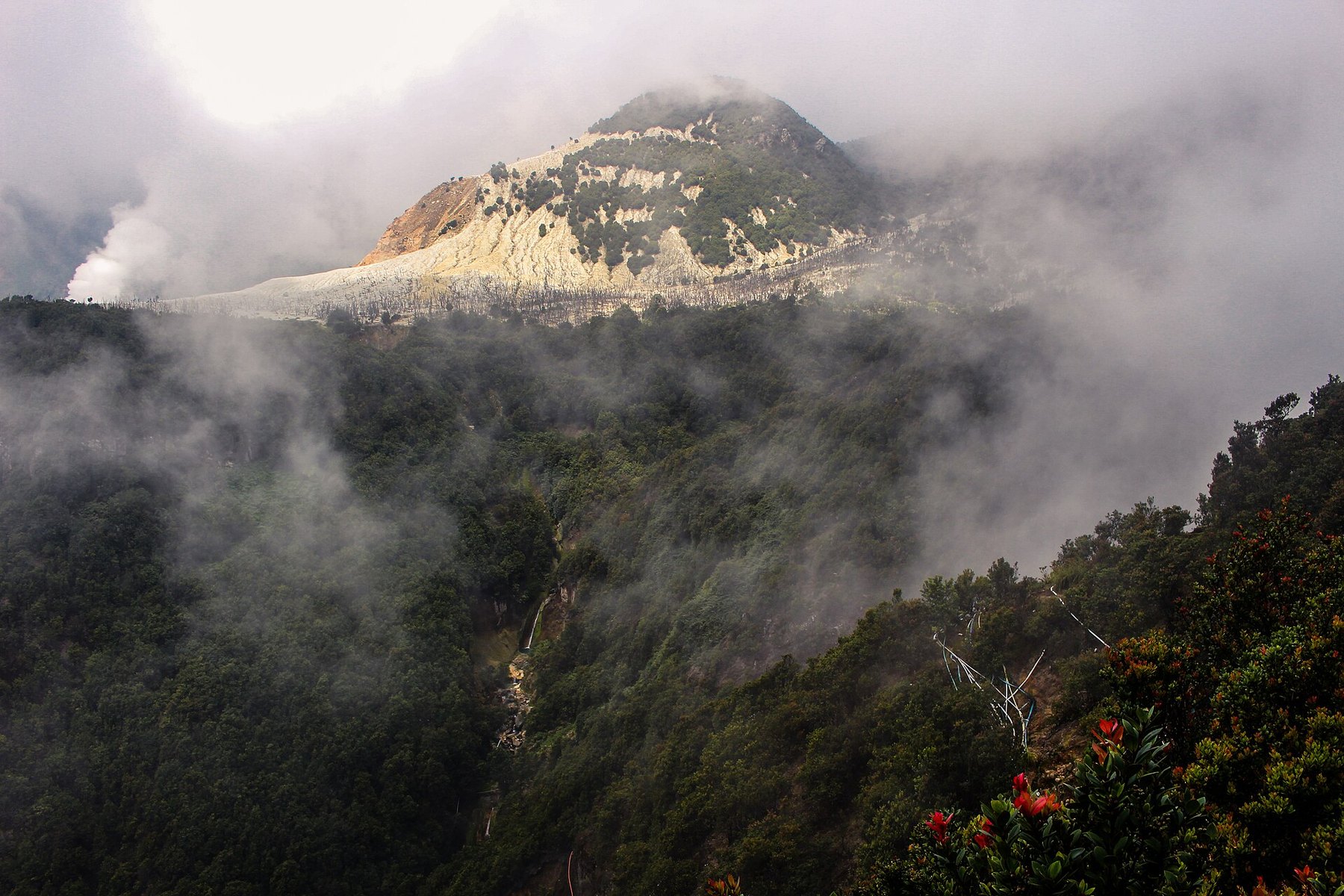
TeaA high-elevation tea garden at Kanyam, Ilam, Nepal; a Nepal tea-garden reference image, not the KTERC estate in PanchtharHari gurung77 / Wikimedia Commons · CC BY-SA 4.0
Nepal

Kanchanjangha Verde

Kanchanjangha Verde is a high-mountain organic green tea made by the Kanchanjangha Tea Estate and Research Center (KTERC) in Panchthar, eastern Nepal. It is also sold as Kanchanjangha Verde (Himalayan Mist). KTERC was founded in 1984 and describes itself as Nepal's first certified organic tea garden; its 95-hectare estate sits in the foothills of Kanchenjunga, with the estate's own materials giving two altitude ranges, 800–2,300 m for the whole property and 1,300–1,800 m for the main garden. The leaf is hand-plucked, briefly rested, quickly dried to stop oxidation, rolled, rested, re-dried, crushed and machine-sorted, then hand-graded. The method is close to classic green tea from the Darjeeling Hills.

Green tea
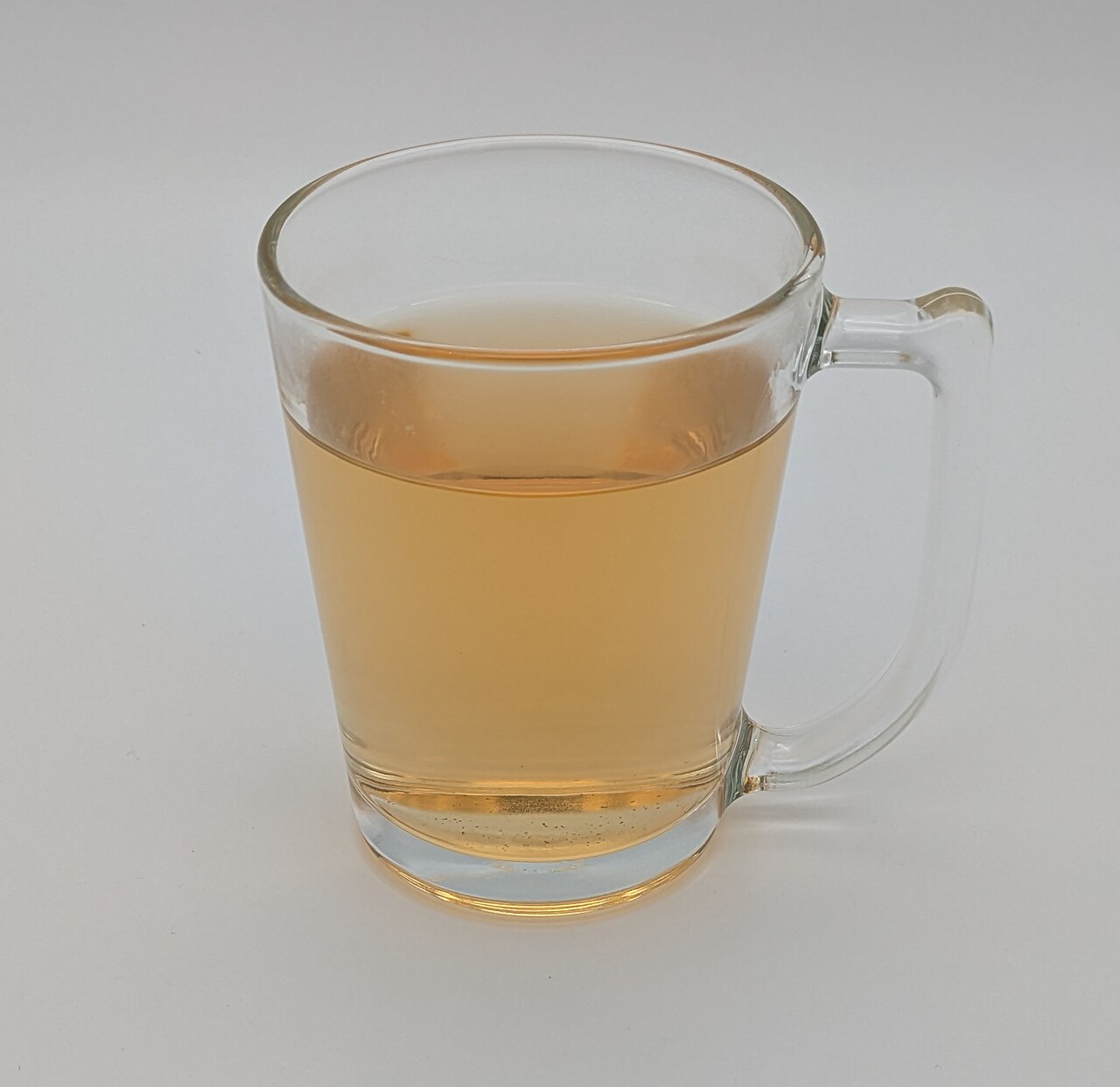
TeaTerraced tea rows and pluckers on a hillside at Kanyam Tea Estate in Ilam, NepalKankai Desk / Wikimedia Commons · CC BY 4.0
Nepal

Kanyam Tea Estate

Kanyam Tea Estate is a tea garden in Ilam, Nepal, owned by the Nepal Tea Development Corporation (NTDC) and now operated by the Triveni Group. NTDC calls it the “Queen of all Tea Gardens”. Its factory sits at 5,500 ft (about 1,676 m), and NTDC describes the garden as the highest in Ilam district; the estate covers about 216 ha, of which 200 ha are planted to tea, and produces about 250,000 kg of orthodox tea a year. It lies in the foothills of Kanchenjunga, about 2 km from the Darjeeling tea gardens. NTDC says the garden was established with British technical collaboration at the initiative of the late King Birendra, but it gives no exact planting year. Kanyam is a garden and place name, not a single retail brand or a tea cultivar; the official material does not give a cultivar, grade, price, organic certification or specific sensory profile.

Black tea
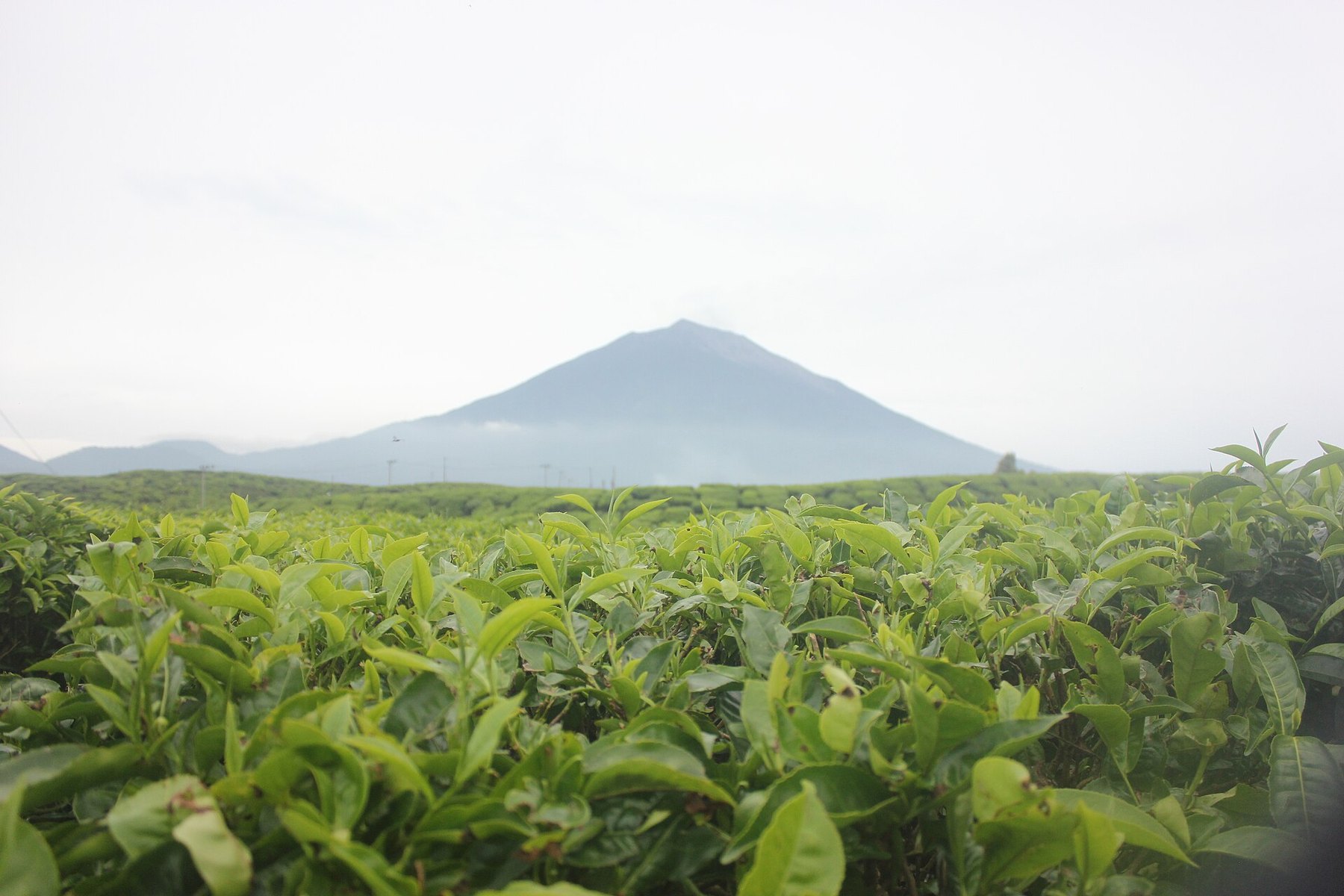
TeaTea rows at Kayu Aro with Mount Kerinci in the distanceZhilal Darma / Wikimedia Commons · CC BY-SA 4.0
Indonesia

Kerinci Tea (Kayu Aro Black Tea)

Kerinci tea usually means black tea from the Kerinci district of Jambi, Sumatra, and its core is the Kayu Aro garden and factory. The main garden sits at about 1,600 m on the western slope of Mount Kerinci; the factory was built in 1925 by the Dutch company NV HVA, began formal production in the early 1930s, and is now managed by PTPN IV PalmCo. It makes both orthodox and CTC black tea. The old draft called it Indonesia’s highest and largest tea region and described snow on a 3,805 m summit. Mount Kerinci is 3,805 m, but it is equatorial and has no permanent snow; the tea garden is nowhere near the summit.

Black tea
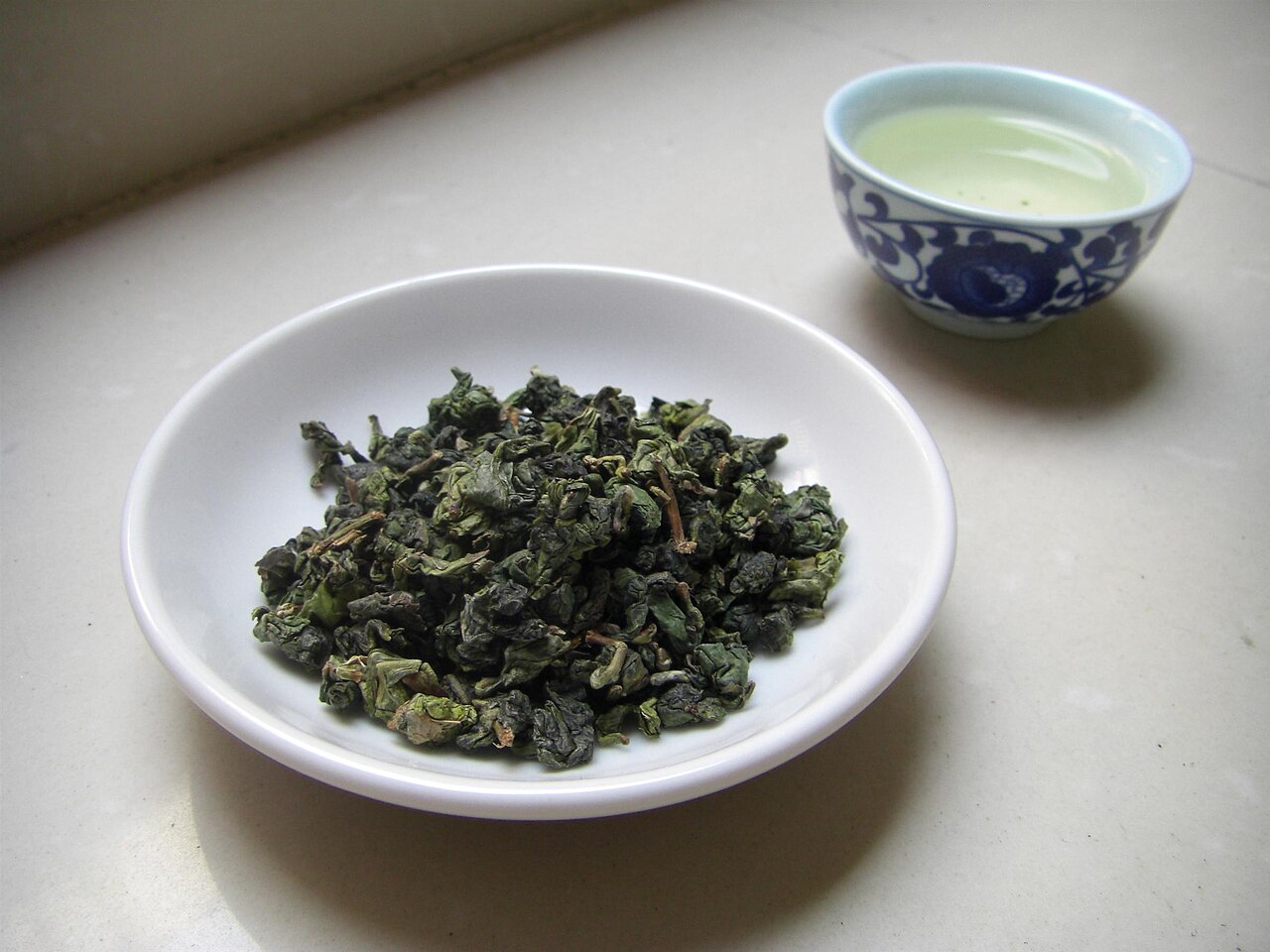
TeaQingxiang Tieguanyin tea leavesQuelcrime · Public domain
China · Fujian

Light-Aroma Tieguanyin

Light-aroma Tieguanyin is one of the three product types of Anxi Tieguanyin, alongside roasted and aged styles. It is made from the Tieguanyin cultivar through withering, shaking, fixing, rolling, wrap-rolling and drying, then sorted, blended and given a low-temperature “literary fire” dry. The leaf is tight and sandy-green, the liquor golden, the aroma clear and orchid-like, and the taste fresh, sweet and distinctly “yin-rhymed”.

Oolong tea
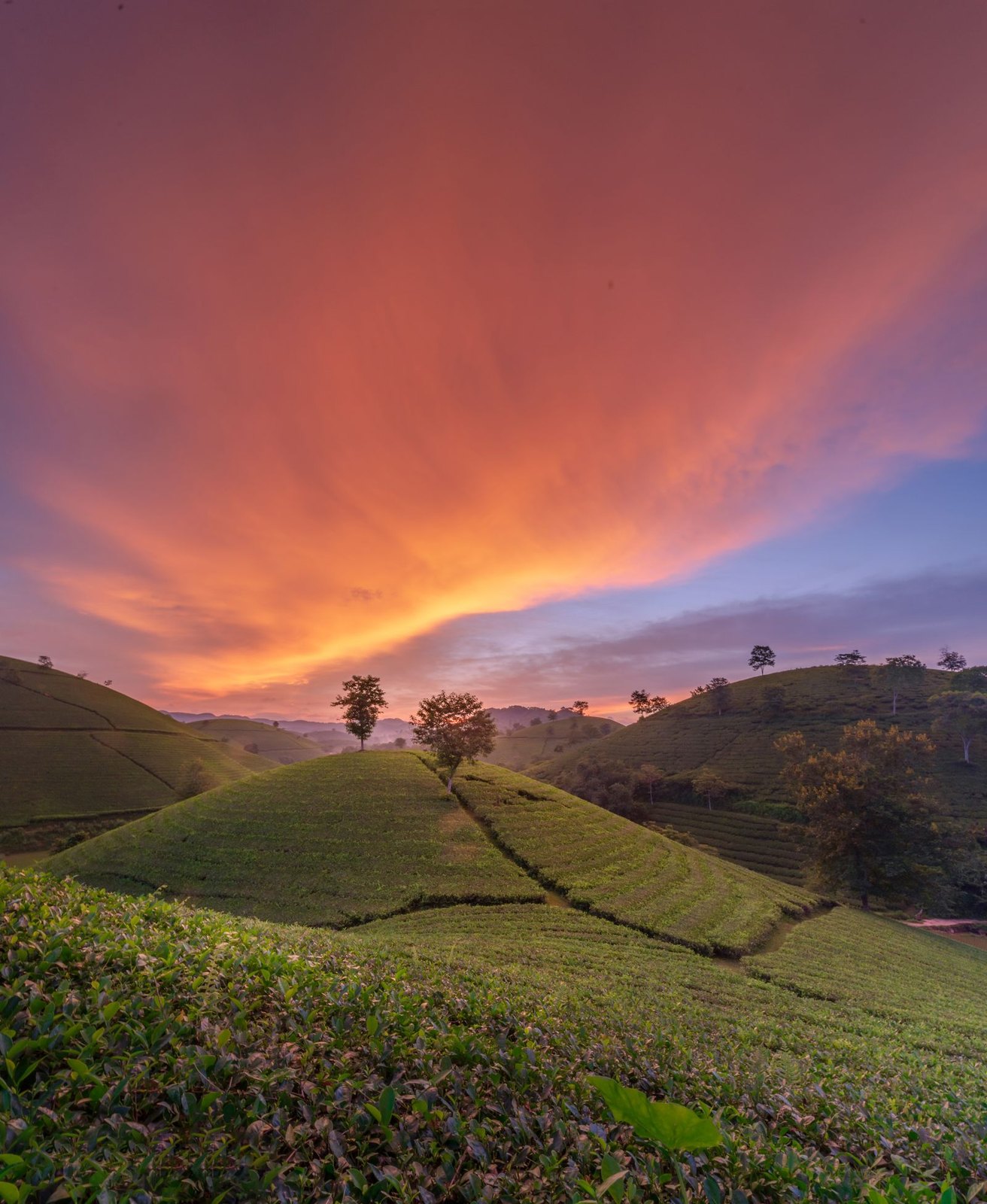
TeaMalabar tea plantation in Pangalengan, West Java, with green tea rows across the hillsDANIEL JULIE / Wikimedia Commons · CC BY 2.0
Indonesia

Malabar Tea Estate (Pangalengan, West Java)

"Malabar Mountain Tea" refers to the Malabar Tea Estate in Pangalengan, West Java, not a separate cultivar and not a generic "mountain garden." The estate was opened by Karel Albert Rudolf Bosscha in 1896 and is now managed by PTPN I Regional 2. A 2003 report gives an area of about 1,300 ha; a 2025 official source puts the tea at 1,400–1,600 m, hand-picked by fine plucking (two leaves and a bud), and identifies Leafy Grade Premium OP FO as the representative black tea. Its flavour is floral with a strong body, and its first export to Taiwan in 2025 came with a potential 42 t/year purchase interest. The old draft's century-old bushes, volcanic-stone cellar and geothermal-mineral story had no reliable source and have been removed.

Black tea
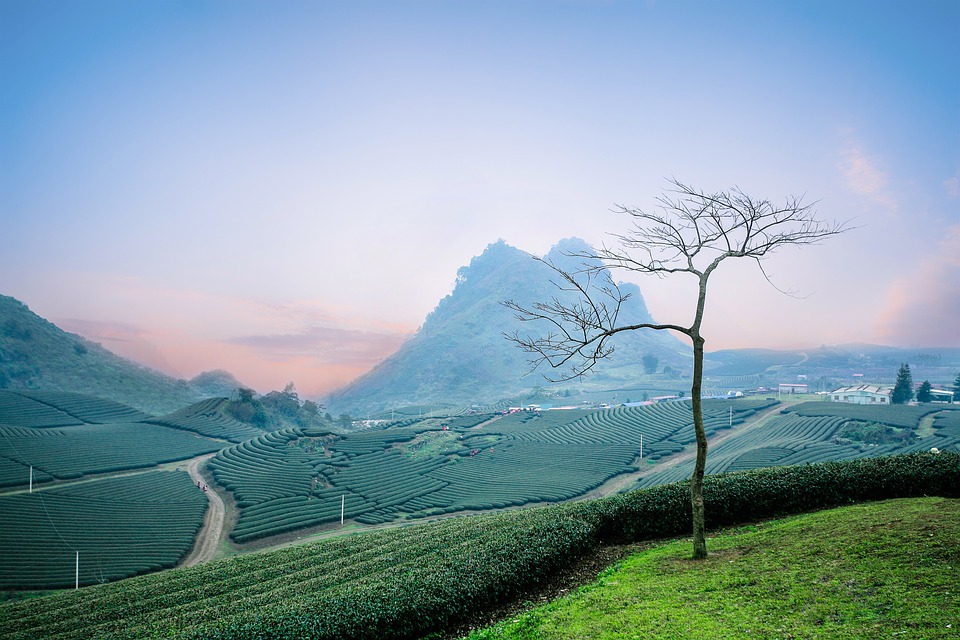
TeaTerraced tea hills and a lone tree on the Mộc Châu plateau in Sơn La, VietnamToanNguyen / Wikimedia Commons (Pixabay) · CC0 1.0
Vietnam

Mộc Châu Oolong

Mộc Châu Oolong is an oolong product family from the Mộc Châu plateau in Sơn La, Vietnam. It is not a single brand and not a single cultivar. Vietnam's national tourism board describes Mộc Châu as a plateau at 1,054 m with some of the country's largest tea-garden scenery. Two producers can be documented: Mộc Sương and Tân Lập. Mộc Sương's own page says it began in 2005 by bringing oolong stock from Taiwan and planting 20 ha; its tea garden is at 1,250 m; it launched Thanh Tâm and Thúy Ngọc oolong in 2010; it now has a 30 ha farm with tea and fruit trees and started an eco-tourism area in 2012. In 2025, the Sơn La provincial newspaper reported that four Mộc Sương oolong products held OCOP 4-star status and that Tân Lập's Kim Tuyên and Tứ Quý oolong held OCOP 3-star status. OCOP is Vietnam's “One Commune One Product” rural-product rating, not a tea grade. The official material does not give a single regional cultivar, sensory standard or price for all Mộc Châu oolong.

Oolong tea
TeaTerraced tea rows in Ilam, eastern Nepal, under low morning cloudPravinchapagain / Wikimedia Commons · CC BY-SA 4.0
Nepal

Nepal Oolong Tea

Nepal oolong is a partially oxidised tea made in the eastern hills of Nepal, mainly around Ilam, Dhankuta and Panchthar, at roughly 1,200–2,100 m. It is a style category, not a protected appellation and not a single cultivar: oxidation can range from about 20% to 80%, and flavour from light floral to nutty, stone-fruit and darker profiles. The old draft turned “Sundarpani”, Jinxuan/Qingxin, “snow-mountain oolong” and “world’s highest” into national facts. Those claims apply, at most, to individual gardens and do not define Nepal oolong.

Oolong tea
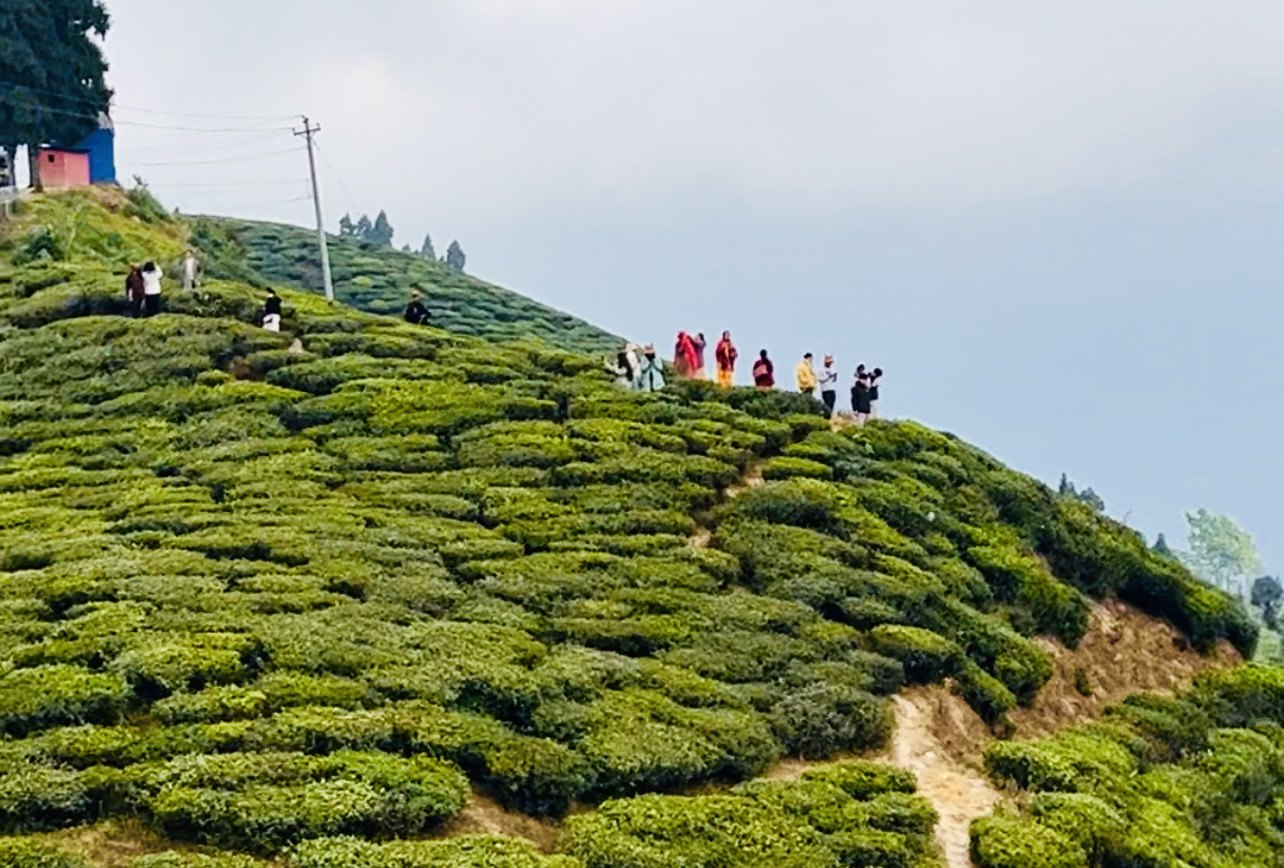
TeaTea rows on a hillside at Kanyam, Ilam, Nepal, with pickers and visitors along the ridgeKankai Desk / Wikimedia Commons · CC BY 4.0
Nepal

Nepal White Tea

Nepal white tea is best understood as a small-batch style from the eastern hills, not a protected appellation and not a single garden. The core districts are Ilam, Dhankuta and Panchthar. Publicly verifiable production falls into at least two families: a pure withered-and-dried silver-needle style, and a lightly rolled style such as KTERC's White Prakash, which is rolled for 8–10 minutes and sold as a "Silvery Oolong." The old draft's claim that all Nepali white tea is unrolled, unoxidised and from one valley does not hold.

White tea
TeaThe Papandayan volcanic complex in Garut, West Java, with sulphur ground and cloud forest (regional image, not a specific white-tea garden)Arief Rachman Muharam / Wikimedia Commons · CC BY-SA 4.0
Indonesia

Papandayan White Tea (Garut Highland White Tea)

Papandayan white tea is this site’s regional label for white tea from the Garut highlands of West Java, Indonesia. It is not a registered origin and not a single-estate brand. What can be verified: a Garut highland producer, Dasep Badrusalam of Mooi Tea House / Teh Nyaneut, made white tea and picked buds only between 05:30 and 07:30; and PTPN VIII operates a tea estate called Papandayan in Garut, but the source describes it as a black-tea estate. The old draft merged the two into “the only white-tea micro-estate on Papandayan’s southern slope at 1,600–1,800 m” and invented a founder, cultivar and awards. Those claims have no source and are not retained.

White tea
TeaTea hills in Phú Thọ, Vietnam, at sunsetTran Anh Tuan / Pexels · Pexels License
Vietnam

Phú Thọ Black Tea

Phú Thọ black tea is a regional fully oxidised tea from Phú Thọ Province in Vietnam, not a single brand and not a Chinese-style dark tea. The province's 2026 figures are about 14,500 ha of tea, 193,000 tonnes of fresh leaf and second place nationally by area, with 76 processors, 18 traditional tea villages, 12 cooperatives, 58 tea-growing communes and 3,800 ha under growing-area codes. Black tea is about 70% of processed volume; exports go to the Middle East, Russia, China, Pakistan, India, Indonesia and the UK, with about 30,000 tonnes exported in the first seven months of 2026. There is no single sensory standard, and Orthodox and CTC routes coexist. Old claims about Ly-dynasty tribute, a late-19th-century “first” black tea factory, 500-year wild tea trees and a Hùng King tea ancestor have no reliable source and are removed.

Black tea
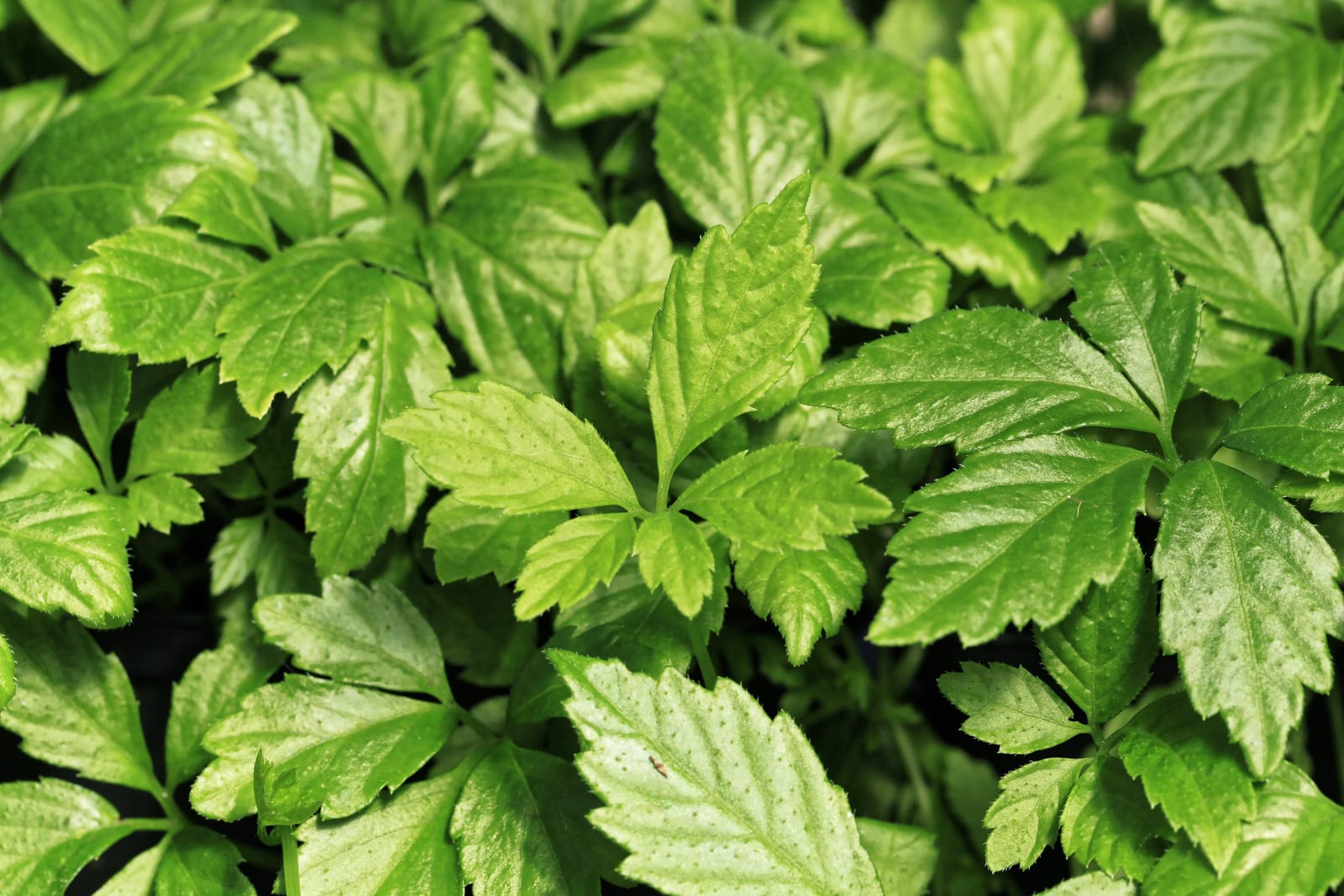
TeaClose-up of five-leaflet Gynostemma pentaphyllum foliage and young stems; a botanical reference photograph, not a Pingli plantation or dried tea productFrank Vincentz / Wikimedia Commons · CC BY-SA 3.0
China · Shaanxi

Pingli Jiaogulan

Pingli Jiaogulan is a geographical indication product from Pingli County in Ankang, Shaanxi. Its raw material is the aerial part of Gynostemma pentaphyllum, a perennial cucurbitaceous vine — not a tea plant (Camellia sinensis) and not a medicine. AQSIQ Announcement No. 189 of 2004 protects the whole county and sets site conditions of 400–1,600 m altitude, pH 6.0–7.5 and organic matter above 2.0%. The 2019 Shaanxi food safety standard divides the product into longxu tips, leaves and stems, recommends no more than 6 g a day, and lists pregnant or nursing women and children under 14 as unsuitable. In 2024 Pingli had 5 wan mu (about 3,330 ha) of jiaogulan, 6,500 tonnes of dried tea and CNY 700 million in output value; the 2025 brand value was CNY 934 million.

Herbal infusions
TeaTea gardens on the hills of Rize, TürkiyeDosseman / Wikimedia Commons · CC BY-SA 4.0
Türkiye

Rize Çayı (Rize Tea)

Rize Çayı is a protected geographical indication for black tea from Rize province, Türkiye. It was registered on 26 March 2021 as a “menşe adı” (designation of origin), registration no. 707, by the Rize Commodity Exchange. It is not a brand and not a synonym for all Turkish black tea: only tea that meets the origin, material, processing and sensory standard may use the name. Rize is the centre of the Turkish tea belt on the eastern Black Sea, with a PGI dossier that gives roughly 2,300 mm annual rainfall, 14°C mean temperature and 78.8% relative humidity; Rize accounts for 67% of Türkiye's fresh tea output, and about 90% of its agricultural land is tea. The tea is fully oxidised, processed through Orthodox and CTC lines, brewed in a double pot and served in the thin-waisted ince belli glass.

Black tea
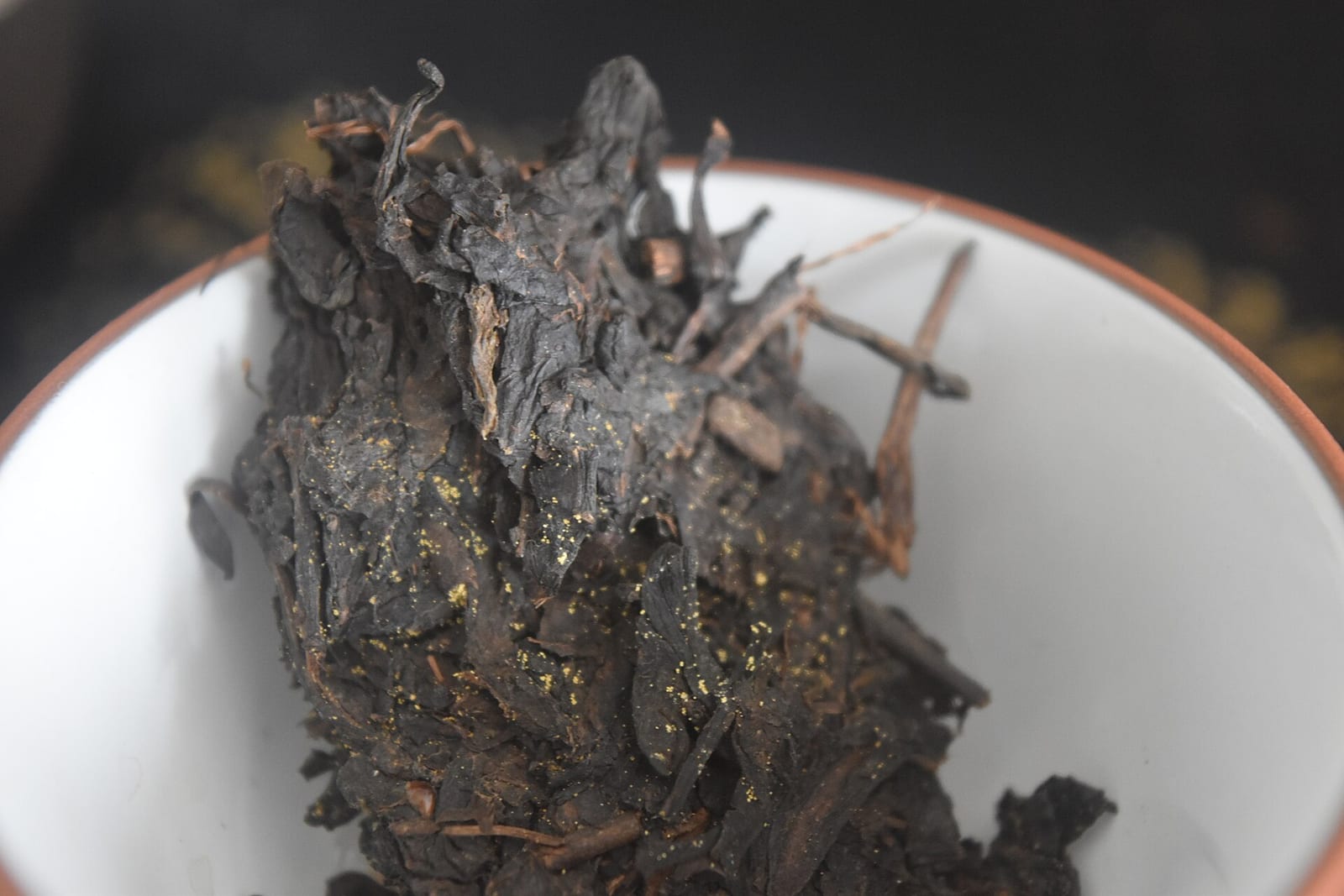
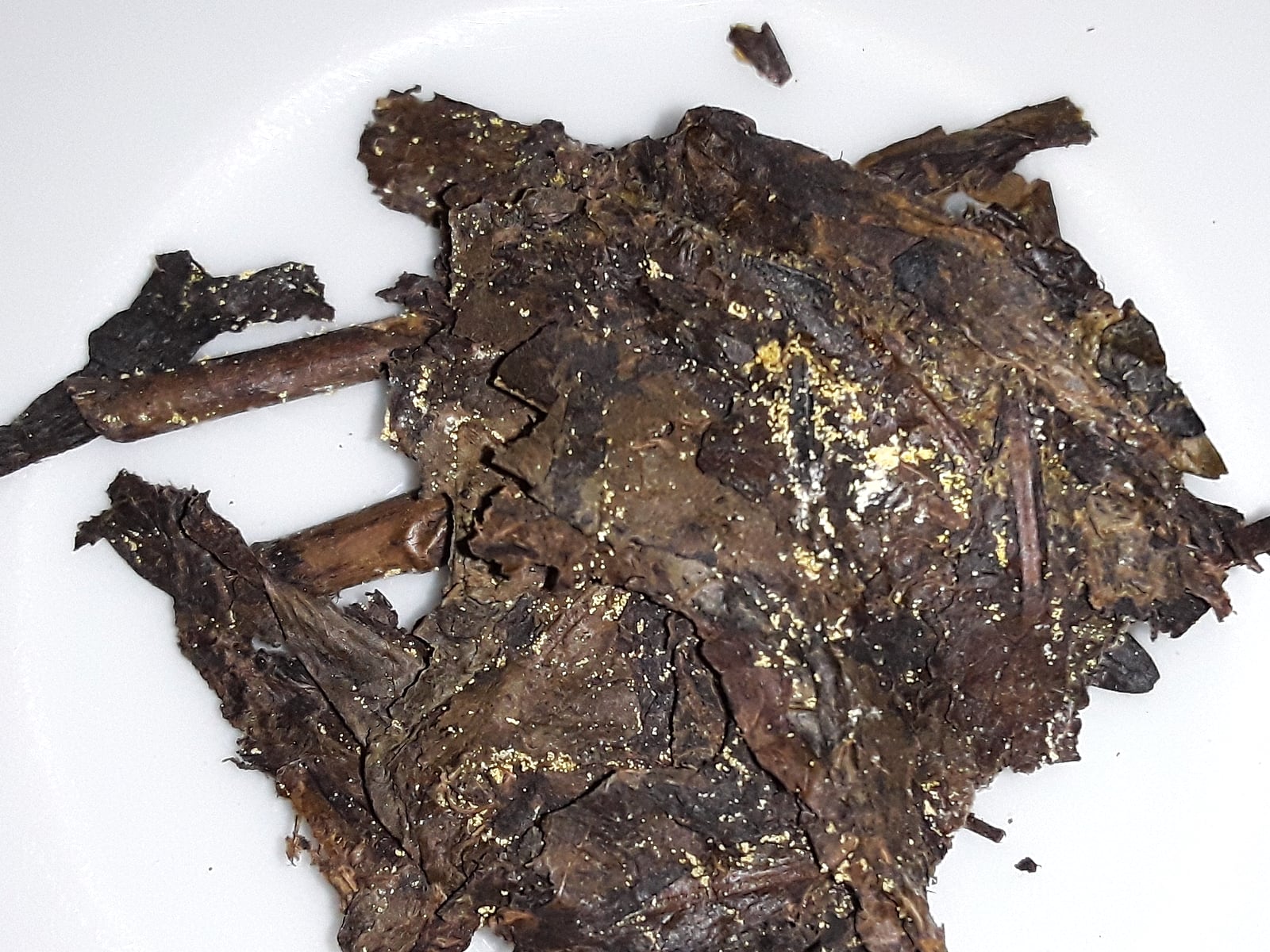
TeaClose-up of broken Fu brick tea with golden 'flowers'; a type-reference photograph of an Anhua sample, not a Jingyang production photoKasuga / Wikimedia Commons · CC BY-SA 4.0
China · Shaanxi

Shaanxi Fu Brick Tea

Shaanxi Fu brick tea is a post-fermented dark tea centred on Jingyang in Xianyang, Shaanxi. It is made from black maocha from southern Shaanxi, Hunan and Sichuan, then pile-fermented, steamed, pressed and incubated so that golden “flowers” of Eurotium cristatum grow inside the brick. Jingyang Fu brick tea received geographical indication protection in 2013; Xianyang Fu tea making was added to the national intangible heritage list in 2021. It is not a black tea, and golden flowers are not evidence of a health effect.

Dark tea
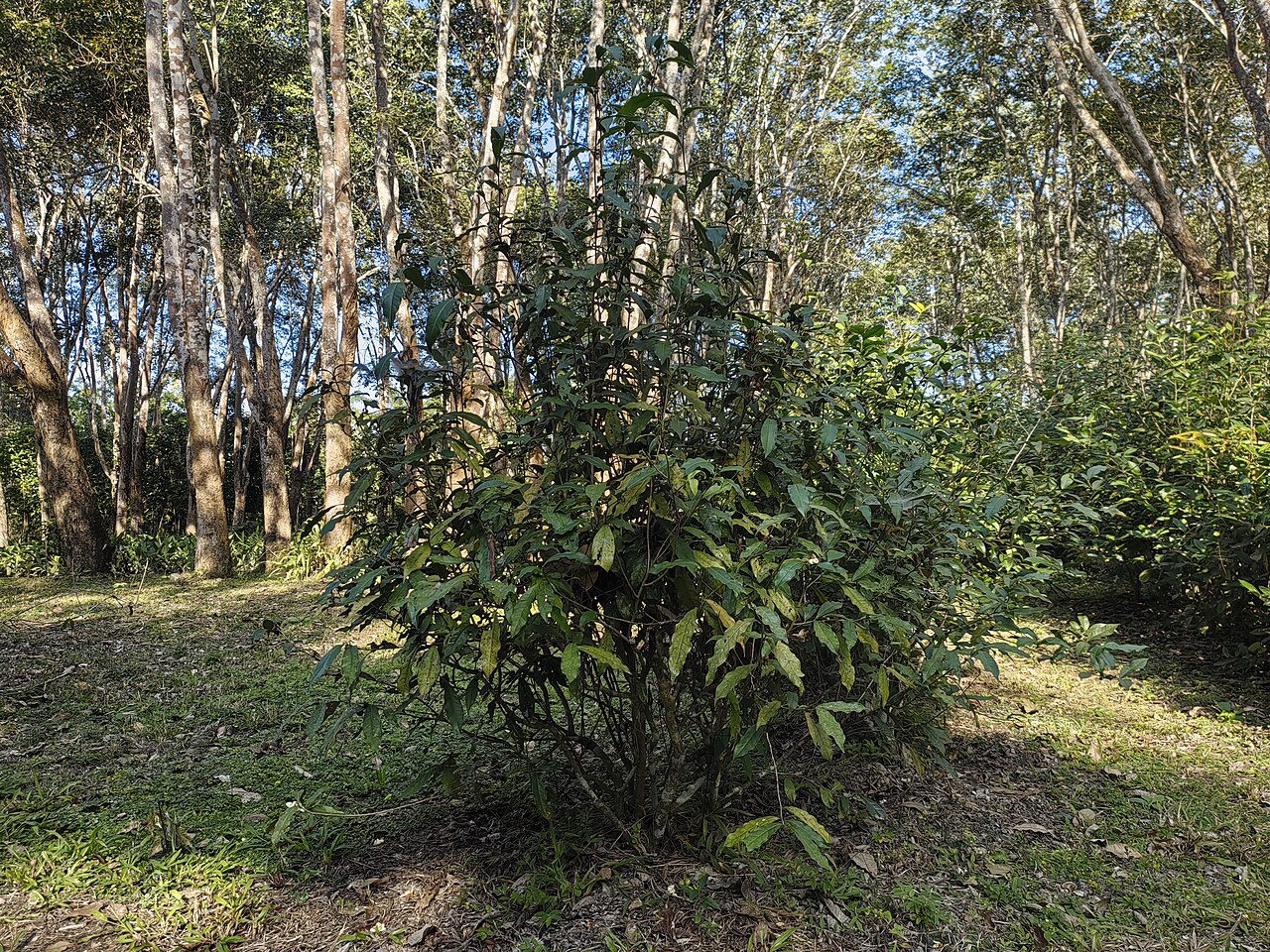
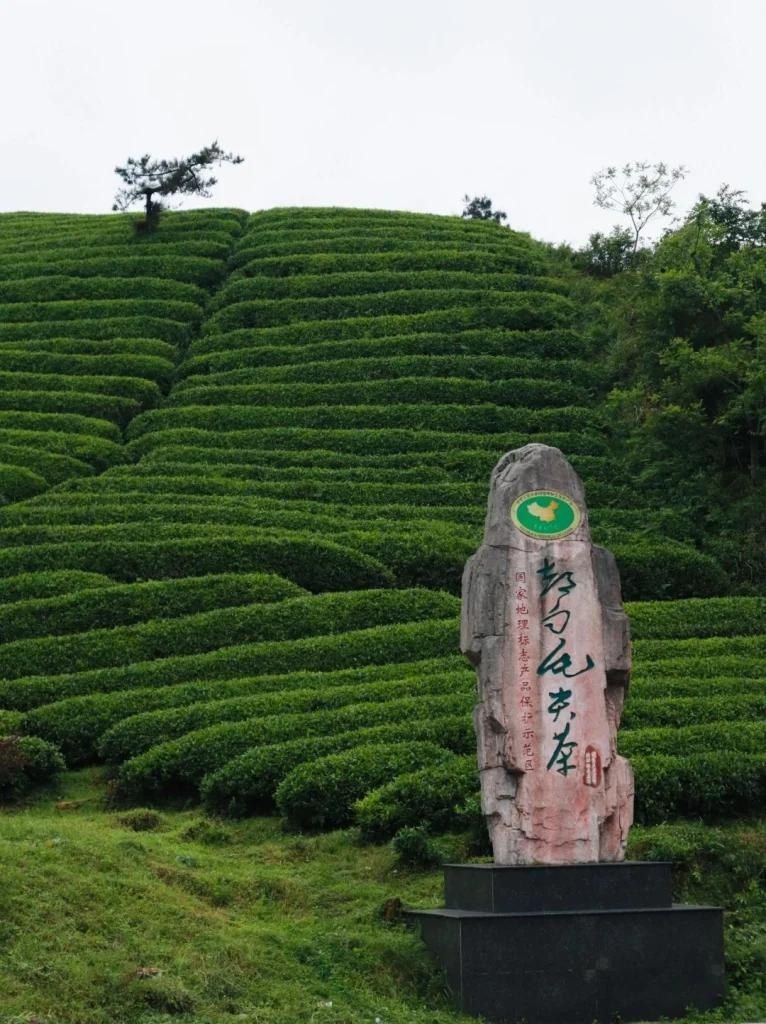
TeaTea terraces and a geographical indication stone at the Duyun Niuchang tea farm in Guizhou; illustrative image, not a Shiqian sitekuaimei / Wikimedia Commons · CC BY 3.0
China

Shiqian Taicha

Shiqian Taicha is a geographical-indication green tea from Shiqian County, Guizhou, and the name covers both the local tea population and the product. It received national GI product protection in 2009, was registered as a GI certification mark in 2010 and as a China Well-Known Trademark in 2013; local material calls it one of Guizhou’s three famous teas. In 2025 the county reported 29,510 tonnes of finished tea, RMB 3.2 billion in combined output value, 436,000 mu of tea gardens and more than 50,000 ancient tea plants.
Green tea
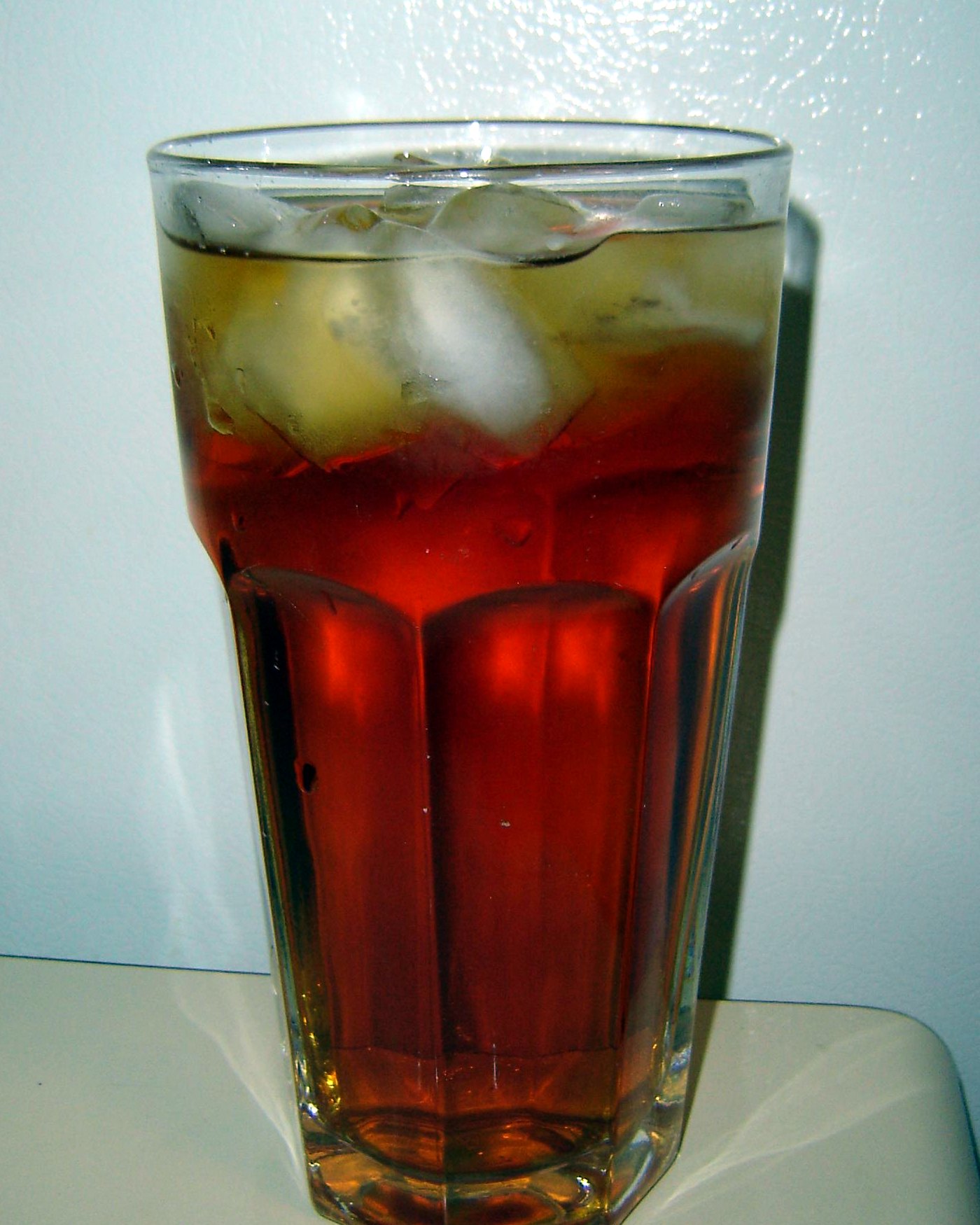
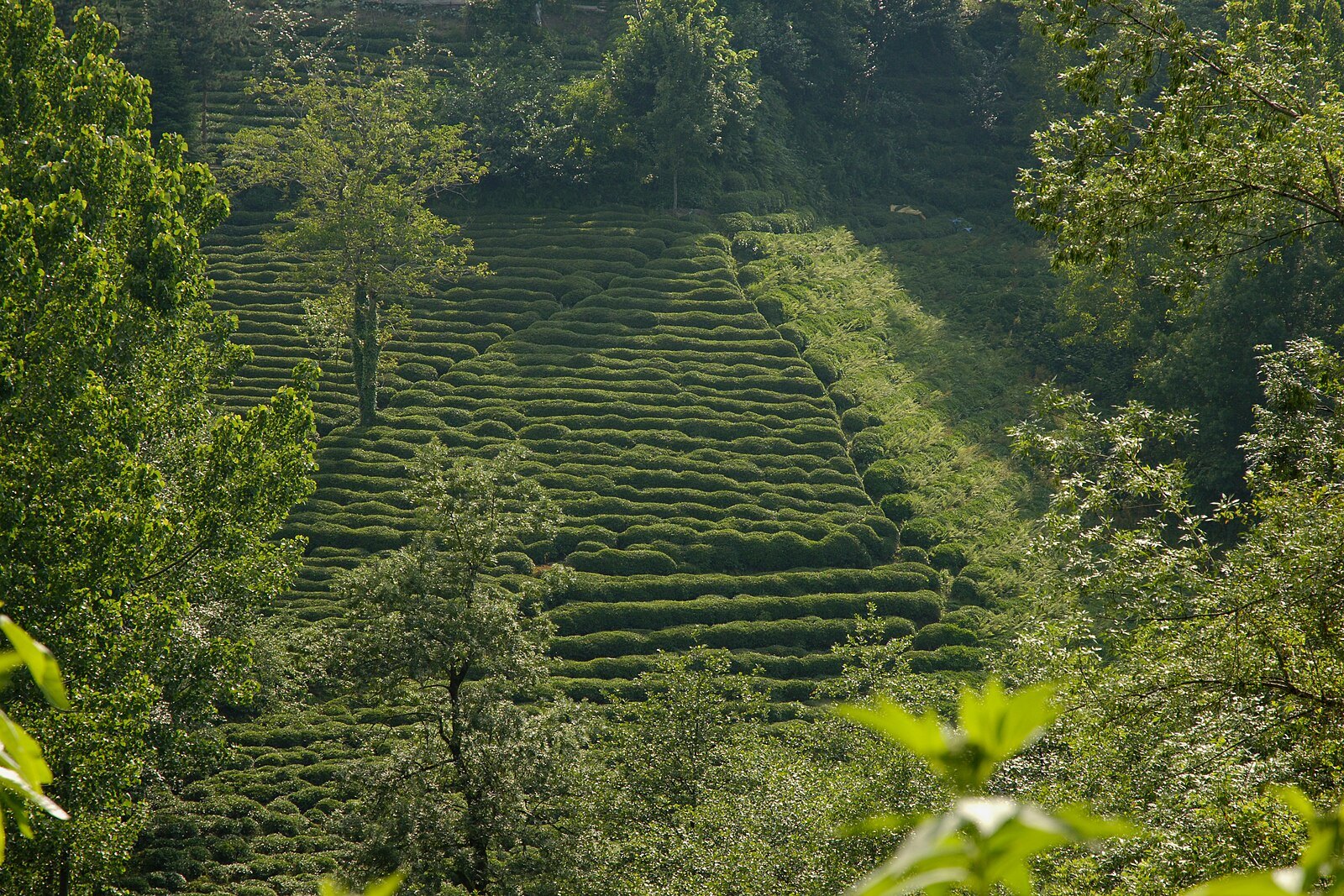
TeaA glass of sweet iced tea with ice cubes, deep amber-red in colourZantastik / Wikimedia Commons · CC BY-SA 2.0
United States

Southern Sweet Tea

Sweet tea is a southern United States way of drinking iced tea, especially associated with South Carolina and Georgia; it is not a tea category, cultivar or brand. The usual method is to brew black tea strong and hot, dissolve a large amount of sugar while the tea is still hot, cool it, and pour it over ice, often with lemon. An early published “Iced Tea” recipe appears in the 1878 edition of Housekeeping in Old Virginia (often cited as 1879): one quart of boiling water and two teaspoons of green tea, strained and poured over ice with two teaspoons of granulated sugar per glass, with lemon optional. That is “iced tea with sugar”, not the modern concentrate sweetened heavily before cooling. South Carolina designated sweet tea its official “state hospitality beverage” in 1995. Summerville calls itself the “Birthplace of Sweet Tea”, but the official tourism page hedges with “history seems to indicate such”; in 2016 the town used 2,524 gallons of sweet tea to set a Guinness record. The origin of sweet tea is not established, and local legend should not be presented as proven history.
Black tea

Explore the world of tea

ESC
Search in

Type a word. Let curiosity lead the way.

Open the full search page →
See all results