What this tea is
“Nepal green tea” sounds like a national category. In practice Nepal has tea gardens at different altitudes and several tea types; green tea is one branch, not the whole country. Kanchanjangha Verde is a specific organic high-mountain green tea from KTERC in Panchthar. “Verde” is a brand name, not a cultivar.
The product is also sold as Kanchanjangha Verde (Himalayan Mist). That second name is useful because it describes the style: a soft, aromatic highland green tea, not a sharp Japanese sencha and not a pan-fired Chinese green.
This page is about KTERC's product only. Nepal has other green teas, other organic gardens and other processing styles. One estate's 95 hectares and certification do not define the country.
The estate: KTERC
KTERC stands for Kanchanjangha Tea Estate and Research Center. It sits near Phidim in Panchthar, eastern Nepal, in the foothills of Kanchenjunga. The estate's own facts are specific:
| Item | Official position |
|---|---|
| Founded | 1984 |
| Organic status | Nepal's first certified organic tea garden |
| Area | 95 ha, with about 87.5 ha of tea garden including extensions |
| Altitude | Two estate figures: 800–2,300 m for the property; about 1,300–1,800 m for the main garden |
| Ownership | A co-operative of about 100 farmer-owners |
| Employment | 150+ direct, about 400 indirect; more than 70% women |
| Products | Black and green tea; the estate says it made Nepal's first organic green tea |
“First certified organic tea garden” and “first organic green tea” are KTERC's own claims. They establish the estate's pioneer position in Nepali organic tea; they do not prove that no other Nepali garden is organic today.
The co-operative structure matters to the tea's identity. This is not a single-owner estate with a decorative “farmer story”. The farmers are described as owners through a co-operative, and the estate runs savings and loan services alongside tea. That structure is part of why KTERC can market both organic certification and a social enterprise model.
Processing: a Darjeeling-style green tea
Kanchanjangha Verde is made in a style closer to classic green tea from the Darjeeling Hills than to Japanese steaming or Chinese pan-firing:
- Hand-pluck the leaf.
- Brief rest to lose some moisture without fermenting.
- Quick dry to stop oxidation.
- Roll to break cells and release aroma precursors.
- Rest so essential oils can develop.
- Re-dry at the peak of aroma.
- Crush and machine-sort through three machines to collect the finer leaf.
- Hand-grade the finished tea by leaf quality.
The product page says this method was brought to KTERC by workers from Darjeeling in the early 1990s. That detail matters: the technique is not an ancient Nepali green-tea tradition. It is a deliberate transfer of Darjeeling know-how into a Nepali organic garden, then adapted locally.
Because it is not a steamed tea, do not expect the marine, bright-green, low-temperature profile of Japanese sencha. The aroma is more highland-floral and grassy, with a nutty edge, and the body can take more heat than a delicate steamed green.
Flavour and brewing
The product page gives the flavour as mellow, grassy meadows, floral, with subtle fruit and nut. That is a useful starting point. It is not a licence to invent “orchid, peach, cream” tasting notes.
The page does not give official gram, temperature or time figures. This page therefore does not present one set of numbers as the product standard. As an editorial starting point, try 3 g tea, 150 ml water, 80–85°C, 1–2 minutes. Keep the first steep short; extend the second. If the grassy edge is too strong, lower the temperature rather than reaching for a hard boil.
Where it sits in Nepali tea
KTERC's importance is not just “high mountain”. It combines organic farming, co-operative ownership, women's employment and orthodox processing in one system. That is a more useful explanation of consistency than the usual “misty Himalaya” scenery.
It is still one producer. Nepal has other tea areas, other orthodox gardens and other green teas. Applying KTERC's 95 hectares, organic certificate and Darjeeling-style process to the whole country would flatten the category.
Common misreadings
| Common shorthand | Problem | Better wording |
|---|---|---|
| “All Nepal green tea is high-mountain mist tea” | Nepal has different altitudes and tea types | KTERC is a high-mountain organic garden in Panchthar |
| “Everything is handmade” | The process uses machine crushing and sorting, then hand grading | Hand-pluck + machine sort + hand grade |
| “Nepal green tea has a specific health benefit” | No verifiable clinical or official claim | Describe flavour and processing only |
| “KTERC is a single estate” | It is a co-operative of about 100 farmer-owners | A cooperative estate, not a single-owner plantation |
| “Verde is a cultivar” | It is a product name | Kanchanjangha Verde is the product |
Source boundary
This page can confirm: Kanchanjangha Verde is a KTERC product; KTERC was founded in 1984 and is Nepal's first certified organic tea garden; the estate is 95 ha in the Kanchenjunga foothills of Panchthar; the leaf is hand-plucked and processed in a Darjeeling-style green-tea method; the product carries USDA Organic and CERES certification; the flavour is mellow, grassy and floral with subtle fruit and nut.
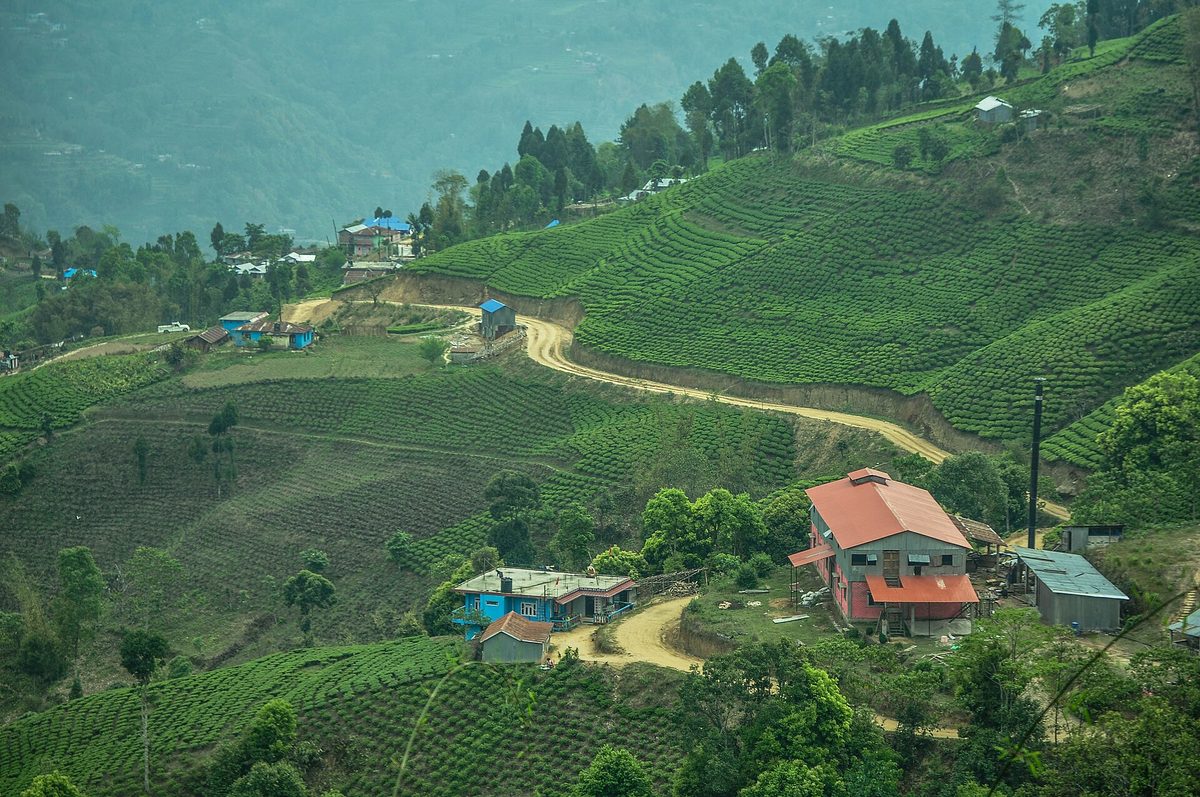
This page does not confirm: the exact retail price, annual volume, precise cultivar, picking season for each lot, caffeine content, or any health benefit. The image is a tea garden at Ilam, Nepal, not the KTERC estate in Panchthar.


