In one sentence
Biluochun is the “fine and curly” green tea of Lake Tai. The leaf is tiny, rolled into a snail-like coil, covered in white down, and brewed into a pale green cup that tastes of fresh chestnut, white flowers and a hint of fruit. It is not the flat, broad-leaf style of Longjing; it is delicate, aromatic and built around the first weeks of spring.
Don't confuse the Dongting
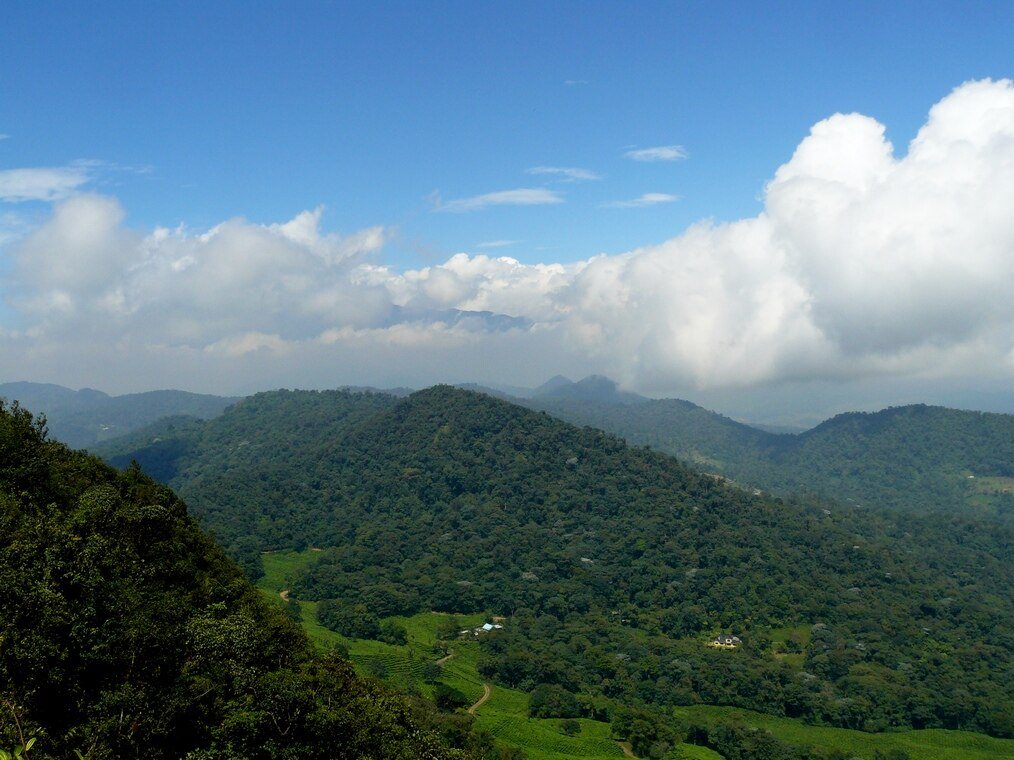
Biluochun comes from Dongting Mountain in Suzhou, Jiangsu, on Lake Tai. This is not Dongting Lake in Hunan. The production area is Wuzhong district, chiefly the East Hill (Dongshan, a peninsula) and West Hill (Xishan, now Jinting town, the largest island in Lake Tai).
The lake moderates temperature: winters are milder, summers are cooler, and the hills stay humid and misty. The soil is acidic yellow or yellow-brown earth, well drained. Tea grows slowly, shoots stay tender, and the aroma compounds accumulate.
The most distinctive part of the garden is tea–fruit intercropping. Tea bushes are planted among peach, plum, apricot, plum, persimmon, orange, loquat and waxberry trees. The tea grows under partial shade; spring blossom and fruit aromas, together with the garden microclimate, contribute to the “floral-fruity” style for which Biluochun is known. This is not a flavouring process. It is an agricultural system, and the Dongting Biluochun tea–fruit composite system is listed as a China Important Agricultural Heritage System.
Cultivar and picking
The traditional material is the Dongting Mountain local population: a shrub-type, medium-leaf, early-sprouting cultivar with small, plump buds and dense down. Modern gardens also plant clonal cultivars such as Longjing 43 and Fuding Daba, but the traditional high-grade Biluochun is still mostly made from the local population.
Picking runs from around the Spring Equinox to Grain Rain. In 2025, the Suzhou authorities set the official start at 15 March, with picking continuing into late April. The standard grade is one bud and one initial leaf, bud longer than leaf, about 1.5–2 cm. Fresh leaf is carefully sorted to remove fish leaves, old leaves and debris.
“Pre-Qingming” tea is picked before the Qingming festival and is the most expensive because the buds are tiny and the yield is low. But “pre-Qingming” is a date, not a quality guarantee. Cultivar, garden, weather and pan-firing matter just as much.
Craft
Biluochun is a pan-fired green tea, traditionally made entirely by hand in a hot wok:
- Fixing (shāqīng). The wok is hot, the leaf load small. The tea is turned quickly so every leaf is heated evenly. This stops oxidation and removes the grassy smell.
- Rolling. While still warm, the leaf is rolled gently to release juice and tighten the strip. Heavy pressure would break the buds and strip the down.
- “Rolling into a ball to show the down” (搓团显毫). This is the signature step. The tea is gathered in the hands and rolled into a ball, then shaken loose, again and again. The leaf curls into a snail shape and the white down becomes visible.
- Drying. Low heat, slow drying, until moisture is below 6%.
The “ball” is not for show. It shapes the leaf, distributes the down, and helps the tea open slowly in the cup. A hand-made batch will have natural variation in curl and down. If every leaf is identical and the down looks like powder sprinkled on top, be suspicious.
Taste
- Dry leaf: fine, tight, curled like a snail, silver-green with white down.
- Liquor: pale green to green-yellow, clear.
- Aroma: fresh, sweet, chestnut, white flowers, sometimes a soft fruit note.
- Mouthfeel: fresh and mellow, low bitterness, quick returning sweetness.
- Leaf base: tender, bright green, intact buds and leaves.
The “freshness” comes from the ratio of amino acids to polyphenols, and from clean fixing and drying. Under-fixing leaves grass; over-fixing turns the aroma cooked and the liquor yellow; heavy rolling makes the liquor cloudy and bitter. Good Biluochun is “fresh without being raw, mellow without being flat”.
Brewing
- Water: 80–85°C. The buds are tender; boiling water cooks the freshness out of them.
- Leaf: 3–4 g per 200 ml glass.
- Method: glass first, water first, then leaf (top-drop). Watch the buds sink and open. A gaiwan works too, but pour quickly.
- Timing: 20–30 seconds for the first infusions, then lengthen. Do not cover and stew.
- Vessel: glass shows the shape; white porcelain shows the liquor colour.
Grades and buying
GB/T 18957-2008 sets grades and reference samples for Dongting Biluochun. Market names such as “special grade” and “first grade” should match the standard number and grade on the package, not just the seller's label.
Look for:
- Origin. Wuzhong district, Dongshan and Jinting (Xishan), within the protected area.
- Label. Since 2025, Wuzhong's geographical-indication label combines the GI mark, the certification mark and a traceability QR code. Scan it and check the authorised producer.
- Shape. Fine, curled, downy; silver-green, not dead green or grey.
- Aroma. Fresh, chestnut or floral, not perfumed or smoky.
- Taste. Fresh, mellow, sweet; not bitter or numbing.
- Leaf base. Tender, bright, intact; not a pile of broken bits.
History and the name
“Biluochun” refers to the shape: green, curled like a snail, picked in early spring. Locals also call it “Xia Sha Ren Xiang” — “the fragrance that startles people”. The nickname is still used in Suzhou's official 2025 press release, so it is a genuine local name.
The popular story that the Kangxi emperor tasted the tea on a southern tour and renamed it “Biluochun” is not used here as history. No verifiable palace archive or local gazetteer text was found. It is a good story, but a story. What is verifiable: Dongting Mountain has a long tea tradition; the modern Biluochun brand took shape through 20th-century competitions, export and standardisation; GB/T 18957-2008 brought it into the geographical-indication system; and the making technique is now part of the UNESCO intangible heritage listing of Chinese tea-making techniques.
Status
This English entry is an independent editorial rewrite, not a sentence-by-sentence translation. It uses GB/T 18957-2008 for the definition, protected area and grading, and the Suzhou Agriculture Bureau's 2025 release for the picking date, GI label and heritage status. Imperial naming legends, exact bud counts, “Tang dynasty tribute tea” and “the only authentic origin” claims were removed. The page is marked reviewed; sources and wording will continue to be revised.