In one sentence
Ripe Pu-erh is the branch of Pu-erh that goes through pile fermentation (wodui). The same Yunnan large-leaf sun-dried maocha is moistened, stacked, warmed by microbial activity, turned, fermented, dried and pressed. The result is drinkable soon after production: deep red liquor, low bitterness, a thick, slippery body, and notes of aged wood, dates or damp earth. It is not a tea that needs twenty years to become pleasant.
A different fermentation from black tea
Two teas can both pour red and still be made by completely different chemistry.
- Black tea is enzymatically oxidised. Tea polyphenols are converted by the leaf's own enzymes into theaflavins and thearubigins.
- Ripe Pu-erh is microbially fermented. In the pile, bacteria, moulds, yeasts and their enzymes work with heat and moisture to transform the leaf.
Both are “fermented” in everyday language. In tea science, only one is an oxidation of the black-tea type. That is why ripe Pu-erh belongs to the dark tea family in GB/T 30766-2014, not to black tea.
How pile fermentation works
The process is simple to describe and hard to control:
- Sort the maocha. Sun-dried green tea is graded and cleaned. Uneven leaf size makes an uneven pile.
- Add water. The moisture level is raised to a range where microbes can work. Too dry and the pile stalls; too wet and it can sour or spoil.
- Build the pile. The tea is stacked to a depth that lets it heat up. A pile that is too small cannot hold temperature; a pile that is too large can go anaerobic in the middle.
- Turn the pile. Turning redistributes heat, moisture and air, and prevents hot spots, mould and uneven fermentation.
- Dry. When the fermentation reaches the target, the tea is spread out and dried to stop the process.
- Sort and press. The fermented tea is screened, blended and pressed into cakes, bricks or bowls, or sold loose.
The skill is in “steady”: temperature that does not run away, moisture that does not swing, turning on time. Under-fermented ripe Pu-erh tastes thin, sharp and heavily “pile-scented”; over-fermented tea can be dark, flat and lifeless. A clean, even, medium fermentation is the goal.
What it tastes like
New ripe Pu-erh:
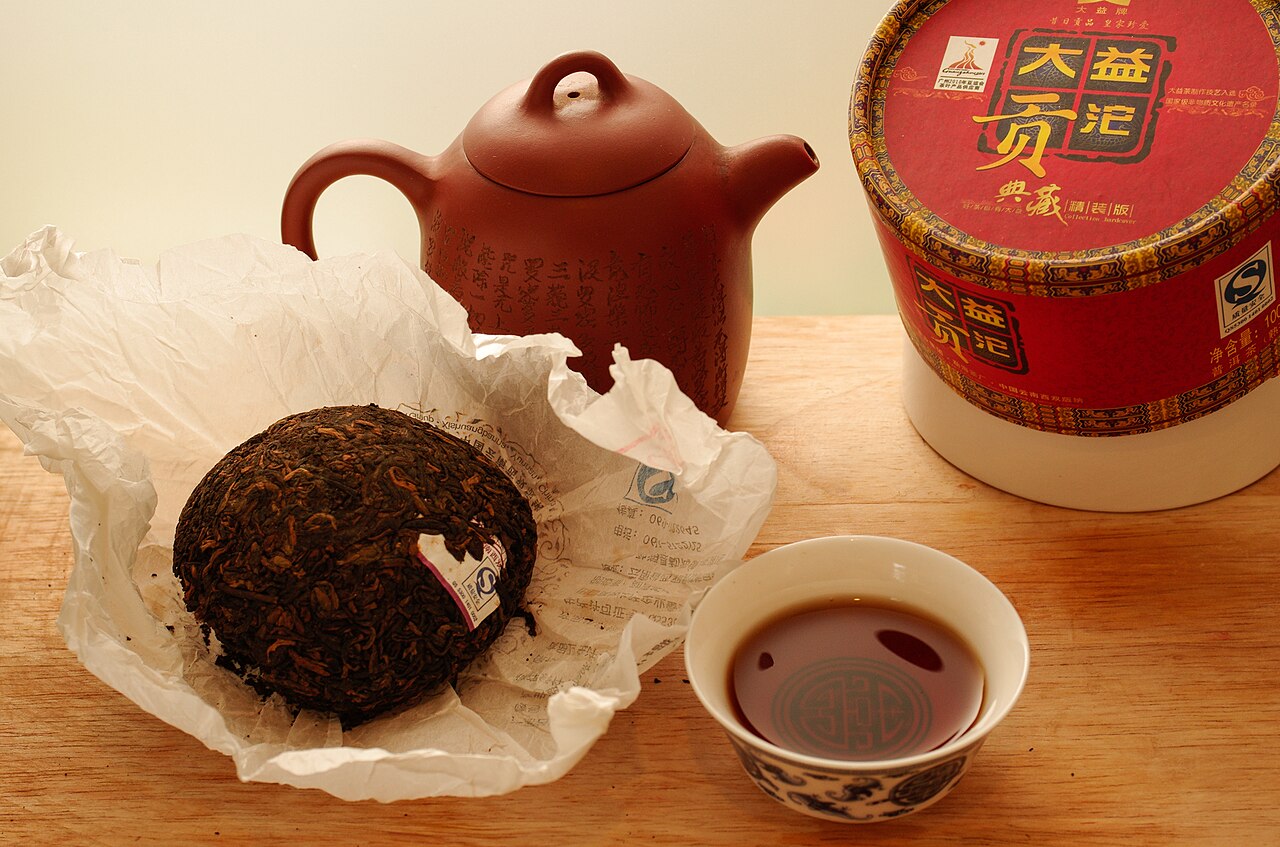
- Dry leaf: reddish-brown to dark brown, tight, sometimes with golden tips.
- Liquor: deep red to burgundy, ideally clear and bright.
- Aroma: aged wood, dates, camphor, damp earth. A new tea often has a “pile scent” — a wet, earthy, sometimes fishy or barnyard note.
- Mouthfeel: thick, smooth, sweet, low in bitterness. Good tea feels like liquid velvet; bad tea feels flat, greasy or hollow.
- Finish: warm and sweet, sometimes with a cooling throat sensation.
The pile scent is not automatically a defect. A freshly fermented tea needs time to “rest” (tuidui), and the smell should fade over weeks or months. What is a defect: a sharp, sour, rotten or persistent mouldy smell that does not go away, liquor that is cloudy or slimy, or a fishy note that dominates the cup.
Resting and storage
New ripe Pu-erh is usually rested in a dry, ventilated, odour-free place before sale or drinking. This is not a precise science; it depends on fermentation level, pressing tightness and storage. Weeks to months are common. Resting too long in a very dry place can flatten the tea; resting in a damp place can bring back mould.
Ripe Pu-erh does change with storage, but it will not undergo the dramatic raw-to-aged transformation of sheng. It mostly loses pile scent, softens, and gains a cleaner aged note. Buy for what it tastes like now, not for a promised future.
Raw vs ripe vs dark tea
- Raw Pu-erh: no pile fermentation; changes slowly in storage; bright, bitter, floral when young.
- Ripe Pu-erh: pile-fermented; drinkable soon; deep, smooth, earthy.
- Other dark teas: Liubao, Fu brick, Qing brick and others also involve microbial post-fermentation, but they use different raw materials, regions, standards and microbial communities. “Dark tea” is a family, not a single recipe.
Brewing
- Water: 95–100°C.
- Leaf: 5–7 g per 150 ml gaiwan; ripe tea can take a little more than raw.
- Rinse: one or two quick rinses with boiling water. This helps remove dust and some pile scent.
- Vessel: Yixing clay is traditional and keeps heat well; porcelain is better for judging cleanliness and liquor colour.
- Timing: first infusions short, then lengthen. Ripe Pu-erh is forgiving, but do not stew it — over-steeping brings up mud and fish notes.
- Old ripe tea: can be simmered in a kettle, but use a small amount and do not boil it down to a thick slurry.
Buying
- Dry leaf: natural reddish-brown, not oily-black or unnaturally shiny. Smell for clean aged wood, not mould or fish.
- Liquor: deep red and clear. Cloudy, murky liquor is a warning.
- Leaf base: soft and elastic, not black and hard.
- Origin: within the Pu-erh protected area, with a geographical-indication mark and traceable producer.
- Age claims: treat “twenty-year old” claims sceptically unless the storage history is documented. Ripe Pu-erh's value is in clean fermentation and storage, not in a number on the wrapper.
A short history
The modern pile-fermentation technique was developed in the early 1970s and spread through Yunnan factories, especially in Menghai. It allowed tea makers to produce a dark, smooth, ready-to-drink Pu-erh without waiting decades for raw tea to age. In 2008, GB/T 22111-2008 brought raw and ripe Pu-erh under one geographical-indication standard.
Some common stories — that one factory “invented” ripe Pu-erh overnight, that ripe tea becomes more valuable every year, or that a particular vintage is the only authentic one — are not supported by the sources used here. The verifiable history is more modest: a technical change in the 1970s, followed by standardisation in 2008.
Status
This English entry is an independent editorial rewrite, not a sentence-by-sentence translation. It relies on GB/T 22111-2008 for the definition, raw material and processing route, and GB/T 30766-2014 for the dark-tea classification. All statements are written against traceable sources, and sources and wording will continue to be revised.