What it is: a regional oolong family, not one brand
Mộc Châu Oolong is an oolong product family from the Mộc Châu plateau in Sơn La, Vietnam. It is not one trademark and not one cultivar. Several companies, cooperatives and farming households make oolong there, and products commonly carry names such as “Trà Ô Long Mộc Châu” or “Mộc Châu Oolong”.
At least two producers can be documented:
- Mộc Sương: a tea company and eco-tourism area around Tân Lập in Mộc Châu, with its own published timeline and product history.
- Tân Lập Tea Processing Co., Ltd.: the OCOP 3-star oolong producer reported by the Sơn La provincial newspaper, making Kim Tuyên and Tứ Quý oolong.
These two are not the whole industry. This page uses them as verifiable cases, not as a complete producer directory.
The region: a plateau at 1,054 m
Vietnam's national tourism board says Mộc Châu is 1,054 m above sea level, has a climate suited to tea, and is home to “the largest tea plantations in the land”. Two cautions follow:
- 1,054 m is the regional plateau altitude, not the uniform altitude of every tea garden.
- “Largest tea-garden scenery” is a tourism-board phrase, not a national tea-area statistic. It can be quoted as official tourism wording, but it should not be turned into “Mộc Châu has the largest tea area in Vietnam”.
The tea hills are about 25 minutes from the town centre, and tea tours run from April to December. That is travel information, not a tea-quality standard.
Case one: Mộc Sương's Taiwanese-style timeline
Mộc Sương's official page gives a relatively complete account:
| Time | Official account |
|---|---|
| 2005 | Started the Mộc Sương brand, brought oolong stock from Taiwan and planted 20 ha |
| Tea-garden altitude | 1,250 m |
| 2010 | Launched Thanh Tâm and Thúy Ngọc oolong |
| Current scale | 30 ha farm with tea and fruit trees |
| 2012 | Started the Mộc Sương eco-tourism area |
Mộc Sương says that Mộc Châu had a suitable climate at the time but few people were growing high-value oolong for export; the team went to Taiwan to learn tea growing and processing and brought oolong stock back. That is the company's own account, and it should not be expanded into “the first Taiwanese-style oolong garden in Vietnam” as regional history. What can be confirmed is narrower: Mộc Sương's oolong route is connected to Taiwanese tea stock and processing, and the company's own timeline begins in 2005.
Mộc Sương also says its tea garden is at 1,250 m, with cool summers and three months of winter frost. That 1,250 m is the company's garden elevation, not the regional 1,054 m. The two figures do not conflict, but they must not be merged.
Case two: Tân Lập's Kim Tuyên and Tứ Quý
The Sơn La provincial newspaper reported on OCOP products in Tân Yên commune in September 2025. For Tân Lập Tea Processing Co., Ltd.:
- In 2024, Trà Bản Hoa Kim Tuyên and Trà Bản Hoa Tứ Quý oolong were recognised as OCOP 3-star products.
- The company manages more than 80 ha of linked tea gardens, mainly the Kim Tuyên cultivar.
- It uses Taiwanese processing equipment, exports to Taiwan, and consumes about 800–900 tonnes of fresh tea a year.
- It also makes green tea and black tea, not only oolong.
This shows that Mộc Châu oolong is not only Mộc Sương and not only one cultivar. Tân Lập's Kim Tuyên (Jinxuan) and Tứ Quý (Four Season) are another verifiable product combination.
OCOP stars are not tea grades
In the 2025 Sơn La OCOP list, four Mộc Sương products hold OCOP 4 stars:
- Trà Ô long xanh Thúy Ngọc
- Trà Ô long xanh Thanh Tâm
- Trà Ô long Thúy Ngọc duỗi đỏ
- Trà Ô long Thanh Tâm GABA
Two Tân Lập products hold OCOP 3 stars:
- Trà Bản Hoa Kim Tuyên – Jinxuan Oolong Tea
- Trà Bản Hoa Tứ Quý – Four Season Oolong Tea
OCOP is Vietnam's “One Commune One Product” rural-product rating. It assesses a product and its local supply chain, not tea sensory quality. Four OCOP stars do not mean “Special Grade tea”, and three stars do not mean “Third Grade tea”. Translating OCOP stars directly into tea grades misleads readers.
Likewise, “GABA” is part of a product name and points to a processing direction. This page does not extend that name into any bodily-function claim.
How to describe the flavour
Mộc Sương and Tân Lập do not publish an official cupping table. Mộc Sương emphasises Taiwanese stock, a 1,250 m garden and its own processing; Tân Lập emphasises Taiwanese equipment, the Kim Tuyên cultivar and exports to Taiwan. These facts establish a Taiwanese-style oolong route with highland material, not a single regional flavour of milk, orchid or honey.
A safer description:
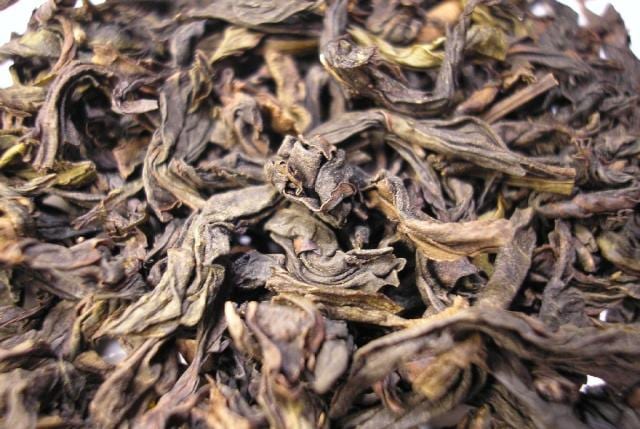
- Mộc Châu oolong follows the Taiwanese-style oolong route, with cultivars such as Qingxin, Jinxuan and Four Season in use.
- Different producers, cultivars and batches produce different aromas and oxidation levels.
- Specific flavour notes should come from the pack or an actual tasting, not from one adjective applied to the whole region.
Common misreadings
| Misreading | Problem | Better wording |
|---|---|---|
| “Mộc Châu Oolong is just the Mộc Sương brand” | Several producers make oolong in Mộc Châu; Mộc Sương is one documented case | Describe a regional oolong family, with Mộc Sương and Tân Lập as cases |
| “A Taiwanese merchant founded Vietnam's first Taiwanese-style oolong garden in 1994” | No citable source was found for this page; Mộc Sương's own timeline begins in 2005 | Say Mộc Sương brought Taiwanese oolong stock in 2005; do not claim a national first |
| “Every Mộc Châu garden is at 1,050 m” | The tourism board gives 1,054 m for the region; Mộc Sương's garden is 1,250 m | Keep regional and garden elevations separate |
| “All Mộc Châu oolong is Jinxuan, and Jinxuan is 60%” | No official regional cultivar ratio was found | Give only documented producer-level cultivars, such as Tân Lập's Kim Tuyên |
| “It won a silver medal at a Taiwan international oolong competition in 2008” | No event source was found | Do not claim awards without an organiser or company record |
| “OCOP 4 stars means Special Grade tea” | OCOP is a rural-product rating, not a tea grade | Say “OCOP 4-star product”, not “Special Grade tea” |
| “GABA oolong has a bodily function” | No test report or official basis was found | Give the product name and processing direction only; no functional claims |
| “Mộc Châu oolong has a uniform pH 5.0–5.5 and 18°C annual average” | No region-wide data was found on this page | Give only producer-specific altitude and climate statements |
Source boundary
This page confirms that Mộc Châu Oolong is an oolong product family from the Mộc Châu plateau in Sơn La, Vietnam; that Vietnam's national tourism board describes Mộc Châu as 1,054 m with some of the country's largest tea-garden scenery; that Mộc Sương's own page says it began in 2005 with 20 ha of oolong stock from Taiwan, that its garden is at 1,250 m, that it launched Thanh Tâm and Thúy Ngọc in 2010, that it now has a 30 ha farm and that it started an eco-tourism area in 2012; and that the 2025 Sơn La report gives four Mộc Sương oolong products OCOP 4 stars and two Tân Lập oolong products OCOP 3 stars, with Tân Lập managing more than 80 ha of linked gardens, mainly Kim Tuyên, using Taiwanese equipment and consuming about 800–900 tonnes of fresh tea a year.
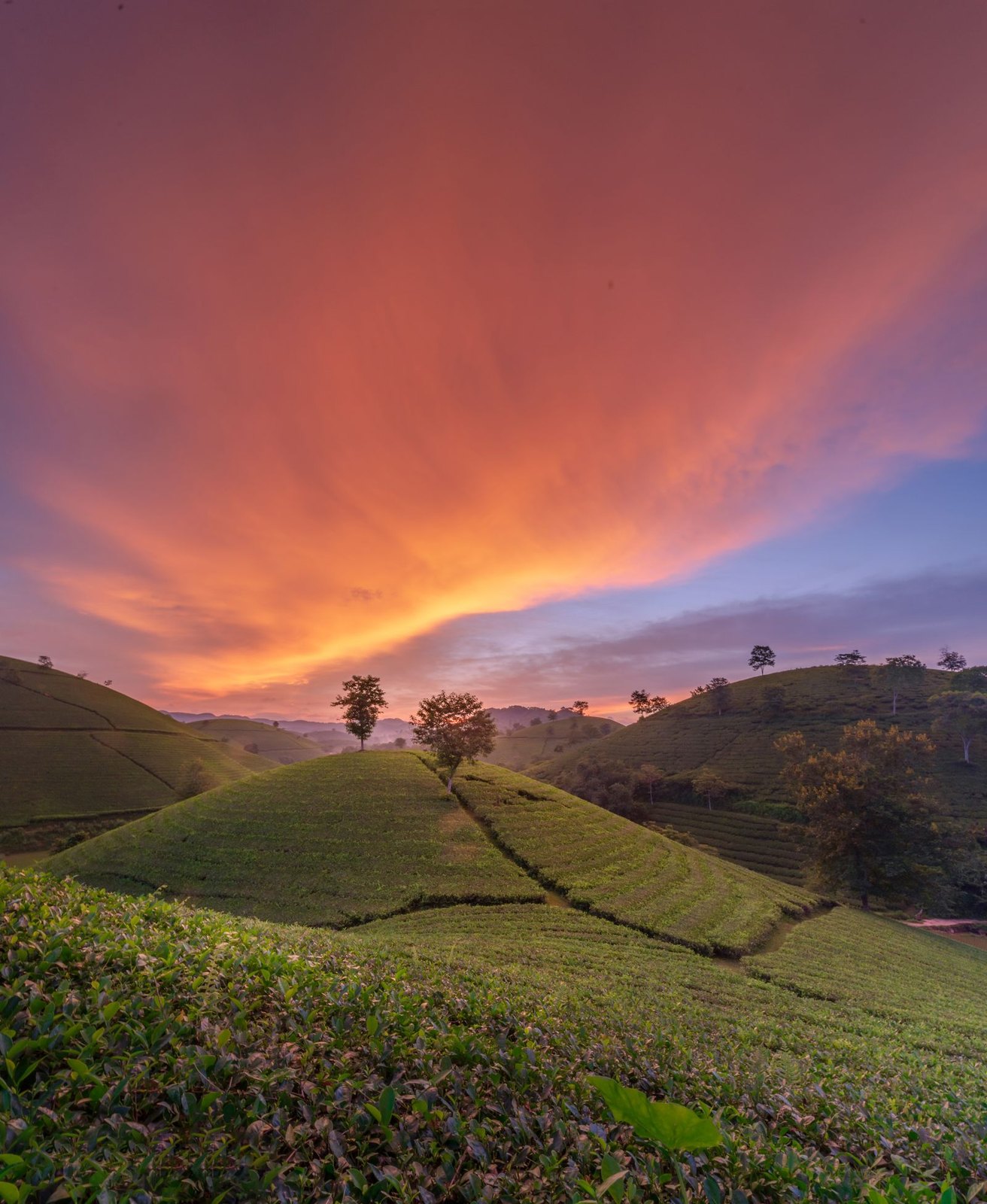
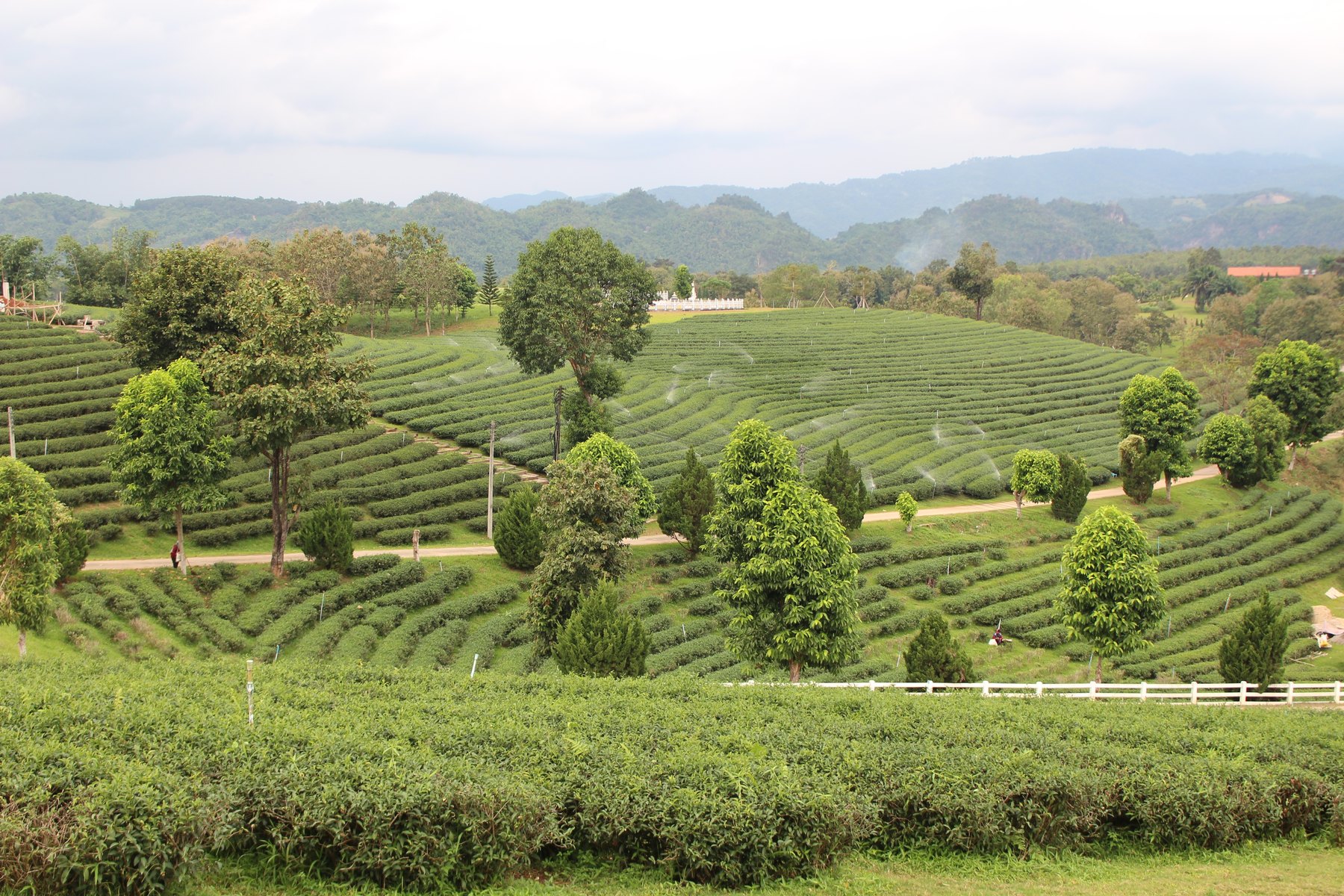
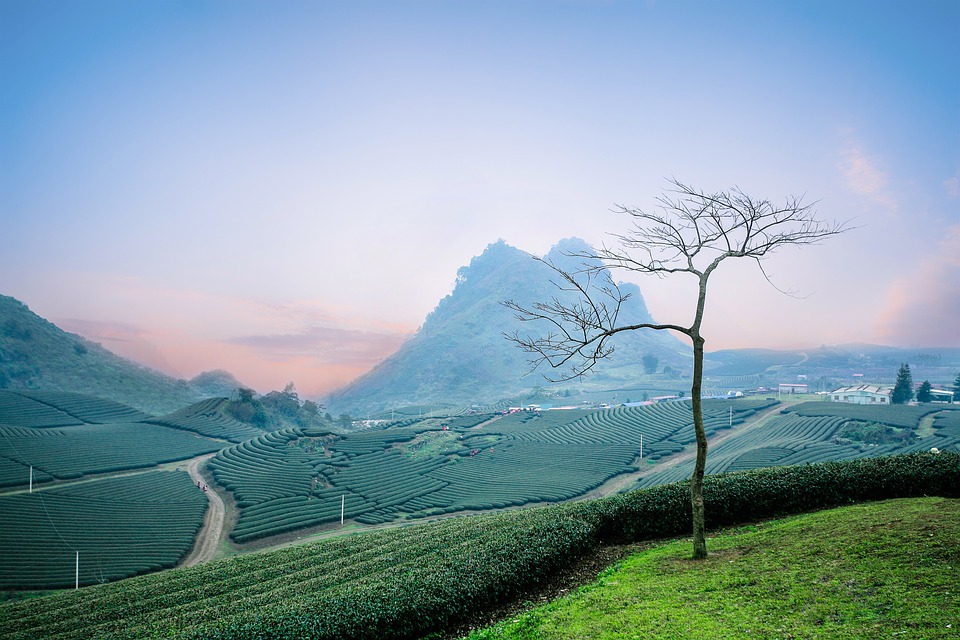
This page does not confirm a region-wide cultivar ratio, a single sensory standard, region-wide soil pH or annual temperature, retail prices, caffeine content, GABA content, any bodily-function claim, or a “first Taiwanese-style oolong garden in Vietnam” historical claim. The page image is a Mộc Châu tea landscape, not Mộc Sương or Tân Lập packaging.