Start with the name
The easy mistake is to read “Choui Fong Oolong” as a cultivar, a mountain or an official grade. Choui Fong is a tea company in Chiang Rai, northern Thailand. Its oolong is a product line, not a single bush, a single field or a protected origin.
The company's oolong page divides the range into Jin Xuan Oolong, Ruan Zhi Oolong, Osmanthus Oolong and a First Flush limited edition. Jin Xuan is also written as “oolong no.12”, a reference to TTES No. 12; Ruan Zhi belongs to the TTES No. 17 line, often called soft-stem oolong. Both are semi-fermented oolong, but they are different cultivars with different aromatic profiles.
So “Choui Fong Oolong” on a packet tells you the brand and the tea family. It does not tell you the cultivar. Look for Jin Xuan, Ruan Zhi, Osmanthus or First Flush before you expect a particular flavour.
Two plantations, not one mountain
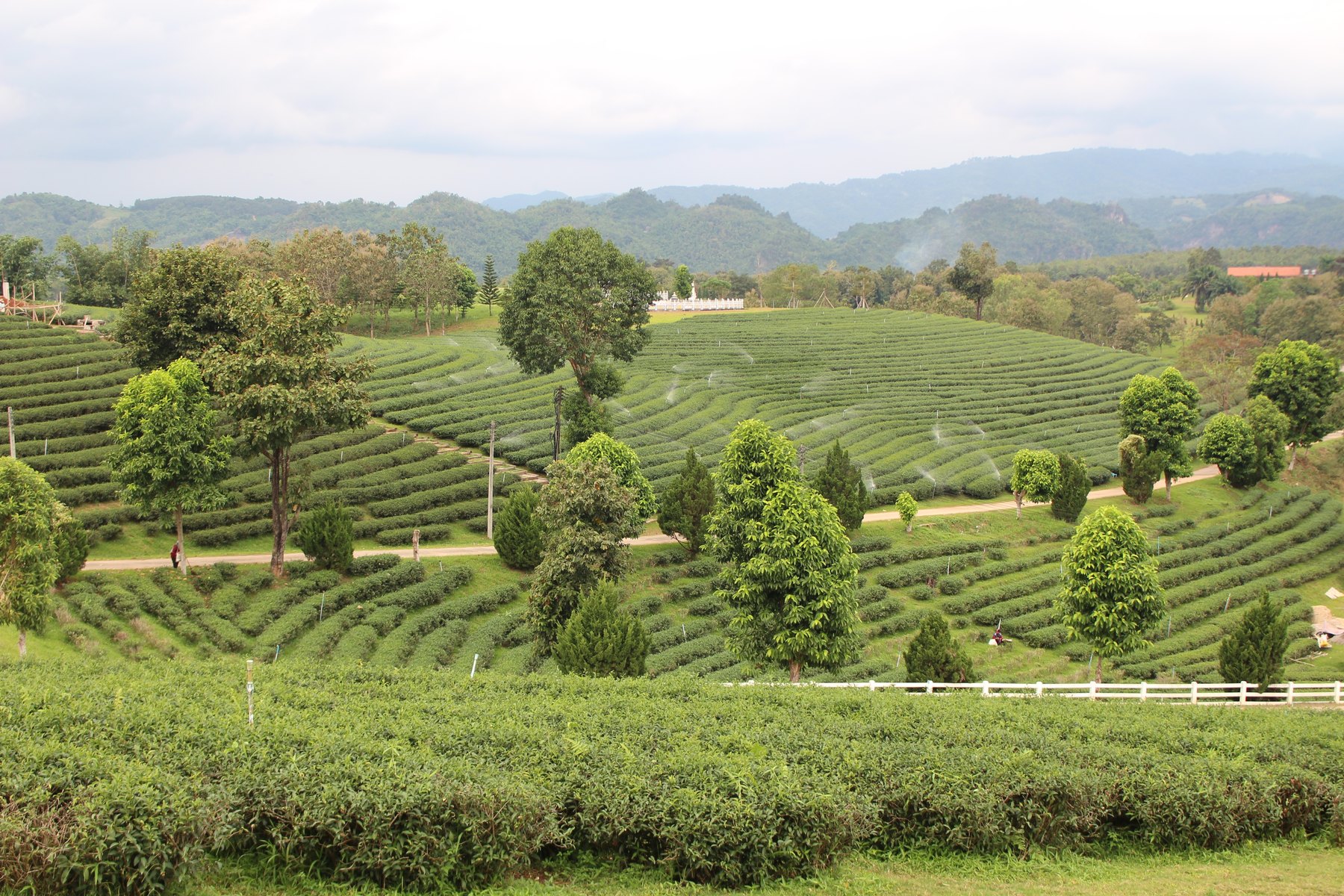
Choui Fong's story starts at Doi Payapai in Mae Fah Luang district. The company says founder Thawee Wanaspitaksakul planted his first tea field there in 1977. Nearly three decades later, in 2003, he established a second plantation in Mae Chan district.
The official history describes more than 1,200 rai of highland tea at 500–1,200 metres and calls Choui Fong the largest tea producer in Chiang Rai by capacity. That last claim is the company's own description; no independent production ranking is cited here. What is clear is that the brand farms several highland sites in Chiang Rai and grows Assam, green, oolong and black tea.
Chiang Rai has a distinct dry season and a wet season, with cooler nights on the high ground. That can slow leaf growth and help build flavour, but altitude alone does not make good oolong. Cultivar, plucking standard, withering and oxidation still decide the cup.
Cultivar and craft: semi-fermented, with no published parameters
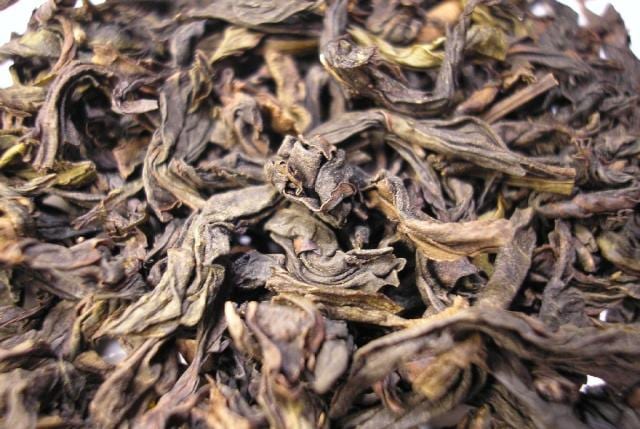
The official product page calls Jin Xuan a “semi-fermented tea”. That places it in the oolong family: withering, bruising or shaking the leaf, partial oxidation, kill-green, rolling and drying. It is neither an unoxidised green tea nor a fully oxidised black tea.
What the company does not publish is the oxidation percentage, kill-green temperature, rolling pressure or baking curve. Widely repeated figures such as “20% oxidation” or “kill-green within ±3°C” are not in the official material used here. The supportable claim is simpler: Choui Fong makes oolong as a semi-fermented tea and describes careful hand-picking and blending as part of its quality control.
Jin Xuan and Ruan Zhi differ first as cultivars. Jin Xuan is often described as creamy and softly floral; Ruan Zhi tends to be cleaner and more directly floral, with a firmer grip. The company's own note on Jin Xuan is restrained: well balanced, flavourful, with a hint of astringency, and best after a meal. That is a more reliable starting point than “explosive milk aroma”.
Osmanthus Oolong is a different product again. It is an oolong with osmanthus flower added; the perfume comes from the flower, not from the Jin Xuan cultivar. Treating osmanthus oolong and Jin Xuan oolong as the same flavour will lead to the wrong purchase.
Reading the cup
Choui Fong's Jin Xuan usually takes a balanced line. It is not pushed to a heavy roast that turns the leaf into caramel, and it is not so light that the liquor feels empty. The aroma tends toward flowers and a soft creaminess; the body has some weight and the finish leaves a little grip. The official “hint of astringency” is structure, not a defect.
Ruan Zhi generally reads lighter and more floral. Its astringency arrives earlier and its return is more direct. It rewards a clean, lighter oxidation; a heavy roast would bury the flower and turn it into another style.
The First Flush limited edition uses the first spring pluck. The company gives the product name and limited status but no precise picking date, oxidation level or field altitude. What can be said is that it is a seasonal member of the line, not a year-round standard.
The useful conclusion is that Choui Fong Oolong is not one fixed taste. It is a range running from clean floral oolong to flower-scented tea and a seasonal first pick. Read the cultivar and product name first; talk about flavour second.
Brewing and buying
The official product pages do not give brewing parameters. A practical gongfu starting point is 90–95°C, about 5 g of leaf per 100 ml, and 10–20 seconds for the first infusions, then adjust. Both Jin Xuan and Ruan Zhi suffer from long sitting; over-steeping magnifies astringency. If the leaf is small or broken, shorten the infusion.
When buying, check four things: the cultivar in the product name (Jin Xuan or Ruan Zhi), whether it is a flower-scented product (Osmanthus), whether it is the First Flush limited edition, and whether the pack is loose tea, a canister or tea bags. Those four details separate a brand line from a specific tea.
Timeline
| Year | Event | Note |
|---|---|---|
| 1977 | First plantation | The founder plants tea at Doi Payapai in Mae Fah Luang district. |
| 1993 | Best producer award | From the Thai business newspaper Matrathan Turakij (Business Standard). |
| 2001 | Oolong quality award | Presented by Princess Maha Chakri Sirindhorn; listed by the company under oolong awards. |
| 2003 | Mae Chan plantation | The second estate is established after nearly three decades of experience. |
| 2009 | World Tea Contest gold | Jin Xuan and Ruan Zhi oolong both take gold at the World Green Tea Association event. |
Sources and status
This page rests on Choui Fong's official history page, its oolong category page and its Jin Xuan product page. Those sources support the founder, the 1977 and 2003 plantations, the 1,200 rai and 500–1,200 metre figures, the semi-fermented positioning, the product range and several awards. They do not support the old draft's “Chaoshan Zhang family”, the 1992 business-trip inspiration, a 2000 planting date, “a million visitors a year” or the CP Group founder anecdote. Those claims have been removed.
The “largest tea producer in Chiang Rai” line remains attributed to the company. Process figures the company does not publish are not supplied here.