A region and a family of teas
“Bao Loc oolong” is not one factory's brand, and it is not a protected geographical indication. It refers to the oolong-style teas made around Bao Loc (Bảo Lộc, formerly B’Lao) in Lam Dong, Vietnam. The town sits at about 800 m; the surrounding tea economy includes companies of different sizes, including Bao Loc VN and Kim Điền, and products range from light floral oolong to darker roasted styles.
Calling it “Vietnamese Tieguanyin” also overstates the case. Tieguanyin is a specific southern Fujian cultivar and craft tradition. Bao Loc oolong uses local seed tea, Shan tea and introduced Taiwanese oolong cultivars, and the processing has been localised. The flavour can resemble Tieguanyin; the identity is not the same.
Terroir: 800 m, fog and basalt
Nhan Dan's description of Bao Loc is concrete: about 800 m, a cool climate, thick night and morning fog, a suitable rain-and-sun pattern, and a large day-night temperature difference. The temperature swing slows tea growth, which helps aroma compounds accumulate and gives the liquor a longer fragrance and a cooler, sweeter finish.
The soil is deeply weathered basalt, rich in minerals and trace elements, well drained but also moisture-retentive. A local tea maker describes it as “not merely a growing medium, but soil that nourishes the quality of the plant”. That is an experienced maker's judgement, not a soil test, but it explains why Bao Loc oolong often has a pronounced mineral edge and body.
Bao Loc is not the only tea area in Lam Dong; Bao Lam belongs to the same tea belt. Treating “Bao Loc oolong” as all oolong from the province would merge a place with a category.
Cultivars: local seed, Shan and Taiwanese oolong
Nhan Dan says Bao Loc's leaf now comes from three groups:
- Local seed tea (chè cành / chè hạt), the traditional seedling population;
- Shan tea, Vietnam's large-leaf local population;
- Introduced oolong cultivars, mainly from Taiwan, tested and adapted locally.
Nhan Dan confirms the cultivar mix, not an exact date for the arrival of Taiwanese oolong. What is clear is that Bao Loc's leaf base combines local seed tea, Shan tea and introduced oolong cultivars, with the oolong craft adapted locally.
Industry: export markets and two company scales
Nhan Dan lists the export markets: Russia, France, the United States, India, Japan, Thailand, Indonesia, Singapore, Taiwan, Hong Kong and the Middle East. The Vietnam Tea Association regards Bao Loc as one of the country's important tea production, processing and trading centres.
Two company profiles show that Bao Loc is not a cluster of tiny workshops:
| Company | Official scale |
|---|---|
| Bao Loc VN | 550 ha of tea garden; 9,000–10,000 tonnes fresh leaf a year; 3,000–3,500 tonnes finished-tea capacity |
| Kim Điền | 50 ha of dedicated oolong garden at about 800 m; more than 2,650 ha of partner raw-material area; about 700 tonnes annual capacity |
These are company self-descriptions, and the scopes differ: Bao Loc VN's 550 ha is its own garden; Kim Điền's 2,650 ha is partner raw material. Adding them into a “total Bao Loc oolong output” would double-count.
A product example: Tứ Quý
Tứ Quý is a Bao Loc oolong from the Tằng Vĩnh An tea company. The product page is simple: 100% oolong leaf, 100 g or 250 g bags, produced in Bao Loc. It is one example, not a specification for the region: loose leaf, light-to-medium oxidation, aroma-and-sweetness led.
“Tứ Quý” is a product name, not a cultivar. Do not infer that it is picked in four seasons or blended from four seasons; the product page does not say that.
Flavour and brewing
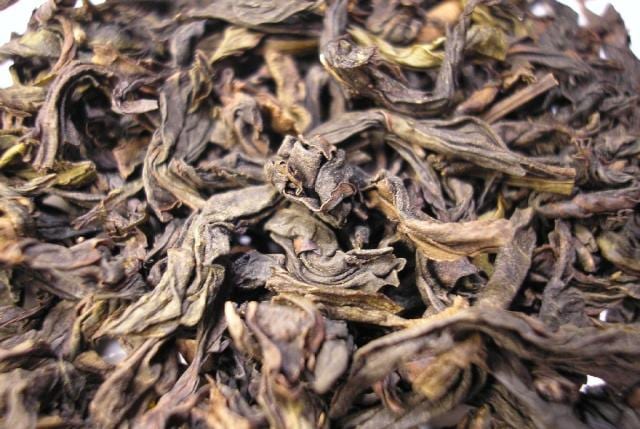
Nhan Dan describes Bao Loc oolong as having a lasting fragrance and a cool, sweet finish. That is a regional tendency, not a guarantee for every product: light styles lean floral and creamy, darker roasts lean nutty and caramel.
The product pages do not give one official brewing set. As an editorial starting point, try 5 g tea, 150 ml water, 90–95°C, 30–60 seconds, adding 10–20 seconds per steep and expecting four to six infusions. These are editorial suggestions, not a Bao Loc standard. Light floral oolong can go closer to 90°C; a roasted oolong can take near-boiling water.
Common misreadings
| Common shorthand | Problem | Better wording |
|---|---|---|
| “Vietnamese oolong originated in Bao Loc” | No evidence that Bao Loc is a single point of origin | Bao Loc is a region and product family, not the origin of Vietnamese oolong |
| “Bao Loc oolong is Vietnamese Tieguanyin” | Tieguanyin is a southern Fujian cultivar and craft; Bao Loc is a region | Bao Loc oolong, possibly Tieguanyin-like in style |
| “Bao Loc is Da Lat” | They are two different cities | Bao Loc is in Lam Dong, at about 800 m |
Source boundary
This page can confirm: Bao Loc oolong is a family of oolong-style teas from Bao Loc, Lam Dong; the area sits at about 800 m with cool, foggy, high-diurnal-range weather and weathered basalt soil; local leaf comes from local seed tea, Shan tea and introduced oolong cultivars; Bao Loc oolong is exported to the listed markets; Bao Loc VN and Kim Điền operate at different scales; Tứ Quý is one concrete Bao Loc product.
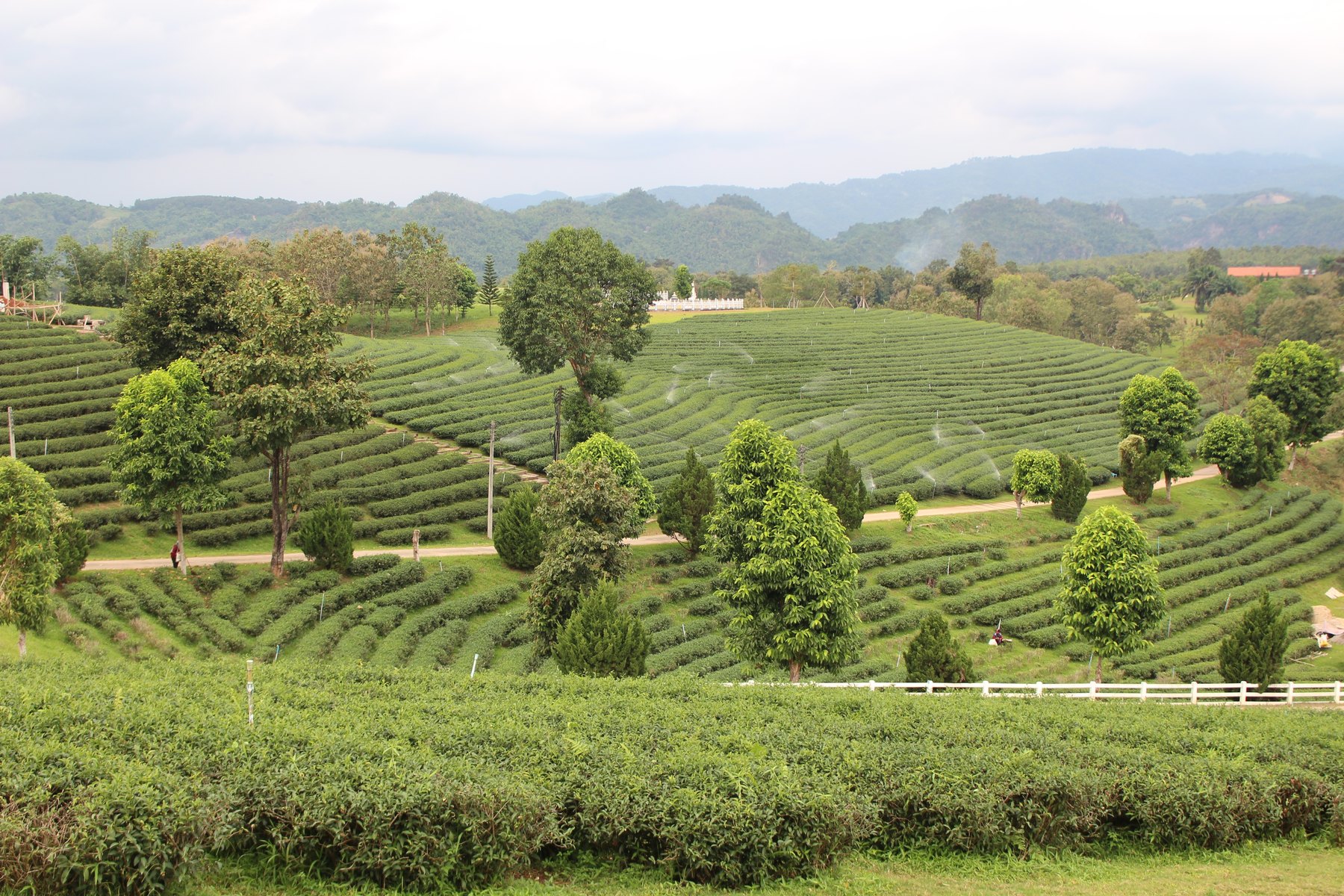
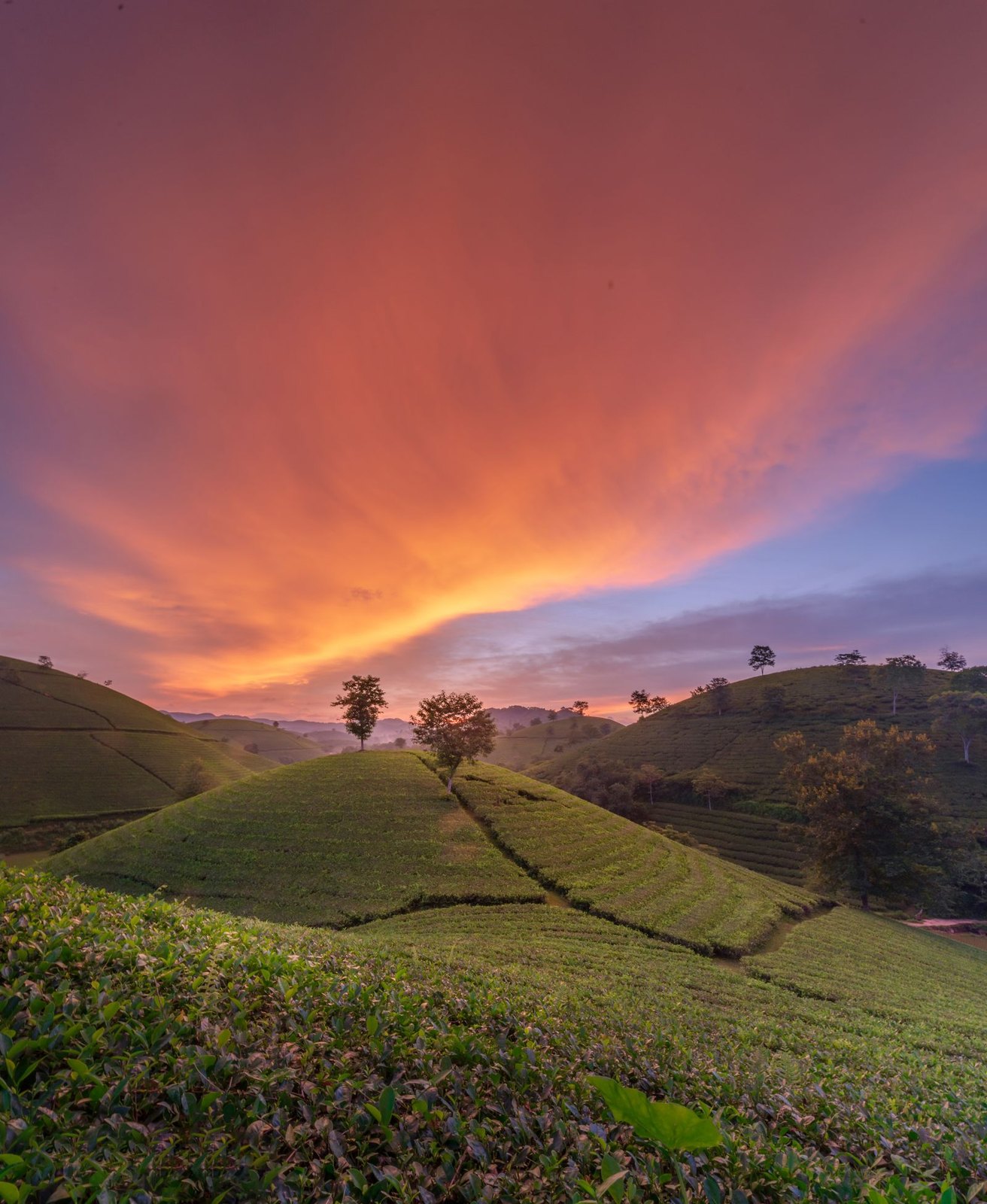
This page does not confirm: the exact total tea area or output of the Bao Loc region, the cultivar and oxidation level of each product, retail prices, or the exact year each Taiwanese cultivar arrived. The image is a Vietnam tea-hill reference photograph, not a Bao Loc tea garden.