Japan’s most common green tea
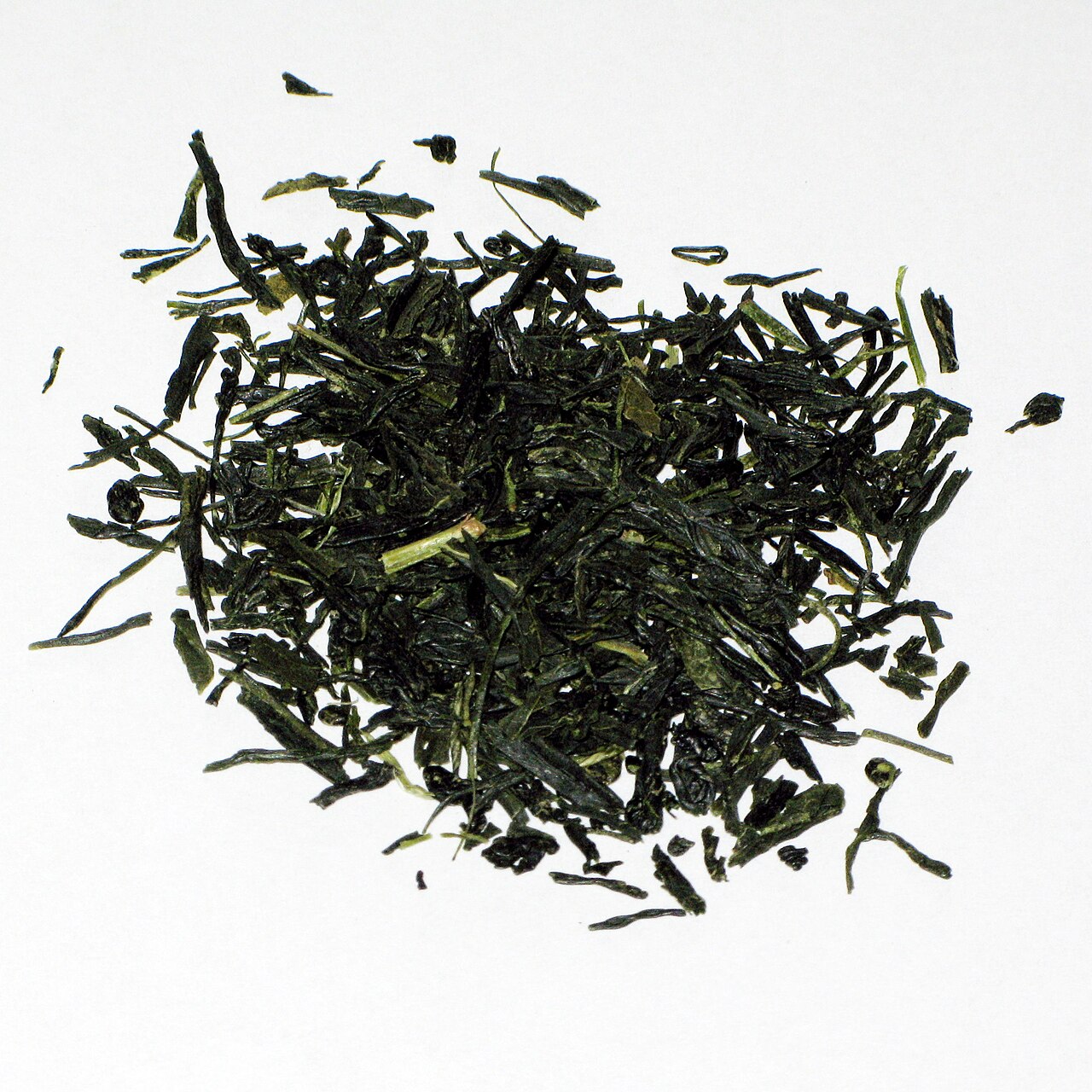
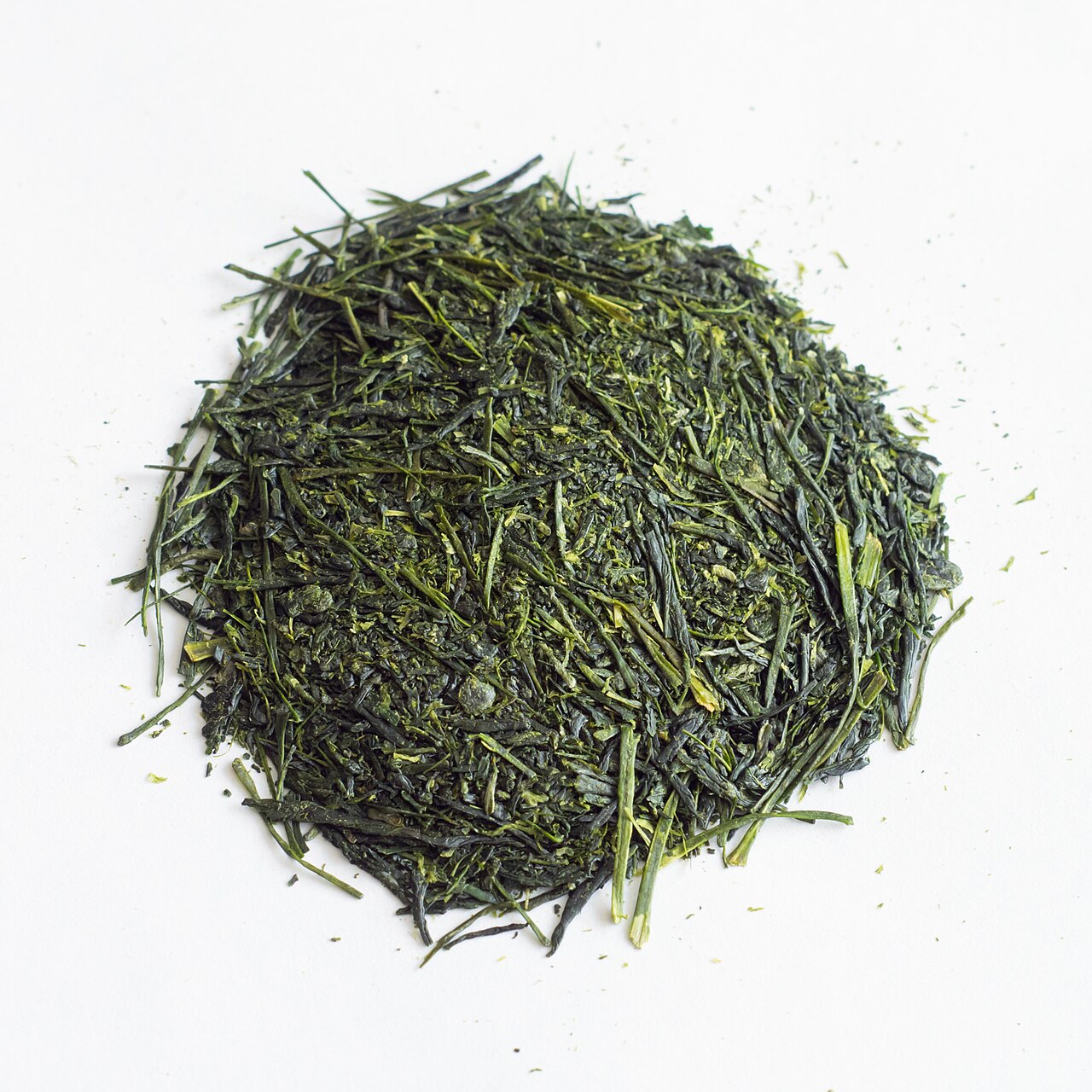
Sencha is the most-produced green tea in Japan. MAFF describes it as fresh leaf steamed, rolled and dried; the main origins are Shizuoka, Kagoshima and Miyazaki. The World Green Tea Association gives an older set of shares: sencha about 75% of Japanese tea production, bancha about 13%, kabusecha about 5%. The percentages shift by year, but sencha remains the everyday base of Japanese green tea.
Sencha is not “pan-fired tea”. The Chinese character “煎” can misleadingly suggest frying in a wok. Japanese sencha is a steamed green tea; the decisive step is steam, not pan heat. Compared with Chinese pan-fired green tea, it has less bean or chestnut roast and more seaweed, fresh grass and steamed-green freshness.
Steaming and rolling
Fresh leaf is steamed quickly to deactivate oxidising enzymes and hold colour and freshness. Steam time sets the style: light steaming for about twenty to thirty seconds keeps the leaf intact and the aroma bright; deep steaming is longer, breaks the leaf more, and gives a deeper green, thicker liquor. Shizuoka’s deep-steamed sencha is a well-known example. After steaming, the leaf is cooled, rough-rolled, rolled, mid-rolled, finish-rolled and dried into a fine needle shape.
Rolling is not only shaping. It partly breaks cell walls so that compounds extract more readily, and it tightens the strip for storage. Too much rolling can make the cup bitter; too little leaves the aroma and body thin.
Brewing
A common starting point is water at 70–80°C, about 3–4 g of leaf per 100 ml, and a one- to two-minute infusion. Hotter water brings umami quickly but also astringency; cooler water gives a softer, sweeter cup but a slower aroma. Deep-steamed leaf is broken and extracts fast, so pour quickly or the cup turns cloudy and bitter. Light-steamed leaf can take a little longer.
Do not pour boiling water straight onto sencha. It pulls bitterness forward and scalds the delicate aroma. If you have no temperature-controlled kettle, boil, then leave the lid open for a minute or two before pouring.
Grades and origins
Sencha grades usually reflect picking season, tenderness, steam style, rolling and drying. First flush (shincha or ichibancha) is the most prized: young leaf, high amino acids, fresh aroma. Second and third flushes are coarser, more astringent, and often go into everyday tea or hojicha. Hand-picked first flush is expensive; machine picking is the Japanese mainstream. The difference is cost, volume and grade, not “real versus fake”.
Shizuoka is known for deep-steamed sencha and the Makinohara plateau; Kagoshima’s warm climate gives early new tea; Miyazaki, Mie and Uji in Kyoto also produce sencha. Uji is famous for matcha and gyokuro, but its tea area also makes high-quality sencha. Origin is a starting point; picking and processing decide the cup.
History
The Uji tea World Heritage platform’s timeline records that Nagatani Soen of Ujitawara developed the Uji hand-rolling method for aosei sencha in 1738. The method kept the leaf green and the aroma fresh, and gradually replaced older steaming and drying methods. Sencha became the mainstream of Japanese green tea and expanded with export in the late Edo and Meiji periods.
Today sencha remains the base tea of Japanese homes, restaurants and the tea-drink industry. “Everyday” does not mean low-end: the word covers everything from convenience-store tea bags to single-garden hand-picked leaf. The difference is raw material and craft.
Sources and status
This page relies on MAFF, the World Green Tea Association and the Uji tea World Heritage platform. MAFF supports the definition, process and origins; the World Green Tea Association supports the production shares and the steamed-rolled process; the platform timeline supports the 1738 Uji hand-rolling method. All statements are written against traceable sources, and sources and wording will continue to be revised.