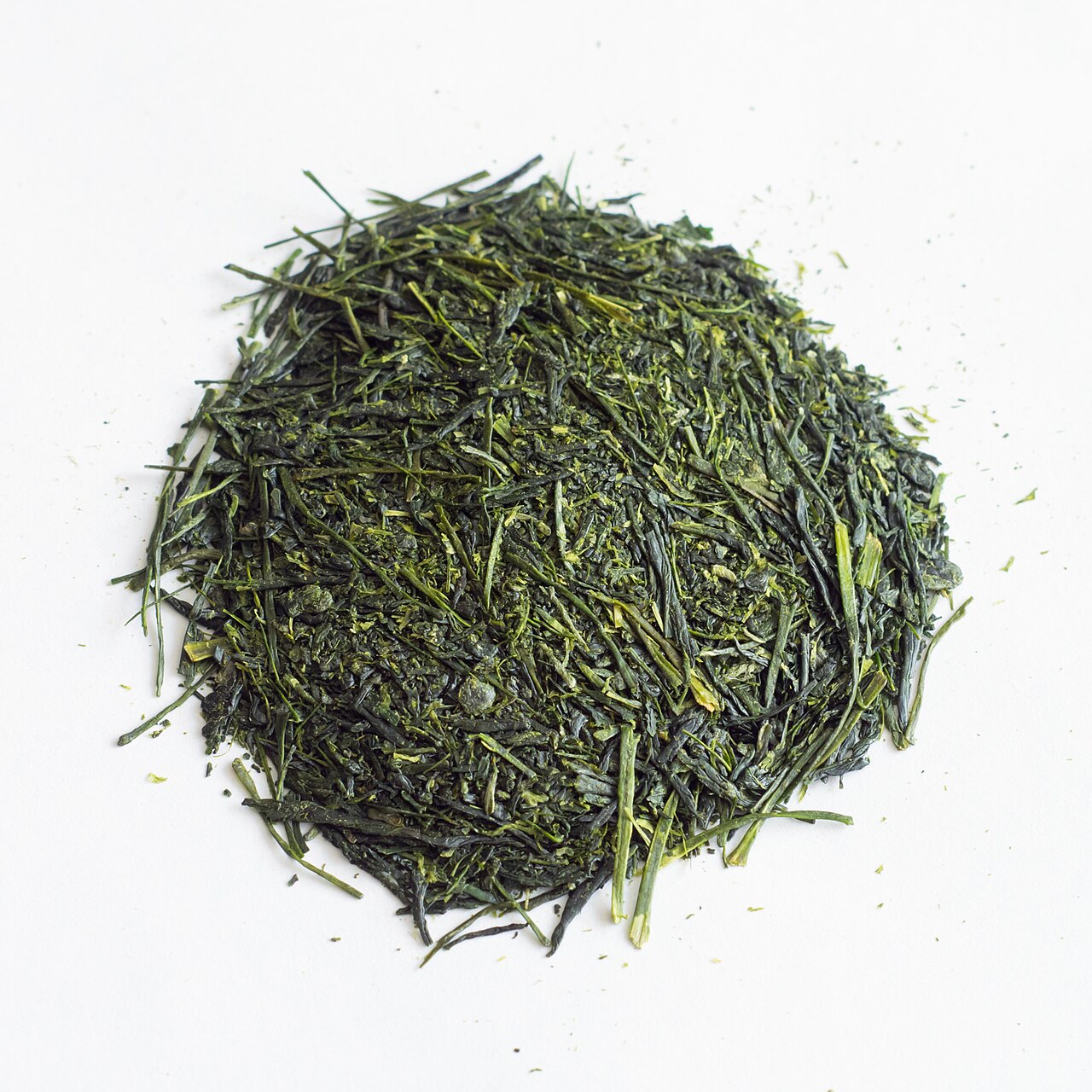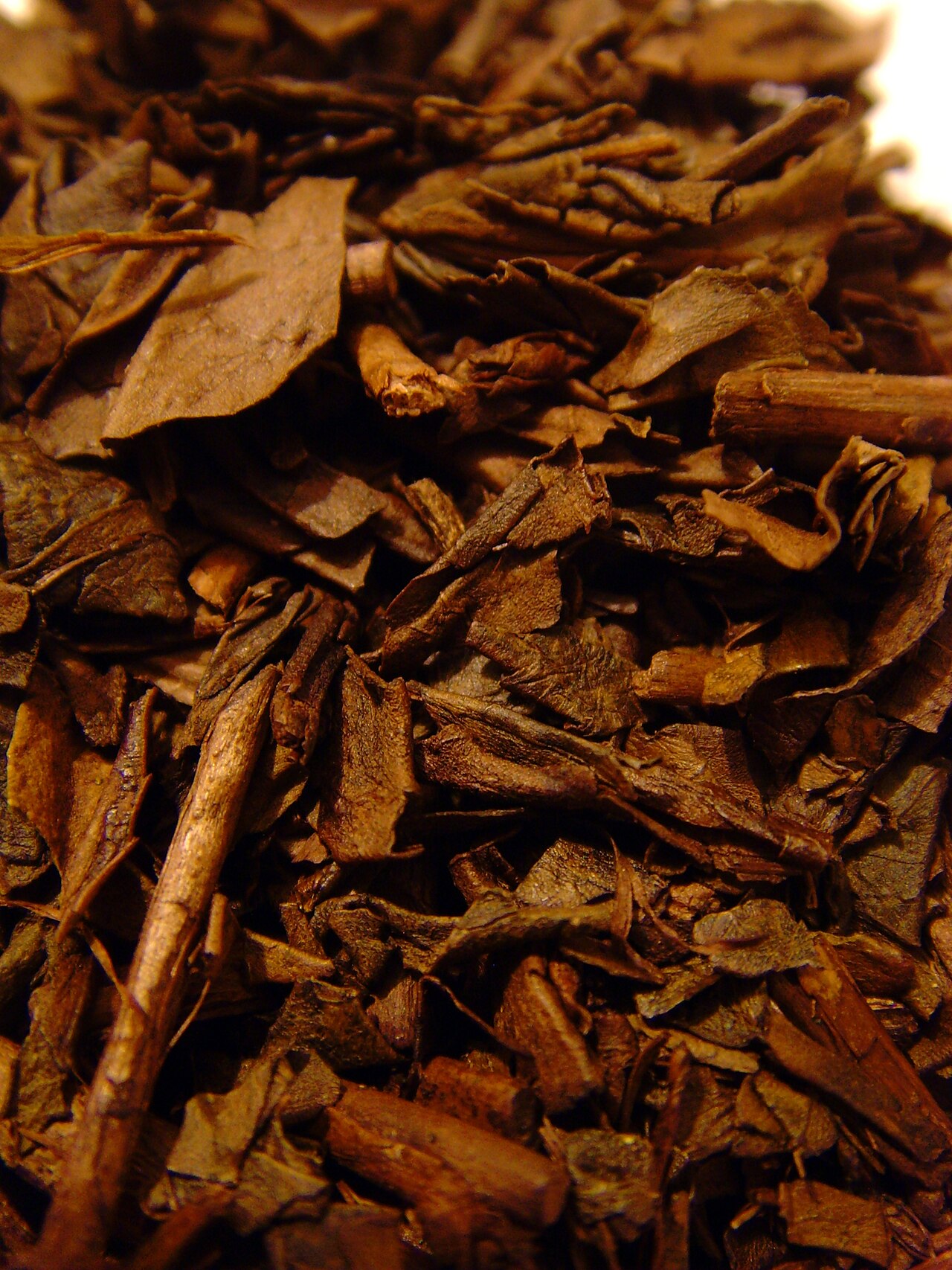
Hojicha is green tea roasted a second time
Hojicha is not a new cultivar and not a fermented tea. It is made by roasting finished sencha, bancha or stems at high heat, turning the leaf from green to yellow-brown or dark brown and the liquor from yellow-green to amber. JNTO describes it as sencha or bancha roasted together with kukicha twigs. The World Green Tea Association gives a process range of bancha roasted at about 200°C for a few minutes.
Because the base is already green tea, hojicha remains in the green-tea family. But roasting changes the aroma and colour enough that everyday language treats it as a separate type. That gap between classification and common name appears often on Japanese tea labels.
What roasting does
Roasting changes aroma first. At high heat, amino acids and sugars undergo Maillard reactions and caramelisation, producing toasted nuts, caramel, toasted bread and a light woody note. Chlorophyll is degraded, the liquor darkens, astringency falls and the texture becomes rounder.
Hojicha is often described as low-caffeine. JNTO lists it as a lower-caffeine tea suitable after meals or before bed. “Lower” is relative to the base tea and roast level, not caffeine-free. A dark roast of coarse bancha will usually have less caffeine and astringency than a light roast of high-grade sencha, which still retains more freshness and caffeine.
Leaf and process
The raw material is broad: sencha, bancha, kukicha stems, even coarse summer and autumn leaf. Stems contain more sugar and fibre, so roasted stems give a pronounced sweetness and are often sold as “hojicha kukicha”. High-grade hojicha may use first-flush sencha and a light roast, keeping some green-tea freshness. Everyday hojicha usually uses bancha or stems and a darker roast, aiming at toast and low astringency.
The tea is spread in a roasting pan or drum, heated at medium-high temperature and turned constantly so that it colours evenly. When the leaf has moved from green to brown and the aroma from grass to toast, the roast is stopped, the tea cooled, sifted and sealed. There is no single recipe: about 200°C for a few minutes is a common range, but moisture, leaf size and equipment all change the result.
Brewing
JNTO suggests water at 90–100°C for about thirty seconds. Hojicha tolerates heat and boiling water opens the roast. For a high-grade light-roast hojicha, 85–90°C preserves more of the remaining freshness. Use a little more leaf than for sencha, because roasted leaf is light and bulky.
The liquor should be amber to reddish-brown and clear, not muddy. The aroma should be toasted nuts and caramel, not scorched or heavily smoky. A burnt bitterness usually means over-roasting or very broken leaf; a thin cup usually means too little leaf or too short an infusion.
History and origin
There is no single verified origin story for hojicha. Japanese tea sources usually place it in twentieth-century Kyoto tea-shop practice, but there is no checkable record of “a certain shop invented it by accident in a certain year”. A safer reading is that roasting was already part of green-tea finishing and storage; merchants found that a darker roast kept longer and produced a warmer aroma, and gradually made it a separate product.
Hojicha is produced across Japan, including Kyoto, Shizuoka and Kagoshima. Kyoto houses are known for lighter roasts and blending; Shizuoka and Kagoshima supply much of the everyday and stem-based hojicha. Origin is not the only variable. Leaf grade and roast level decide the cup more directly.
Sources and status
This page relies on JNTO and the World Green Tea Association. JNTO supports the definition, the lower-caffeine note and the brewing suggestion; the World Green Tea Association supports the 200°C roast and classification. All statements are written against traceable sources, and sources and wording will continue to be revised.