In one sentence
Taiping Houkui is the green tea that refuses to be small. Most famous Chinese greens chase tiny buds and delicate tips; Houkui takes a whole shoot — two leaves holding one bud — and presses it into a long, flat, upright strip. The result looks like a green bookmark and brews into a cup with high orchid aroma, a thick, sweet body and a long finish.
What the standard says
GB/T 19698-2008 is the current national standard for Taiping Houkui, published 2008-06-25 and implemented 2008-10-01. It replaced GB 19698-2005, and its 2025-08-04 review decision was “continue in force”.
The Huangshan city regulation on traditional famous teas adds the local legal framework: Taiping Houkui has the whole of Huangshan district as its production area, with Shidacha as the main cultivar. The traditional process is sorting, withering, fixing, shaping and baking. The regulated quality description is “two leaves and one bud, flat and upright, substantial and heavy, green, high orchid aroma, sweet and mellow”.
Where it grows
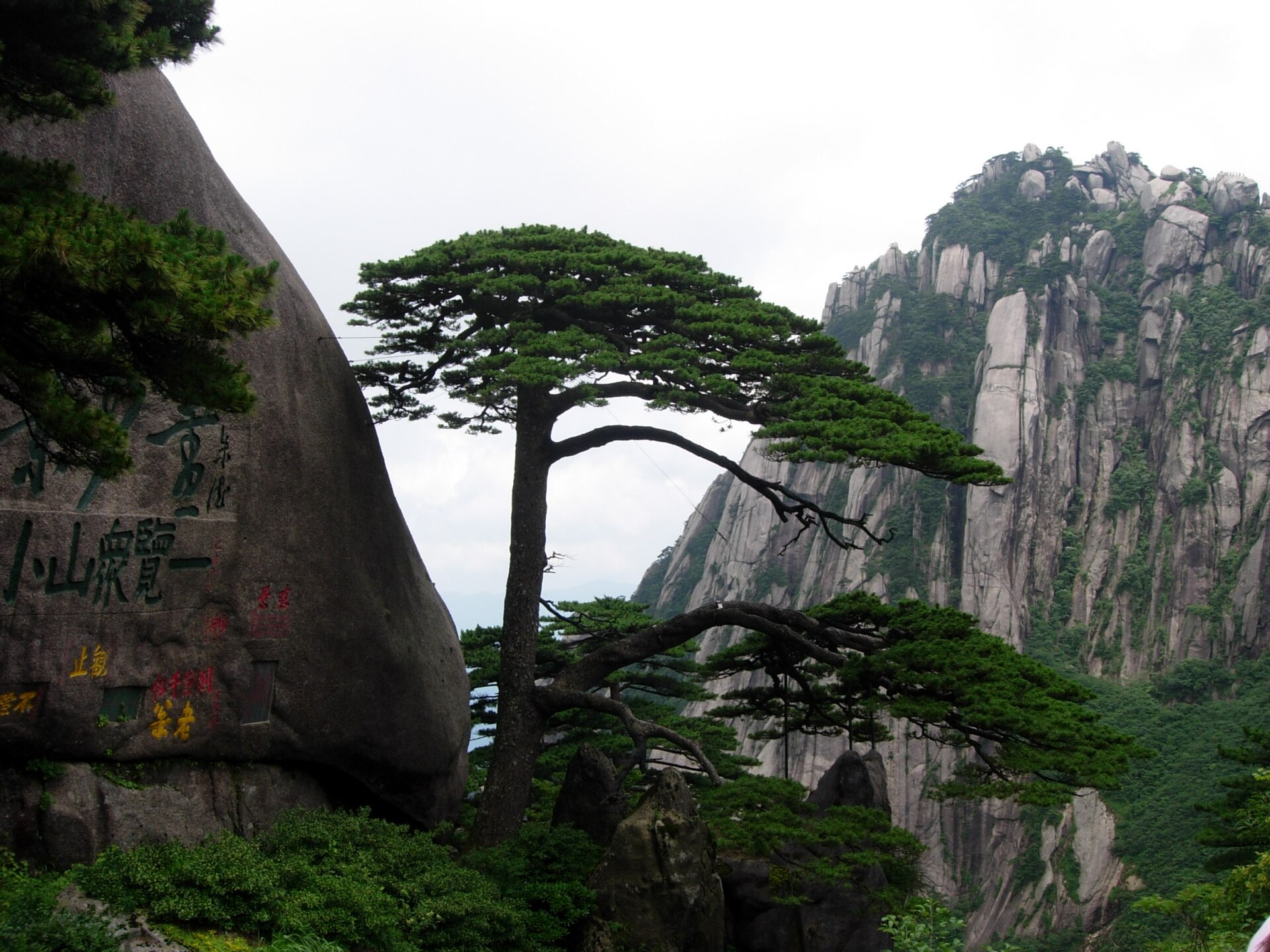
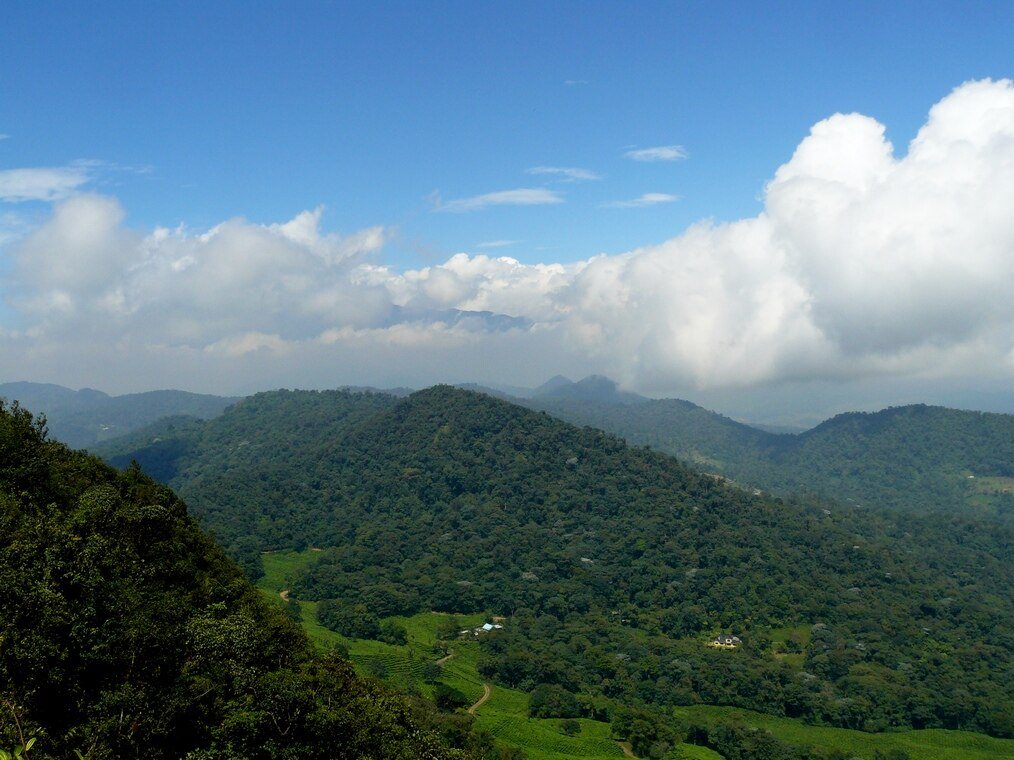
The core origin is Xinming township in Huangshan district, especially the villages of Houkeng, Hougang and Yanjia, near Lake Taiping. The lake and the surrounding mountains create a humid, cloudy microclimate; gardens sit on south-facing slopes with diffused light and well-drained mountain soil.
A 2026 report from Anhui Economic Net gives Xinming about 24,000 mu of tea gardens — about 1,600 hectares — and 306.73 tonnes of output in 2025. Those figures are a useful correction to the old internet claim that the core area is “only a few hundred mu and under 10 tonnes”. The core villages are small, but the production area is larger than the old story suggests.
“Core origin” and “protected area” are different. The protected area is the whole of Huangshan district; the most famous gardens are the three villages above. Ask which village and garden a tea comes from, not just whether the wrapper says “Houkeng”.
Cultivar and picking
Shidacha is a local Huangshan population cultivar: shrub type, medium leaf, oval leaves, thick and soft, with yellow-green buds and leaves that stay tender. Its larger shoot size is the raw material basis for Houkui's big flat strip.
Picking is one bud and two leaves, around Grain Rain — later than many famous greens. Houkui does not chase the earliest possible bud; it waits for the shoot to reach a certain maturity so the leaf is thick and the infusion has body. The fresh leaf is then sorted (拣尖): fish leaves, old leaves, broken pieces and off-standard shoots are removed, leaving a clean one-bud-two-leaf set.
Craft
The traditional sequence is:
sorting → withering → fixing → shaping → baking.
- Sorting. Every shoot is checked by hand. This is where the “two leaves holding one bud” shape begins.
- Withering. Thin spreading for several hours; the leaf loses some water, the grassy note fades, and the leaf becomes soft enough to shape.
- Fixing. High heat, fast turning, to stop oxidation and preserve the green colour and fresh taste. Under-fixed leaf has red stems and grass; over-fixed leaf is cooked and yellow.
- Shaping. The most distinctive step. The shoot is straightened and pressed flat, with the two leaves folded around the bud, to form a flat, upright strip that does not scatter, lift or curl at the edge. Traditional work is by hand; today some steps use machines, but high-grade tea is still adjusted by hand.
- Baking. First and final baking at low temperature, to set the shape, develop the orchid aroma and bring moisture into the safe range.
The press should not be so hard that the leaf becomes a dead, glassy sheet. Good Houkui is flat but still has thickness and weight; the leaf base should open and feel soft, not stiff.
Taste
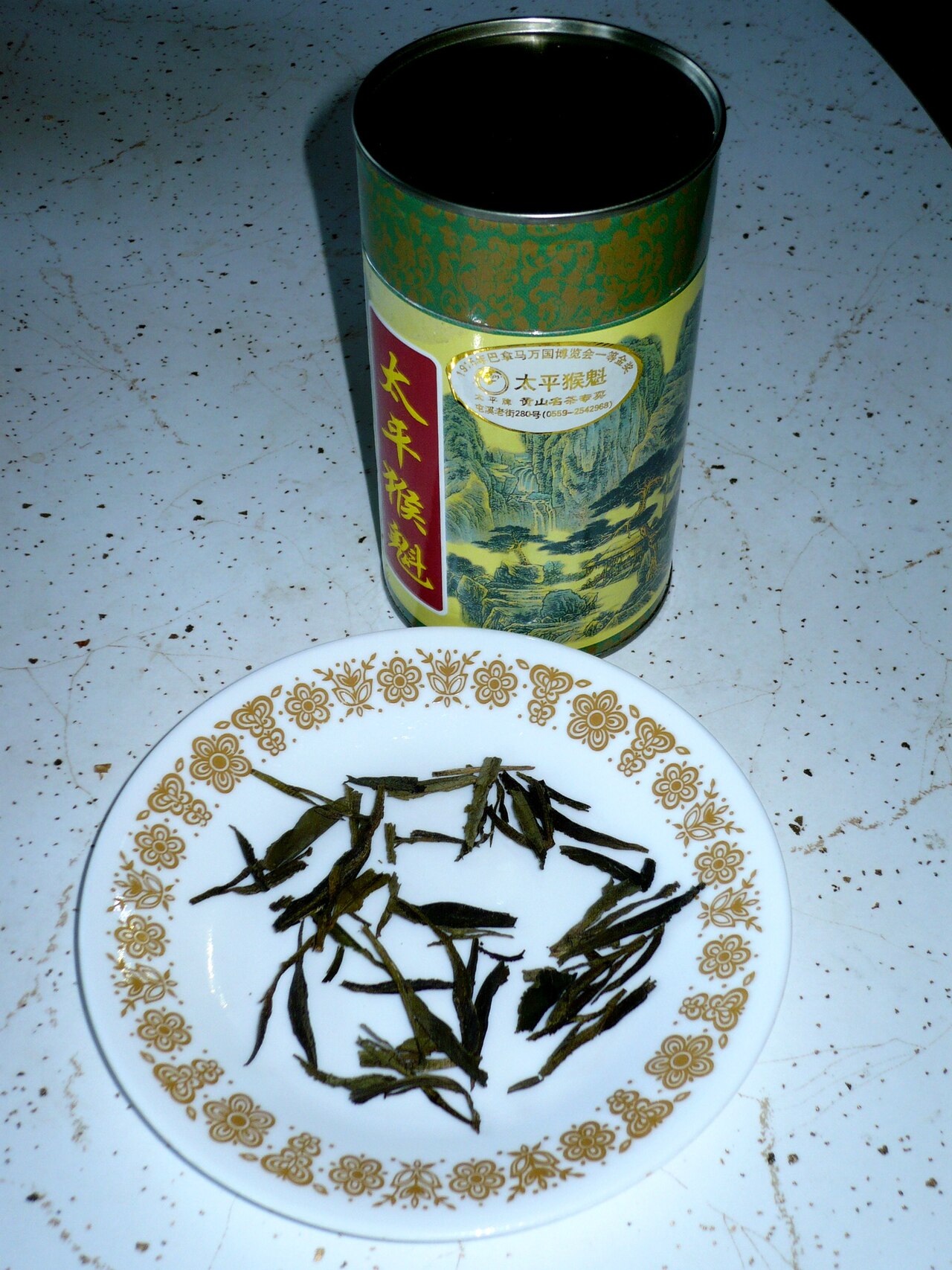
- Dry leaf: long, flat, upright strips, two leaves around one bud, dark green and even, with down hidden between the leaves.
- Liquor: pale green to green-yellow, clear and bright.
- Aroma: high orchid, sometimes a cooked chestnut note.
- Mouthfeel: fresh, sweet, mellow, with a thick body and a long finish. Bitterness is low.
- Leaf base: large, tender, yellow-green, with intact shoots.
Houkui's aroma is often described as “orchid high and bright”. It is not the sharp perfume of jasmine tea; it is a clean, cool floral note that rises from the cup. Because the leaves are large, the first infusion is mostly aroma; the body arrives in the second and third.
Brewing
- Water: 90–95°C. The leaf is thick; too cool and the aroma stays closed, but do not pour boiling water straight onto the buds.
- Leaf: 4–6 g per 200 ml glass. Houkui strips are large, so use more leaf than you would for a fine-bud green.
- Vessel: a tall glass is best; it lets the shoots open and shows the “two leaves holding one bud” shape.
- Method: warm the glass, add leaf, pour water to seven-tenths full. Do not cover.
- Timing: 20–30 seconds for the first infusions, then lengthen. Do not stew.
Grades and buying
GB/T 19698-2008 grades Taiping Houkui. A seller's “special grade” or “first grade” should match the standard number and grade on the package.
Look for:
- Origin. Huangshan district, with the core villages of Houkeng, Hougang and Yanjia in Xinming township.
- Shape. Flat, upright, two leaves holding one bud, edges not scattered or curled, dark green and natural.
- Aroma. High orchid, not smoke, char or perfume.
- Taste. Fresh, sweet, mellow; not bitter or throat-locking.
- Leaf base. Large, tender, intact.
- Label. GB/T 19698-2008 and the geographical-indication mark; the producer should be traceable.
History
Local accounts often trace Houkui to the late Qing, naming a tea farmer Wang Kuicheng and a creation date around 1900, with the name fixed in 1912. No primary archive was found for those details, so this entry does not treat them as established fact. What is verifiable: Houkui became a recognised Anhui famous tea in the 20th century; GB/T 19698-2008 brought it into the geographical-indication system; and the Huangshan regulation now protects its production area, cultivar and traditional process.
The old claims of a 1915 Panama Exposition gold medal, a 1955 “top ten tea” title, a 2007 gift to a foreign president, and a core area of only a few hundred mu are removed or corrected. The output figure now follows the 2026 Anhui Economic Net report.
Status
This English entry is an independent editorial rewrite, not a sentence-by-sentence translation. It uses GB/T 19698-2008 for the standard framework, the Huangshan traditional-tea regulation for the production area, cultivar, process and quality description, and the 2026 Anhui Economic Net report for the core area and output. Legends, medals and unsourced gift stories were removed. The page is marked reviewed; sources and wording will continue to be revised.