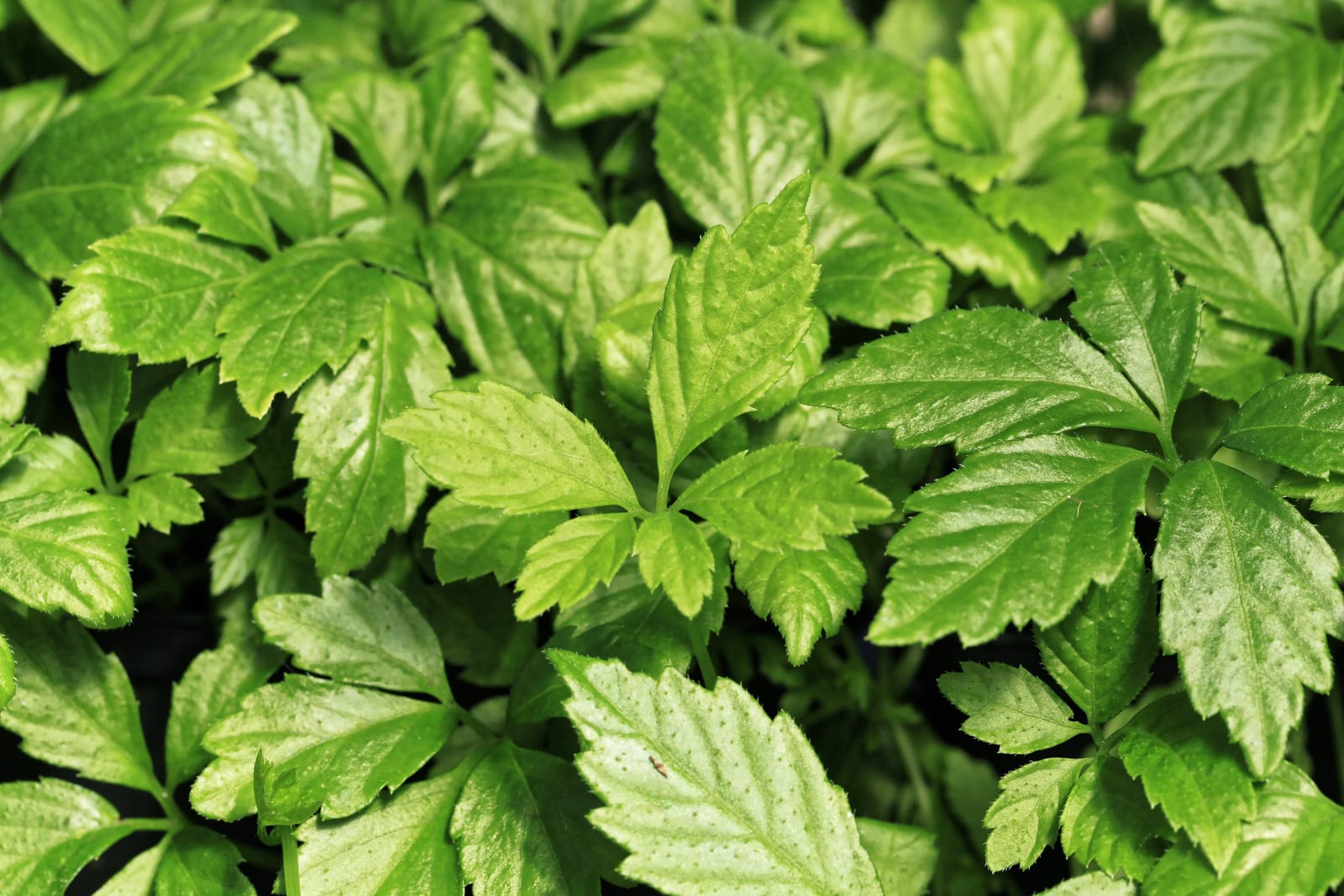
What it is: not a tea plant, not a medicine
Pingli Jiaogulan is a geographical indication product from Pingli County in Ankang, Shaanxi. Its raw material is the perennial herbaceous vine Gynostemma pentaphyllum (Cucurbitaceae), not the tea plant Camellia sinensis (Theaceae). It therefore belongs with herbal infusions and “substitute teas”, not with green, black or dark tea.
This is not a semantic quarrel. Tea-plant products are discussed through fresh-leaf picking, kill-green, rolling, fermentation and drying. Jiaogulan is discussed through the harvest of vines, leaves and “longxu” tips, and through kill-green or drying under food-ingredient rules. Calling Pingli Jiaogulan “Shaanxi green tea” or “Pingli green tea” gets the plant family, the product class and the regulatory category wrong at the same time.
It is also not a medicine. The local standard treats it as a food ingredient. This page covers identity, origin, processing, flavour and drinking boundaries; it does not offer health or therapeutic conclusions.
Origin: the whole county, 400–1,600 m
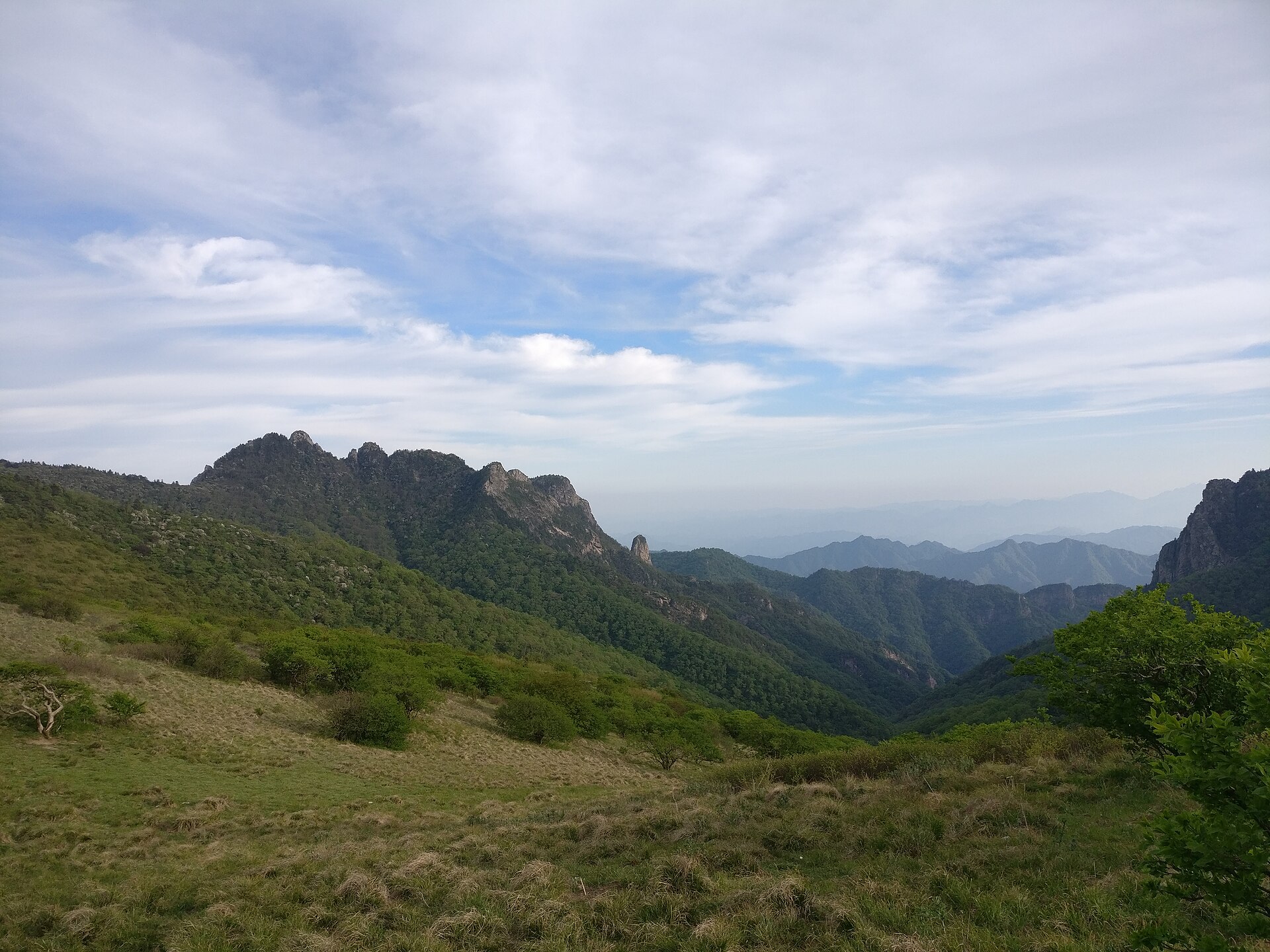
Pingli County lies in southeastern Shaanxi, in the southeastern part of Ankang, on the northern slopes of the Daba Mountains in the central Qinling–Daba belt. The county falls from south to north: high mountains in the south, hills and river terraces in the north. That range makes “Pingli” a county-level origin, not the name of one fixed hillside.
On 13 December 2004, the former General Administration of Quality Supervision, Inspection and Quarantine issued Announcement No. 189, placing Pingli Jiaogulan under origin-area product protection. The protected area is the entire administrative territory of Pingli County, and the announcement sets these cultivation conditions:
| Item | 2004 announcement |
|---|---|
| Protected area | The entire administrative territory of Pingli County |
| Altitude | 400–1,600 m |
| Soil | Sandy or loam soil; pH 6.0–7.5; organic matter above 2.0% |
| Terrain | Level, well drained and irrigated, deep fertile soil |
| Sowing | Once temperature is stable above 10°C; 0.5–1 kg per mu; 8,000–12,000 plants per mu |
| Field care | Soil moisture 70–80%; manual weeding; chemical herbicides prohibited |
These are eligibility conditions for geographical indication protection, not measured values for every field in the county. Altitude, aspect and soil vary widely between Pingli’s townships. “400–1,600 m” should not be read as the exact elevation of any one bag of product.
The announcement also gives a quality characteristic: “green colour, dense longxu, selenium at or above 0.02 mg/kg”. That is one of the original minimum quality thresholds, not the full definition of today’s “selenium-rich” label; the relationship is set out below.
Plant and product cuts: tips, leaves and stems
Jiaogulan is a perennial herbaceous vine with fine tendrils at the nodes and bird’s-foot-shaped compound leaves. Cultivated plants usually carry five or seven leaflets. “Five-leaf” and “seven-leaf” refer to the number of leaflets on a leaf stalk, not to a tea cultivar and not to a grade.
The 2019 Shaanxi food safety local standard DBS61/0019-2019, Food safety local standard — Pingli Jiaogulan, divides cultivated Pingli Jiaogulan by harvest part into three products:
| Product | Harvest part | Standard process | Key point |
|---|---|---|---|
| Longxu tips | The top 6–12 cm of the tender shoot, including tendril, young stem and young leaf | Sort, wash, kill-green, dry | “Longxu” is a trade name, not simply the botanical tendril |
| Leaves | Fresh leaves from the middle to upper part of the vine, between two-fifths and four-fifths of the plant | Sort, wash, kill-green, dry | No old stems, yellow leaves or foreign matter |
| Stems and leaves | The whole vine from 15 cm above the ground | Sort, wash, dry | This class may skip kill-green |
These are not a simple “higher grade costs more” ladder. Longxu picks the youngest tip, so yields are lower and the pieces are finer. Leaves and stems come from the middle and upper vine or the whole vine, so volumes are larger and the pieces coarser. All three are sold as “jiaogulan tea”, but their brewing behaviour, pack sizes and prices differ; identify the class before comparing.
Processing: kill-green is not universal
The local standard gives a minimum process path. Longxu and leaves must be sorted, washed, kill-greened and dried. Stems and leaves need only sorting, washing and drying, and may skip kill-green. Companies may add rolling, shaping, sieving, baking or ultrafine milling on top of the standard, but “all Pingli Jiaogulan is kill-greened” is not a standard requirement.
Two processing techniques promoted in Pingli are steam kill-green and ring-pipe hot-air drying. Steam kill-green uses a short high-temperature steam pass to curb enzymatic oxidation and reduce the grassy note; the ring-pipe hot-air drier is used for more even drying. Temperature, timing and leaf load are company parameters, and public sources do not give one set of values, so this page does not invent them.
Quality and flavour: what the standard says
DBS61/0019-2019 sets these sensory requirements for the three products:
| Product | Shape | Colour | Aroma and taste |
|---|---|---|---|
| Longxu tips | Fine, tight, curled, fluffy | Green to yellow-green | Lasting tender aroma; fresh and sweet, or slightly bitter with a sweet finish |
| Leaves | Curled, compact | Green to dark green | Lasting clean aroma; slightly bitter and refreshing, or slightly bitter and mellow |
| Stems and leaves | Curled, fluffy | Yellow to yellow-green | Lasting clean aroma; slightly bitter and fresh, or slightly bitter and mellow |
The standard also sets chemical minima and limits: total saponins at least 0.4 g/100 g for longxu, 0.5 g/100 g for leaves and 0.4 g/100 g for stems and leaves; moisture no more than 10.0 g/100 g; total ash no more than 10.0 g/100 g for longxu and leaves, and 12.0 g/100 g for stems and leaves. These are product-compliance metrics, not “effective doses”; a saponin number cannot be used to infer what drinking the infusion will do.
Selenium labelling is easier to confuse. The 2004 announcement says “selenium at or above 0.02 mg/kg”, a geographical-indication quality characteristic. The 2019 food standard separates three labels:
| Label | Selenium (mg/kg) |
|---|---|
| Jiaogulan | 0–4.0 |
| Selenium-containing jiaogulan | 0.075–4.0 |
| Selenium-rich jiaogulan | 0.15–4.0 |
So “Pingli Jiaogulan” is an origin and site-condition concept, while “selenium-rich jiaogulan” is a more specific label grade. Pingli sits in Ankang’s selenium-rich belt, and local reports often use that to explain selenium levels, but buyers still need to check which grade is printed on the pack. “From Pingli” does not automatically mean “selenium-rich”, and “selenium-rich” is not an efficacy promise.
Brand timeline: from origin-area protection to local standards
| Date | Event | Verifiable record |
|---|---|---|
| 13 December 2004 | Origin-area product protection | AQSIQ Announcement No. 189 protects the entire administrative territory of Pingli County. |
| 2011 | Geographical indication certification trademark | The “Pingli Jiaogulan” geographical indication certification trademark is registered. |
| 14 March 2019 | Food safety local standard issued | DBS61/0019-2019 is issued, effective 14 September 2019, for Pingli Jiaogulan cultivated as a food-processing raw material. |
| 25 May 2023 | Geographical indication product standard issued | DB61/T 1684-2023, Geographical indication product — Pingli Jiaogulan, is issued, effective 25 June 2023. |
| 2025 | Brand-value assessment | The geographical indication “Pingli Jiaogulan” is valued at CNY 934 million in the China brand-value assessment. |
This table contains only modern institutional milestones with a public record. Earlier folk-drinking stories, Qing-era tribute claims and 1980s industry-start dates are not written here as fixed dates because this page has not found a complete official text that supports them.
Industry: 5 wan mu, CNY 700 million, CNY 934 million brand value
Pingli treats tea and jiaogulan as two parallel specialty industries, and their figures should be read separately. A May 2025 case study from the Shaanxi Provincial Development and Reform Commission gives 20 wan mu of tea and 5 wan mu of jiaogulan in Pingli, with CNY 5.8 billion in tea-chain output value for 2024. Jiaogulan is a different series. Treating the CNY 5.8 billion as jiaogulan output would merge two industries. Tea-area figures also vary between statistical dates, so they should not be added to the jiaogulan area.
Public reports give several adjacent jiaogulan figures:
| Date and source | Area | Output | Value |
|---|---|---|---|
| August 2024, China Economic Net | 5 wan mu (about 3,330 ha) | 6,500 tonnes of dried tea | CNY 700 million |
| March 2025, China Net report | 5 wan mu | More than 7,000 tonnes | Above CNY 700 million; about CNY 7,000 per mu |
| November 2025, Shaanxi Provincial Government | 5 wan mu | — | Annual output value above CNY 700 million |
Area is stable at about 5 wan mu, output falls between 6,500 and 7,000-plus tonnes, and value is around CNY 700 million. The figures have different statistical dates, so they should not be added together, and “CNY 7,000 per mu” is not a guaranteed return for every field.
A June 2025 reply from the Ankang Municipal People’s Congress adds two brand figures: 12 enterprises authorised to use the geographical indication mark, and a 2025 brand value of CNY 934 million. Brand value is an assessment, not company revenue and not a retail price. Reports of March and November 2025 also mention four enterprises with annual output above CNY 50 million and 30 above CNY 1 million, making longxu tea, ultrafine powder, teabags, jiaogulan noodles and more than 20 processed products.
Drinking boundaries and common confusions
Under DBS61/0019-2019, the recommended maximum is 6 g a day. Pregnant women, nursing women and children under 14 are listed as unsuitable. That boundary applies to the food-ingredient products covered by the standard, not to jiaogulan extracts, compound formulations or medicines treated as ordinary tea.
This page gives no fixed brewing numbers. Longxu, leaves and stems differ in shape and extraction speed; the pack label’s dose, water temperature and steeping time come first. Applying “3 g, 85°C, 3 minutes” to every Pingli Jiaogulan product would treat different products as one tea.
| Common claim | Problem | More accurate wording |
|---|---|---|
| “Pingli Jiaogulan is a kind of tea plant” | It is a cucurbitaceous herbaceous vine, not a Theaceae tea plant | Pingli Jiaogulan is a geographical-indication herbal infusion, not a green tea |
| “Longxu means tea buds” | “Longxu” is the trade name for the top 6–12 cm tender shoot of jiaogulan | Longxu is a harvest part and product name, not a tea bud |
| “Pingli Jiaogulan is the same as Pingli Nüwa tea” | They are parallel industries, with separate area, output and value figures | Tea and jiaogulan are counted separately; jiaogulan had 5 wan mu, 6,500 tonnes and CNY 700 million in 2024 |
| “The geographical indication belongs to one company” | It is a regional public brand; 12 enterprises were authorised in June 2025 | Write “geographical indication regional public brand”, not “one company’s exclusive mark” |
| “Selenium-rich means it works” | Selenium-rich is a content label, not an efficacy claim | Check the label grade and test basis; do not treat selenium content as a therapeutic claim |
| “Wild is always better than cultivated” | The local standard covers only cultivated five- or seven-leaflet jiaogulan in Pingli County | Wild material is a separate question and cannot be graded under the cultivated-product standard |
Source boundary
This page can confirm that Pingli Jiaogulan is a geographical indication product of Pingli County; that AQSIQ Announcement No. 189 of 2004 protects the entire county and sets conditions of 400–1,600 m, pH 6.0–7.5 and organic matter above 2.0%; that the geographical indication certification trademark was registered in 2011; that DBS61/0019-2019, issued in 2019, divides the product into longxu tips, leaves and stems, sets a 6 g daily maximum and lists unsuitable groups; that DB61/T 1684-2023 was issued in 2023; that Pingli had 5 wan mu, 6,500 tonnes of dried tea and CNY 700 million in output value in 2024; and that the 2025 brand value was CNY 934 million, with 12 enterprises authorised to use the geographical indication mark.
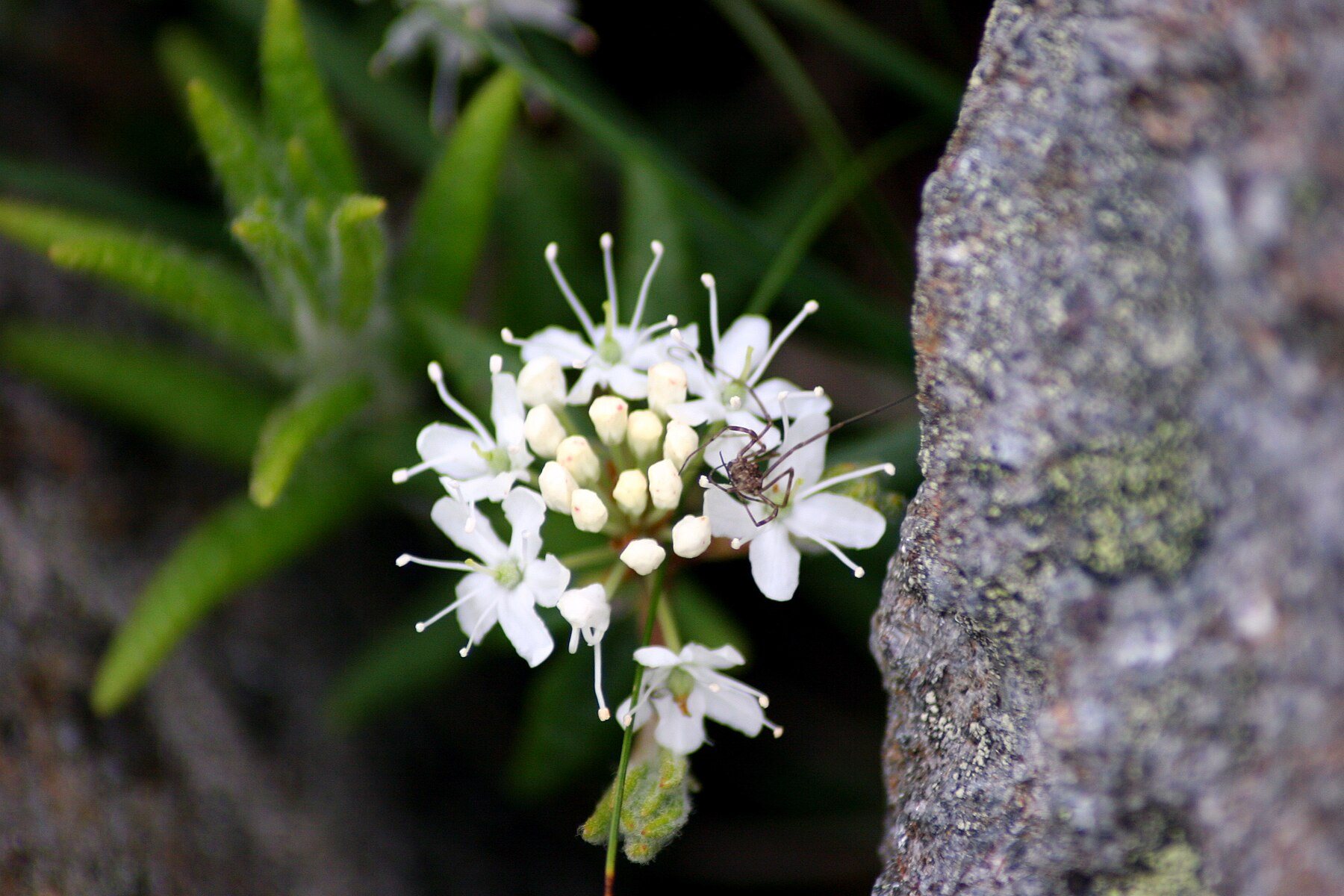
It cannot confirm the measured saponins, selenium or sensory scores of any one batch; the steam-kill-green temperature, timing or rolling parameters of any company; the caffeine content of Pingli Jiaogulan; any health, therapeutic or weight-loss effect; or a “world/China number one” ranking. The page image is a botanical reference photograph of the plant, not a Pingli plantation shot and not a dried-tea product shot.