First, the category: a boreal infusion, not Camellia tea
"Canadian boreal herbal tea" is not a fixed recipe and not an official national tea. It is a convenient label for caffeine-free infusions made from plants of Canada's boreal forest. The most common ingredients are Labrador tea and spring spruce tips; balsam fir, pine and sweet gale also appear.
It contains no Camellia sinensis, so it is not green, black or white tea in the botanical sense. "Herbal tea," "tisane" or "infusion" is more accurate. Recipes differ by region, family and brand: some are a single Labrador tea; others blend spruce tips, fir, mint and lingonberry leaf.
| Item | Detail |
|---|---|
| Name | Canadian boreal herbal tea |
| Type | Caffeine-free herbal infusion; not Camellia tea |
| Core plants | Labrador tea, spruce tips; sometimes fir and pine |
| Range | Boreal forest and peatland across Canada |
| Tradition | Long used by Indigenous peoples; later adopted by settlers |
| Flavour | Resin, flowers, citrus, wood and mint, depending on the blend |
| Safety | Labrador tea contains ledol/grayanotoxins; do not drink it heavily every day |
Boreal forest and harvest: a local plant tradition, not a "Canadian specialty tea"
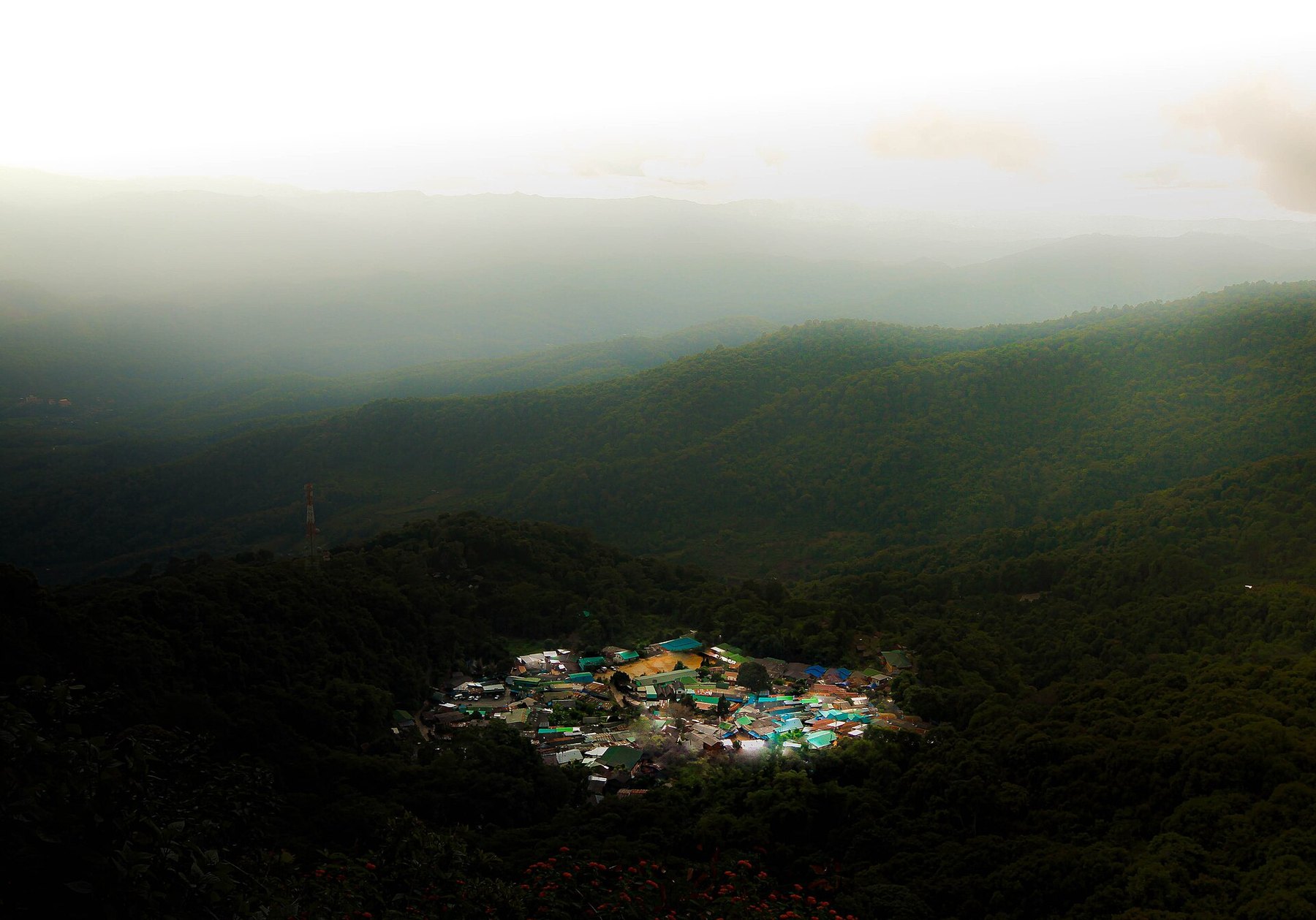
The Canadian boreal forest runs from Newfoundland to the Yukon, from the Great Lakes' northern shore to the Arctic treeline. It is one of the largest terrestrial biomes on earth. Labrador tea is not a Labrador provincial specialty; it is common in bogs, peatlands and tundra across Canada and northern North America. Spruce, fir and pine form the forest itself.
Parks Canada is clear: Labrador tea was used as a hot drink by both Indigenous peoples and European settlers, and it had many traditional uses. Those preparations were made by people with local knowledge, and inadequate preparation can cause health problems. That warning matters. Traditional knowledge is not a licence to copy any recipe blindly, especially with an ericaceous plant.
The spruce-tip window is short. Laughing Lichen picks in spring, when the sheath has opened and the tip is 0.5–1.5 inches long, taking only a little and never stripping a branch. Pick too early and the tip is tiny; too late and it is woody and resin-heavy. Labrador tea is usually harvested as leaf, fresh or dried. Because it grows slowly, harvest lightly and never pull the whole plant.
The two core ingredients: Labrador tea and spruce tips
Labrador tea
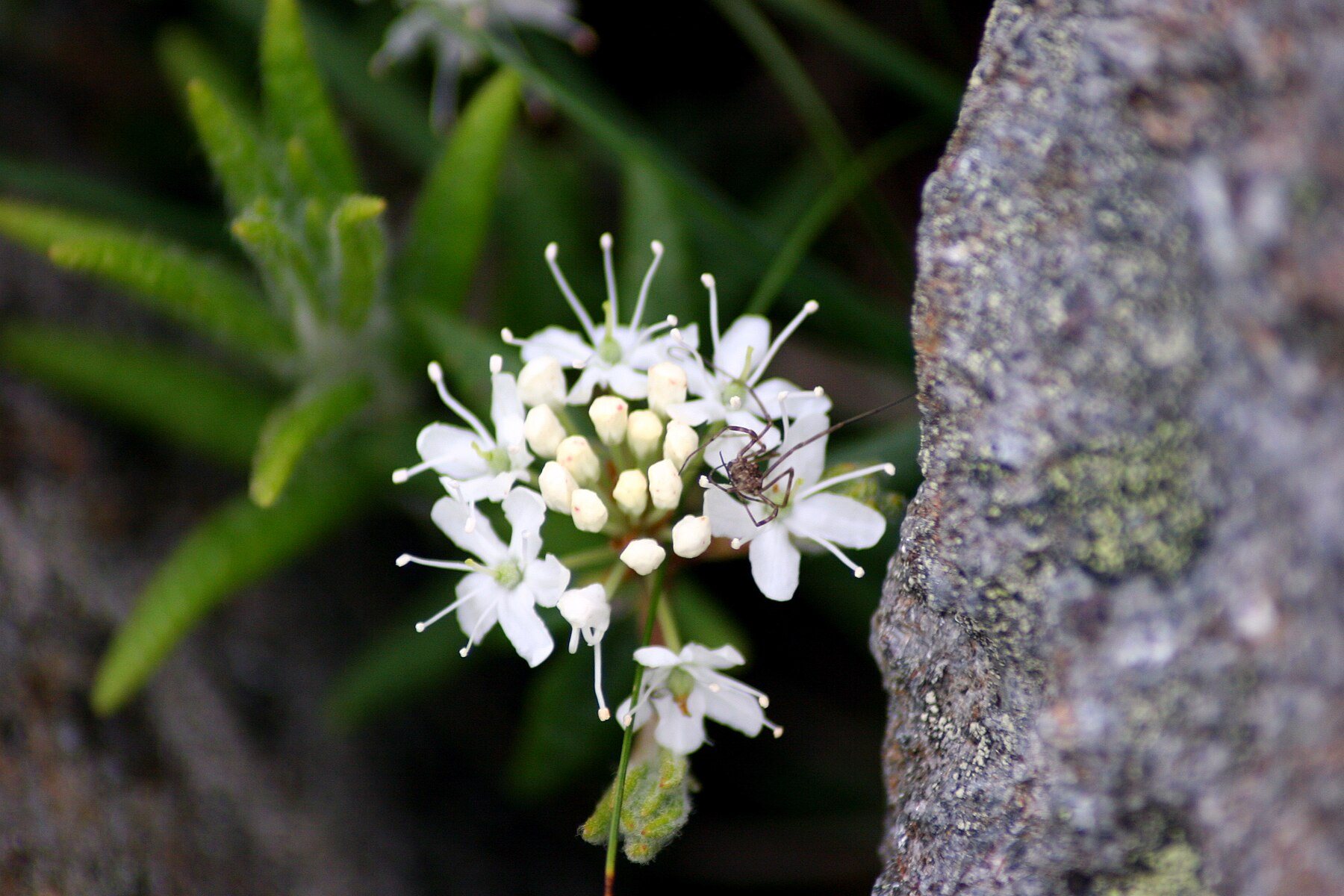
Two common species are Rhododendron groenlandicum (bog Labrador tea) and R. tomentosum (northern Labrador tea). They are low evergreen shrubs with woolly leaf undersides and white flower clusters. Dene, Inuit, Athabaskan and other Indigenous peoples used them as beverages and for a range of traditional complaints. They contain ledol and grayanotoxins; R. groenlandicum is lower in ledol, but that does not make unlimited drinking safe.
Spruce tips
Picea glauca (white spruce) and P. mariana (black spruce) are the usual species. Spring tips have a citrus, resin and mint-like freshness and contain vitamin C. The academic paper notes that Canadian Indigenous peoples used 25 conifer species as traditional food, and spruce and pine needle teas and beers were used against scurvy. But there is a common overreach: "aneda" in the Cartier 1536 story was more likely arborvitae (white cedar) than spruce. Conifer needles do contain vitamin C; the historical story is not medical proof.
Balsam fir (Abies balsamea) and pine (Pinus spp.) are also used in blends. Different species have very different resin and aroma profiles. "All conifers can be brewed" is false.
Processing and flavour: dry, blend, steep
Labrador tea is usually dried for storage. A common household recipe is 1 tsp dried leaf per cup of boiling water, steeped 5 minutes; some Indigenous preparations boil longer for a darker infusion. Commercial products control the leaf ratio and may blend it with other plants.
Spruce tips can be used fresh or dried. Laughing Lichen recommends a hot-water steep of 10–15 minutes rather than a long rolling boil, which makes the resin too heavy. A typical dose is 1–2 tsp dried tips per 250 ml at 90–95°C.
Flavour:
- Labrador tea: wood, resin, flowers and a light spice; liquor gold to amber. Some drinkers find it like a forest floor of pine and herbs.
- Spruce tips: citrus, resin, mint and green freshness; early spring is lighter, late spring more woody.
- Balsam fir: sweet resin and forest aroma, often used for the "sweet" note in a blend.
- Blends: lingonberry leaf, mint, yarrow and juniper may appear; the range runs from clean and light to heavy and resinous.
It is not a "strong as black tea" drink. Most boreal infusions are light to medium in body and work hot or cold.
Safety: not a detox tea, not medicine
Labrador tea contains ledol and grayanotoxins. Excessive drinking can cause nausea, vomiting, dizziness, drowsiness, diarrhoea and cramps; severe cases can involve seizures, paralysis and, rarely, death. R. groenlandicum is lower in ledol, but the risk is not zero.
The 2015 review is explicit: because of ledol and grayanotoxin toxicity, the drink should not be consumed more than once a day. Pregnant or breastfeeding people, children, people with epilepsy and anyone on medication should avoid it or consult a clinician first. It is not a replacement for medicine and should not be marketed as a "detox," "blood-pressure" or "cold cure" therapy.
Harvest carries its own risks. Labrador tea can be confused with bog laurel, sheep laurel and azalea, which are toxic. Among conifers, yew (Taxus) is toxic and must not be brewed. Only harvest plants you can identify with certainty; if in doubt, do not drink. Avoid roads, industrial sites, polluted water and protected areas. Take a little leaf or tip, never strip the branch.
Buying
- Check the species on the label. Rhododendron groenlandicum, Picea glauca/mariana and Abies balsamea are more useful than "boreal tea" or "forest tea."
- Check whether it is single or blended. A single Labrador tea, a single spruce tip and a mixed herbal blend have different flavour and safety profiles.
- Check harvest and origin. Small-scale Canadian harvest, organic/wild-craft certification and harvest season are useful signals.
- Read the warnings. A responsible product mentions pregnancy, children and medication interactions. No warning does not mean safe.
- Avoid detox or cure language. "Detox," "cure" and "replace medication" are reasons to walk away.
- Start small. Begin with one cup at low strength and observe. Do not make a strong pot on the first try.
Misconceptions
"Canadian boreal herbal tea is Canadian Camellia tea."
No. It contains no Camellia sinensis; it is a caffeine-free herbal infusion.
"Labrador tea can be drunk freely every day."
It contains ledol and grayanotoxins. The review advises no more than once a day; pregnancy, childhood and medication add caution.
"Every conifer can be brewed."
No. Yew is toxic, and some conifers are unsuitable. Use only clearly edible, confidently identified species.
"Herbal tea can replace medicine."
It cannot. Traditional use is not medical proof. Persistent symptoms need clinical care.
"Cartier's 'aneda' was spruce."
The academic paper argues it was more likely arborvitae (white cedar). Spruce needles contain vitamin C, but the story is not "spruce cured scurvy."
"Boreal herbal tea is one recipe."
No. Labrador tea, spruce tips, fir, pine, lingonberry leaf and mint can all appear, and brands differ widely.
Bottom line
Canadian boreal herbal tea is a caffeine-free infusion of Labrador tea, spruce tips and other boreal plants, with a long Indigenous and settler drinking tradition. It is not Camellia tea and not medicine. Its value is in flavour and harvest culture, provided the plant is identified correctly, prepared properly and not consumed to excess.