In one sentence
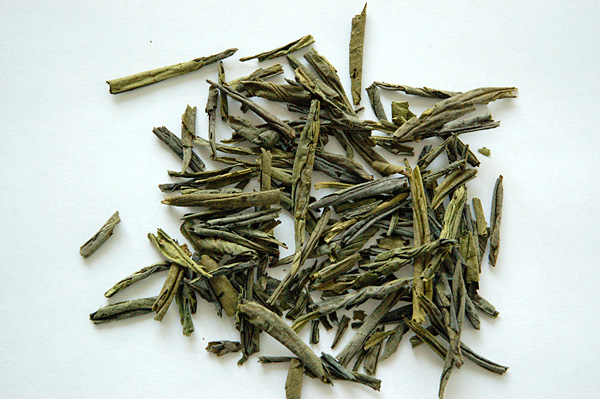
Lu'an Guapian is the “single leaf” green tea of the Dabie Mountains. No bud, no stem — just one mature leaf, pan-fixed, shaped into a melon-seed strip, then finished with a famous charcoal step called lao huo (“old fire”). The cup is thick rather than delicate, with chestnut, roasted sweetness and a long, deep finish. It is proof that a green tea does not have to be built from buds to be fine.
What the standard says
DB34/T 237-2017 is the Anhui provincial standard for geographical-indication Lu'an Guapian. It defines the tea as a flat, melon-seed-shaped green tea made from single fresh leaves obtained by picking the leaf directly or pulling the leaves from a picked shoot, through a distinctive process. The product must have a green-tea character and be free of stems, free of buds, free of off-flavours, clean, with no non-tea inclusions, no colouring and no additives.
The standard grades the tea into six levels: jingpin (fine), teyi (special 1), teer (special 2), first, second and third. Each grade has a reference sample, renewed every two years. The top grade is described as melon-seed shape, back-curled and straight, flat and lying flat, even, “precious green with frost”, with no floating leaves; aroma floral and high; taste fresh, mellow and sweet; liquor tender green, clear and bright; leaf base tender, yellow-green, lively and even.
Where it grows
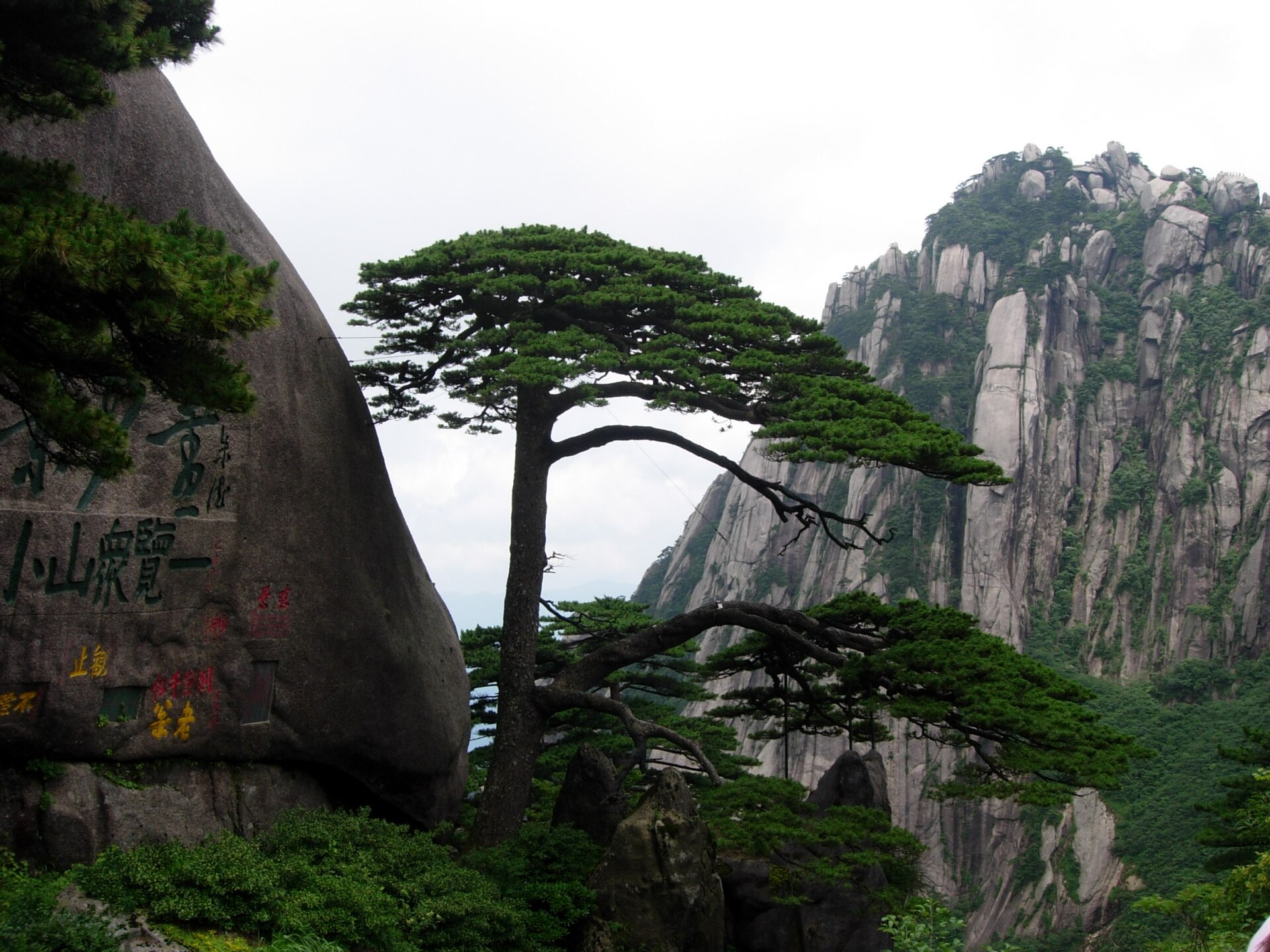
The protected area is in the Dabie Mountains of Lu'an, Anhui, covering tea districts in Yu'an, Jinzhai and Huoshan. The standard describes a transitional climate between the northern subtropical and warm temperate zones: about 234 frost-free days, 1,981 hours of sunshine, 1,109 mm of annual rain, an average 16°C, and a soil pH of 5.0–6.5.
The core gardens are often associated with Qishan in Jinzhai and Dushan in Yu'an. High elevation, cloud, a large day–night temperature swing and well-drained yellow-brown soil produce thick leaves that can survive the repeated firing. The famous “Bat Cave” is a local landmark, but the old claim that bat guano creates a unique “orchid base” is not used here: it is an appealing story without agronomic evidence. What matters is cultivar, leaf thickness, picking standard, fire control and storage.
Cultivar and picking
The standard lists Dushan Xiaoye (Dushan small-leaf), Qitoushan Zhongye (Qitoushan medium-leaf) and improved clonal cultivars. Dushan small-leaf has thicker leaves and a stronger aroma; Qitoushan medium-leaf is a little thinner but stays tender.
There are two picking methods:
- Pick the leaf (采片): when the shoot reaches one bud and three leaves, pick a single leaf directly from the bush, choosing leaves of consistent size and tenderness.
- Pull the leaf (扳片): pick the whole shoot, then pull the leaves off by hand and grade them by tenderness.
The standard forbids diseased, frozen or damaged leaves; when picking directly, buds and stems must not be included. So the “no bud, no stem” rule starts in the garden, not in the wok.
Craft
DB34/T 237-2017 lists nine hand-processing steps:
spreading → raw wok → cooked wok → first bake → sorting → small fire → resting → old fire → packing.
- Spreading. Fresh leaf is spread 4–6 cm thick for 4–6 hours to lose grass and some water.
- Raw wok. Wok at about 150°C, about 80 g of leaf, turned with a reed or bamboo brush for about 2 minutes, until the leaf softens, turns green and smells fresh.
- Cooked wok. Wok at about 100°C, pressing and turning for about 4 minutes to form the melon-seed shape. Tender leaf is pressed lightly, older leaf more firmly.
- First bake. Bamboo basket over charcoal at 80–100°C, turned every 2–3 minutes, down to about 30% moisture.
- Sorting. Remove unformed leaves, discoloured leaves, floating leaves and non-tea material.
- Small fire. About 80°C, slow baking to about 15% moisture.
- Resting. The tea rests at room temperature for 72 hours or more, so moisture redistributes and the aroma clears.
- Old fire (lao huo). The signature step. A strong, even charcoal fire; 12–14 kg of tea per basket; two people lift the basket over the fire for about 1.5 seconds, then lift it away and turn the leaf, repeating more than 150 times without a long pause. The target is “precious green with frost”, a formed aroma and moisture below 6%.
- Packing. Cool, then pack and seal promptly.
“Old fire” is not a gimmick. The short, repeated passes heat the leaf edge and drive aroma conversion without scorching the whole leaf. Too little fire and the tea is green and grassy; too much and the leaf is charred, the liquor yellow and the aroma burnt.
Taste
- Dry leaf: single, flat, melon-seed-shaped pieces, back-curled and straight, “precious green with a white frost”, no bud, no stem.
- Liquor: tender green to yellow-green, clear and bright.
- Aroma: chestnut, roasted sweetness, sometimes floral; high and lasting.
- Mouthfeel: fresh, mellow, thick, sweet; low bitterness, deep throat feel.
- Leaf base: yellow-green, bright, soft and even.
Compared with bud tea, Guapian is thicker and more “savoury”. It does not rely on down or tender bud aroma; it relies on leaf substance and fire. The top grade can show a floral note; first grade is more chestnut; lower grades are coarser and more astringent.
Brewing
- Water: 85–90°C. The leaf is thick; too cool and the aroma stays closed, but boiling water can turn the chestnut note burnt.
- Leaf: 4–5 g per 200 ml glass or gaiwan.
- Vessel: glass for the leaf shape; white porcelain for the liquor colour. Yixing is not ideal because it can absorb the roasted aroma.
- Timing: about 30 seconds for the first infusions, then lengthen. Do not steep for minutes.
- Rinse: optional; a quick rinse can help open tight pieces, but do not discard too much of the first infusion.
Grades and buying
Look for:
- Shape. Melon-seed, back-curled, flat and even; “precious green with frost”; not broken bits, curls or yellow-brown leaf.
- Cleanliness. No buds, no stems, no floating leaves, no non-tea material.
- Aroma. Chestnut or floral, high and clean; not grass, smoke, char or mould.
- Taste. Fresh, mellow, sweet, deep; not bitter or throat-locking.
- Leaf base. Yellow-green, bright, soft and even.
- Label. DB34/T 237-2017 and the geographical-indication mark. The Lu'an market regulator's 2021 data listed 65 authorised enterprises.
History and geographical indication
Lu'an has a long tea history, but the exact origin of the “Guapian” shape is told differently in local sources. This entry does not turn a legend into a date. What is verifiable: on 2007-12-28, the former national quality-supervision authority approved Lu'an Guapian as a geographical-indication product (Announcement No. 222 of 2007); the current production standard is DB34/T 237-2017.
The old page's claims — “the only tea in the world with no bud and no stem”, “bat guano gives an orchid base”, “national gift tea after 1949”, “Zhou Enlai served it to foreign guests”, “given to Kissinger in 1971”, “national intangible heritage in 2008”, “UNESCO intangible heritage in 2022” — were removed because no complete, verifiable official source was found. The “no bud, no stem” requirement is retained as a product rule, but not as a world-exclusive claim.
Status
This English entry is an independent editorial rewrite, not a sentence-by-sentence translation. It uses the full text of DB34/T 237-2017 for the definition, environment, cultivars, picking, nine-step process, grades and sensory requirements; the Lu'an municipal regulation for the standard–GI relationship; and the 2021 market-supervision publication for the 2007 approval and the number of authorised enterprises. Legends and unsourced historical claims were removed. The page is marked reviewed; sources and wording will continue to be revised.