A style, not an appellation
“Nepal oolong” is a partially oxidised tea made in Nepal’s eastern hills. It is not a protected origin, a single cultivar, a single garden or a single grade. Trade sources put the oxidation range at roughly 20%–80%, which is wide enough to cover teas that taste almost like a light floral pouchong and teas that resemble a darker, nutty oolong.
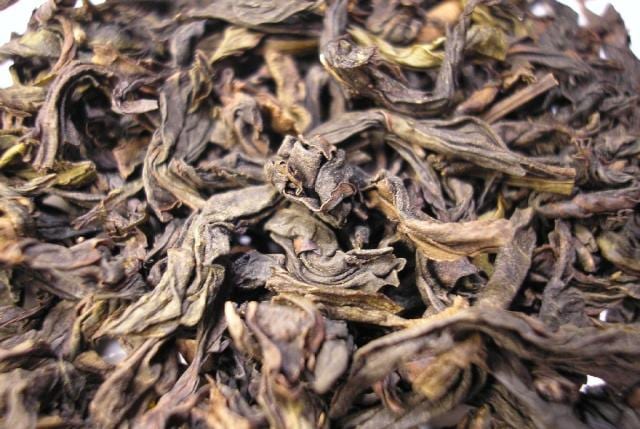
That range is the first thing to understand. A bag labelled “Nepal Oolong” can be light, green-gold and orchid-scented, or amber, woody and stone-fruit sweet. The label alone does not tell you which one you are buying.
| Item | Detail |
|---|---|
| Name | Nepal oolong / Nepali oolong |
| Type | Partially oxidised tea; about 20%–80% oxidation |
| Main areas | Ilam, Dhankuta, Panchthar and other eastern hills |
| Common altitude | About 1,200–2,100 m; some gardens higher |
| Cultivar | Varies by garden; no national register |
| Processing | Orthodox-style withering, rolling, partial oxidation, firing |
| Flavour | Light floral to nutty, stone fruit, wood and baked sweetness |
Where it grows
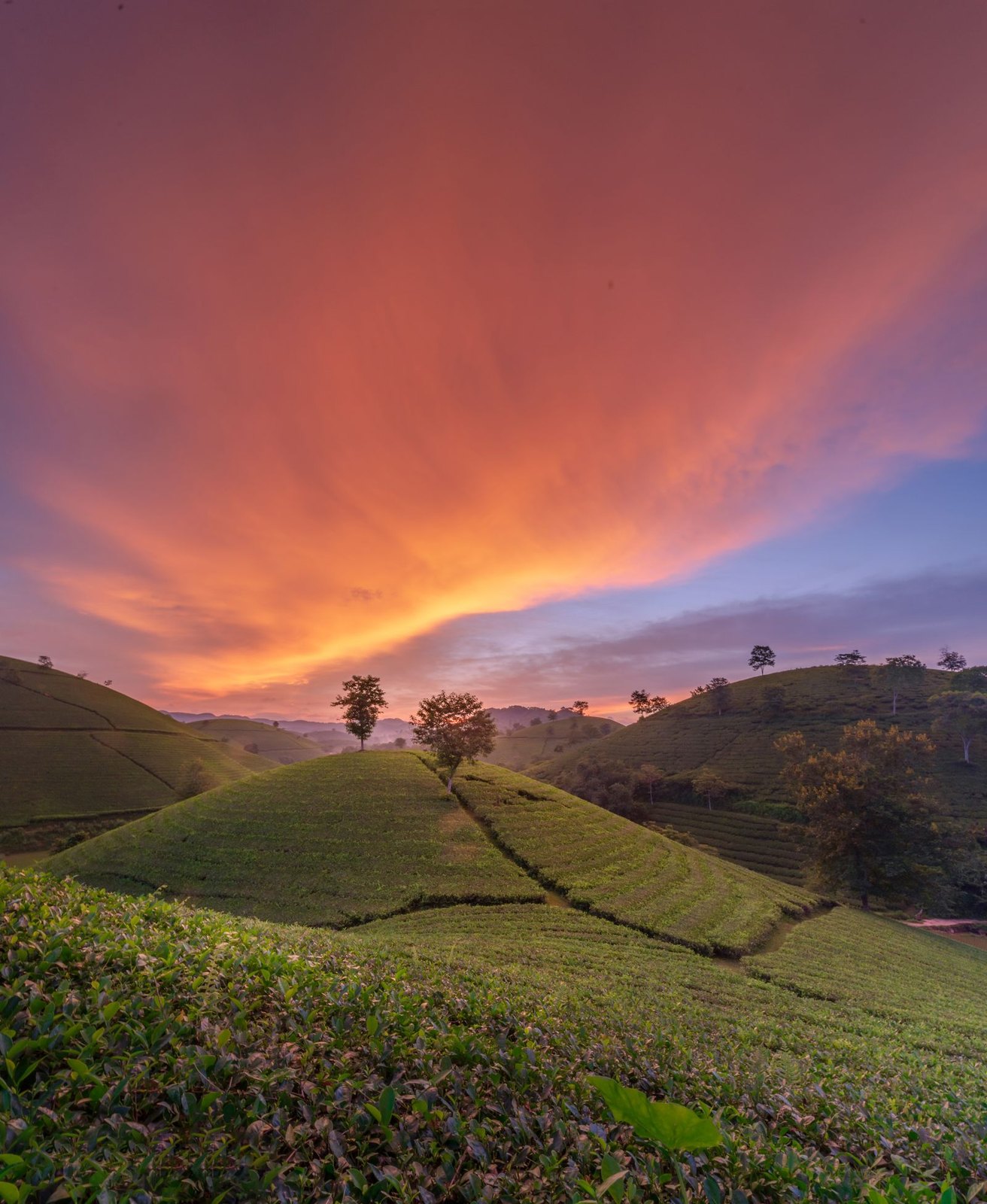
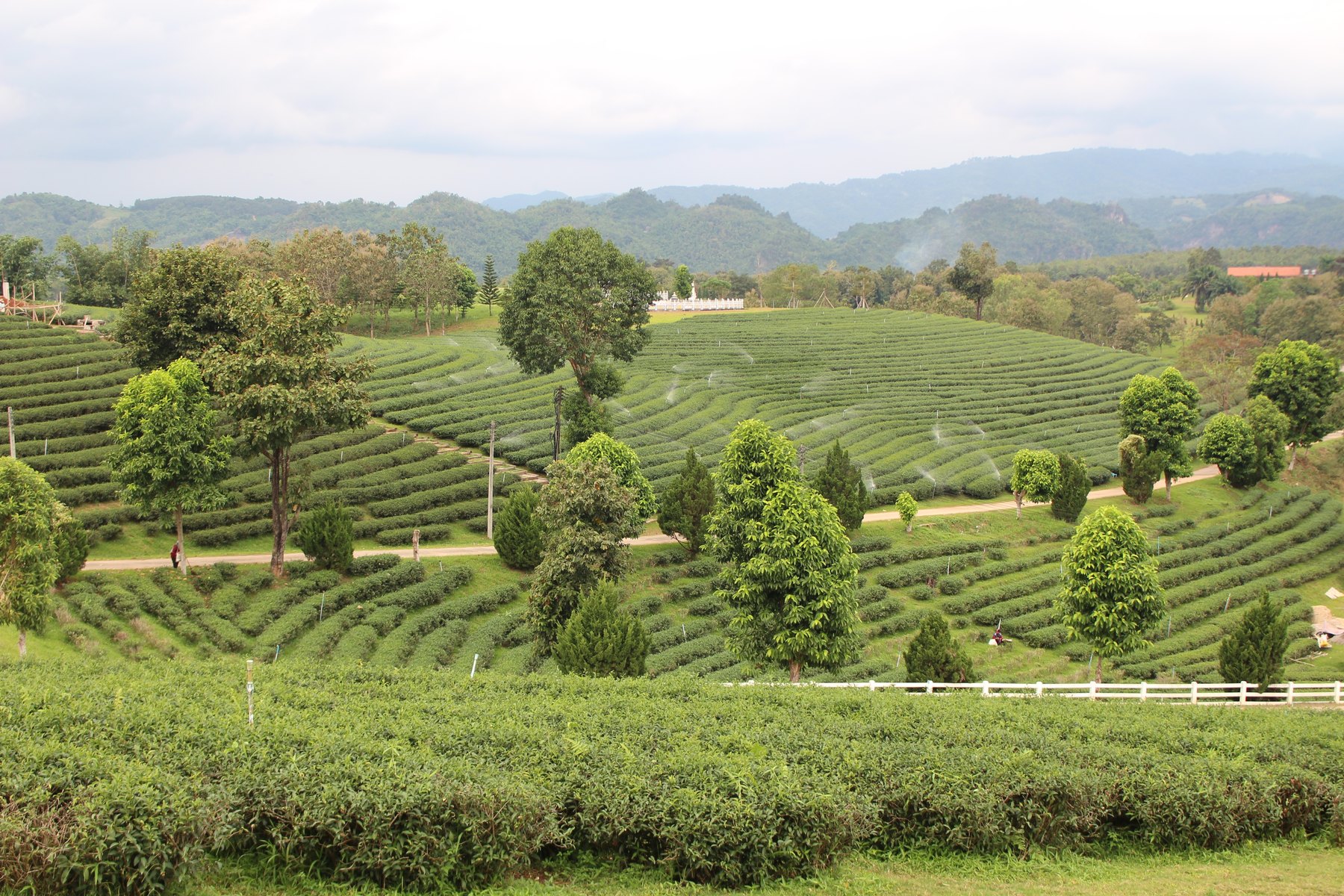
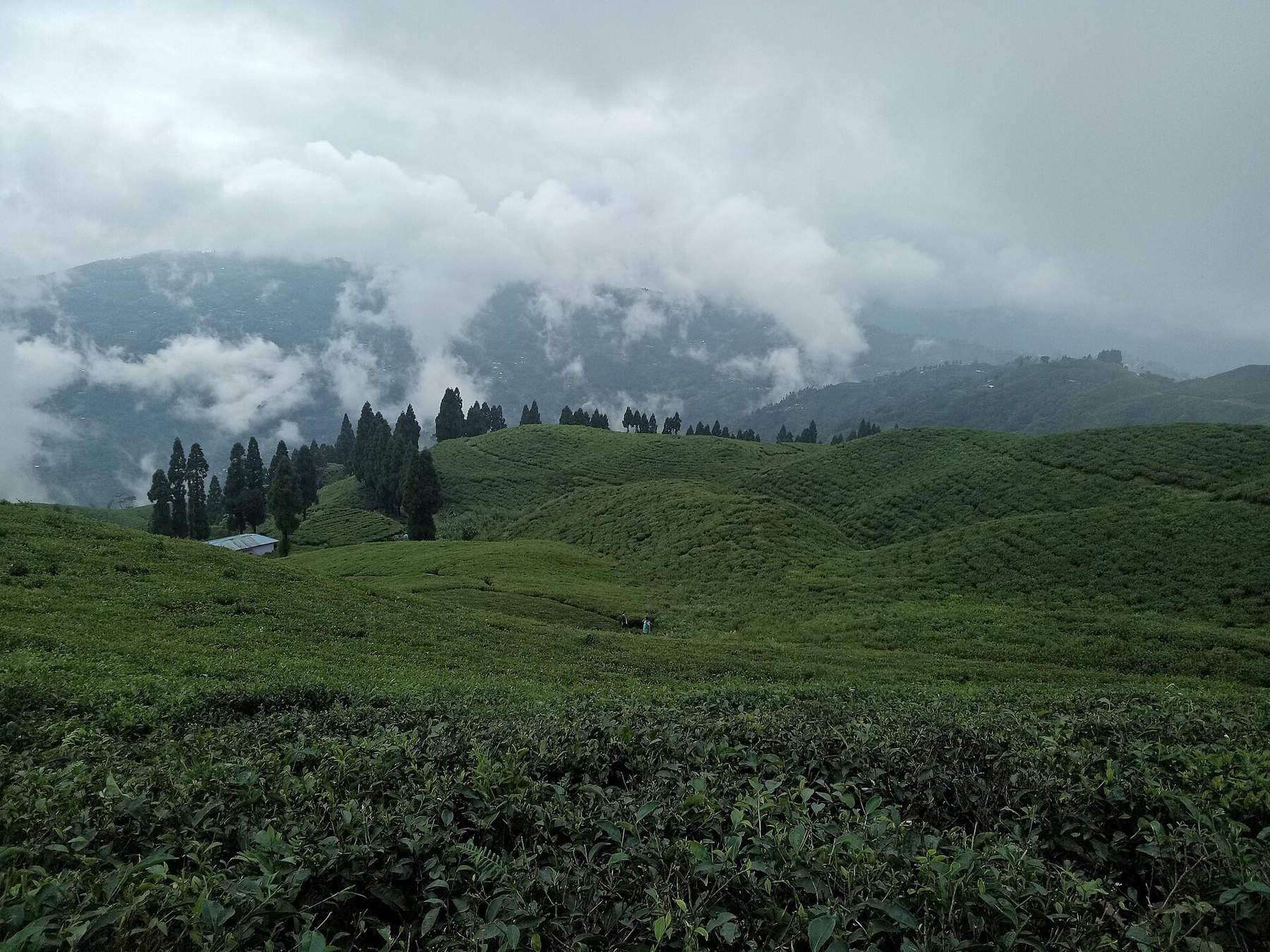
Nepal’s commercial tea belt runs through the eastern hills. Ilam is the best-known district, with a wide altitude span, heavy mist and gardens interleaved with forest and villages. Dhankuta lies farther north, around Hile and Dhankuta town. Panchthar is more remote, with smaller plots and more batch-to-batch variation.
Trade sources commonly describe the belt as 1,200–2,100 m. Some gardens sit higher: the Siddha Devi oolong from Ilam is listed at about 2,300 m. That is a garden-level fact, not a national altitude. It does not prove that all Nepal oolong grows at 2,300 m, and it does not establish a “world’s highest” record.
A wide oxidation range
It helps to think in three broad bands:
- Light oxidation, about 20%–40%: orchid, gardenia, honey, green apple; a light body and a quick sweet finish.
- Medium oxidation, about 40%–60%: apricot, peach, ripe fruit, milk; a rounder body.
- Darker oxidation, about 60%–80%: nuts, stone fruit, caramel, wood; an amber liquor and a longer finish.
These bands are a buying guide, not a legal classification. Individual producers may use different cut-offs, and a tea can sit between bands.
Two producers, two reference points
Kanchanjangha Tea Estate (KTERC) was founded in 1984 by Deepak Prakash Baskota and is described by Nepal Tea Collective as Nepal’s first certified organic tea garden. Its Shangri-La Oolong is a useful reference for the darker end of the range: withered, rolled for 30–40 minutes, oxidised for about two hours, then dried. The result is nutty, stone-fruit and sweet, closer to a dark Chinese oolong than to a light pouchong.
The Siddha Devi garden in Ilam is a useful reference for the high-altitude end: a mountain oolong listed at about 2,300 m. It is a different product from Shangri-La and should not be treated as the definition of Nepal oolong. These are two examples, not two national standards.
Cultivars: batch information, not a national recipe
The old draft said Nepal oolong is all Jinxuan and Qingxin, and invented a garden called “Sundarpani” plus a Taiwanese technical mission. Public sources reviewed here do not provide such a neat national recipe.
In practice, different gardens use different plant material. Some lots are described as Taiwanese-style cultivars, some as local selections, and some as blended green leaf. “Jinxuan” or “Qingxin” on a bag is useful batch information. It is not the definition of Nepal oolong. The same goes for “Sundarpani”: if a place name cannot be checked, do not build a national story on it.
Processing: stopping oxidation at the right point
Oolong is defined by stopping oxidation at a chosen point, not by being “half green and half red” in a vague sense. The basic Nepal oolong flow is:
- Pluck one bud and two or three leaves.
- Wither until the leaf softens and loses surface moisture.
- Shake or roll to bruise part of the leaf and start enzyme-driven oxidation.
- Fix at the target oxidation level.
- Roll into shape and dry.
Light versions emphasise floral aromatics; darker versions emphasise fruit, nuts and sweetness. Rolling pressure, oxidation time and drying temperature all change the result. The Shangri-La figures above are one producer’s parameters, not a national standard.
Flavour
Light Nepal oolong often shows orchid, gardenia, honey and green apple. The liquor is pale gold, the body light and the finish sweet. Medium versions move toward apricot, peach, ripe fruit and a creamy texture. Darker versions show nuts, stone fruit, caramel and wood, with an amber liquor and a longer finish.
Compared with Taiwanese oolong, Nepal oolong often tastes more “mountain wild” and less polished by roasting. Compared with Darjeeling oolong, it sits closer to the Chinese oolong family than to a black tea with a light twist. Those differences are more useful than a “snow-mountain oolong” label.
How to brew it
- Gaiwan or pot: 3–4 g tea to 150 ml water, 85–90°C, 2–3 minutes for the first steep.
- Gongfu: 5–7 g tea to 100–110 ml water, about 95°C, 10–15 seconds for the first steep, then add 5–10 seconds per infusion.
- Light oxidation: use cooler water and a shorter steep to protect the florals.
- Darker oxidation: 95°C and a slightly longer steep help the nuts and sweetness come forward.
- No milk: the aromatics are too fine; milk covers the point of the tea.
If the liquor turns bitter, lower the temperature or shorten the steep. If the aroma is flat, raise the temperature slightly; do not start with a hard boil.
How to buy it
- Check the oxidation level. 20%–40%, 40%–60% and 60%–80% are different products, not one “oolong.”
- Check the garden and season. Ilam, Dhankuta and Panchthar taste different; spring and autumn lots differ too.
- Check the cultivar. Jinxuan, Qingxin and local selections are all possible, but you should know which one you are buying.
- Check the certificate. Organic gardens have certificates; “high-mountain organic” without a certificate is a description, not a certification.
- Buy a sample. Nepal oolong is often made in small lots, and the same garden can vary a lot from year to year.
Myths to drop
“Nepal oolong is a protected appellation.”
No. It is a style and origin category without a single legal definition.
“All Nepal oolong is Jinxuan and Qingxin.”
Cultivars vary by garden; a national recipe is not supported.
“All Nepal oolong comes from 2,300 m snow mountains.”
The common belt is about 1,200–2,100 m. Some gardens are higher; there is no verified world altitude record.
“Nepal oolong is always light and floral.”
The oxidation range runs to 80%, and darker versions can be nutty, woody and stone-fruit sweet.
“‘Snow-mountain oolong’ is a formal grade.”
It is a trade phrase, not an origin, cultivar or grade.
One-line definition
Nepal oolong is a partially oxidised tea from the eastern hills: about 20%–80% oxidation, flavours from orchid to nuts and stone fruit, and gardens centred on Ilam, Dhankuta and Panchthar. It is not one tea; it is a spectrum.