Matcha is not “green tea powder”
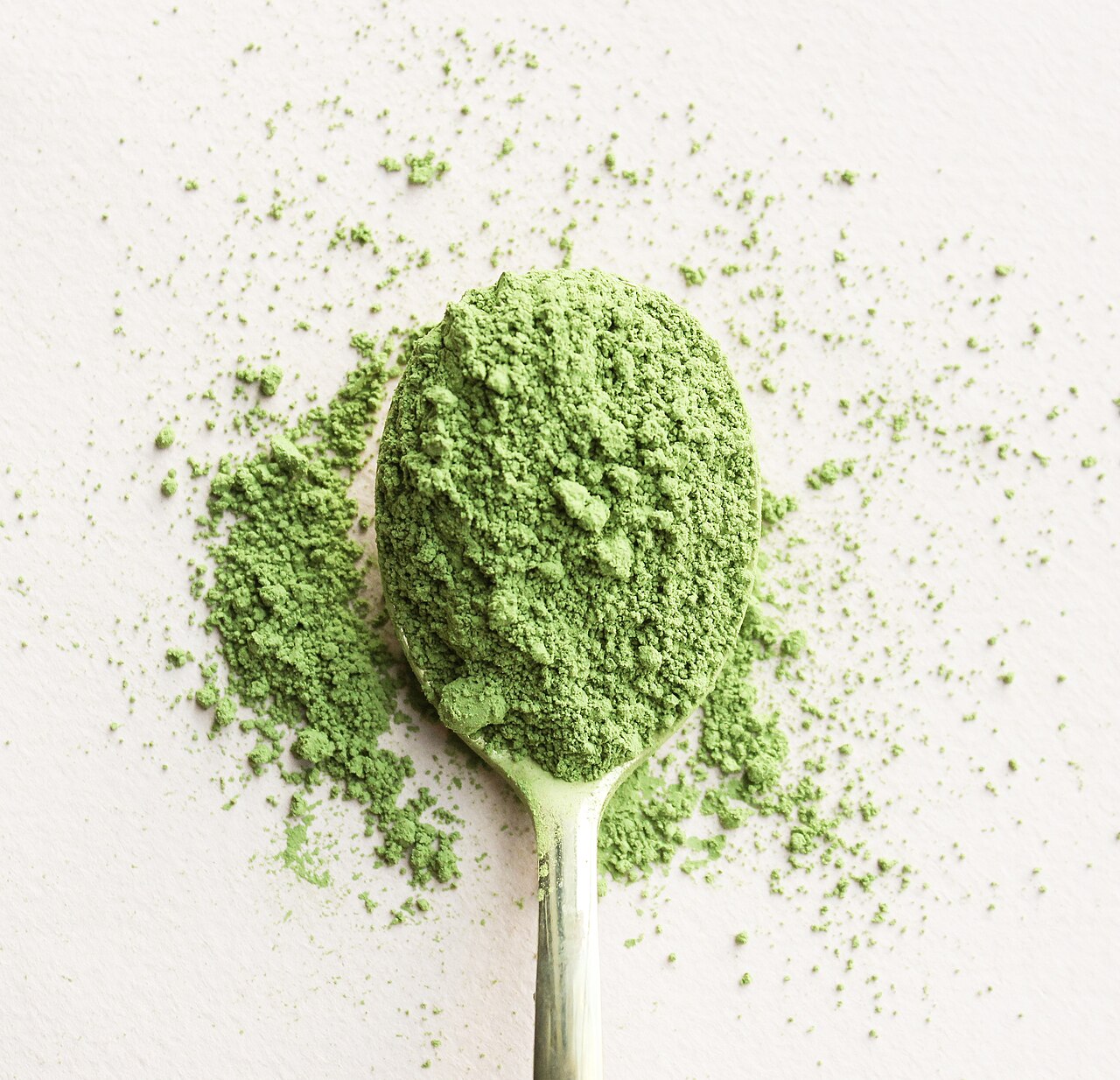
Matcha is often reduced to “green tea ground into powder”, which misses the first half of the process. The Agriculture, Forestry and Fisheries Research Council (AFFRC) defines tencha (matcha) as tea grown under covers for about three weeks (around 20 days) before picking, so that the new shoots develop in low light; the leaf is then steamed, left unrolled and dried into tencha; tencha is finally milled into a fine powder with a tea mill or comparable equipment.
The colour and sweetness of matcha therefore do not come from grinding. They come from shade cultivation, steaming and the decision not to roll. Ordinary green tea ground in a blender may be called green-tea powder, but it is not matcha: the particle size, colour, aroma and suspension behave differently.
Why shading matters
Under shade, photosynthesis slows and amino-acid compounds accumulate relative to catechins, so astringency drops and umami rises. Uji City’s leaflet lists shade cultivation as a key reason Uji tea suppresses bitterness and increases umami. The Agriculture, Forestry and Fisheries Research Council (AFFRC) gives about three weeks (around 20 days) of cover. The exact shading ratio, material and duration vary by garden, cultivar and year. There is no single national formula of “twenty days at ninety percent shade”.
Shading also changes leaf structure: chlorophyll increases, the leaf becomes thinner and softer, and it holds its green colour more easily after steaming. Too little shade gives a yellow-green powder and a more astringent cup; too much shade or a late pick can produce a flat, dull leaf.
From tencha to powder
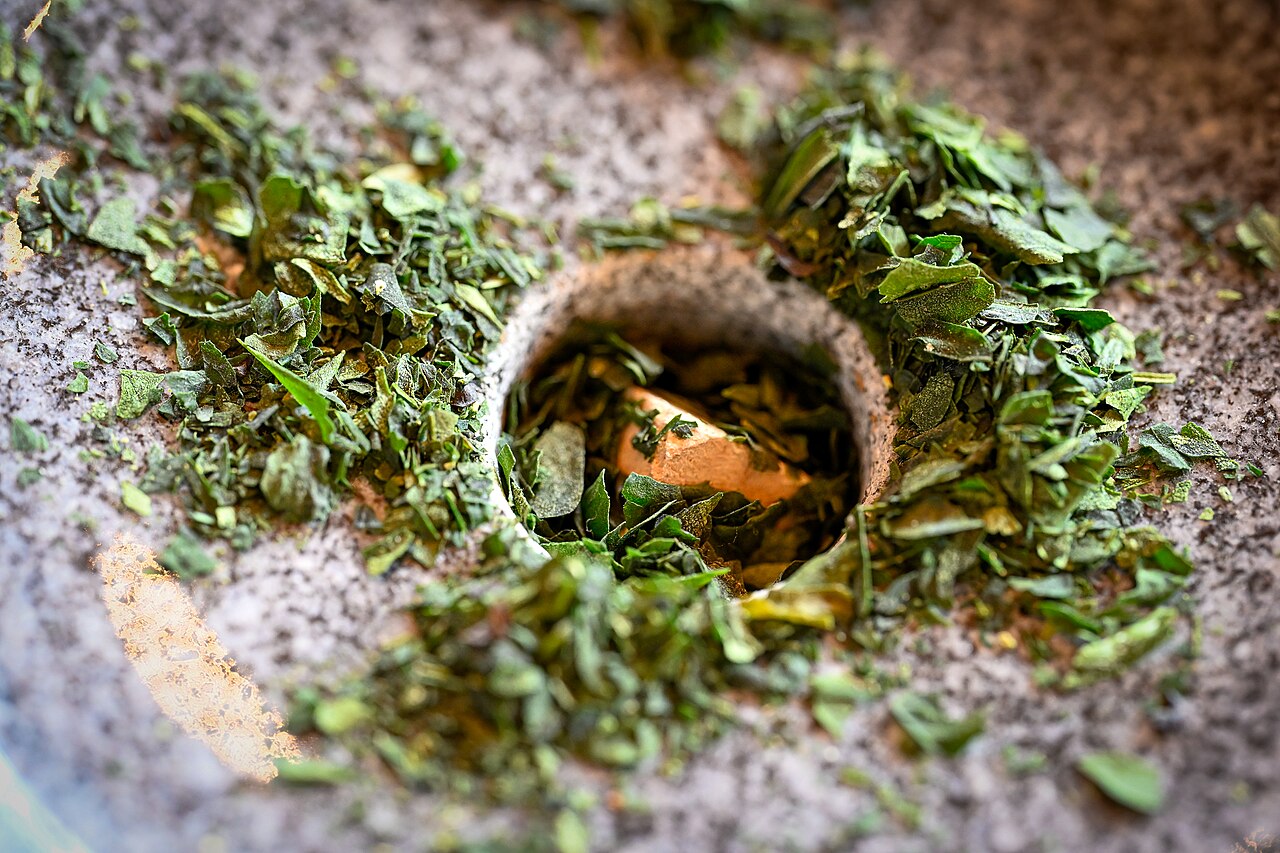
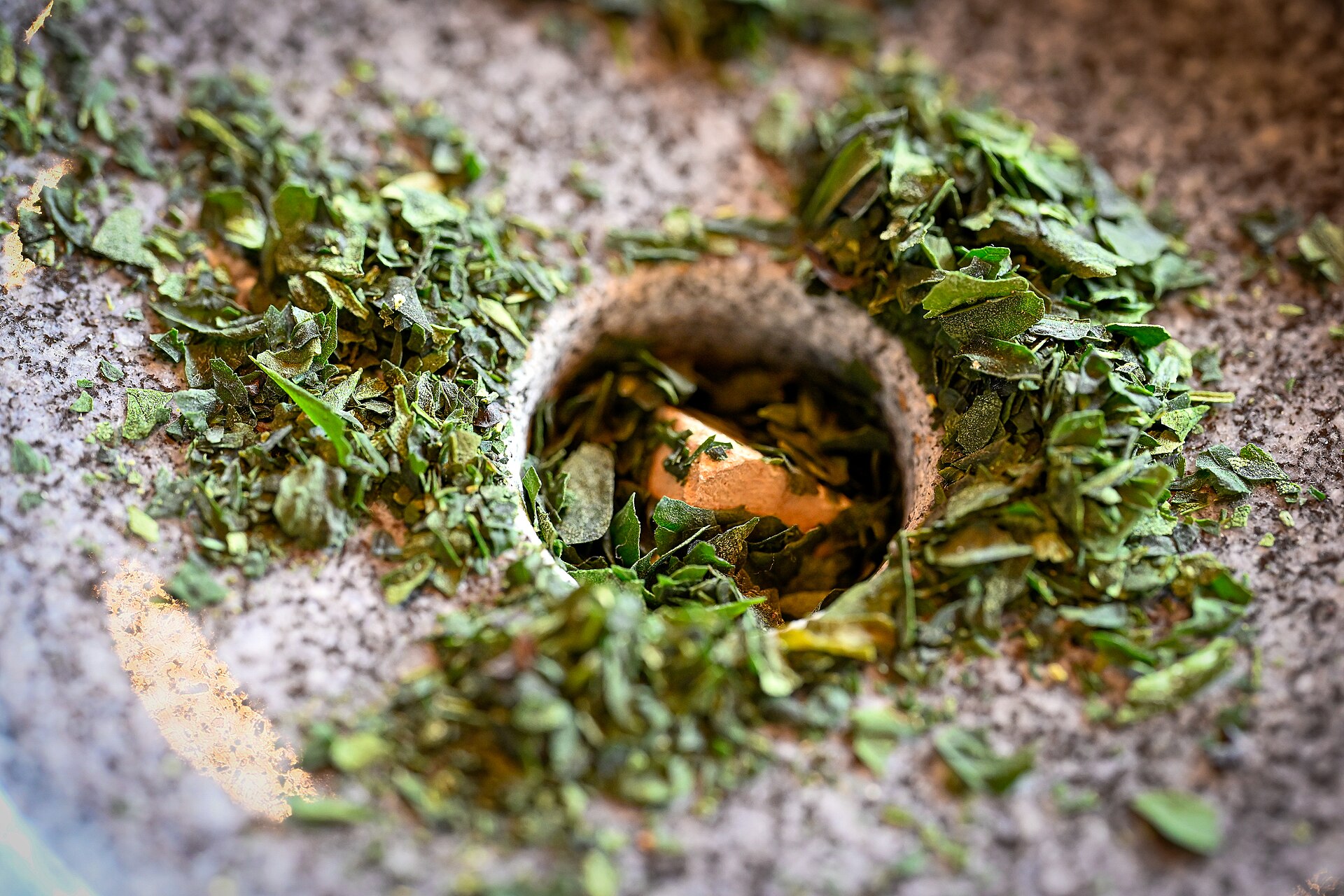
The critical step in tencha is “no rolling”. Sencha is rolled into shape; tencha is steamed and dried with the leaf kept flat. After drying, stems and veins are removed so that only the leaf flesh remains. Traditional production grinds with a stone mill; modern production uses ball mills or ceramic mills. Both aim at a fine particle with low friction heat.
Grinding generates heat. If the powder gets too hot, it oxidises, darkens and loses its fresh aroma. Matcha is therefore stored away from light, sealed, and kept cool or frozen. Once opened, use it quickly; a clear glass jar on a sunny shelf is the wrong container.
Grades and use
Matcha is roughly divided by use: ceremonial and culinary. Ceremonial matcha is further divided into koicha (thick tea) and usucha (thin tea). Koicha usually uses a higher-grade tencha with deep colour, dense sweetness and low astringency. Usucha is lighter and suited to everyday whisking. Culinary matcha is used in baking, ice cream and drinks; its colour and aroma standards are lower than ceremonial matcha, but that does not make it “fake matcha”.
To whisk, sift the powder first to break lumps. Put a small amount in a bowl, add water at about 80°C, and whisk briskly back and forth with a chasen rather than in a circle. Koicha uses little water and becomes a thick paste; usucha uses more water and builds a finer foam. Water that is too hot pulls out bitterness; water that is too cold makes foaming difficult.
History and origin
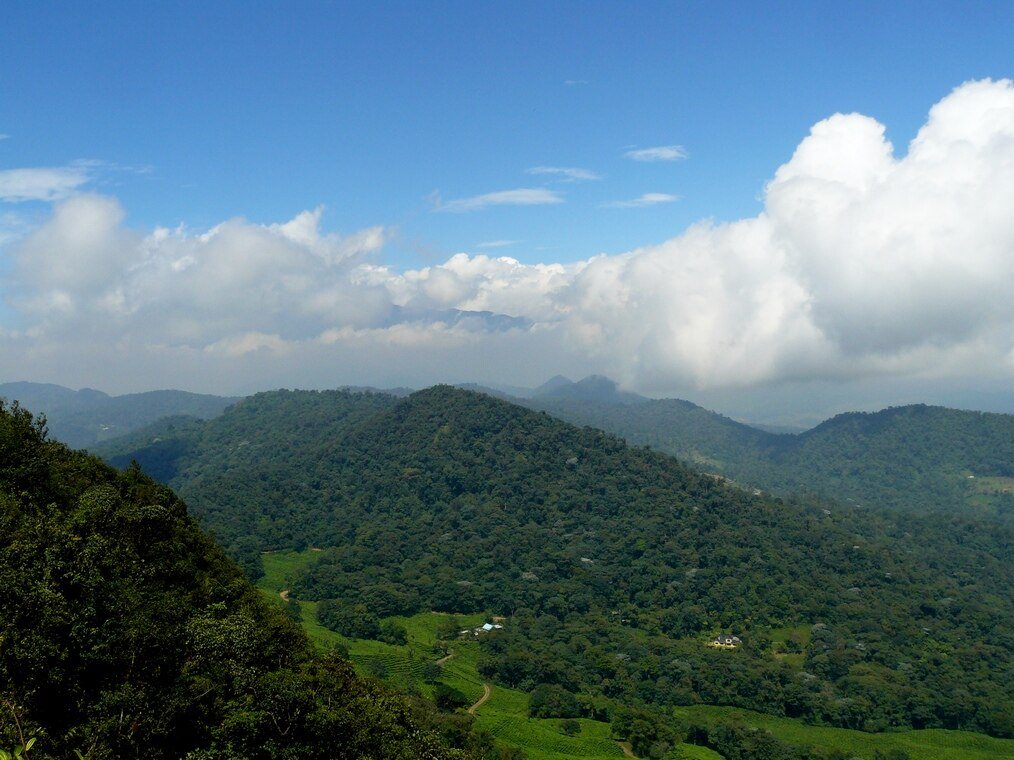
Tea came to Japan from China, initially in the form of powdered tea and point-steeping in temples and court circles. Eisai brought tea seeds and practice back to Japan, and Uji became an important tea region. Uji growers later developed cover cultivation, made shaded leaf into tencha, and ground it into matcha. Today Japan’s main matcha regions include Kyoto, Kagoshima, Shizuoka, Aichi and Fukuoka. Uji is a historic brand and craft centre, not the only place that makes matcha.
“Uji matcha” is a narrower origin and brand question, treated on its own page. General “matcha” is a category and a process; the two should not be conflated.
Sources and status
This page relies on MAFF, the Agriculture, Forestry and Fisheries Research Council (AFFRC) and Uji City. They support classification, the tencha definition and the Uji shade-cultivation background respectively, and none substitutes for the others. Unsourced legacy claims — “Asahi has the highest theanine”, “a stone mill produces only thirty grams an hour”, “matcha is the Maotai of tea” — have been removed. All migrated pages are currently marked reviewed, but sources and wording will continue to be revised.