In one sentence
Phoenix Dancong is the aroma-driven oolong of Chaozhou. Where Tieguanyin chases a balanced “flavour of the cultivar” and Wuyi rock tea chases mineral depth, Dancong chases individuality: one line can smell of honey and orchid, another of gardenia, magnolia, almond or cinnamon. The liquor is usually orange-gold and clear, the entry is thick and sweet, and the finish leaves a cooling, lingering “mountain rhyme” in the throat.
Where it grows
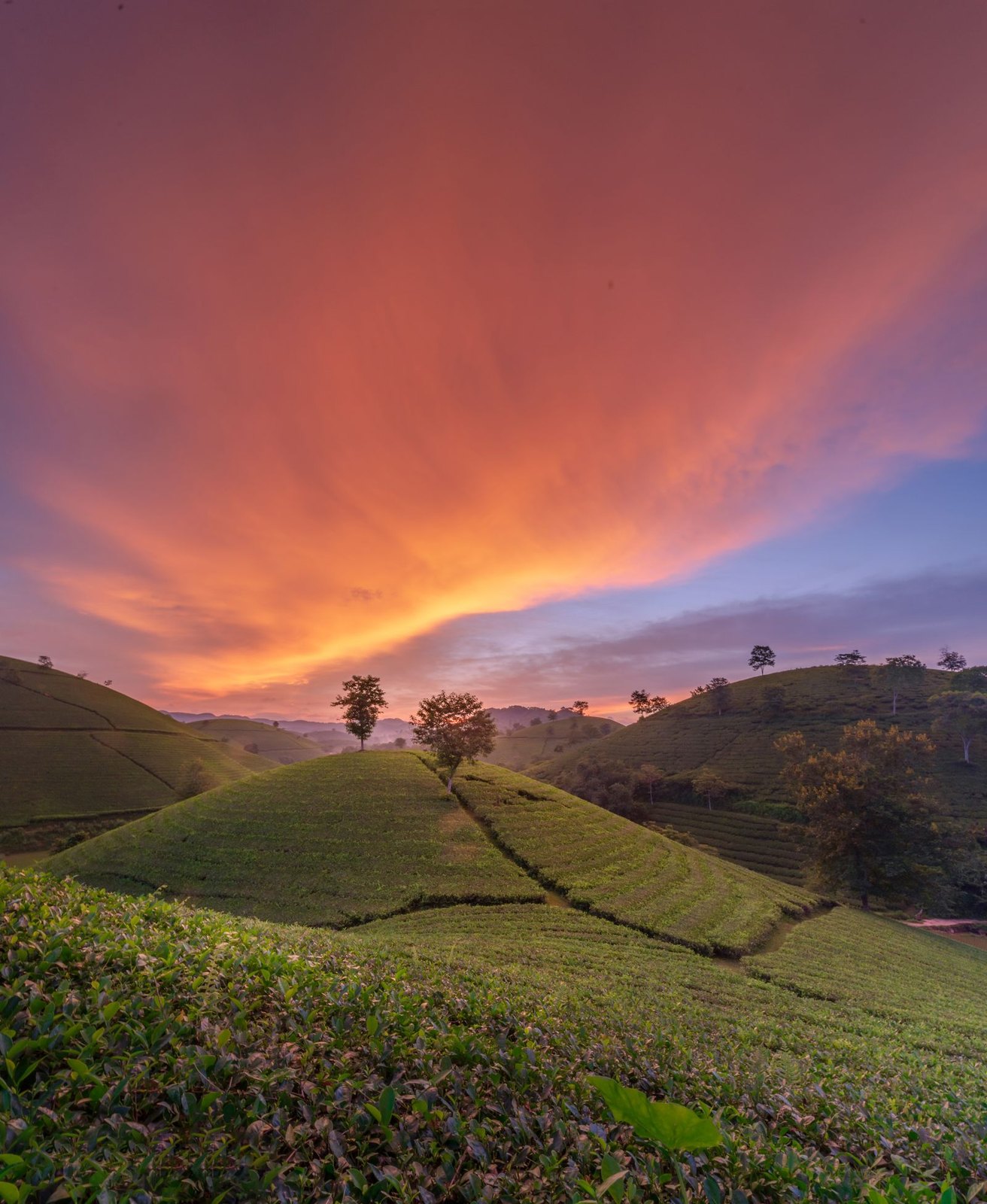
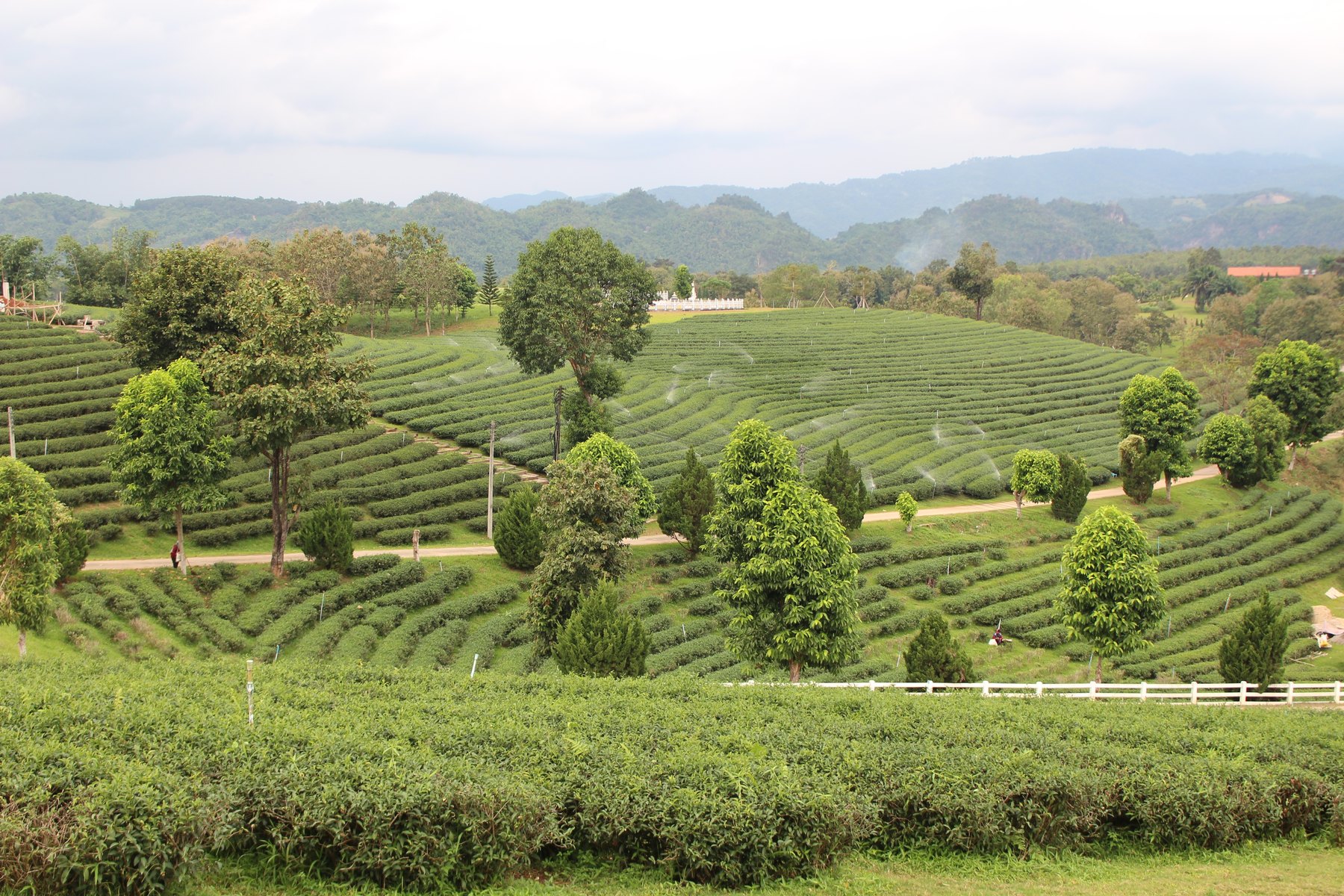
The tea comes from the Phoenix Mountains in Chaozhou, Guangdong, with the core in Fenghuang township and the higher slopes of Wudong. The mountains are high enough to be cool and misty, with a large day–night temperature swing, abundant rain and acidic red/yellow soils that drain well. Tea grows slowly, builds thickness in the leaf, and develops the aromatic complexity that lowland bushes often lack.
The Chaozhou government's 2021–2025 industry plan puts the city's tea area at 225,000 mu and raw tea output at 26,700 tonnes. That scale matters: Dancong is not a tiny mountain curiosity, it is a major regional industry. But scale is not quality. Within the same township, a high-elevation old bush and a low-elevation young bush can carry the same cultivar name and taste nothing alike.
What “Dancong” means
“Dancong” is usually translated as “single bush”. The standard is more precise: Dancong is made from the leaves, dormant buds and young shoots of Dancong lines. In practice, farmers select outstanding individual bushes or clonal lines from the Fenghuang Shui Xian population, propagate them, and pick and process them separately. The point is not that every finished cake comes from one literal bush, but that the material is kept separate enough to express a specific line.
This is why the names are so numerous. Honey-orchid (蜜兰香), gardenia (黄栀香), magnolia (玉兰香), almond (杏仁香), cinnamon (肉桂香), osmanthus (桂花香), ginger flower (姜花香) and night jasmine (夜来香) are sensory labels. They describe the dominant aroma impression, not a botanical classification. “Duck shit” (鸭屎香) is a folk nickname; the market also uses “silver flower” (银花香) as a more polite name. A name is a starting point for tasting, not a guarantee.
Craft
Dancong is one of the most labour-intensive oolongs. The Chaozhou industry plan lists 19 primary-processing steps, about 24 hours from fresh leaf to rough tea:
picking → sun-withering → cooling → shaking → resting → re-shaking → resting → shaking → resting → shaking → resting → fixing → rolling → breaking → first baking → cooling → second baking → sorting → storage.
The heart is shake-green (zuoqing). Fresh leaves are withered briefly in the sun, then cooled indoors. Shaking bruises the leaf edge and starts a controlled oxidation; resting lets the moisture redistribute and the aroma develop. The cycle repeats several times. Too little shaking and the tea stays green, flat and grassy; too much and the edge reddens too far, bringing harshness and a cooked aroma. The decision is made by hand, nose and experience, not by a fixed timer.
Fixing stops the oxidation. Rolling shapes the strip and breaks the leaf surface so the tea can infuse. Baking — traditionally over charcoal, now often electric or a hybrid — dries the tea and pushes the aroma from fresh and green toward honeyed and roasted. Dancong is usually lightly to medium baked; heavy baking can bury the very aroma the tea is famous for.
Taste
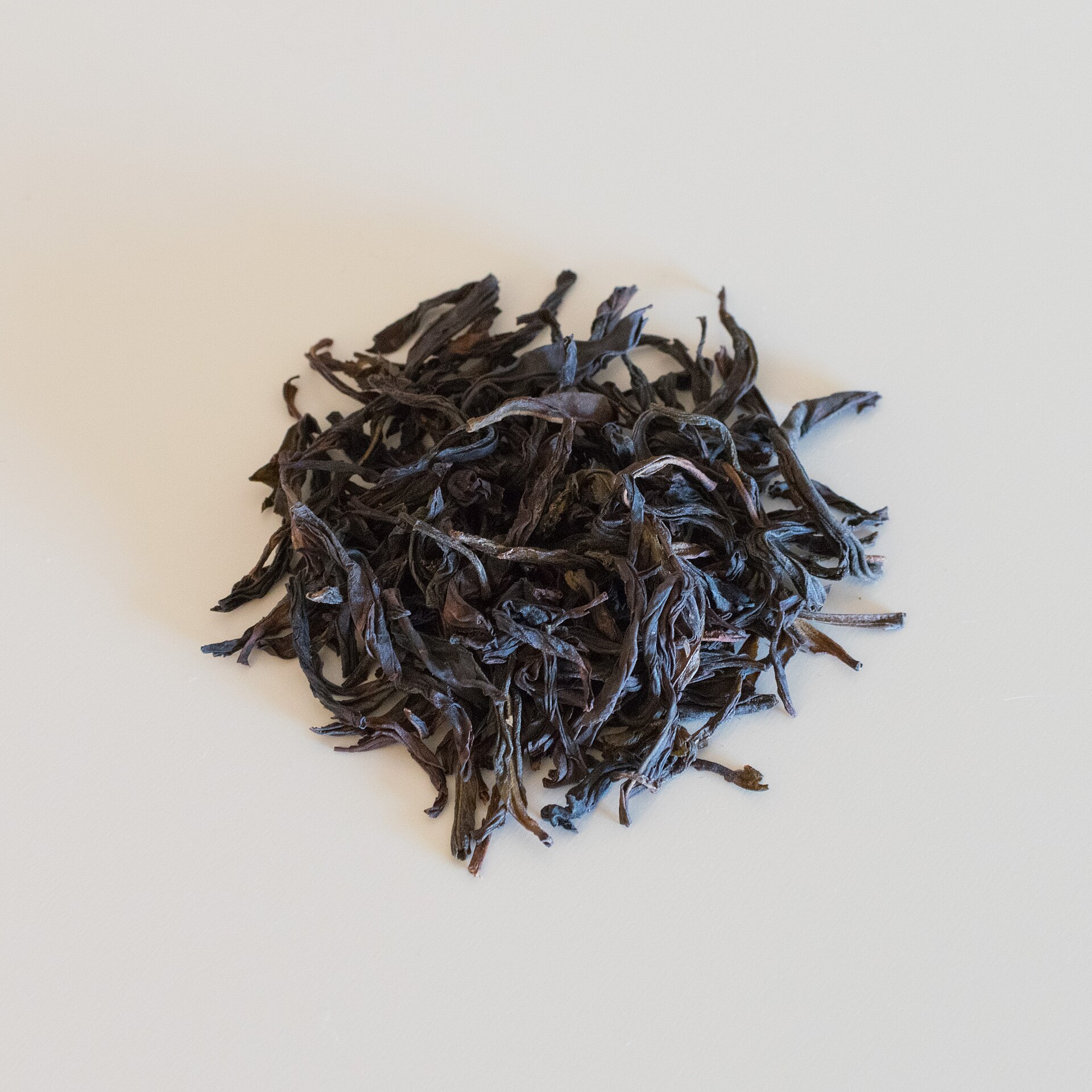
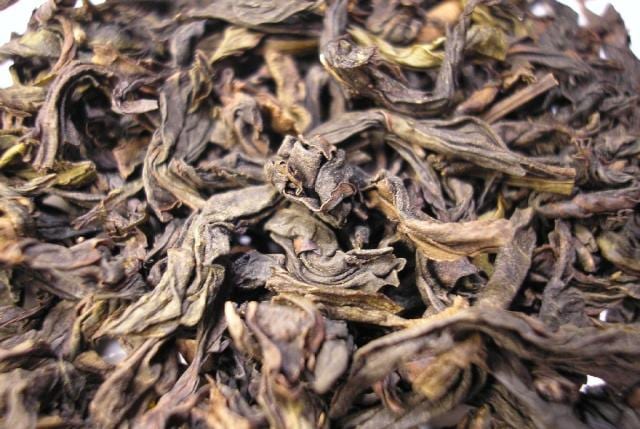
- Dry leaf: thick, tight strips, dark brown and slightly glossy, sometimes with yellow-brown tips.
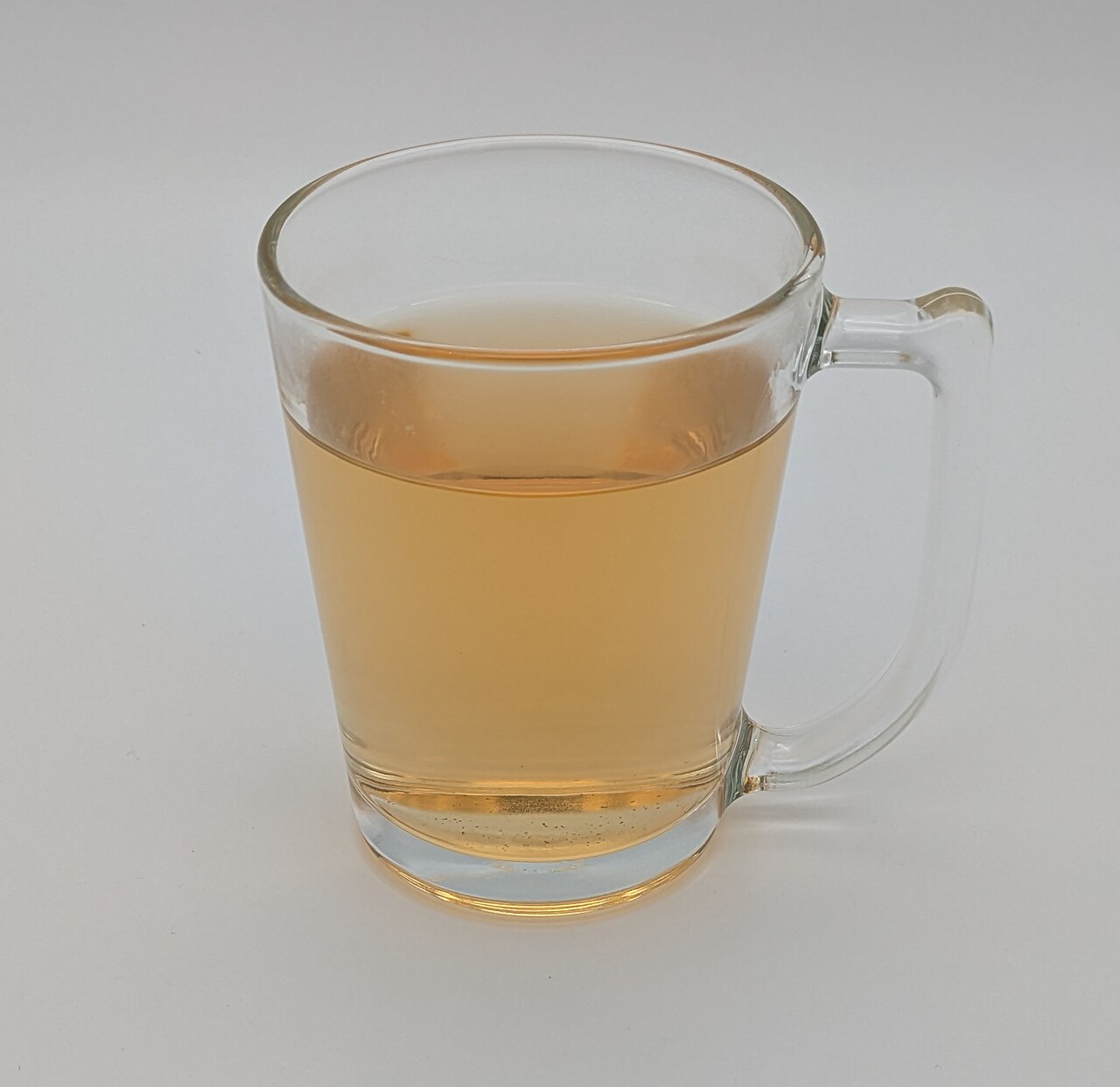
- Liquor: orange-gold to deep gold, clear and bright.
- Aroma: high, penetrating and long. Honey-orchid is sweet and creamy; gardenia is white-floral and sharp; magnolia is softer; almond has a nutty edge; cinnamon is warm and spicy.
- Mouthfeel: thick and sweet on entry, with a noticeable bitterness that should melt into a long aftertaste. The throat feels cool and moist.
- Leaf base: thick, soft, with a clear red edge against a green centre.
“Mountain rhyme” (shanyun) is not a lab measurement. It is the combination of a clean high aroma, a thick body, a deep aftertaste and a cooling throat feeling that high-elevation Dancong often shows. Lowland tea can be pleasant, but it usually has a shorter aroma and a thinner body.
Brewing
- Water: 95–100°C. Dancong needs heat.
- Leaf: 6–8 g per 120–150 ml gaiwan. The strips are tight, so use enough leaf.
- Vessel: white porcelain gaiwan is ideal. It lets you smell the lid and judge the liquor colour; Yixing clay softens the body but can absorb the high notes.
- Rinse: one quick rinse, then pour it off.
- Timing: first infusions fast — 5–10 seconds. Increase gradually. Do not park the leaf in water; Dancong turns bitter quickly.
- Number of infusions: good tea can last 8–12 rounds. The aroma fades before the body does, so smell the lid at every step.
Grades and buying
Dancong is usually graded by elevation, tree age, season and craft:
- High-mountain spring: the most aromatic and textured; expensive.
- Mid-mountain spring: the everyday sweet spot.
- Autumn/snowflake: lighter body, often a bright “autumn aroma”.
- Summer: coarser, more bitter, usually lower grade.
When buying:
- Line name. Honey-orchid or gardenia is an aroma type, not a grade. Ask for the specific garden, bush or batch.
- Origin. Fenghuang core area and Wudong cost more, but the word “Wudong” on a wrapper proves nothing by itself.
- Craft. Look for a clean, lively aroma, not a burnt or greenish one. The leaf base should be elastic, not stiff.
- Taste. Aroma should be high but not perfumed; body should be thick but not bitter; the finish should stay.
- Traceability. Chaozhou now runs a Dancong traceability system. A QR code can show the garden, picking, processing and testing record.
Ancient trees and history
The Chaozhou government reported in 2026 that Fenghuang township has about 15,000 tea trees over 100 years old, and that the “Da'an Songzhong” tree is about 600 years old. A 2019 municipal source gave more than 4,600 trees over 200 years. These are genetic resources, not a quality certificate: an old tree can be badly made, and a young bush can be excellent.
The popular story that a Song emperor, fleeing south, tasted a wild tea and named it “Songzhong” is not used here as history; no verifiable primary source was found. What is verifiable is a long tea-growing tradition in the Phoenix Mountains, followed by modern clonal selection, single-bush processing and standardisation in the 20th and 21st centuries.
Status
This English entry is an independent editorial rewrite. It uses GB/T 30357.6-2017 for the definition and product categories, the Chaozhou industry plan for the 19-step process and industry scale, and the 2026 municipal report for ancient-tree numbers. Imperial legends, exact cultivar counts, auction prices and “the only authentic origin” claims were removed. The page is marked reviewed; sources and wording will continue to be revised.