Scope
Guangdong lies south of the Nanling range. Tea gardens follow the Fenghuang Mountains of eastern Guangdong, the Nanling belt in the north, the Yunwu Mountains in the west and the edges of the Pearl River Delta. A 2026 provincial agriculture department briefing gives 1.7659 million mu of tea gardens and 203,500 tonnes of made tea; the 2024 statistical bulletin gives 191,700 tonnes. The two figures use different calibres. This page follows the department's latest briefing and uses the statistical bulletin as a cross-check. Guangdong is both a producer and one of China's largest tea consumption and distribution markets. Fenghuang Dancong, Yingde black tea, Hakka pan-fired green tea, Zijin Chancha and Xinhui tangerine tea form a layered industry; "Guangdong only makes oolong" is false.
Geography and terroir
The Tropic of Cancer crosses Guangdong. The Nanling range blocks cold air from the north, while the southern coast is moderated by the sea, producing a subtropical monsoon climate. The Fenghuang Mountains of eastern Guangdong rise into a rugged, misty landscape with strong differences in aspect and day–night temperature. Yingde and Shaoguan in the north combine limestone, Danxia landforms and river terraces. The Yunwu and Tianlu mountains of the west are humid with a long rainy season. The Pearl River Delta mixes alluvial plains, hills and urban markets. Red, lateritic red and yellow soils dominate; slope drainage and valley moisture are common terroir factors. The high aroma of Dancong, the strength of Yingde black tea and the freshness of Hakka pan-fired green tea all depend on cultivar, elevation, season and processing; "humid Lingnan" alone explains little.
Main tea areas
- Chaozhou–Fenghuang Mountains–Raoping: the core of Fenghuang Dancong, Fenghuang Shuixian, Lingtou Dancong and Raoping Baiye Dancong. In 2025 Chaozhou had 297,300 mu, 39,800 tonnes of made tea and RMB 9.521 billion in output value.
- Qingyuan–Yingde–Shaoguan: Yingde black tea, Yinghong No. 9, Liannan large-leaf tea and Renhua Baimaocha, the main black-tea and large-leaf green-tea belt of northern Guangdong.
- Meizhou–Dapu–Fengshun: Meizhou Hakka green tea, Dapu Xiyan tea and Fengshun green tea, where Danxia, mountains and Hakka culture meet.
- Heyuan–Zijin–Huizhou: Zijin Chancha, Heyuan Xianhu tea and Luokeng tea. The honey aroma caused by small green leafhopper bites is Zijin Chancha's signature.
- Jiangmen–Xinhui–Zhanjiang: Xinhui tangerine tea, tangerine black tea and Leizhou sea-red fragrant tea, close to the coast and the Pearl River Delta market.
- Pearl River Delta: Guangzhou, Shenzhen, Foshan and Dongguan wholesale markets, teahouses, tea spaces and new-style tea drinks make up Guangdong's consumer and distribution side.
Tea types and processing
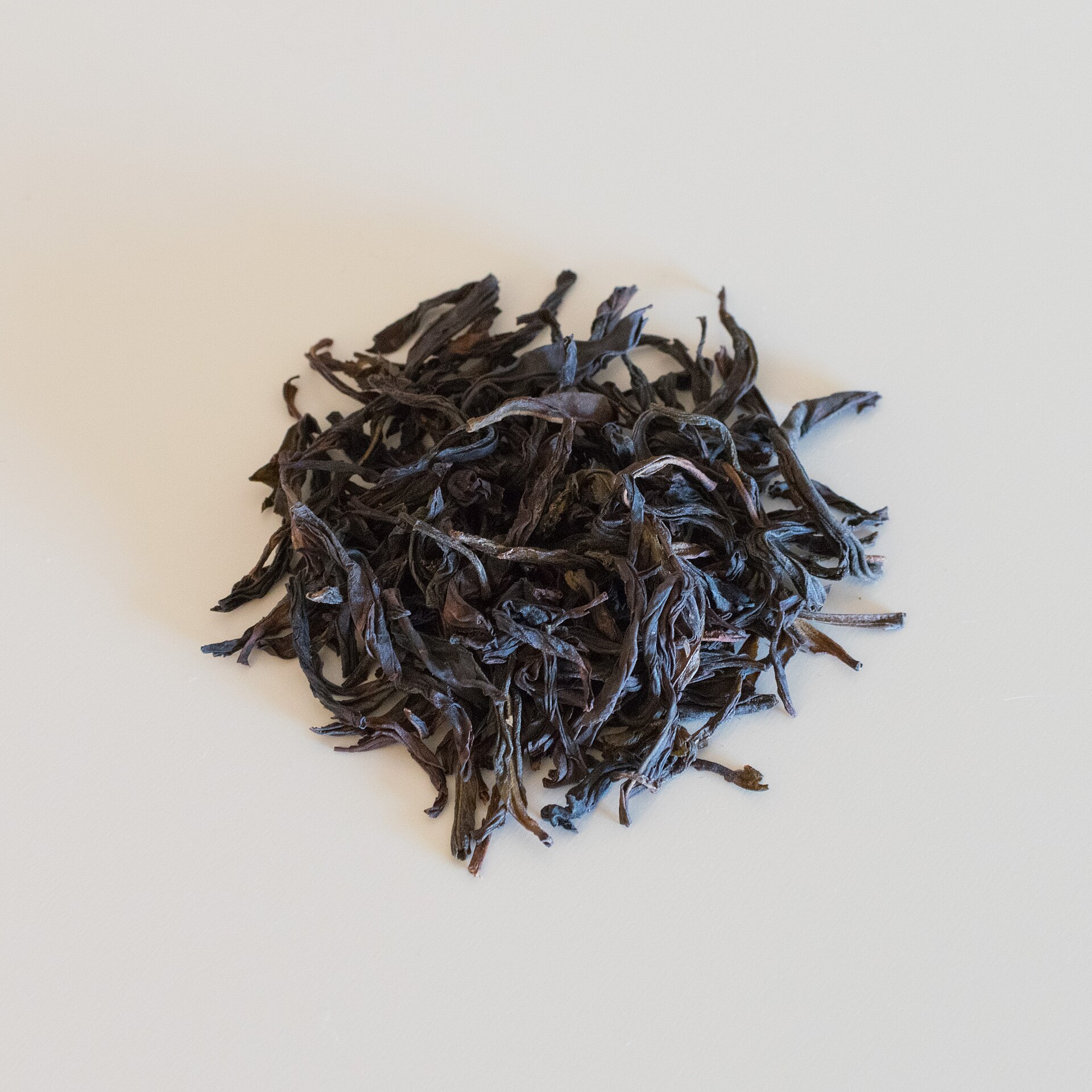
Oolong and black tea are the most recognisable Guangdong teas, but green and reprocessed teas remain important. Fenghuang Dancong is selected single-bush material from the Fenghuang Shuixian population. It goes through sun-withering, indoor withering, shaking and resting (zuoqing), kill-green, rolling and baking, producing floral, honeyed or fruity aroma profiles. Different bushes on the same slope can differ widely, and "Yashixiang" is only one cultivar's nickname. Yingde black tea uses large-leaf cultivars such as Yinghong No. 9, with withering, rolling, fermentation and drying; the strips are tight, the liquor bright red and the taste strong and fresh. Hakka pan-fired green tea relies on kill-green, rolling and pan-drying, with a pronounced wok fire. Xinhui tangerine tea combines tangerine peel with ripe Pu'er or black tea, bringing fruit, aged peel and tea together. Fermentation, roasting and leaf grade vary greatly across these categories; "Guangdong tea is always strong" flattens the picture.
History and market
Chaozhou gongfu tea is the most visible everyday practice of Lingnan tea culture: a small pot, small cups, a high pour and a low serve, with the "Guan Gong patrolling the city" and "Han Xin counting soldiers" pour to spread aroma and strength. The Fenghuang Mountains carry legends of old "Song-dynasty" bushes, while the commercial Dancong category grew out of modern single-bush selection and the Chaozhou tea market. Yingde black tea developed after the 1950s with the Yingde tea farms and the export system, and Yinghong No. 9 became its representative cultivar. Xinhui tangerine tea rode the consumption base of aged peel and Pu'er in the Pearl River Delta. Guangdong is China's largest tea consumption and distribution province; Guangzhou, Shenzhen and Dongguan markets connect producers with the whole country. In 2025 Chaozhou's tea output value reached RMB 9.521 billion; Yingde black tea's whole-chain value passed RMB 10 billion, and its 2026 regional public-brand value reached RMB 5.732 billion. These figures show market depth, not the quality of any single garden or leaf.
Common misunderstandings
- Fenghuang Dancong is not one cultivar or one aroma. It is a category of single-bush selections from the Fenghuang Shuixian population; aroma, bush age and processing all create differences.
- "Yashixiang" is not an insult. It is the nickname of one Dancong cultivar, often formally called Yinhuaxiang.
- Yingde black tea is not "English tea". It is a Chinese gongfu black tea made in Yingde, Guangdong, not a British blended tea.
- Guangdong is not only oolong. Black tea, green tea, reprocessed tangerine tea and new-style tea drinks all matter.
- "Strong aroma" is not a quality guarantee. Roasting, cultivar, leaf grade and brewing all shift the balance of aroma and taste.
Representative teas
The working index contains 24 regional teas. Only the one that has passed the public gate is linked here; the rest remain in editorial review.
Further reading and sources
Provincial statistics, production-area data and brand information are drawn from the sources below. Definitions, grades and processing for individual teas follow their own entries.