A regional tea, not a single product
Phú Thọ black tea (chè đen Phú Thọ) is black tea from Phú Thọ Province in northern Vietnam. “Black tea” here means chè đen, a fully oxidised tea in the same family as what English calls black tea. It is not a Chinese-style dark tea such as pu-erh or liubao, and it is not a post-fermented tea.
It is also not a brand, an estate or a fixed recipe. The province has dozens of processors, a cluster of traditional tea villages and thousands of growers. Products range from Orthodox leaf to CTC granules. The name is best understood as a region plus a tea type: the origin has a boundary, the product does not have one standard template.
That shapes the writing. There is no province-wide sensory table to publish, and no single company's export formula should be presented as the provincial norm. What can be documented is scale, product mix, processing routes and export direction.
Scale: 14,500 hectares, second nationally by area
The provincial government's 2026 figures:
| Measure | Figure |
|---|---|
| Tea area | about 14,500 ha |
| Fresh leaf | 193,000 tonnes a year |
| National position | second by area |
| Large processors | 76 |
| Traditional tea villages | 18 |
| Cooperatives | 12 |
| Tea-growing communes | 58 |
| Growing-area codes | 3,800 ha |
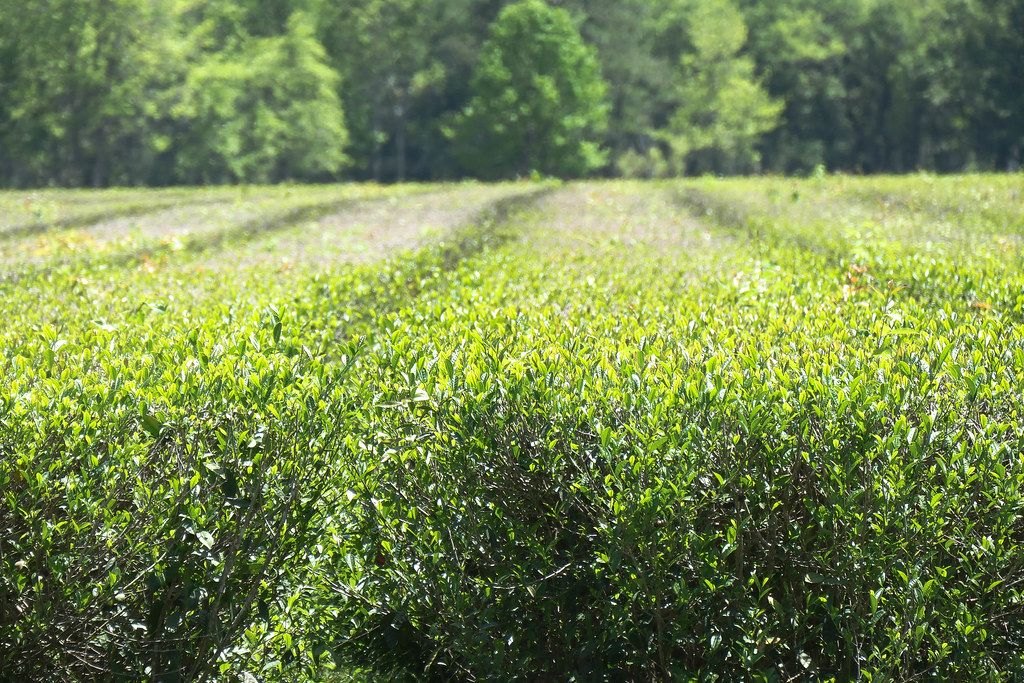
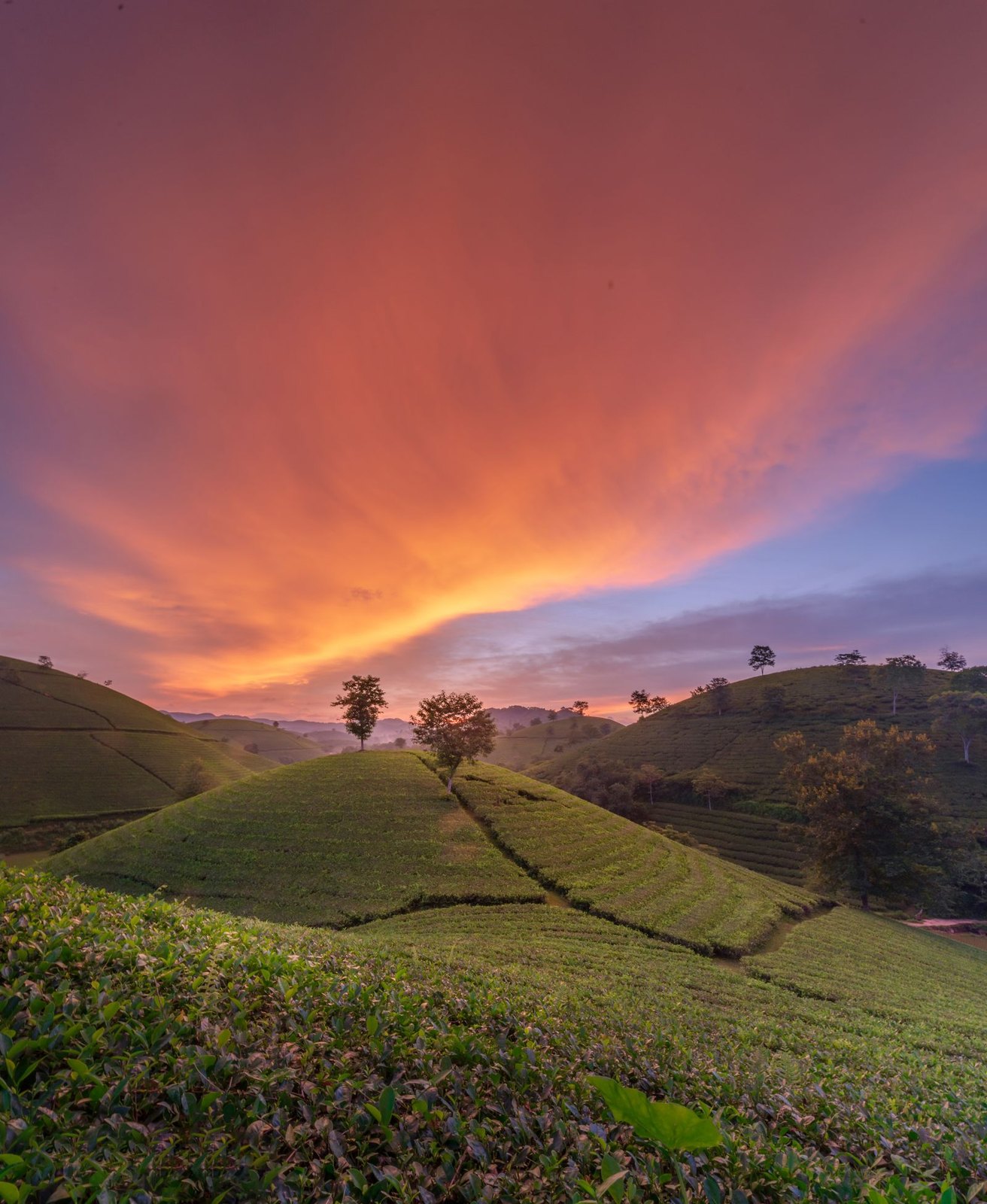
Phú Thọ sits in the midland and mountain zone of northern Vietnam, with tea on sloping hills. The scale makes it one of Vietnam's most important tea regions, but not the only one: Thái Nguyên, Sơn La and Lâm Đồng have different product profiles.
Growing-area codes are an export tool. They register blocks, area and growers so buyers can trace residue and origin. The 3,800 ha under codes are not the same as saying all 14,500 ha have reached that level of traceability.
Product mix: about 70% black tea, Orthodox and CTC together
About 70% of Phú Thọ's processed tea is black tea; the rest is mainly green tea. Black tea is export-oriented, with markets in India, China, Pakistan, Indonesia, the UK, Russia and the Middle East, and more recent sales to the US, the EU and Japan.
Two processing routes coexist:
- Orthodox: whole-leaf or broken-leaf tea, with rolling and drying designed to keep more of the leaf structure; suited to loose-leaf drinking and leaf presentation.
- CTC: crush–tear–curl, a granular product that extracts fast and strong; used in tea bags and milk-blend formulations.
Asia Tea's factory in Yên Lập is a concrete example: it started with an Orthodox black tea line in 2009, added CTC in 2010, and handles 150 tonnes of fresh leaf a day. That is one company's timeline, not the provincial timeline, but it shows that both routes are real in Phú Thọ.
Neither route is “better.” Orthodox supports origin storytelling and loose-leaf brewing; CTC supports stable, strong, low-cost export blends. A page that calls all Phú Thọ tea “whole-leaf” or all of it “broken” is wrong.
Flavour: no province-wide standard
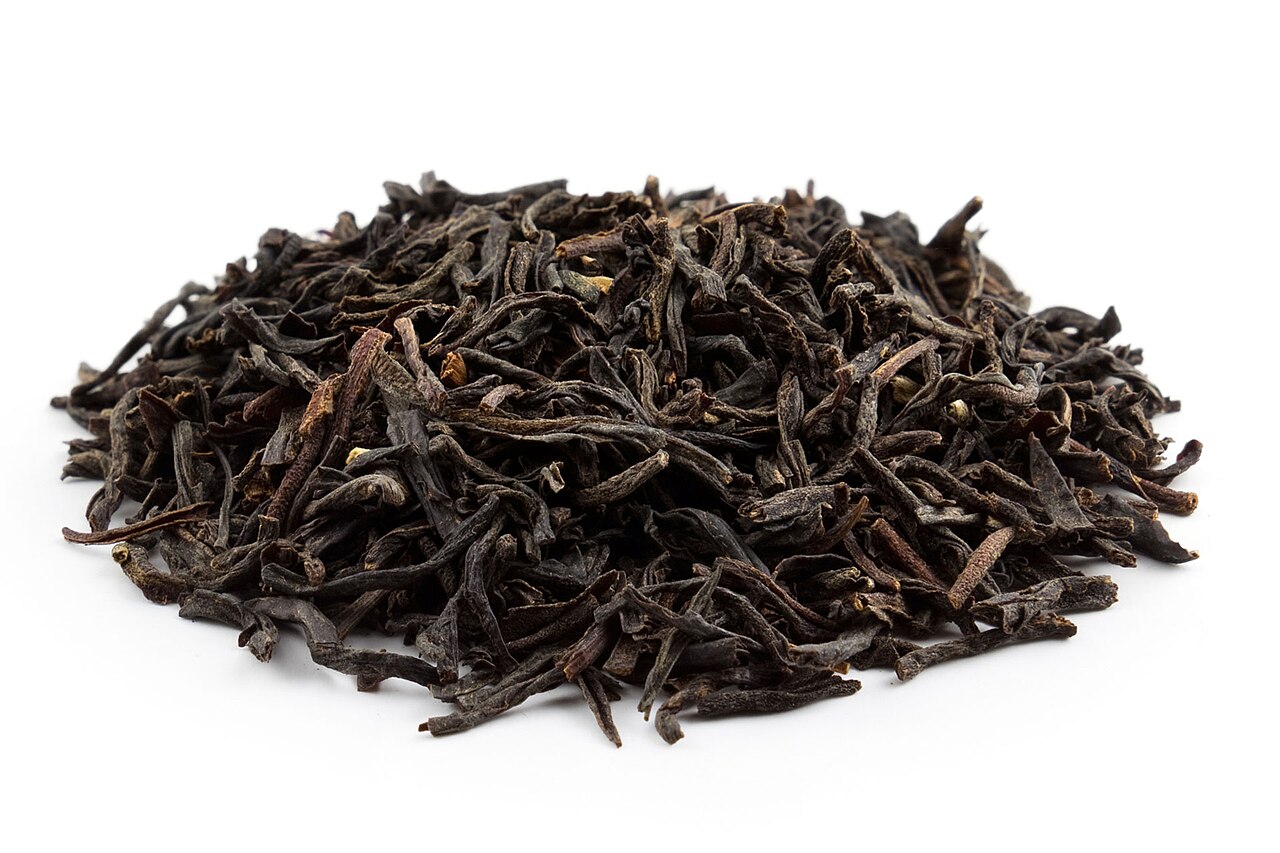
The official material does not publish a single sensory standard for Phú Thọ black tea. What can be said is that it is fully oxidised, usually red in the cup and relatively strong, suitable for drinking plain or with milk and for blending. Specific notes — malt, caramel, wood, floral — depend on cultivar, season, oxidation and drying.
That is the main difference from a “famous mountain” tea. Phú Thọ's competitive advantage is scale, export standards and cost, not one estate's signature aroma. At the point of sale, grade, sieve size, season and production date matter more than the words “Phú Thọ.”
History: 1958 is the verifiable marker
The old draft pushed the history back to “Ly dynasty tribute to the Song” and added a late-19th-century “first black tea factory in northern Vietnam,” a French botanist's “500-year wild tea trees” and a Hùng King tea-ancestor legend. None of those had a reliable source in this review, and they are removed.
The modern marker that can be documented is 20 July 1958, when Ho Chi Minh visited the Phú Thọ tea factory in Đào Giã. That shows early state attention to the area's tea industry; it does not prove that Vietnamese black tea began in 1958.
Phú Thọ's tea economy took its modern shape through state factories, household growing and export channels in the later 20th century. The processors, traditional villages and cooperatives visible today are the result of that longer evolution. Specific “firsts” without a source are left out.
Exports: about 30,000 tonnes in seven months of 2026
Phú Thọ tea is export-oriented. In the first seven months of 2026, the province exported about 30,000 tonnes, with markets including the Middle East, Russia, China, Pakistan, India, Indonesia and the UK, plus efforts in the US, the EU and Japan.
That structure explains two things:
- Why black tea dominates: international demand for CTC and Orthodox black tea is stable, and export blends scale more easily than a single high-end green tea.
- Why grade matters more than origin story: export buyers look at sieve size, strength, residues and delivery reliability before they look at a provincial narrative.
This is not to say Phú Thọ has no high-end tea. The province is also promoting the “Trà Đất Tổ” brand and higher-value products. But the mass export base is still black tea, CTC and blends. Keep “export commodity” and “premium niche” separate so the two do not contradict each other.
Brewing: treat it as black tea
Phú Thọ black tea is fully oxidised, so brew it like black tea:
- leaf: 3 g to 150–200 ml;
- water: 90–95°C;
- time: 2–3 minutes for the first steep; 1–2 minutes for CTC;
- additions: milk, sugar or lemon work; CTC is the better base for milk tea.
Orthodox leaf holds up for two or three steeps. CTC extracts fast and is strong in the first cup; do not leave it sitting. If the cup is too astringent, reduce leaf or shorten the time rather than trying to “wash” the tea.
Common errors
| Claim | Problem | Better wording |
|---|---|---|
| “Ly dynasty tribute to the Song” | No reliable source | Do not write an ancient tribute line |
| “First black tea factory in northern Vietnam, late 19th century” | No verifiable “first” record | Only the 1958 Ho Chi Minh visit |
| “500-year wild tea trees” | No species, age or location evidence | Do not give an ancient-tree number |
| “Hùng King tea ancestor” | Legend, not industry history | Can be told as legend, not as fact |
| “All Phú Thọ black tea tastes the same” | No province-wide sensory standard | A regional type; flavour varies by grade and processor |
| “All Orthodox” | CTC is also significant | Orthodox and CTC coexist |
| “Vietnamese pu-erh-style dark tea” | Chè đen is fully oxidised black tea | Say black tea / fully oxidised tea |
Where it sits in Vietnamese tea
Phú Thọ's value is not that it is “older than Thái Nguyên” or “more premium than Sơn La.” It is a documented example of Vietnam's bulk tea export capacity: 14,500 ha, 193,000 tonnes of fresh leaf, 76 processors, about 70% black tea and a 30,000-tonne export flow.
For anyone learning Vietnamese tea, Phú Thọ is a useful starting point because it is neither a single estate nor an abstract category. It has a defined region, defined processing routes and defined export markets. Accept that it is a regional tea type first, and the “largest,” “century-old tree” sales language loses its grip.
Source boundary
Confirmed here: the regional fully oxidised identity, 14,500 ha, 193,000 tonnes of fresh leaf, second nationally by area, 76 processors, 18 tea villages, 12 cooperatives, 58 tea communes, 3,800 ha of growing-area codes, about 70% black tea, Orthodox and CTC coexistence, about 30,000 tonnes exported in seven months of 2026, and the 1958 Ho Chi Minh visit.
Not confirmed here: a province-wide sensory standard, exact cultivar shares, a single company's export price, the traceability status of every garden, or the number of ancient tea plants. For a specific product, read the grade, producer, export standard and test information.