What it is
“Boston tea” can mean a historical event, a commercial brand or a museum product. Abigail's Blend is the museum product: a signature black-tea blend commissioned by the Boston Tea Party Ships & Museum and Abigail's Tea Room, created by tea master Bruce Richardson and crafted by Elmwood Inn Fine Teas. It is named for Abigail Adams.
It is not the tea thrown into Boston Harbor in 1773. It is not the “Boston Harbour Tea” commercial brand either. It is a modern commemorative blend that uses today's black teas to recall the Chinese black teas of 1773. The museum's own description is “reminiscent of the flavours found in the Chinese black teas thrown overboard … but better”.
The 1773 event
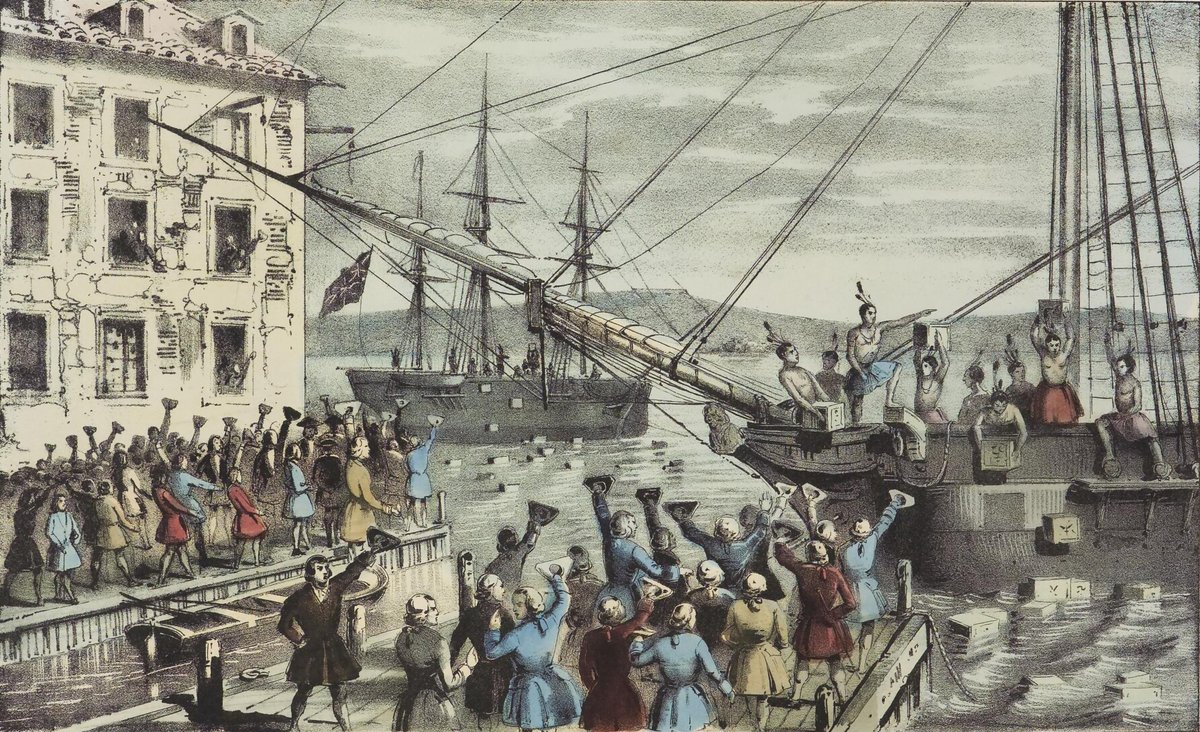
On 16 December 1773, Boston colonists boarded three ships at Griffin's Wharf — Beaver, Dartmouth and Eleanor — and dumped 340 chests of East India Company tea into Boston Harbor. The museum's official page gives the weight as over 92,000 lb (about 46 tonnes); the Massachusetts Historical Society gives “some 90,000 lb”. These are two rounded accounts of the same event, not two events.
The East India Company's 1774 compensation letter itemises the cargo: Bohea, Singlo, Hyson, Congou and other teas. Bruce Richardson says about 80% of the tea thrown overboard was Chinese black tea, with the rest green tea. That is why Abigail's Blend starts with Chinese black tea rather than an Indian black tea base.
The museum fact sheet calls the Boston Tea Party “the single most important event leading up to the American Revolution”. That is the museum's historical framing. It is not a claim that the tea party was the only cause of the Revolution; the political, tax and colonial conflicts behind the event were broader.
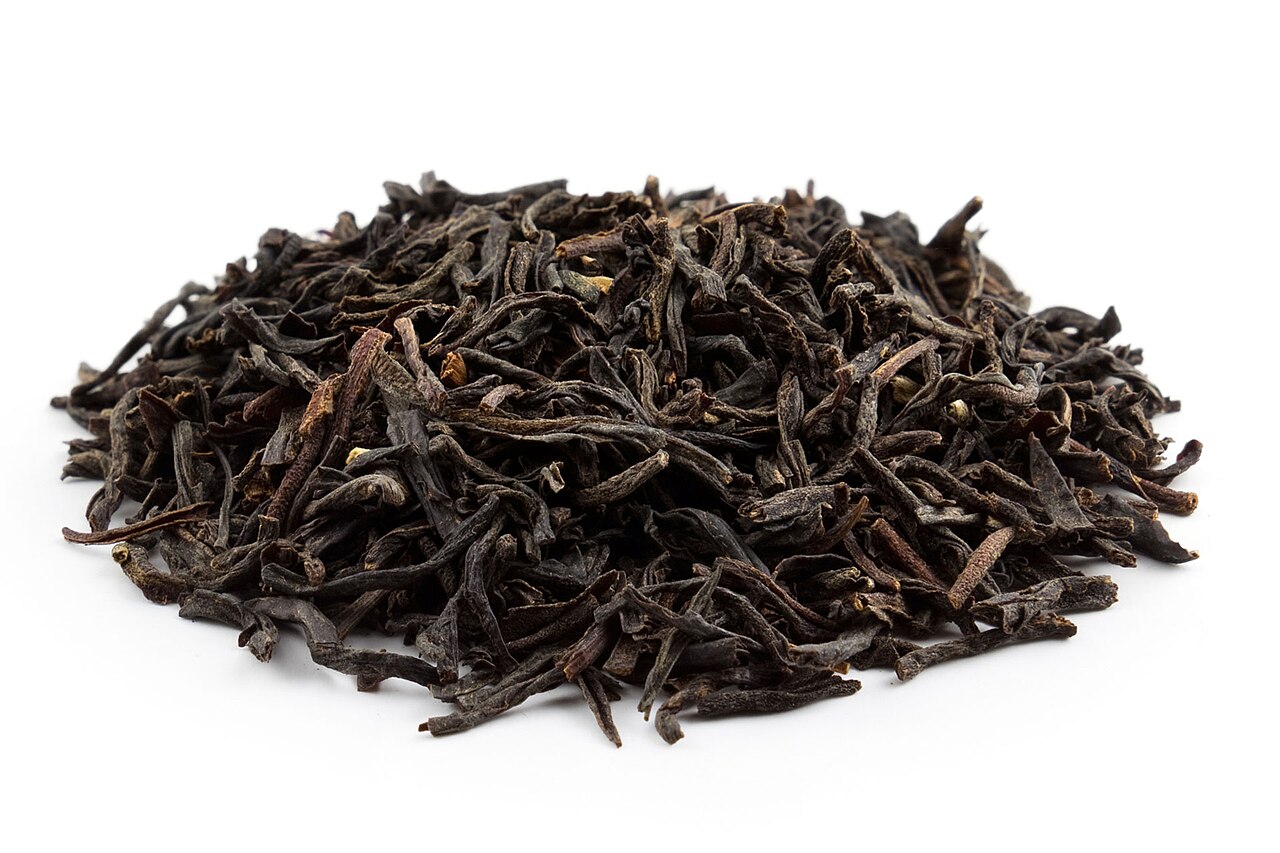
The blend: Yunnan black tea, Assam, Nilgiri and Kenya
Bruce Richardson describes the blend in four layers:
| Layer | Role |
|---|---|
| Chinese Yunnan black tea | Provides the earthy, woody, full-bodied base that recalls the Chinese black teas of 1773 |
| Assam black tea | Adds malt, strength and body |
| Nilgiri black tea | Smooths and rounds the blend |
| Kenyan black tea | Adds a bright, familiar British-style foundation |
The official material does not give percentages. “Five teas with an exact recipe” or “40% Yunnan, 30% Assam” would be invented. What can be confirmed is the four origins and the structure: a Chinese black-tea base softened and lifted by modern Indian and African black teas.
The product: 3.5 oz loose tea or 14 pyramid bags
The official shop lists:
- 3.5 oz (99 g) loose tea;
- 14 pyramid tea bags;
- official price $17.99;
- ingredient: handpicked black teas;
- crafted exclusively for the museum by Elmwood Inn Fine Teas;
- gluten free.
“Handpicked black teas” is an ingredient description, not proof that every step of the blend is handmade. It does suggest leaf-grade tea rather than dust or fannings. Do not turn it into “all-handmade”.
Flavour and drinking
The official serving advice is broad: hot or iced, with or without milk. That tells you the blend is neither a delicate tea that needs to be drunk plain nor a brute-strength breakfast tea that only works with milk. Plain, the Yunnan base and Assam malt come first; with milk, the Nilgiri and Kenyan brightness keep the cup from going flat.
The official material does not give gram, temperature and time figures. As an editorial starting point, try 3 g tea, 200 ml water, 95°C, 3–4 minutes. For milk, make the tea a little stronger; for iced tea, steep the same ratio, remove the leaf, then chill or pour over ice. These are editorial suggestions, not pack instructions.
History vs product
Three things need to stay separate:
- The 1773 event: 340 chests of East India Company tea were dumped into Boston Harbor.
- The museum product: Abigail's Blend, a modern blend named for Abigail Adams.
- The commercial brand: Boston Harbour Tea and similar names are separate market products, not the museum blend.
Merging them into “a Boston tea brand founded in 1773” turns a historical event, a museum souvenir and a commercial brand into one false story. Abigail's Blend is a commemorative tea. It can recall 1773; it is not from 1773.
Common misreadings
| Common shorthand | Problem | Better wording |
|---|---|---|
| “The Boston Tea Party was the sole cause of the American Revolution” | The Revolution had multiple political and economic causes | The museum calls it the most important event leading up to the Revolution |
| “Five teas with an exact recipe” | The official material gives no percentages | Yunnan black tea + Assam + Nilgiri + Kenya |
| “The brand was founded in 1773” | The product is a modern museum blend | A modern commemorative blend sold by the museum |
| “Abigail's Blend is the original 1773 tea” | The original tea was dumped into the harbor | A modern blend inspired by the original flavours |
| “Boston Harbour Tea is the museum product” | It is a separate commercial brand | Keep the museum blend and the commercial brand separate |
Source boundary
This page can confirm: Abigail's Blend was commissioned by the Boston Tea Party Ships & Museum and Abigail's Tea Room, created by Bruce Richardson and crafted by Elmwood Inn Fine Teas; it is named for Abigail Adams; the blend uses Chinese Yunnan black tea, Assam, Nilgiri and Kenyan black tea; on 16 December 1773, 340 chests weighing over 92,000 lb were dumped into Boston Harbor, about 80% Chinese black tea; the product comes as 3.5 oz loose tea or 14 pyramid bags at $17.99; it can be served hot or iced, with or without milk.
This page does not confirm: exact blend percentages, the year and grade of each component, current stock or discounts, or the personal details of Abigail Adams' connection to the tea. The image is Nathaniel Currier's 1846 lithograph, a historical illustration, not the product pack and not a photograph of 1773.