In one sentence
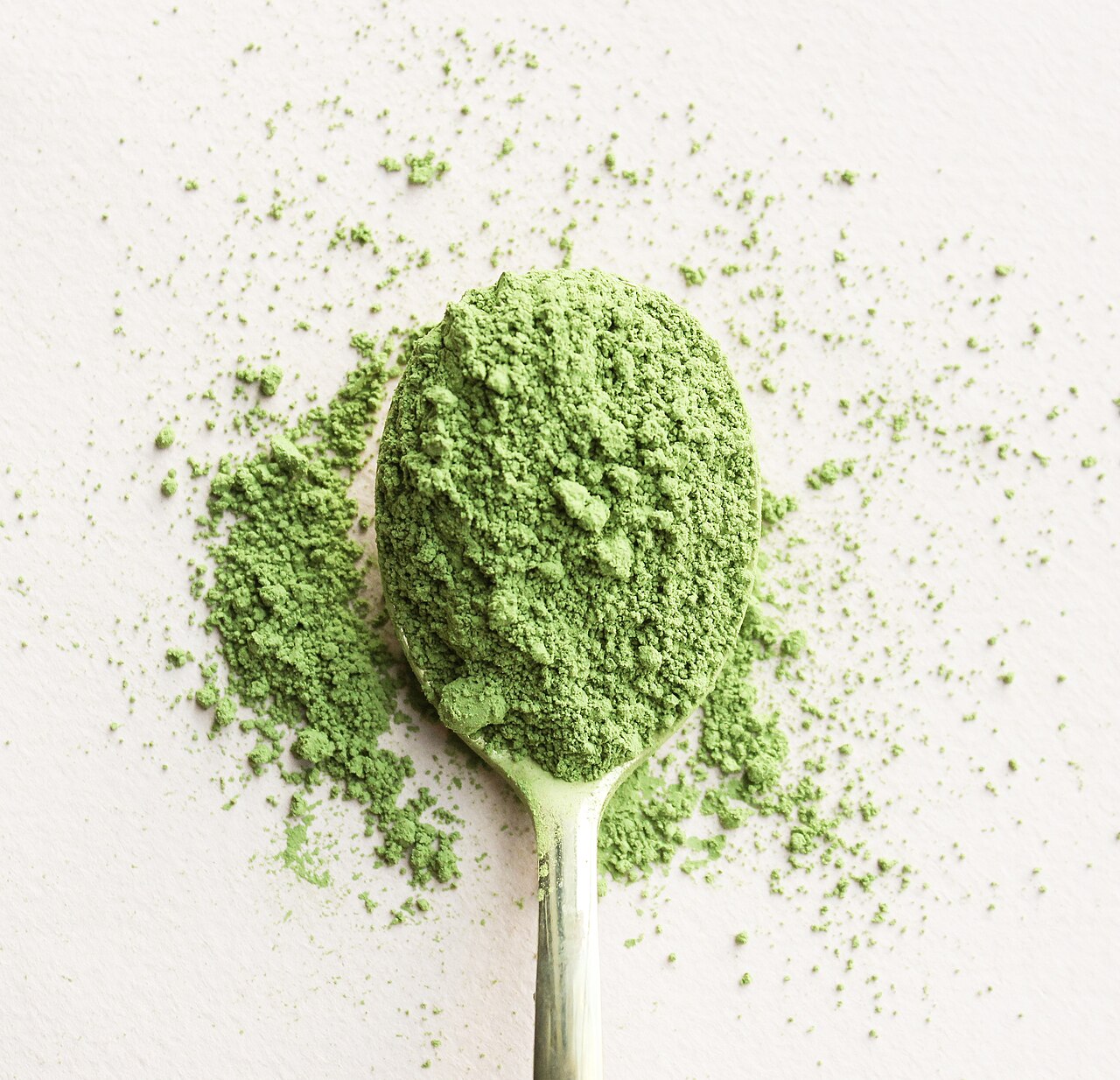
Korean matcha — 말차, malcha — is shade-grown green tea leaf, steamed, dried, de-veined and milled into a fine powder. It belongs to the same powder-tea family as Japanese matcha, but it is not a copy. Korean producers use their own cultivars, districts, shade regimes and milling, and the cup reflects that.
Where it grows
Korean green tea is concentrated in the south:
- Boseong, Jeollanam-do: one of the country’s best-known tea counties, home to the Tea Museum of Korea and the Daehan Dawon plantation.
- Hadong, Gyeongsangnam-do: FAO describes about 1,200 years of tea growing in Hwagae-myeon, a hand-fired tea tradition, and roughly 20% of national tea output from that one township. In 2015, 801 of 951 tea-farming households there worked in tea.
- Jeju: a volcanic island with warm winters, tea fields and citrus orchards side by side.
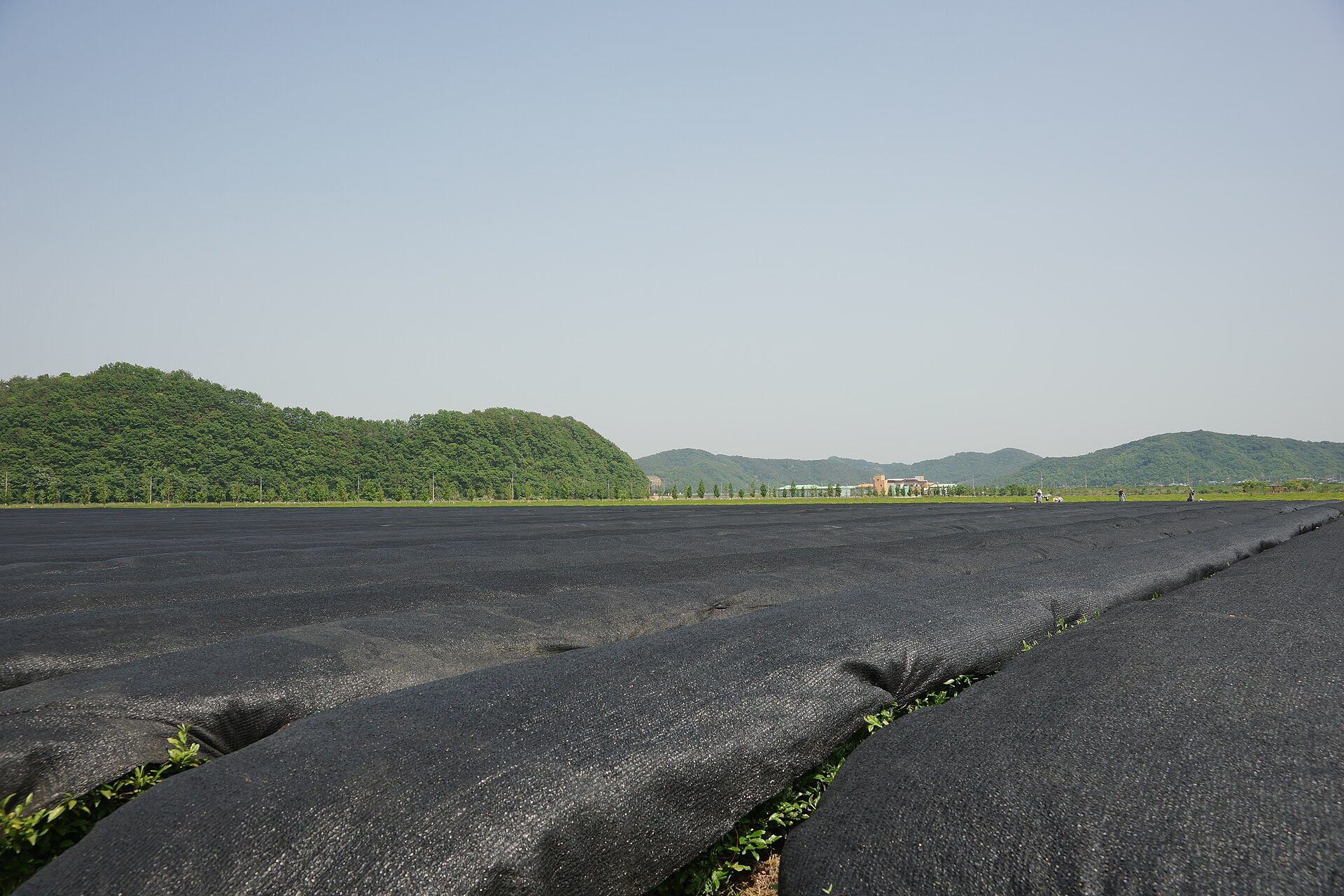
Hadong has recently promoted “Hadong matcha” as a brand and export project. Local reporting says the leaf is shaded before harvest to raise chlorophyll and deepen the green, and that the powder is softly sweet, smooth in aroma and bittersweet at the finish. Boseong also has certified organic matcha: the national eco-agriculture certification database lists an “organic Boseong matcha” product under certification number 15800020.
How it is made
The basic sequence is close to Japanese matcha:
- Shade the bushes for a period before harvest to reduce direct light, deepen colour and lower astringency.
- Pick the spring flush, mainly buds and young leaves.
- Steam quickly to fix colour and flavour.
- Dry the leaf.
- De-stem and de-vein so only the soft lamina remains.
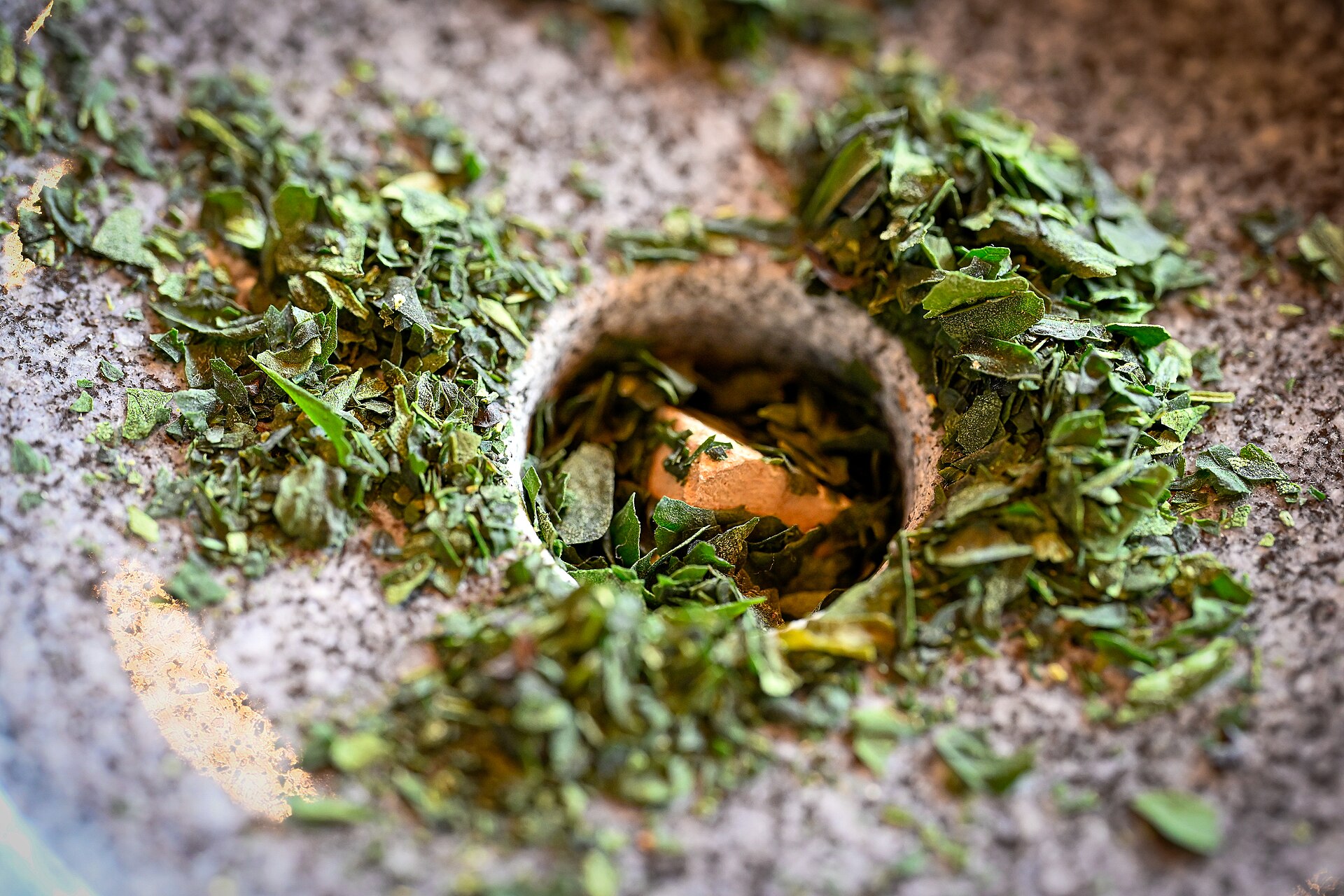
- Mill with a stone mill or a mechanical mill to a micron-level powder.
The differences are in the details: Korean cultivars, shade duration, steaming equipment, milling fineness and blending. Korean matcha can range from bright green to deep green, and from seaweed and grass to nutty and sweet. One “Japanese matcha” template does not fit all of it.
Flavour
- Powder: bright to deep green, fine, with grass, seaweed and a light sweetness.
- Liquor: green to deep green, with powder in suspension; the foam is often thinner than top-grade Japanese matcha.
- Aroma: grass, seaweed, bean and nut; Korean versions are often described as less astringent, sweeter and softer in texture.
- Taste: soft and savoury at the front, mild bitterness, a sweet finish; good shading keeps the astringency low.
- Body: fine, rounded, not gritty.
Whisking
- Ratio: 1 g powder to 60 ml water at about 75°C.
- Sift the powder first to break clumps.
- Whisk: make a paste with a little water, add the rest, then whisk in a W motion with a bamboo chasen until a fine foam forms.
- No boiling water: it scalds the powder and brings out a cooked, bitter note.
- Drink soon: the powder settles.
Korean vs Japanese matcha
| Dimension | Korean matcha | Japanese matcha |
|---|---|---|
| Main districts | Boseong, Hadong, Jeju | Uji, Kagoshima, Aichi and others |
| Cultivars | Korean local and selected cultivars | Asahi, Uji kōmidori and others |
| Shade | Used, duration varies by district | Used, often 20–30 days |
| Steaming | Used | Used |
| Milling | Stone or mechanical | Mostly stone |
| Flavour | Often lower astringency, softer sweetness | More seaweed, umami and astringency |
| Certification | Organic certification, local brands | Uji matcha GI and other schemes |
Buying
- Colour: bright to deep green; not yellow or grey.
- Aroma: grass, seaweed and bean; no stale or warehouse smell, no flavouring.
- Texture: fine between the fingers, no grit or clumps.
- Origin: Boseong, Hadong or Jeju; look for the producer, a certification or a local brand.
- Date: matcha oxidises fast. Buy small, keep cold and dark, use soon after opening.
- Use: ceremonial/thin-tea grade for whisking; food grade is fine for lattes and baking.
Cultural place
Korean tea culture separates “tea” from the wider family of fruit, grain and root infusions. Matcha is not a ancient everyday habit for most Koreans; it is a recent revival driven by cafés, baking and export demand. Hadong and Boseong use it as a local brand — a continuation of the green-tea tradition and a new market move at the same time. A claim of a thousand-year Korean matcha tradition would overstate the case. A more accurate sentence is: Korea has a long green-tea tradition; matcha is one contemporary branch of it.
Sources and status
The entry relies on FAO’s Hadong agrosystem profile for the 1,200-year growing history, the household figures and the mountain conditions; on Korea.net for the Hadong and Boseong district roles and the green-tea classification; and on Hadong News for the shading practice and flavour description. No Korean national processing standard or matcha geographical indication was located for this batch, so the entry avoids “national standard” and “GI” claims. Old lines such as “Korean matcha derives from Japanese matcha”, “Boseong is the world’s largest matcha producer” and “matcha was a Joseon court daily” have been removed. The page is reviewed for structure and sourcing, not as a regulatory standard.