First, the taxonomic boundary
Hwangcha (황차) is a Korean tea name usually rendered in English as Korean yellow tea. The “yellow” refers mainly to the colour of the liquor and the leaf, not to the Chinese yellow-tea process known as menhuang or sealed-yellow.
The difference is simple:
- Chinese yellow tea: after kill-green, the warm leaf is piled and sealed so that it turns yellow under heat and moisture. Junshan Yinzhen, Huoshan Huangya and Mengding Huangya are examples.
- Korean hwangcha: the leaf is allowed to oxidise to a substantial degree, then pan-fired to fix the tea. Hankook Tea gives a range of roughly 50–80% oxidation.
In process terms, hwangcha sits closer to a partially oxidised oolong than to a Chinese yellow tea. Calling it “a branch of Chinese yellow tea” is a category error.
Why the name “yellow tea” survives
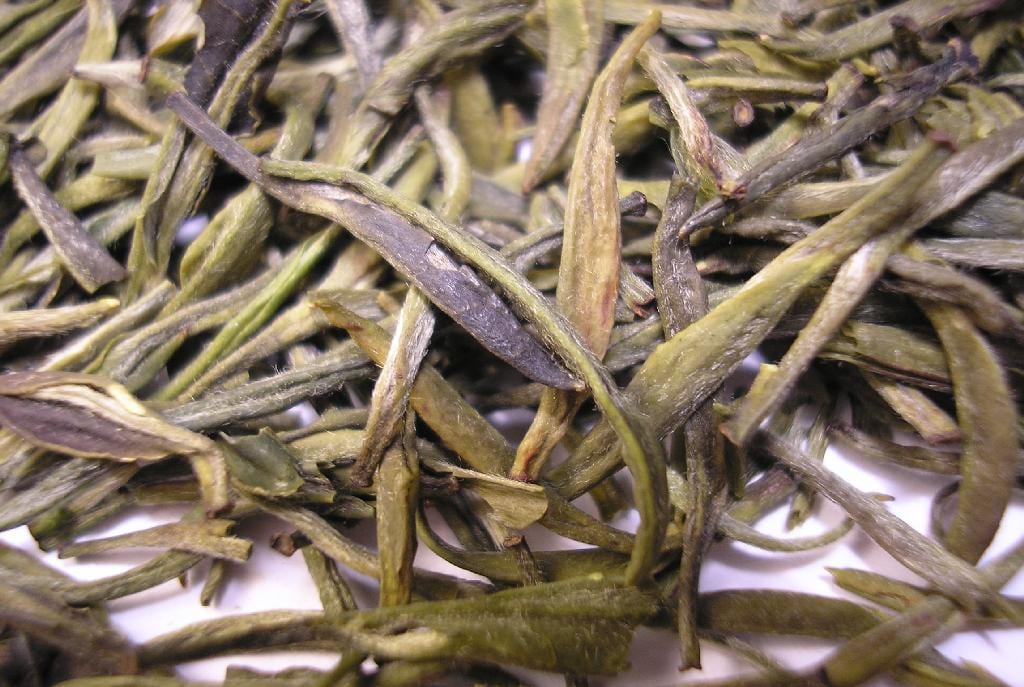
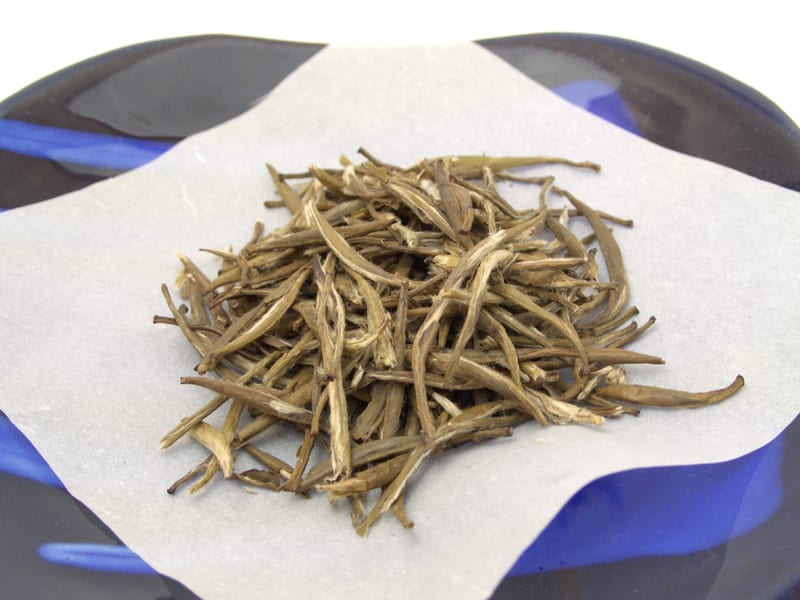
“Hwang” means yellow and “cha” means tea. The finished liquor often looks amber, golden or orange, and the wet leaf can carry a yellowish-brown tone. English-language sellers therefore use “Korean yellow tea” as a readable trade name. It is a colour-and-market name, not a claim that the tea belongs to the Chinese six-category system.
Hankook Tea's guide places hwangcha squarely in the partially oxidised family and gives about 50–80% oxidation. That range is wide on purpose: different makers and batches can land closer to a floral, green-edged style or closer to a cooked-fruit, amber style. There is no single fixed “hwangcha oxidation number” that all producers must follow.
The process: oxidation, pan-firing, two to three days
According to Hankook Tea's public explanation, the basic route is:
- allow the freshly picked leaf to oxidise to roughly 50–80%;
- pan-fire to stop oxidation and fix the flavour;
- roll and dry, with the whole cycle taking about two to three days.
This is what separates hwangcha from both neighbouring families. It is not green tea, because oxidation is allowed to proceed. It is not black tea, because oxidation is stopped around the halfway mark rather than taken to completion. The result is a tea with some of green tea's freshness and some of black tea's roundness, cooked fruit and sweetness.
The 50–80% figure is Hankook Tea's industry description, not a statutory Korean standard. Other producers may publish different numbers, and some use the broader term balhyocha for partially oxidised tea. The reliable way to identify hwangcha is to read the process description, not just the colour on the pack.
A concrete product: Hwang Cha Gold
Hankook Tea's Hwang Cha Gold, Early Spring Harvest gives a checkable example:
- type: hwang cha / Korean yellow tea;
- harvest: early spring;
- grade: Sejak;
- leaf: traditional jae-rae-jong seed-grown material from the company's own Honam gardens;
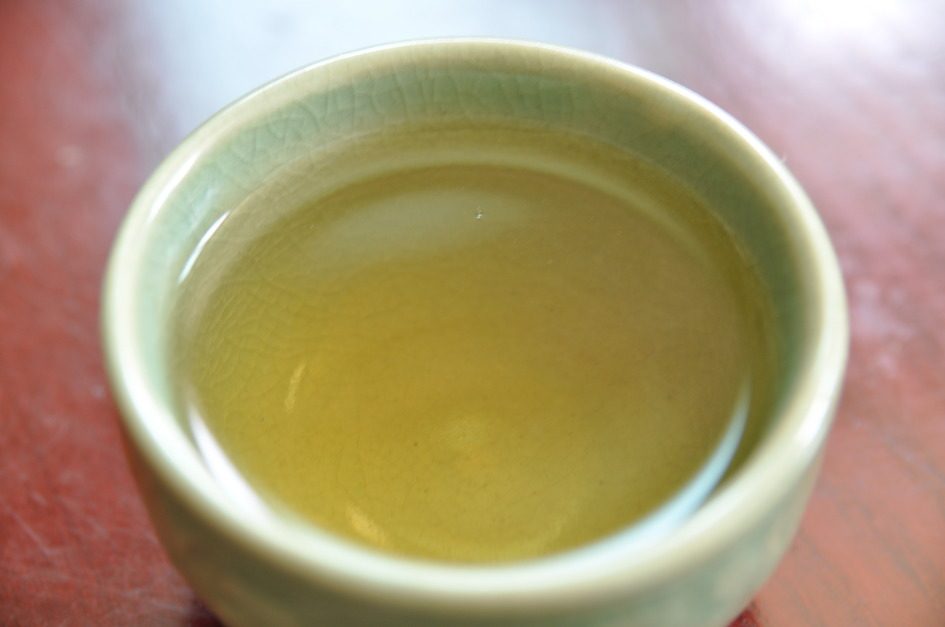
- liquor: amber and smooth;
- pack: 80 g canister.
Sejak is a grade in Korean spring-tea sorting. It is not a Chinese tea grade and not a national mandatory standard. It tells you where this product sits in the maker's own picking and grading system; translating it as “second grade” or “pre-Qingming” would be misleading.
Likewise, jae-rae-jong is a traditional Korean seed-grown population, not a Chinese clone name. It tells you that the material comes from seed-propagated local plants rather than one named clone. That fact belongs to this product page; it should not be stretched into “all hwangcha is made from jae-rae-jong”.
How to brew it
Hwangcha is more forgiving than a fine green tea. The product page does not give a single official recipe, so a conservative starting point is:
| Item | Suggestion |
|---|---|
| Leaf | 3 g |
| Water | 150 ml |
| Temperature | 85–90°C |
| Time | 1–1.5 minutes for the first infusion, then lengthen |
| Vessel | gaiwan or small teapot |
This is a brewing suggestion, not a manufacturer's standard. For a greener, lighter cup, drop to 80–85°C and shorten the infusion. For more cooked-fruit sweetness, use water at the higher end and add a little time. Avoid a long rolling boil, which pulls out bitterness.
What not to confuse it with
- Chinese yellow tea: Junshan Yinzhen, Huoshan Huangya, Mengding Huangya and others; the defining step is sealed-yellow, not 50–80% oxidation.
- Korean green tea: unoxidised, fresh and often beany or seaweed-like.
- Korean black tea: more fully oxidised, redder liquor, heavier fruit and sweetness.
- Hwangcha: a partially oxidised tea in between, amber to golden liquor, rounder than green tea.
When buying, read the process line before the colour word. “Yellow tea” alone can easily lead a drinker to expect a Chinese menhuang tea that this is not.
Certainty and sources
The page rests on three layers. Hankook Tea's official guide defines hwangcha as a partially oxidised, pan-fired tea with about 50–80% oxidation and a two-to-three-day cycle. The official product page supplies one concrete sample: Sejak grade, Honam gardens, jae-rae-jong material and an amber, smooth liquor. The Commons photograph documents the liquor colour only. The brand history page provides context; it is not used to claim a royal secret recipe or a unique lineage.