In one sentence
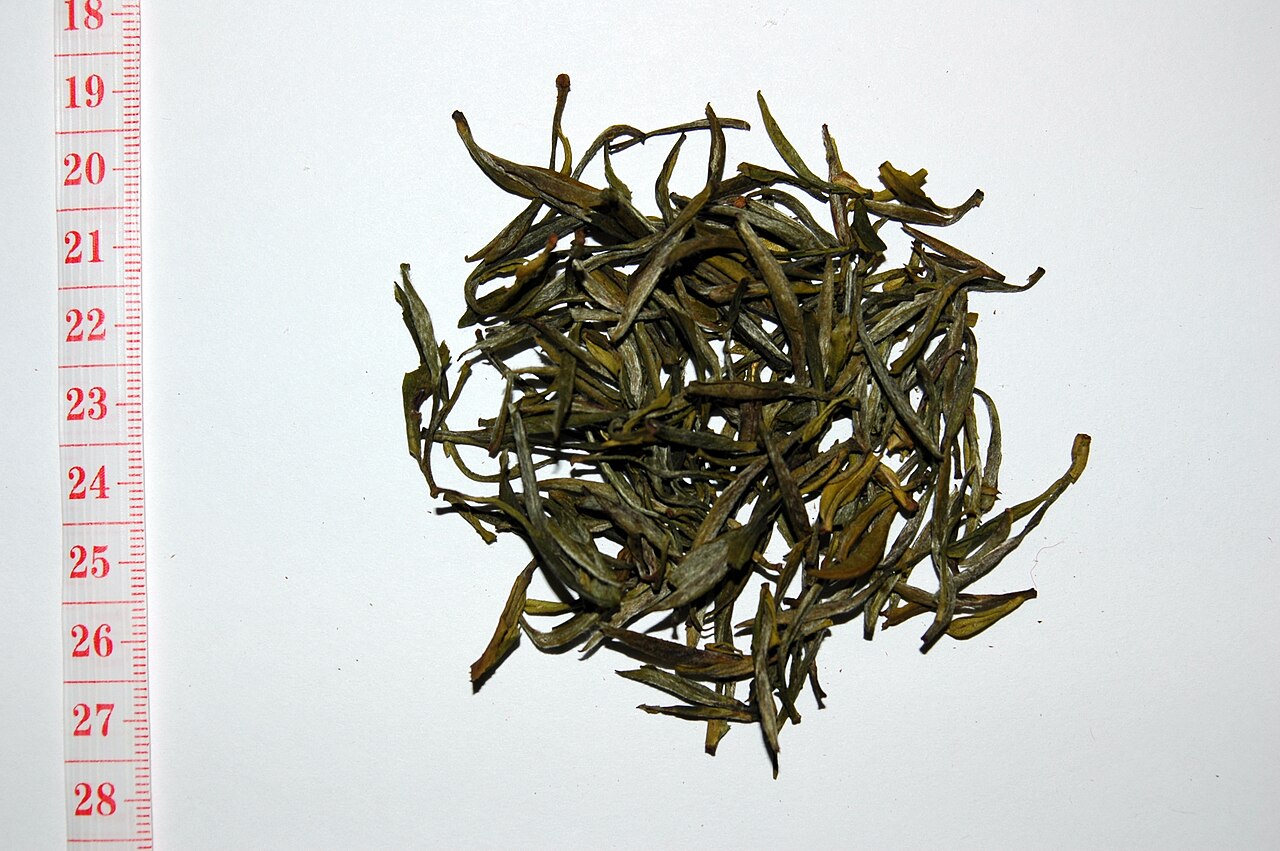
Huangshan Maofeng is the “sparrow tongue” green tea of the Yellow Mountain. The leaf is slightly curled, plump, ivory-green and downy; the cup is pale green-yellow, fragrant with orchid or fresh chestnut, and sweet with a clean, lasting finish. It is a baked green tea, not a pan-fired flat tea like Longjing, and not a curled downy tea like Biluochun.
What the standard says
GB/T 19460-2008 defines Huangshan Maofeng as a green tea made within the protected area, from the buds and leaves of local cultivars — Huangshan种, Qimen种, Dishuixiang, Mingzhou种 and improved selections — by a specific process, with the quality characteristics of “plump buds, high and lasting aroma, fresh and sweet taste, good infusion endurance”.
The protected area is the tea-producing townships of Tunxi district, Huangshan district, Huizhou district, Shexian, Xiuning, Qimen and Yixian in Huangshan city, with the exact boundary in Annex A of the standard. “Huangshan Maofeng” is therefore not the private brand of one garden inside the scenic area; it is a geographical-indication name that qualifying producers across the seven districts and counties may use.
Standard status:
- GB/T 19460-2008 is in force. Published 2008-06-03, implemented 2008-12-01, replacing GB 19460-2004.
- GB/T 19460-2026 was published on 2026-09-28 and will be implemented on 2027-10-01. It is listed as “to be implemented” and will replace the 2008 version.
- Until 2027-10-01, the 2008 version remains the mandatory reference for products that declare it. A package may lawfully cite the old or the new standard during the transition; check the production date and the standard number.
Where it grows
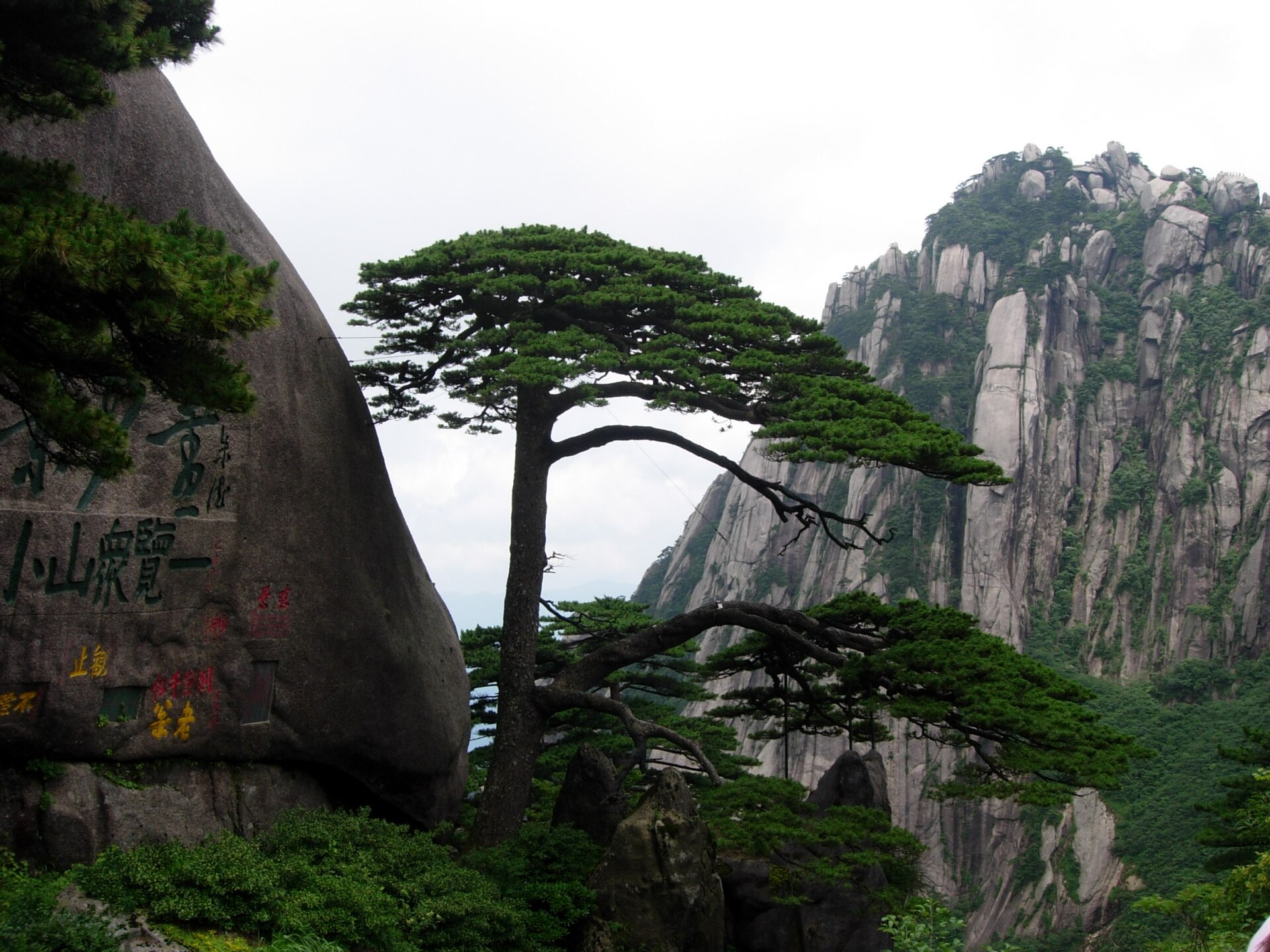
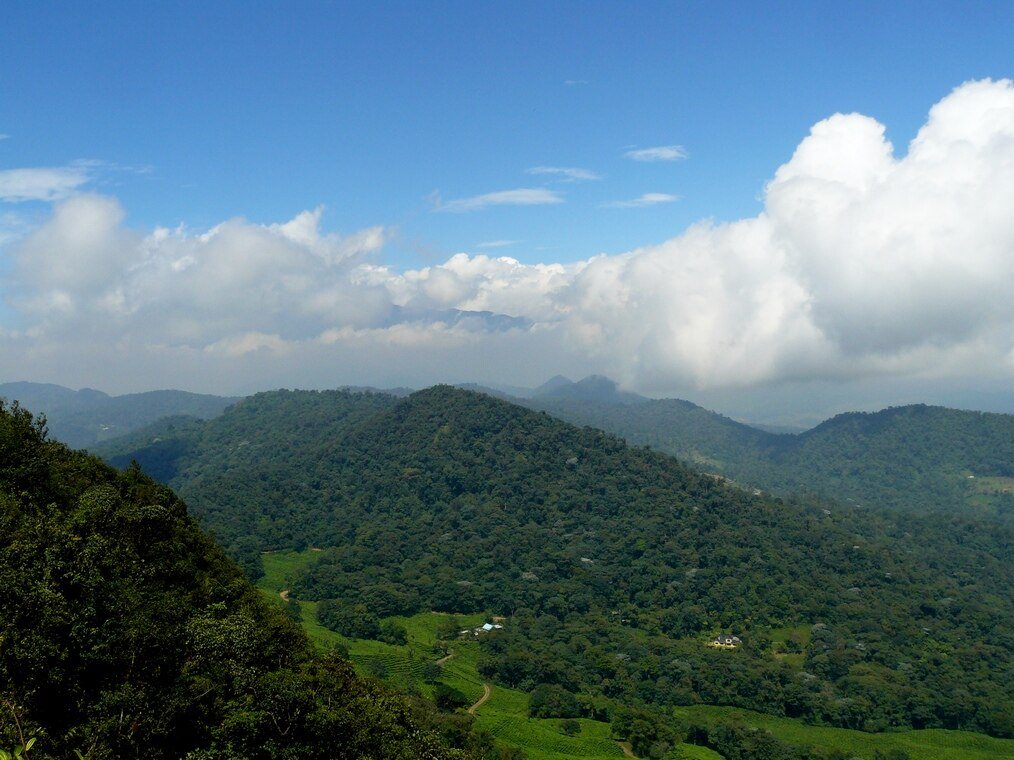
The core gardens are around the Huangshan scenic area and in Huizhou, Huangshan and Shexian. Tea grows on mountain slopes and in valleys where clouds and mist soften the light, the day–night temperature swing is large, and the soil is a well-drained mountain yellow or yellow-brown earth.
“High mountain and cloud mist” has a real meaning here: slower growth, thicker buds, more down, and a more concentrated aroma. Lowland gardens sprout earlier and crop heavier, but often have a shorter aroma and a thinner body. Altitude is not the only variable: cultivar, tree age, picking standard and baking all matter.
Cultivar and picking
The standard lists local cultivars including Huangshan种, Qimen种, Dishuixiang and Mingzhou种, plus improved selections. Huangshan种 is the traditional population cultivar: yellow-green, plump buds, dense down, and a cup with high aroma and mellow body. Different cultivars sprout at different times and carry different aroma profiles; “Huangshan种” is not a single clone.
Picking runs from around Qingming to Grain Rain, with the highest grades earlier. The standard requires buds and leaves to be attached and intact, with consistent tenderness, evenness and cleanliness. Top-grade Maofeng is one bud and one initial leaf, bud longer than leaf. Lower grades use coarser material. After picking, the leaf is spread thin to wither until it softens and the grassy note fades.
Craft
The standard process is:
fresh leaf → withering → fixing → cooling and moisture redistribution → shaping (straightening or rolling) → first baking → cooling → final baking → dry tea → sorting.
- Withering (摊青): thin spreading, gentle water loss, leaf softening and early aroma development.
- Fixing (杀青): high heat stops oxidation and preserves the green colour and fresh taste. Under-fixing gives red stems and grass; over-fixing gives a cooked aroma and yellow leaf.
- Cooling and moisture redistribution: lets water inside the leaf even out, so the next shaping step does not break the leaf.
- Shaping: top-grade Maofeng is mainly straightened (理条), with little or no heavy rolling, to keep the bud and leaf intact and the down visible. Lower grades may be rolled tighter, sacrificing some integrity for a tighter strip.
- First and final baking: first baking removes most of the water and sets the shape; final baking, at lower temperature, develops the aroma and brings moisture into the safe range.
The white down is not a powder to be added. Natural down sits evenly on the bud and leaf. If it flakes off at a touch or looks like a surface dusting, question the process.
Taste
- Dry leaf: slightly curled, bud-and-leaf sets like a sparrow tongue, ivory-green to yellow-green, glossy, with visible white down.
- Liquor: pale green to green-yellow, clear and bright.
- Aroma: high and lasting, orchid, fresh chestnut or clean green note.
- Mouthfeel: fresh, mellow, sweet, low bitterness, good infusion endurance.
- Leaf base: tender yellow-green, intact buds and leaves.
The “ivory” colour is a visual signature: green with a soft yellow cast, not dead green and not dull yellow. Fixing and baking control it. Too hot, the leaf yellows and the aroma cooks; too cool, the leaf stays green but the aroma is raw.
Brewing
- Water: 80–85°C. The buds are tender; boiling water makes the cup cooked and dull.
- Leaf: 3–4 g per 200 ml glass or gaiwan.
- Method: glass, water first then leaf, or a gaiwan with quick pours. Do not cover and stew.
- Timing: 20–30 seconds for the first infusions, then lengthen.
- Vessel: glass for shape, white porcelain for colour and aroma.
Grades and buying
GB/T 19460-2008 grades Huangshan Maofeng into special grade 1, special grade 2, special grade 3, first grade, second grade and so on, with requirements for shape, liquor, aroma, taste and leaf base. A seller's “special grade” should match the standard number and grade on the package.
Look for:
- Origin. One of the seven protected districts/counties in Huangshan.
- Standard number. GB/T 19460-2008, or the 2026 version where declared; before 2027-10-01 the old version may still be lawful.
- Shape. Bud-and-leaf sets, slightly curled, not flat strips or broken bits.
- Aroma. Orchid or fresh chestnut, not smoke, char or perfume.
- Taste. Fresh, sweet, lasting; not bitter or throat-locking.
- Leaf base. Tender yellow-green, intact.
History
Huangshan has a long tea history, but the exact creation date and person behind “Huangshan Maofeng” are not consistent across local accounts. The common story — a Shexian merchant named Xie Zheng'an created it in 1875 — is not treated here as established fact because no primary archive was found. What is verifiable: Huangshan Maofeng became a leading Anhui green tea through 20th-century competitions, export and brand building; GB/T 19460-2008 brought it into the geographical-indication system; and a revised standard was published in 2026 for implementation in 2027.
Status
This English entry is an independent editorial rewrite, not a sentence-by-sentence translation. It uses GB/T 19460-2008 for the definition, protected area, cultivars and process; the national standards platform's record for GB/T 19460-2008 for its current status; and the national standards platform for the 2026 revision dates. “Tang dynasty tribute tea”, “Zhu Yuanzhang” legends, “1915 Panama gold medal”, “1955 top-ten tea” and exact garden-area/output figures were removed. The page is marked reviewed; sources and wording will continue to be revised.