What "Nepal white tea" actually means
Nepal white tea is not a protected appellation like Fuding white tea, and it is not a fixed cultivar system. It is a working label for small-batch white or lightly oxidised tea made in the eastern hills of Nepal, mainly around Ilam, Dhankuta and Panchthar. It is not the product of one garden, and it is not an official statistical category.
The National Tea and Coffee Development Board reports CTC, orthodox, green and other tea. There is no "white tea" line. You can find Ilam's orthodox tonnage, the number of estates and the area under smallholders, but you cannot find a national white-tea production figure. That is not a missing document; the category has not yet been separated in official statistics.
| Item | Detail |
|---|---|
| Name | Nepal white tea / Nepali white tea |
| Type | White and lightly oxidised white-style tea; not one process |
| Core districts | Ilam, Dhankuta, Panchthar |
| Elevation | Commonly about 1,300–2,100 m, depending on the garden |
| Material | Single buds or one leaf and a bud; cultivar varies |
| Scale | Smallholder and small-estate batches, sorted by cultivar and pluck |
| Protection | No Darjeeling-style geographical indication |
| Official statistics | No separate white-tea category |
Where it comes from
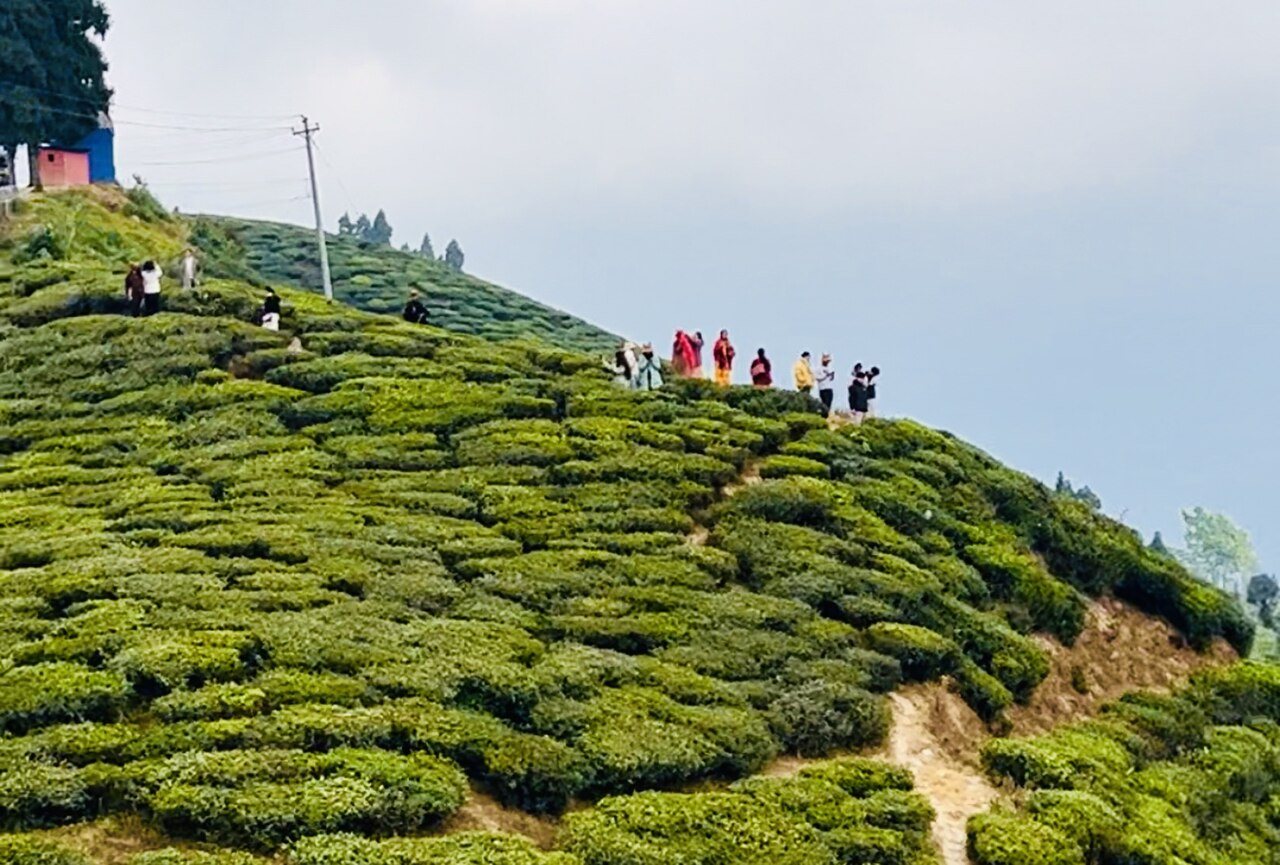
Ilam is Nepal's largest orthodox district. In 2021/22 the official statistics recorded 36 estates, 1,864 ha of estate tea and 5,372 ha of smallholder tea in Ilam, with about 5,476 tonnes of orthodox tea, 663 tonnes of green tea and 143 tonnes of "other" tea. Dhankuta and Panchthar have their own gardens and smallholder systems, but on a much smaller scale.
This is not a single-valley story. Most Ilam growers work 1–2 acres. White, oolong, black and green tea may come from the same small garden, separated by batch and plucking standard. A "Nepal white tea" on the market may be a 30 kg micro-lot or a single experimental block on a larger estate.
Nepal's tea industry traces to 1863, when tea seeds were sent by a Chinese emperor and planted in Ilam. In 1982, Jhapa, Ilam, Panchthar, Dhankuta and Terhathum were designated as tea districts. Specialty white tea, however, is a much more recent small-batch development. Nepal does not have a Darjeeling-style GI, so "Himalayan white tea" and "Nepal silver needle" are commercial descriptions, not protected origin names.
Two ways of making it
Publicly verifiable material shows two quite different approaches.
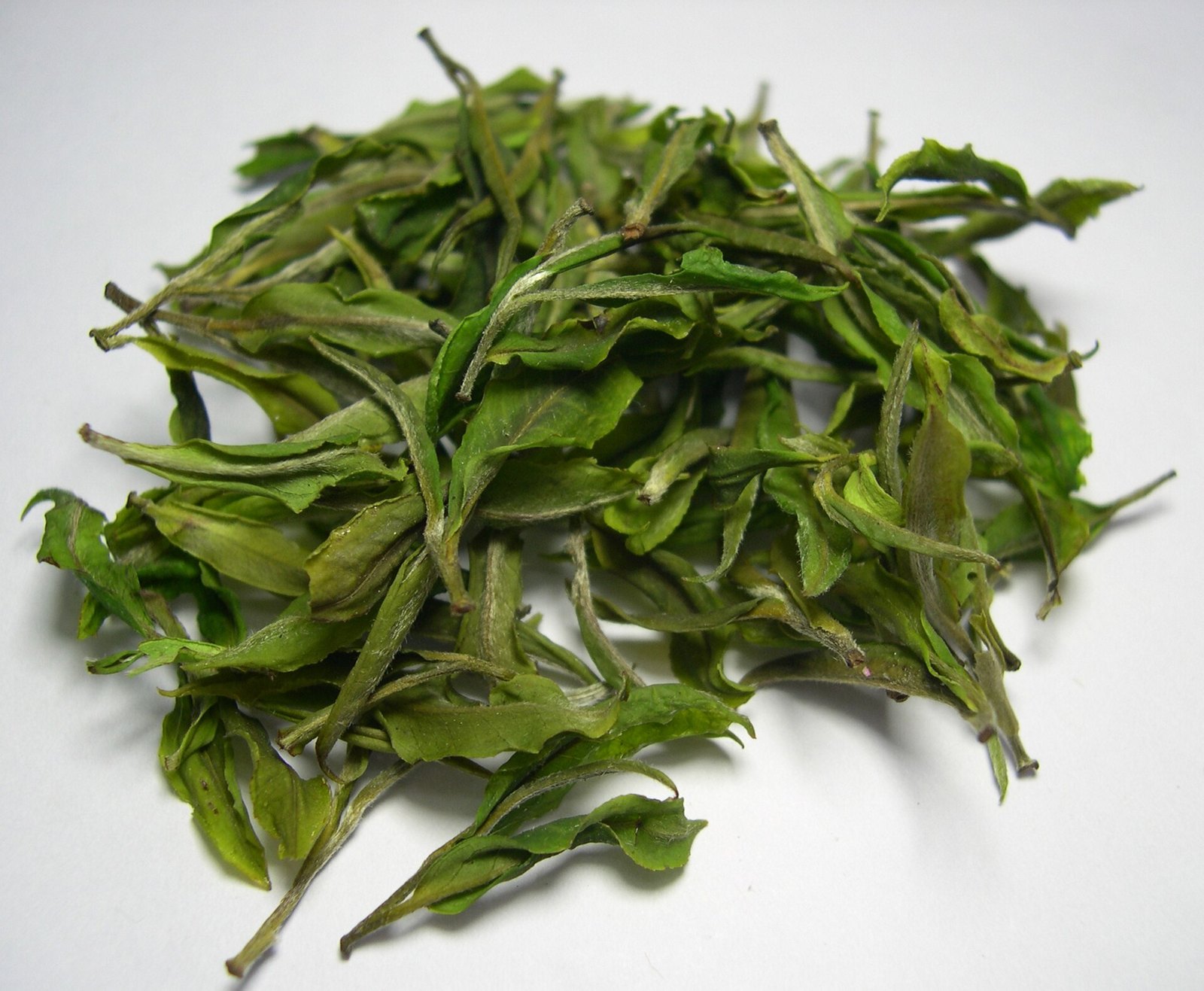
Pure wither and low-temperature dry. Farmers Tea Co. in Malate, Ilam, at about 1,676 m, makes a Fresh White Tea from the tenderest spring buds. The leaves are lightly withered and slowly dried at low temperature to keep the floral, soft character. This is close to the white tea most drinkers already know: no deliberate rolling, with withering and drying doing the work.
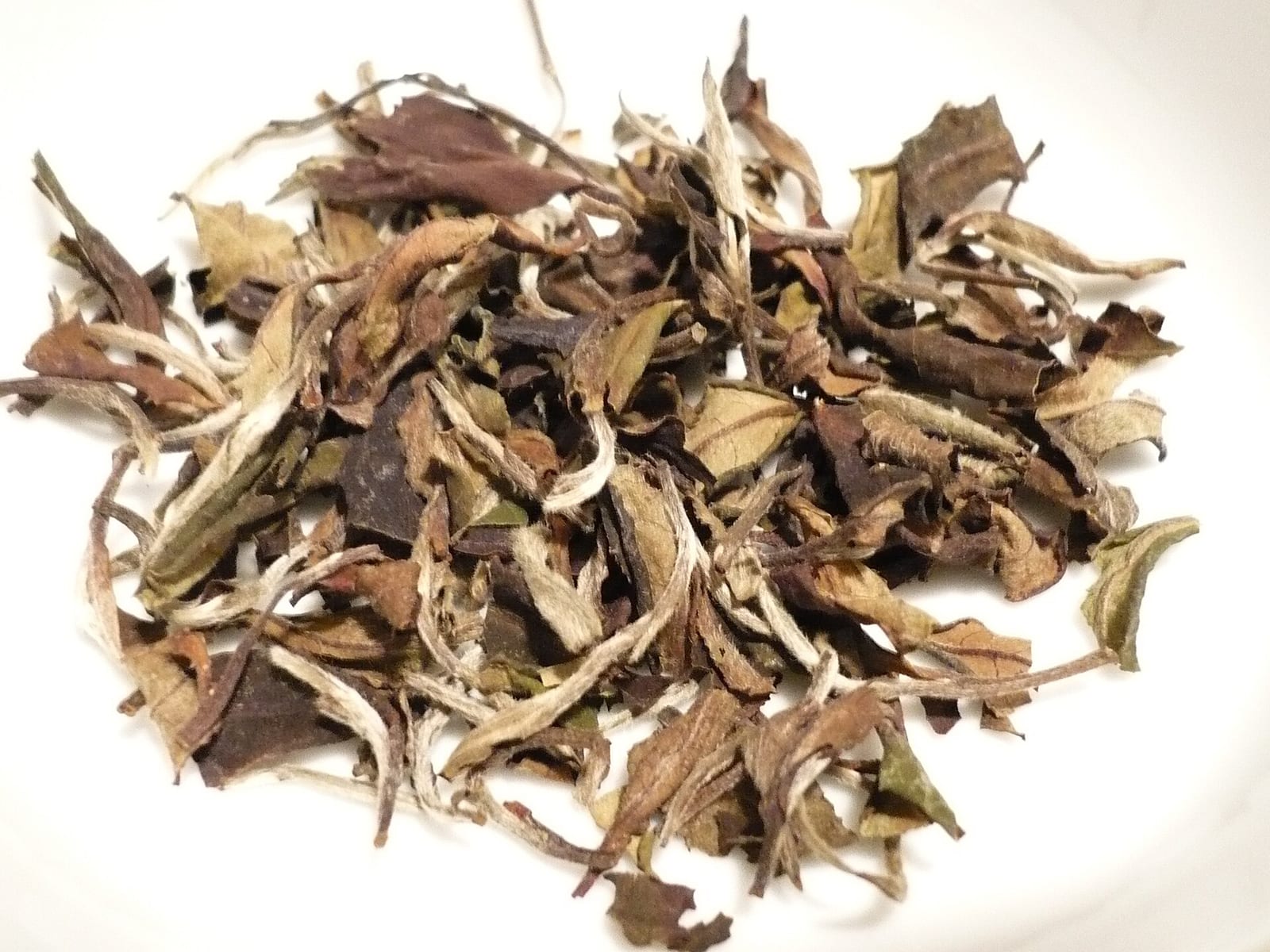
Wither, light roll, then dry. KTERC's White Prakash picks one leaf and a bud from the first and second flush. The leaves are naturally withered for several hours, lightly rolled for 8–10 minutes to release some aroma, then dried. Because of that roll, some sellers call it a "Silvery Oolong." It sits between white tea and a very light oolong. It is still low-oxidation and lightly handled, but it is not a "no-roll" white tea.
So "Nepal white tea is unrolled and unoxidised" is an oversimplification. The category is low-oxidation and lightly handled overall, but "no rolling" is not a universal rule. Ask whether the tea was purely withered and dried, or lightly rolled. That question tells you more than the words "white tea" on the tin.
What it tastes like
Pure withered-and-dried Nepali white tea tends to be floral, honeyed, hay-like and cool, with a pale yellow to almost colourless liquor. It is light in the mouth, finely sweet and low in astringency. It is not a perfume-heavy tea; its appeal is cleanliness, softness and a long, quiet finish.
The lightly rolled White Prakash is more outgoing: flowers, vanilla, cream, nuts, sometimes a hint of ripe fruit and a light-oolong sweetness. The liquor is a little deeper, the texture more structured, and it holds up better across infusions. It will appeal to drinkers who like white peony or lightly oxidised oolong; it may not satisfy someone looking only for a silver-needle bud tea.
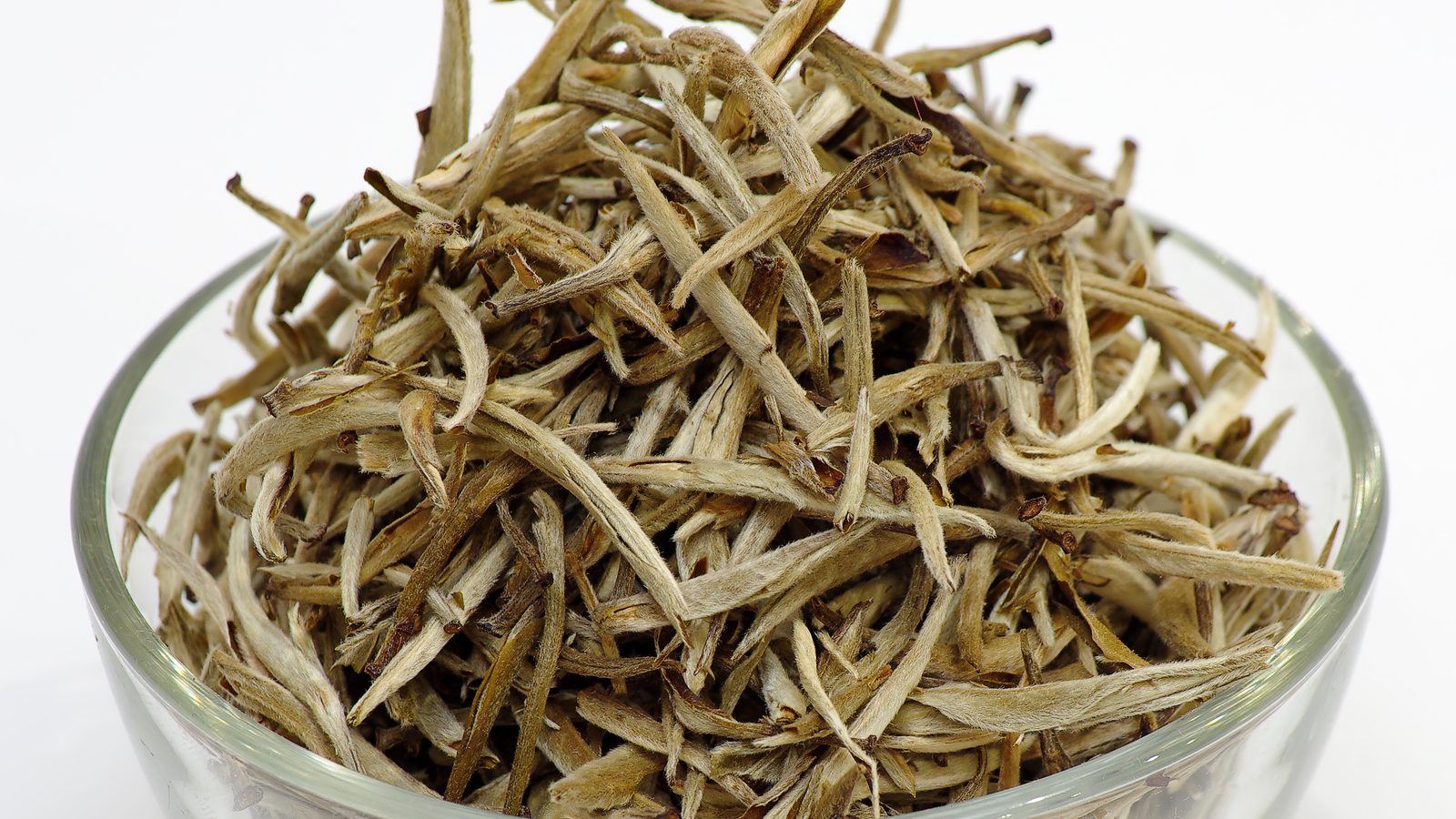
Nepali white tea is not only buds. Silver-needle-style products exist, but one-leaf-and-a-bud and even one-leaf-and-two-buds lightly rolled teas are common. More buds do not automatically mean better tea. Clean withering, prompt drying and no stewing or green off-notes matter more.
Brewing
- Ratio: 2 g per 200 ml, or about 1.5 tsp per 250 ml.
- Water: 80–85°C. Start pure bud tea at 75–80°C; lightly rolled tea can take 85°C.
- Time: 2–4 minutes for the first infusion. Farmers Tea Co. recommends 75–85°C for 4 minutes; KTERC recommends 2 g per 8 oz at about 180°F (82°C) for 4 minutes.
- Refills: good white tea usually gives 2–3 infusions, adding about 1 minute each; the rolled style lasts longer.
- Avoid: do not use rolling boiling water and a long stew. This is not a strong, dark tea. Too much heat turns the fine sweetness into astringency.
If the cup turns bitter, lower the temperature and shorten the steep before reaching for sugar. White tea is delicate by design; a long hot steep flattens exactly what makes it interesting.
Buying
- Look for the producer, not just the country. KTERC, Farmers Tea Co. or Siddha Devi tells you more than "Nepal white tea."
- Ask about the process. Pure wither-and-dry, or lightly rolled? A rolled tea may be sold as "Silvery Oolong," and that is useful information, not a defect.
- Ask about flush and cultivar. First or second flush, buds or one leaf and a bud, which cultivar. Nepal white tea is not a single cultivar.
- Check certification and batch. Organic certification, exporter details and a lot number matter in a fragmented smallholder system. "High altitude" is not a substitute.
- Do not treat an award as a grade. Siddha Devi's Silver Wings won Grand Champion, Best Liquor and Best White Tea at the 2024 World Tea Expo. That is one lot's result, not a national standard.
- Start with a sample. Production is small and batch variation is real. A 50 g sample is smarter than a large tin.
Misconceptions
"Nepal white tea is silver needle."
Silver needle is one style. One-leaf-and-a-bud and lightly rolled "Silvery Oolong" styles are also common.
"All Nepali white tea is unrolled."
White Prakash is rolled for 8–10 minutes. Process varies by producer.
"It comes from one core valley."
Ilam is the largest orthodox district, but Dhankuta and Panchthar also make white and specialty tea. The old draft's single "Tutra Valley" origin has no reliable support.
"Higher altitude is automatically better."
Altitude affects growth and aroma, but withering, rolling, drying and batch control decide the cup. A 1,300 m garden and a 2,100 m garden can both make good tea or bad tea.
"White tea has no caffeine."
White tea contains caffeine, usually less than a strong black tea. Sensitive drinkers still need to watch quantity and timing.
"Nepal white tea has a protected appellation."
There is no Darjeeling-style GI today. The Ilam industry has discussed geographical indication, but "Nepal white tea" itself is not a protected name.
Bottom line
Nepal white tea is a small-batch white and lightly oxidised style from the eastern hills: no protected appellation, no official white-tea production figure, and at least two process families, pure wither-and-dry and lightly rolled "Silvery Oolong." Buy by garden, process and lot, not by the phrase "Himalayan silver needle."