A lighter Earl Grey, not a generic style
Lady Grey is a variation of Earl Grey, but the name is not free for anyone to use. It was created by Twinings in the early 1990s and is a Twinings trademark. The blend keeps bergamot, softens it, and adds orange peel and lemon peel, which push the cup toward bright, juicy citrus rather than perfume.
Think of it as the lighter branch of the same family. Earl Grey leads with bergamot; Lady Grey widens the citrus range, with orange peel supplying a rounder sweetness and lemon peel adding a clean, slightly bitter edge. Twinings describes the cup as “light, refreshing” with “juicy citrus notes” and a “zesty orange” character.
A modern product, not a Victorian legend
Twinings’ own history is unusually clear. Lady Grey was developed in the early 1990s for the Nordic market, where Earl Grey was considered too strong. Twinings created and trademarked it; it first went on sale in Norway in 1994 and in Britain in 1996. Twinings North America dates the first blend to 1994 and calls it a softer, more elegant Earl Grey.
This is not a 19th-century recipe invented by the Grey family. Lady Grey is a modern product name, not a Victorian tradition. The “Lady” in the name is a brand choice, not a documented tea-table invention by a historical figure. Treating it as a product is more accurate than treating it as a legend.
What is in the blend
Twinings’ current UK ingredient list is tea, orange peel (3%), lemon peel (3%) and flavouring. The peel percentages show that the citrus is real material, not just a flavour description. The “flavouring” line is not broken down, so the exact form of the bergamot — oil, natural flavouring or something else — is not disclosed on the pack.
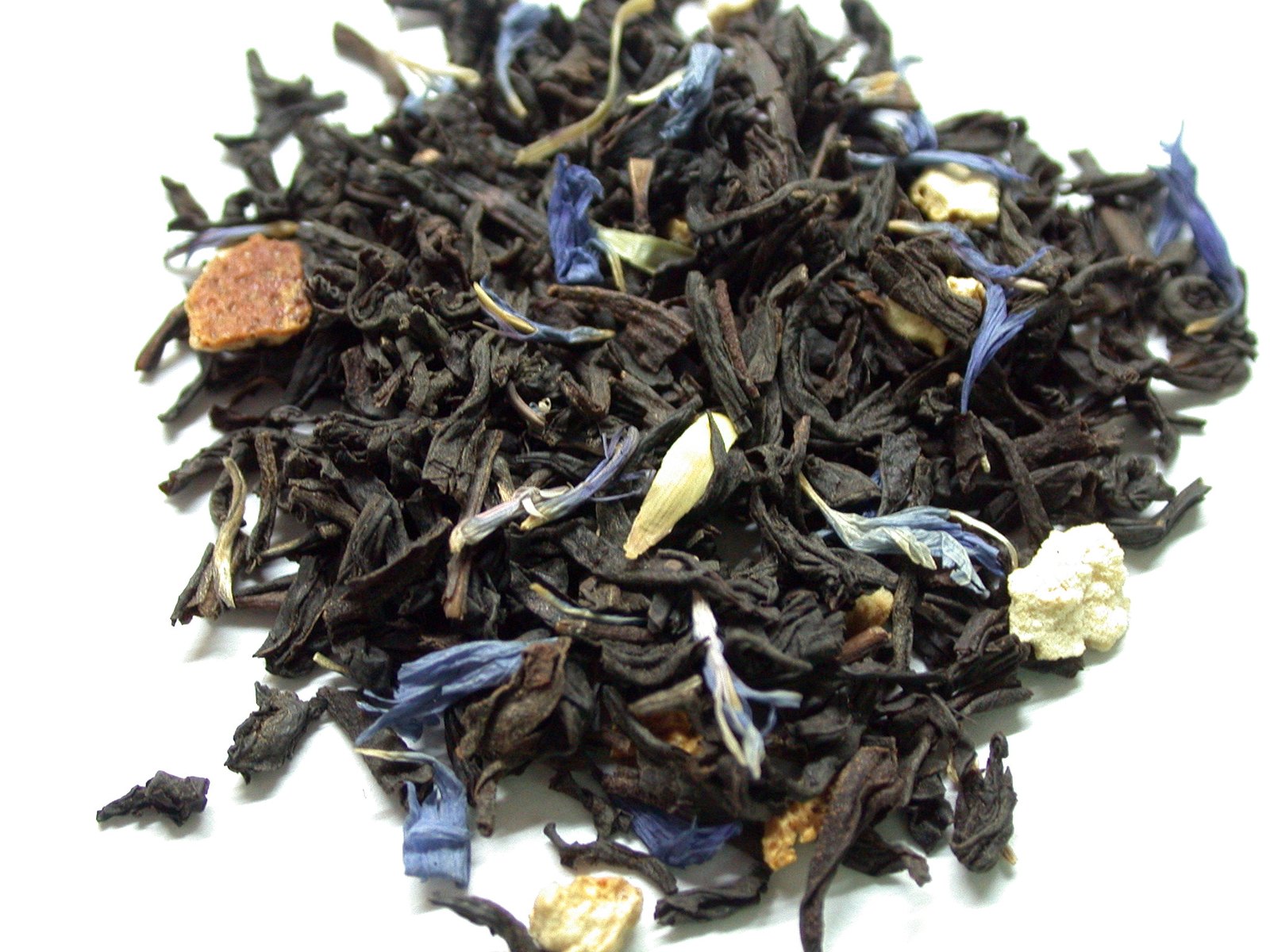
Many Earl Greys use bergamot oil or flavouring; Lady Grey usually keeps bergamot lower and lets orange peel do more of the work. Some versions add cornflower petals for colour. The photo on this page shows those blue petals, but Twinings’ current UK ingredient list does not mention them. Recipes vary by market and by version, so the pack in front of you is the final authority.
How it tastes
Lady Grey usually feels more “juicy” than Earl Grey. Orange peel gives a round, sweet citrus top note; lemon peel adds a clean lift and a little bitterness; bergamot sits in the background and holds the tea together. Twinings sums it up as “bright with zesty orange”.
Compared with Earl Grey:
- Earl Grey: bergamot-forward, more perfumed, more concentrated.
- Lady Grey: wider citrus, more orange and lemon peel, lighter and softer — a good choice for anyone who finds classic Earl Grey too strong.
- Milk: both accept it, but milk mutes the orange peel. Try Lady Grey plain first, then decide.
Brewing
- Water: 95–100°C.
- Ratio: 2–3 g leaf to 200 ml water; one tea bag to 200 ml.
- Time: 2–3 minutes. Twinings recommends 2–3 minutes; a little longer gives more strength, but do not over-steep or the peel turns bitter.
- Finish: plain first; add a slice of orange or lemon if you want more lift. A splash of milk is optional but will soften the citrus.
Buying notes
- The name: Lady Grey is a Twinings trademark. Similar teas from other companies are usually sold as Madame Grey, Empress Grey or another name — not Lady Grey.
- The peel: check the orange and lemon peel percentages. More peel means a more direct citrus profile; “flavouring” alone tells you less.
- The petals: cornflower is a visual garnish, not a flavour source. Petals do not prove quality; leaf and peel freshness matter more.
- The version: recipes differ by market and by tea bag versus loose leaf. Read the pack you are buying.
Timeline
| Date | Event | Note |
|---|---|---|
| Early 1990s | Twinings develops Lady Grey | Aimed at a Nordic market that found Earl Grey too strong. |
| 1994 | First sold in Norway | Twinings North America also dates the first blend to 1994. |
| 1995 | US trademark registration | The name is protected as a Twinings mark. |
| 1996 | Launched in Britain | The product expands from the Nordic market. |
| Today | Multiple market versions | Peel, petals and packaging vary by market. |
Sources and status
This page draws on Twinings’ Lady Grey product page, Twinings’ Earl Grey family guide and Twinings North America’s history page. The product page supports the ingredients, flavour and brewing; the family guide supports the early-1990s Nordic origin, the trademark and the 1994/1996 launch dates; the history page cross-checks 1994. The page does not present Lady Grey as a 19th-century recipe or as a verified story about a historical countess.