What it is: dark tea, not black tea
Shaanxi Fu brick tea is a post-fermented dark tea from the Xianyang area of Shaanxi, with its core processing tradition in Jingyang. In Chinese tea classification it belongs to heicha — “dark tea”, usually rendered in English as dark tea — not to hongcha, “red tea”, which English calls black tea. The difference is in the process: black tea is an oxidised tea made from fresh Camellia sinensis leaves, while Fu brick tea is a compressed post-fermented tea made from black maocha that has been pile-fermented, steamed, pressed and incubated under controlled temperature and humidity so that golden “flowers” grow inside the brick.
Three names need to be kept apart:
| Name | What it refers to | Boundary |
|---|---|---|
| Shaanxi Fu brick tea | The regional working name used on this page for Fu brick tea from the Xianyang/Jingyang area | It is not the protected name in the 2013 geographical indication announcement, and it is not a synonym for every Shaanxi dark tea |
| Jingyang Fu brick tea | The geographical indication product approved by Announcement No. 137 in 2013 | Protection is limited to the eight towns and eleven villages listed in the announcement |
| Xianyang Fu tea | A Xianyang regional public brand and an intangible heritage project name | Its scope is wider than the Jingyang GI; brand value and enterprise counts belong to this scope |
Mixing the three names produces two common errors: treating Xianyang Fu tea's industry figures as Jingyang Fu brick tea's figures, or treating “Shaanxi Fu brick tea” as an already registered geographical indication. This page labels the scope whenever it uses protection, brand or output data.
Fu brick tea is also not a tea cultivar. Its raw material is still the leaf of Camellia sinensis, but the product type is defined by processing: black maocha is pile-fermented and pressed into a brick. Calling it a black tea, a “fully fermented tea” or a cultivar name gets the tea class, the process and the name hierarchy wrong at the same time.
Origin: Jingyang is a processing centre, not a tea-growing district
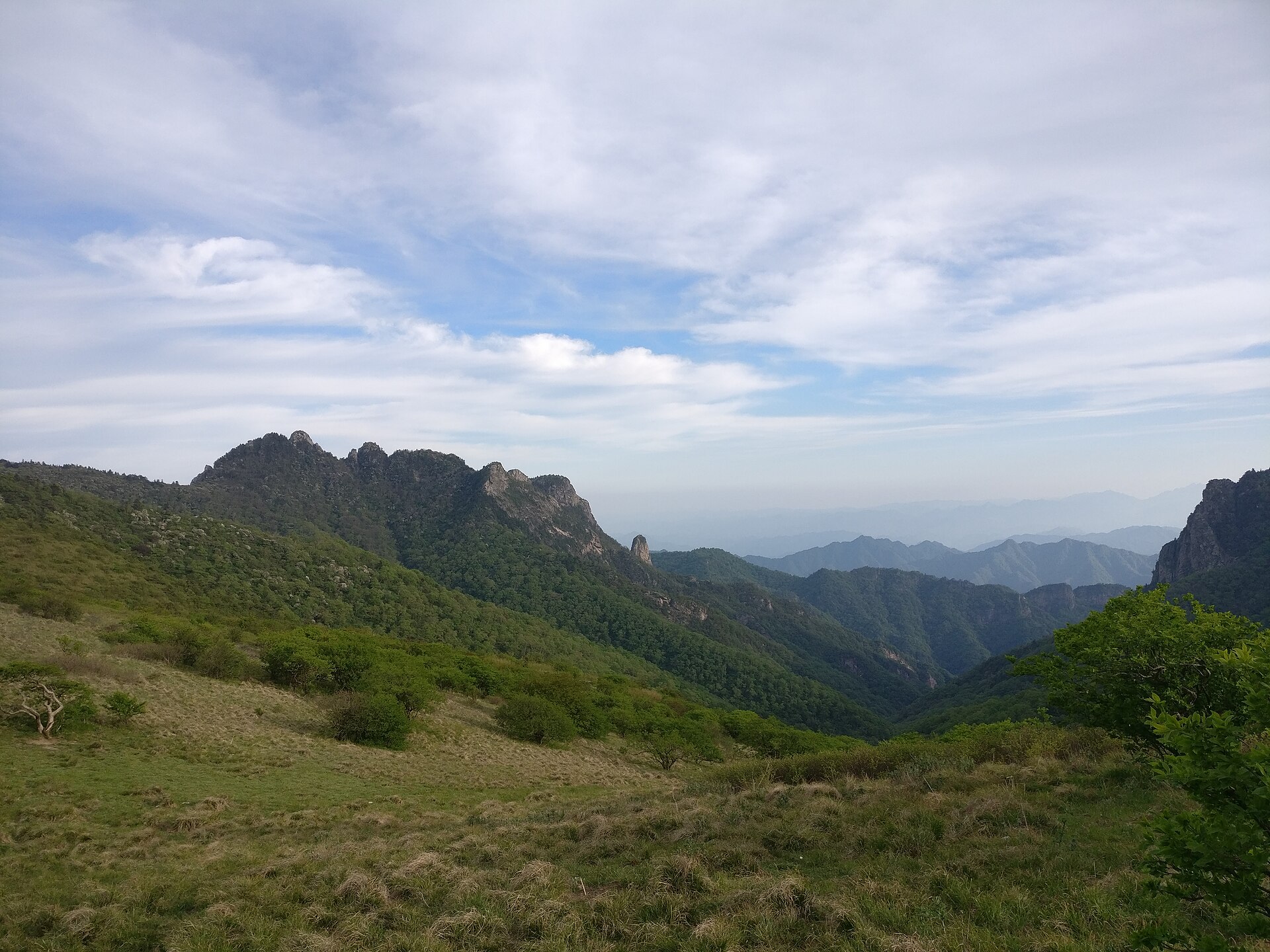
Jingyang sits in the central Guanzhong Plain in Xianyang, Shaanxi, with the Jing River running through the county. The 2013 protection notice defines the GI area as eight towns in Jingyang County — Jinggan, Zhongzhang, Sanqu, Yongle, Qiaodi, Yunyang, Chongwen and Wangqiao — plus eleven administrative villages in Anwu: Gaocun, Ganzebao, Yaojia, Majia, Xili, Dongli, Zhongshan, Rujia, Zhuyuanzhang, Wangjia and Xuyan. That is the 2013 text; later administrative changes do not rewrite the announcement.
Jingyang is not a major tea-growing district. The local saying “north of the Qinling no tea is planted, yet Jingyang produces famous tea” describes Jingyang's role in the northbound tea trade, processing and trading, not tea cultivation. The 2013 notice is explicit about raw material: black maocha from southern Shaanxi, Hunan and Sichuan; production water must come from groundwater within the protected area and meet the national drinking-water standard.
So the “Shaanxi” in Shaanxi Fu brick tea refers first to the processing, brand and GI location, not to the origin of every leaf. Southern Shaanxi supplies part of the black maocha; Hunan and Sichuan are also recognised sources in the announcement. Saying that the product uses only Shaanxi-grown leaf contradicts the notice; saying that it is not a Shaanxi product because some leaf comes from elsewhere ignores the processing and brand value created in Jingyang.
Traditional accounts also repeat a “three cannot” saying: without Jingyang's water, Jingyang's climate, or Jingyang's technique, the tea cannot be made. This describes the old dependence on local water, the heat and humidity of the fu days, and the skill of beating and firing the brick. It is a craft narrative, not a reproducible experiment. Modern flowering rooms control temperature and humidity, so season and location no longer constrain production in the old way; the underlying logic that water, climate and technique together shape flowering still holds.
Raw material and form: black maocha, a pressed brick, golden flowers
The raw material is black maocha. It is usually coarser and leafier than the leaf used for famous green teas, often with some stems, and has already gone through fixing, rolling, pile fermentation and drying. The 2013 notice does not define a separate cultivar standard for the raw material; it regulates origin, process and finished-product limits together. It permits stems up to 15% in the Special grade and 18% in Grade 1, and non-tea foreign matter up to 0.8%. These are upper limits, not an invitation to add stems or foreign matter.
Traditional Fu brick tea is pressed in a wooden mould with a wooden tea mallet, then moved to a flowering room. The 2021 national intangible heritage text summarises the traditional process in seven steps: ingredient pile fermentation, boiling tea glaze, stir-frying the tea with the glaze, filling and sealing, beating the tea into the mould, tying and piercing the brick, and natural flowering. The 2013 notice gives a longer sequence from raw-material sorting to finished-product warehousing. The two are levels of detail, not competing processes.
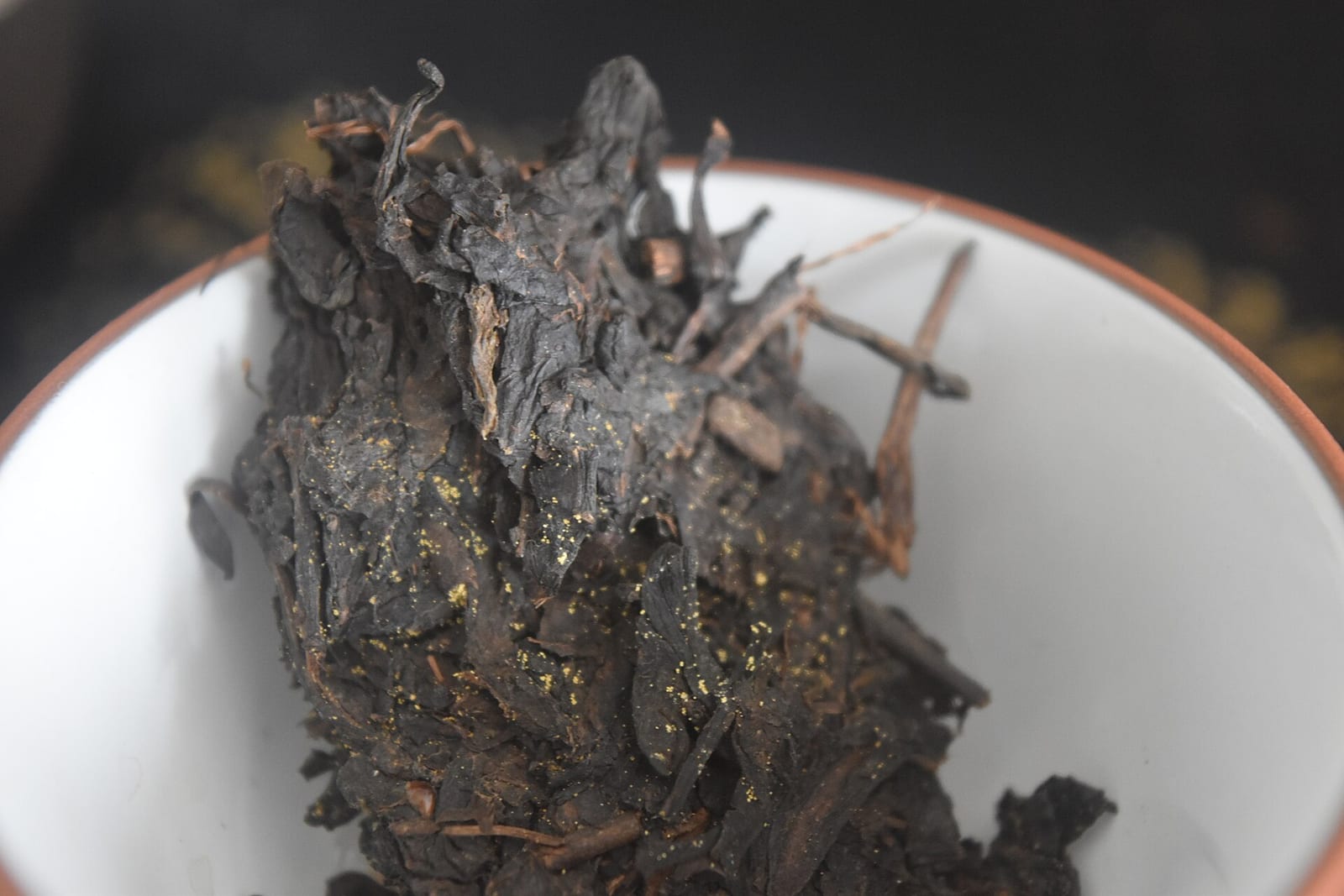
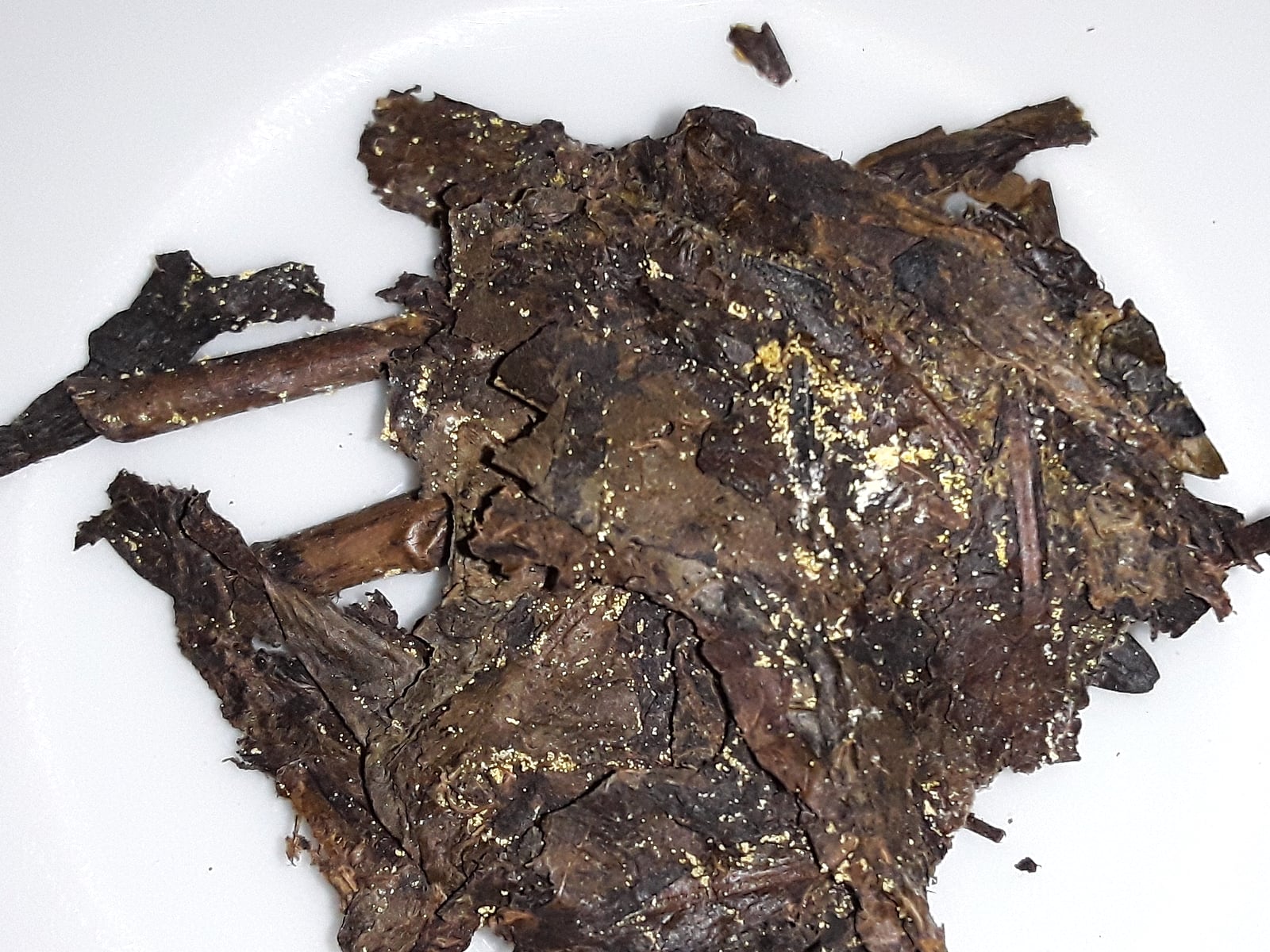
The most visible feature is the golden “flower” inside the brick. The 2013 sensory requirement is “brownish-yellow colour, golden flowers visible, colonies full and evenly distributed”; the physical specification sets Eurotium cristatum at no fewer than 300,000 colonies per gram of dry tea. The golden flowers are colonies of Eurotium cristatum grown during the flowering stage. They are not a powder added to the tea, and the term does not mean that the tea leaf itself is a flower.
Golden flowers must be distinguished from mold. Normal golden flowers are yellow, granular and embedded in the brick or on its surface, alongside a clean fungal-floral and aged aroma. White fuzz, green or black patches, sourness, dampness or a stale warehouse smell are not explained by “golden flowers”. The first flowering stage does produce white mycelium, but that is an intermediate state; it does not mean that a finished brick may be sold with white mold.
Processing: pile fermentation, pressing and flowering
The 2013 notice sets out a long chain: raw-material sorting → sieving → steaming → pile fermentation → boiling tea juice → stir-frying → weighing → steaming → filling the mould → pressing → resting → removing from the mould → pre-packing → loading into the flowering room → flowering → drying → inspection → packing → warehousing. Pile fermentation, flowering and drying are the three stages that most directly shape the tea.
| Stage | Key parameters in the 2013 notice | Purpose |
|---|---|---|
| Pile fermentation | Steam the maocha for 5–7 minutes, put it into a wooden bin about 1 m deep, ferment for 12 hours at 40–60°C, stir as needed | Continue the transformation of black maocha under moist heat and build the base of the post-fermented flavour |
| Boiling tea juice, stir-frying | Use tea juice as a starter and stir-fry the leaf to the specified temperature | Adjust moisture and flavour before pressing and flowering |
| Moulding, pressing, resting | Fill the mould, press, rest and remove the brick | Give the tea a stable brick shape and density |
| Flowering | Three stages of four days each: 24–26°C and 65–75% RH; 27.5–28.5°C and 75–85% RH; 27.5–28.5°C and 55–65% RH | Let Eurotium cristatum grow inside the brick and produce golden flowers and the fungal-floral aroma |
| Drying | After flowering, raise the temperature by 3°C per day to 50°C for two days; lower by 2°C per day to 35°C; then raise by 1°C per day to 40°C until dry | Stabilise the brick, reduce moisture and fix the quality |
These parameters are not a recipe for a home workshop. They show that flowering is not leaving a brick in a corner to grow mold. Temperature, humidity, time and brick density all affect colony growth; environmental control in a flowering room is one of the clearest differences between modern Fu tea production and the old natural process.
The two texts do not agree on every timing detail. The 2021 heritage text gives about 8 hours for ingredient pile fermentation and “a month or more” for natural flowering; the 2013 notice gives 12 hours for pile fermentation and three flowering stages of four days each. These are likely records from different scales, equipment or traditional batches, and it is not useful to call one simply wrong. This page follows the 2013 notice for the process table because it is the technical requirement of the geographical indication product; the heritage text's “month or more” is a reminder that traditional natural flowering depended more on season and environment than a controlled flowering room does.
The 2021 intangible heritage text also keeps the traditional “boiling tea glaze” step: old tea and tea fruit are boiled to make a glaze, which is used as a starter when stir-frying the leaf. It corresponds to the “boiling tea juice” in the 2013 notice but is described in craft language. Both texts make the same point: Fu brick tea is not simply black maocha pressed tight; tea juice, moisture, temperature and the beating technique all take part in flavour formation.
Quality and flavour: red and clear, fungal-floral, mellow
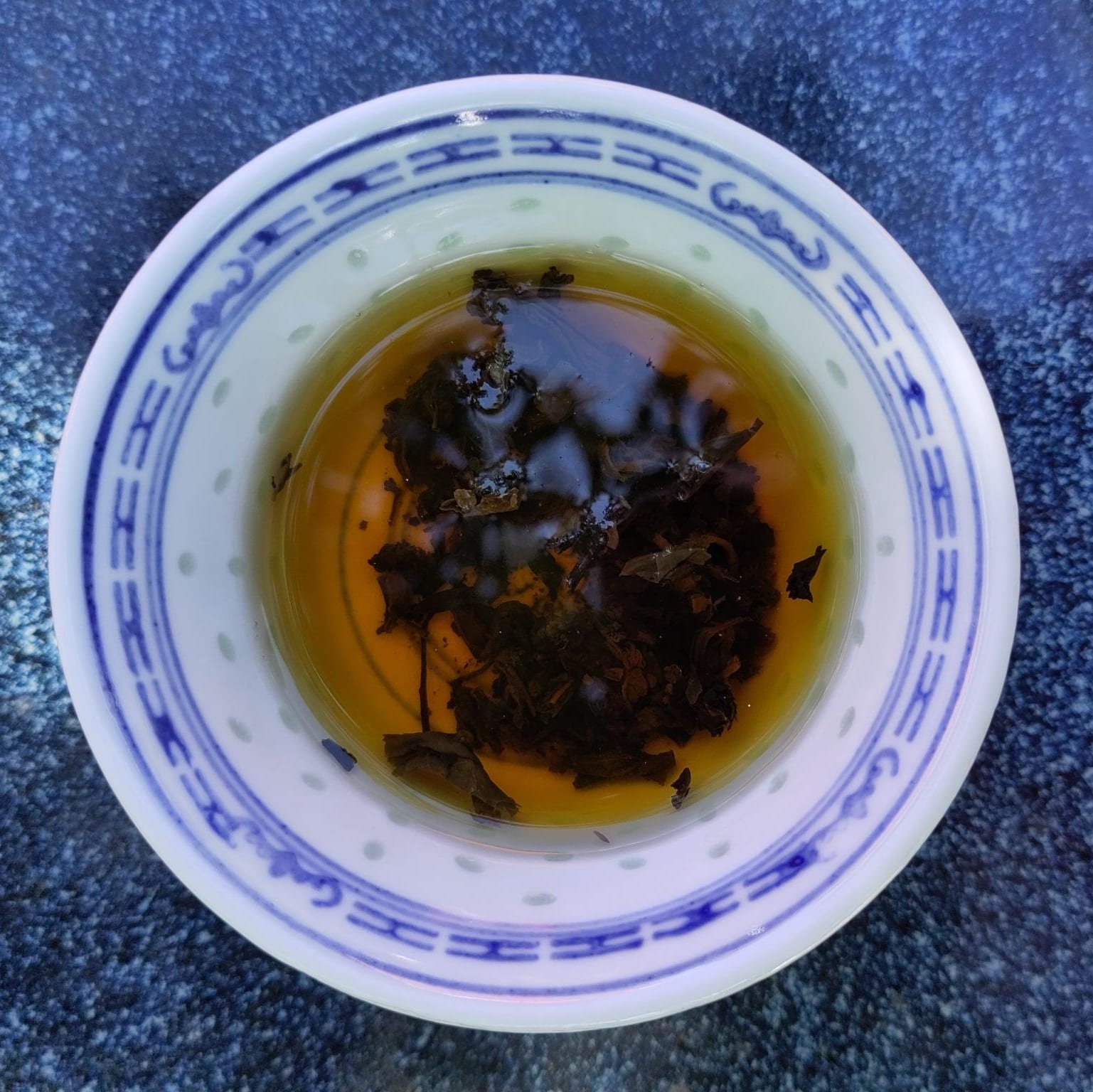
The 2013 sensory requirement for Jingyang Fu brick tea is: neat and even shape; brownish-yellow colour; visible golden flowers; full, evenly distributed colonies; pure, persistent aroma with an aged note; clear, red and bright liquor; mellow, sweet, slightly smooth taste; dark brown, fairly even infused leaf.
In the cup, Fu brick tea commonly shows aged wood, fungal-floral notes and a mild sweet, glutinous edge. The liquor should be red and concentrated but still clear; it should not be so cloudy that the bottom of the cup disappears. Thickness, sweetness and smoothness depend on raw material, flowering, drying and storage, not on a simple count of golden flowers.
The 2013 physical limits are:
| Item | Special grade | Grade 1 |
|---|---|---|
| Moisture (mass fraction) | ≤14.0% (12% by weight-water basis) | ≤14.0% (12% by weight-water basis) |
| Total ash (mass fraction) | ≤8% | ≤8% |
| Tea stems (mass fraction) | ≤15% | ≤18% |
| Non-tea foreign matter (mass fraction) | ≤0.8% | ≤0.8% |
| Eurotium cristatum (colonies/g dry tea) | ≥300,000 | ≥300,000 |
These are the quality requirements of the 2013 geographical indication product, not a universal national standard for every Fu brick tea. Different companies and product standards may use different grades and limits; a figure on another label should not be dropped into this table as if it were the same specification.
For everyday brewing, a compressed Fu brick is best started with boiling water and a quick rinse to help the piece open. A practical starting point is 5 g of tea to 150 ml of water, with short first infusions, then adjusting according to brick density, fragment size and age. The tea can also be boiled, but avoid long, hard boiling that turns it bitter. This ratio is an editorial suggestion, not a rule in the 2013 notice.
Timeline: GI in 2013, national heritage in 2021, UNESCO in 2022
| Date | Event | Note |
|---|---|---|
| 26 September 2013 | AQSIQ Announcement No. 137 approved geographical indication protection for “Jingyang Fu brick tea” | The protected area is eight towns and eleven villages in Jingyang; the notice also sets raw material, process, flowering parameters and quality limits |
| 24 May 2021 | The State Council published the fifth batch of national intangible cultural heritage projects; “dark tea making technique (Xianyang Fu tea making technique)” was added as an extension project | Project No. VIII-152, declared by Xianyang, Shaanxi; protection unit is the Xianyang Mass Art Centre |
| 29 November 2022 | “Traditional tea processing techniques and associated social practices in China” entered the UNESCO Representative List | Xianyang Fu tea making was one of the joint projects; this is recognition of the craft, not a product GI |
| 2024 | Xianyang Fu tea regional public-brand value reached CNY 3.586 billion and entered the 2024 China tea regional public-brand value TOP50 | The value belongs to the Xianyang Fu tea regional public brand, not to the Jingyang GI product as a separate brand |
| 2024 | Xianyang Fu tea output exceeded 11,000 tonnes and value exceeded CNY 2.3 billion; provincial Fu tea output was 11,900 tonnes and value CNY 3.222 billion | The two sets use different statistical scopes: city-level preliminary figures versus the provincial agriculture department's dispatch |
Earlier history is less tidy. Local industry material says Xianyang Fu tea has more than 600 years of production history. The China Intangible Cultural Heritage Network project page, by contrast, uses “it is said” for two more specific claims: loose tea in the Northern Song Xining period (1068) and a fixed technique in the first year of the Ming Hongwu reign (1368). Because the source itself says “it is said”, those years are craft tradition, not independent historical evidence. This page therefore avoids “created in a certain year” or “tribute tea in a certain Song year” claims that cannot be checked. The Ming-Qing tea-horse trade, the northbound tea traffic and the Jingyang processing tradition are useful background; “600 years” is better treated as an industry narrative than as an exact chronological marker.
Industry: 11,900 tonnes and 11,000 tonnes are different rulers
The 2024 provincial tea-industry dispatch gives 3.0137 million mu (about 200,900 ha) of tea gardens, 147,000 tonnes of total tea output and CNY 28.082 billion in total output value, including 11,900 tonnes and CNY 3.222 billion for Fu tea; tea sales exceed CNY 44 billion. The 11,900 tonnes is a provincial Fu tea figure, not the output of Jingyang County or Xianyang City alone.
Xianyang's preliminary 2024 figures are different: Fu tea output over 11,000 tonnes, value over CNY 2.3 billion, up 10% year on year. In 2023 Xianyang produced 10,900 tonnes of Fu tea worth CNY 2.007 billion. The city also reports more than 50 Fu tea processing enterprises, 30,000 tonnes of annual capacity, nearly 1,000 marketing companies and more than 20,000 jobs; in 2024, 31 Fu tea producers were designated as C-level supervised enterprises and the 2024 Xianyang Fu tea standards-system guide was published.
| Indicator | Figure | Scope |
|---|---|---|
| 2024 provincial Fu tea output | 11,900 tonnes | Shaanxi Provincial Department of Agriculture and Rural Affairs, provincial dispatch |
| 2024 provincial Fu tea value | CNY 3.222 billion | Same |
| 2024 Xianyang Fu tea output | Over 11,000 tonnes | Xianyang preliminary figures |
| 2024 Xianyang Fu tea value | Over CNY 2.3 billion | Same, up 10% year on year |
| 2023 Xianyang Fu tea output | 10,900 tonnes | Xianyang Supply and Marketing Cooperative |
| 2023 Xianyang Fu tea value | CNY 2.007 billion | Same |
| 2024 Xianyang Fu tea regional public-brand value | CNY 3.586 billion | 2024 China tea regional public-brand value TOP50 |
| Xianyang Fu tea processing enterprises | More than 50 | Xianyang Supply and Marketing Cooperative |
| Xianyang Fu tea annual capacity | 30,000 tonnes | Same |
These figures should not be added or subtracted at will. 11,900 tonnes and 11,000 tonnes are not “the province's extra 900 tonnes”; they come from different statistical scopes and dates. CNY 3.222 billion and CNY 2.3 billion are not the same value measure. The CNY 3.586 billion brand value belongs to the Xianyang Fu tea regional public brand and must not be written as “the Jingyang Fu brick tea brand value”.
Likewise, the provincial total tea output value of CNY 28.082 billion is not the value of Fu tea alone; Fu tea accounts for CNY 3.222 billion of it. Calling the whole CNY 28.082 billion “Shaanxi Fu brick tea value” would merge green tea, black tea, Fu tea and other tea types into one number.
Drinking and buying boundaries: golden flowers are not medicine, white mold is not a golden flower
Fu brick tea is a tea, not a medicine. Eurotium cristatum is the target fungus of the flowering process, and the 2013 notice uses a colony count as a quality limit. That is not a consumer dose for lowering blood lipids, losing weight or improving sleep. Calling golden flowers a probiotic supplement, or calling Fu brick tea a remedy for fatty liver or high blood lipids, goes beyond what the public standards can support.
For buying and storing, use these boundaries:
- Colour and form: normal golden flowers are yellow, granular and embedded in the brick or on its surface. White fuzz, green or black patches are not “golden flowers”; they are a mold risk.
- Aroma: a clean fungal-floral and aged aroma is normal. Sourness, dampness, a stale warehouse smell or a sharp off-note point to a storage or fermentation problem.
- Liquor: red and concentrated but clear. Cloudiness, heavy suspended matter or unusual sediment should not be explained away as “tea dust” alone.
- More golden flowers is not automatically better: the 2013 notice sets a minimum colony count, not a quality ranking based on maximum density. Colony density, brick density, aroma, liquor and storage all shape the experience.
- Older is not automatically better: ageing needs a dry, clean, dark, odor-free environment. A damp, odour-absorbing or moldy brick does not improve with time.
- Not every Shaanxi Fu brick is a Jingyang GI product: protection is limited to the eight towns and eleven villages in the 2013 notice. Other Xianyang producers may make the same type of tea without being entitled to the Jingyang Fu brick tea mark.
At home, break the brick into pieces you will use, keep them in a dry, dark, odor-free container away from kitchen smoke and damp, and avoid refrigeration because repeated opening can introduce moisture and odours. Brew with boiling water, rinse first, then adjust the infusion time to taste; older or more tightly compressed tea can take longer, but long hard boiling is not recommended.
Source boundaries: the notice, the heritage listing and the industry figures each do one job
This page uses three kinds of material separately:
- The 2013 notice governs the GI area, raw material, process parameters and product-quality limits. It does not prove a health effect, and it does not describe the current state of every Shaanxi Fu tea company.
- The 2021 national heritage listing and the 2022 UNESCO listing govern craft identity and transmission. They recognise Xianyang Fu tea making as intangible heritage; they do not award a quality grade to a company, brand or product.
- The 2024 industry figures govern output, value, enterprise counts and brand value. Provincial, Xianyang and Jingyang GI scopes must not be mixed; the CNY 3.586 billion brand value belongs to the Xianyang Fu tea regional public brand.
The image also needs a note. The page image is a close-up of an Anhua Fu brick from Hunan, by Kasuga, CC BY-SA 4.0. It shows the broken-brick form and golden colonies; it is not a Jingyang or Xianyang production photograph, and it cannot prove the raw material, process, colony count or grade of a Shaanxi product. Just as a photograph of a tea garden elsewhere cannot prove the altitude of a Shaanxi garden, this image is only a type reference.
Finally, many origin stories surround Fu brick tea: processing in the fu days, the tea-horse trade, northbound tea traffic, accidental flowering. They help explain the craft, but they do not form a single evidence chain that can be dated to a year. This page keeps the local “more than 600 years” industry wording while refusing to turn a specific founding year into settled fact; that is closer to the available material than a neatly invented date.