What it is
Anhua dark tea is the family of dark teas produced in Anhua, Hunan. Common products can be roughly grouped into the “three tips” (Tianjian, Gongjian, Shengjian, also called Xiangjian), the “three bricks” (Fu brick, Hei brick, Hua brick) and Hua Juan (such as Qianliang tea). They share pile fermentation but differ in material grade, pressing, fungal growth and drying. Anhua dark tea is not one product, and no single flavour description covers all of it.
Origin and classification
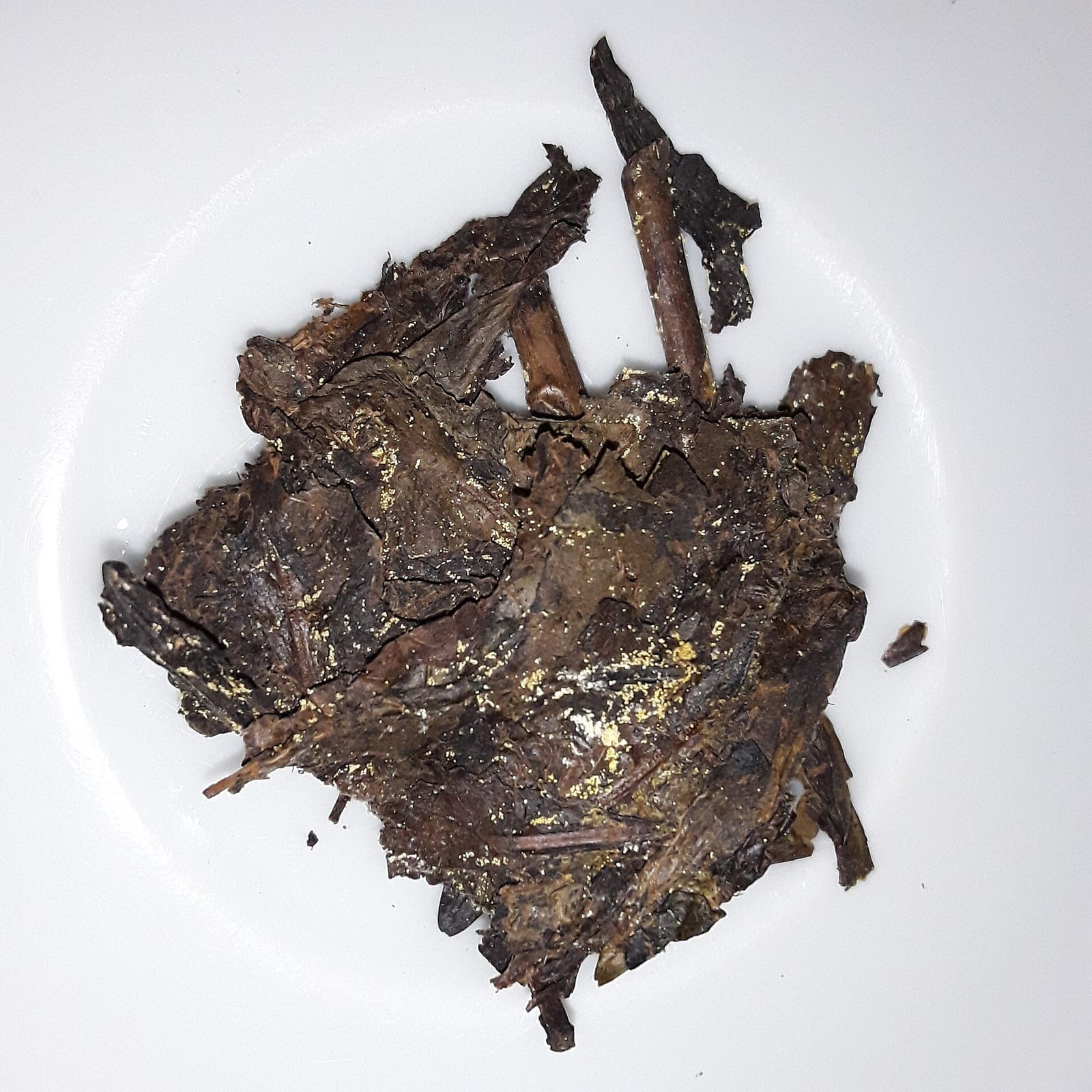
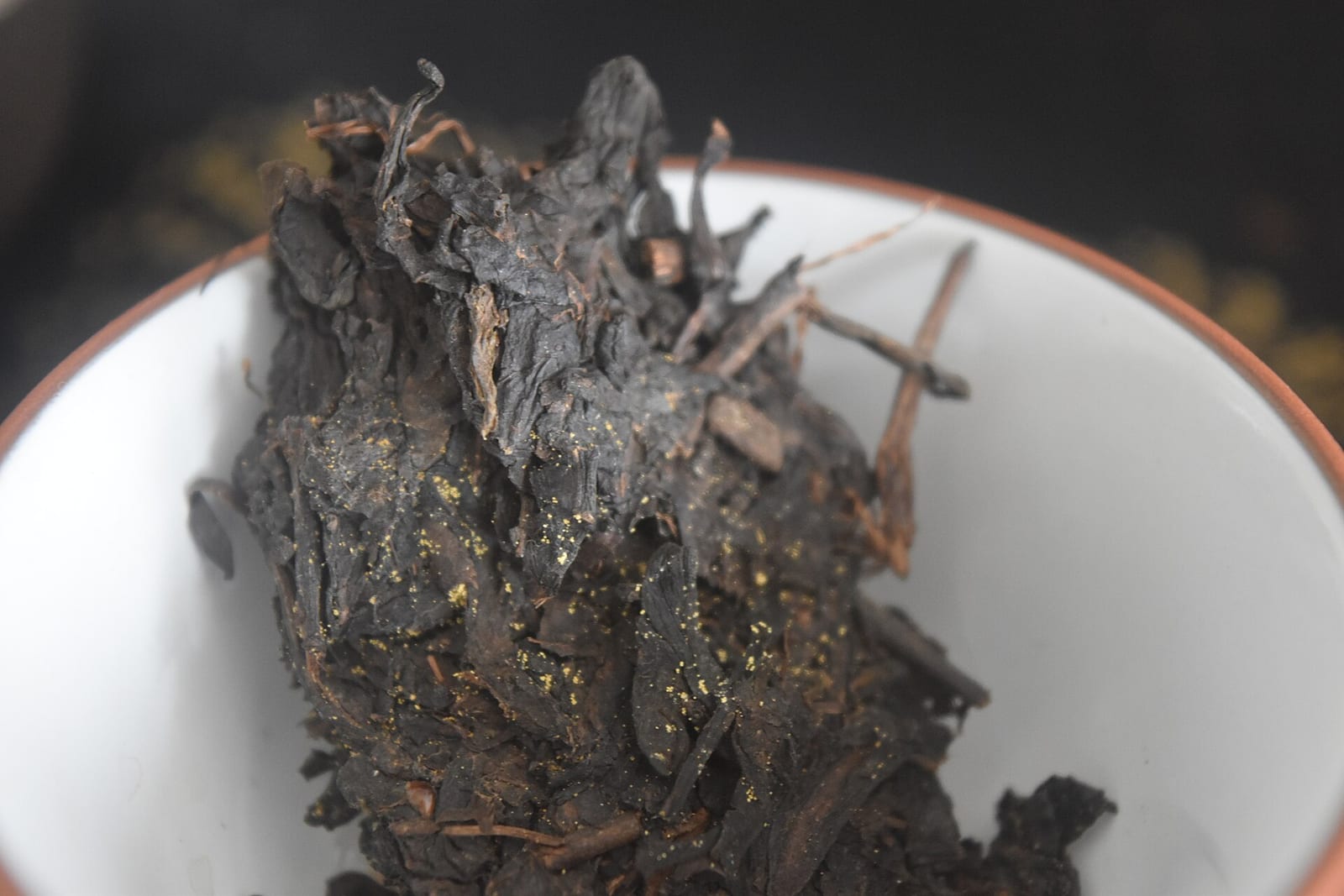
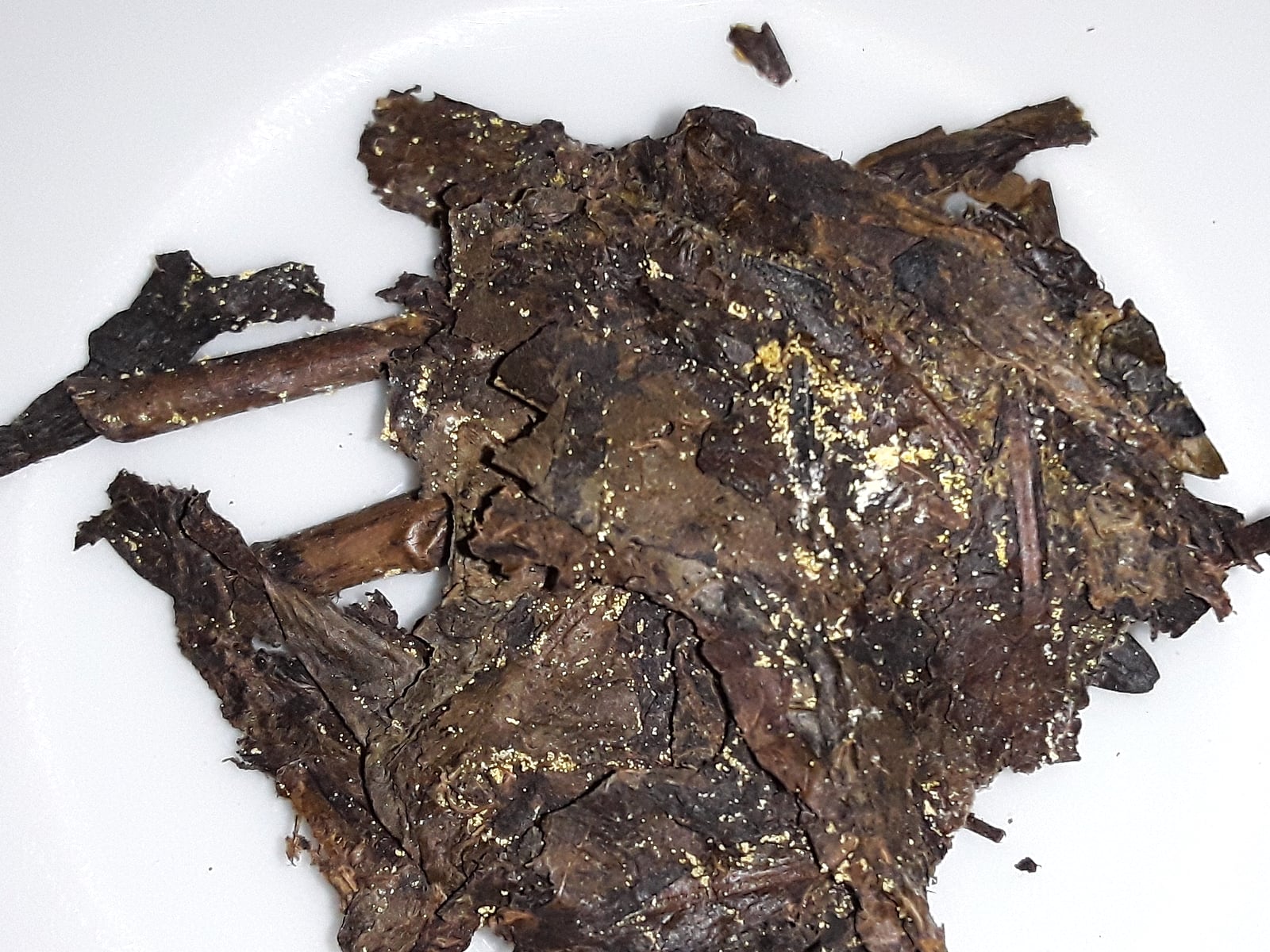
The GI area is linked to Anhua County; exact boundaries and product categories follow the DB43/T 657 series and GI announcements. Tianjian often uses finer material and thinner strips; Fu brick is pressed and may develop Eurotium cristatum (“golden flowers”) under suitable temperature and humidity; Hei brick is tightly pressed; Hua Juan has traditional bamboo-basket and cylinder forms. Raw material, processing and standards differ by product, and price or age cannot replace category judgement.
Processing
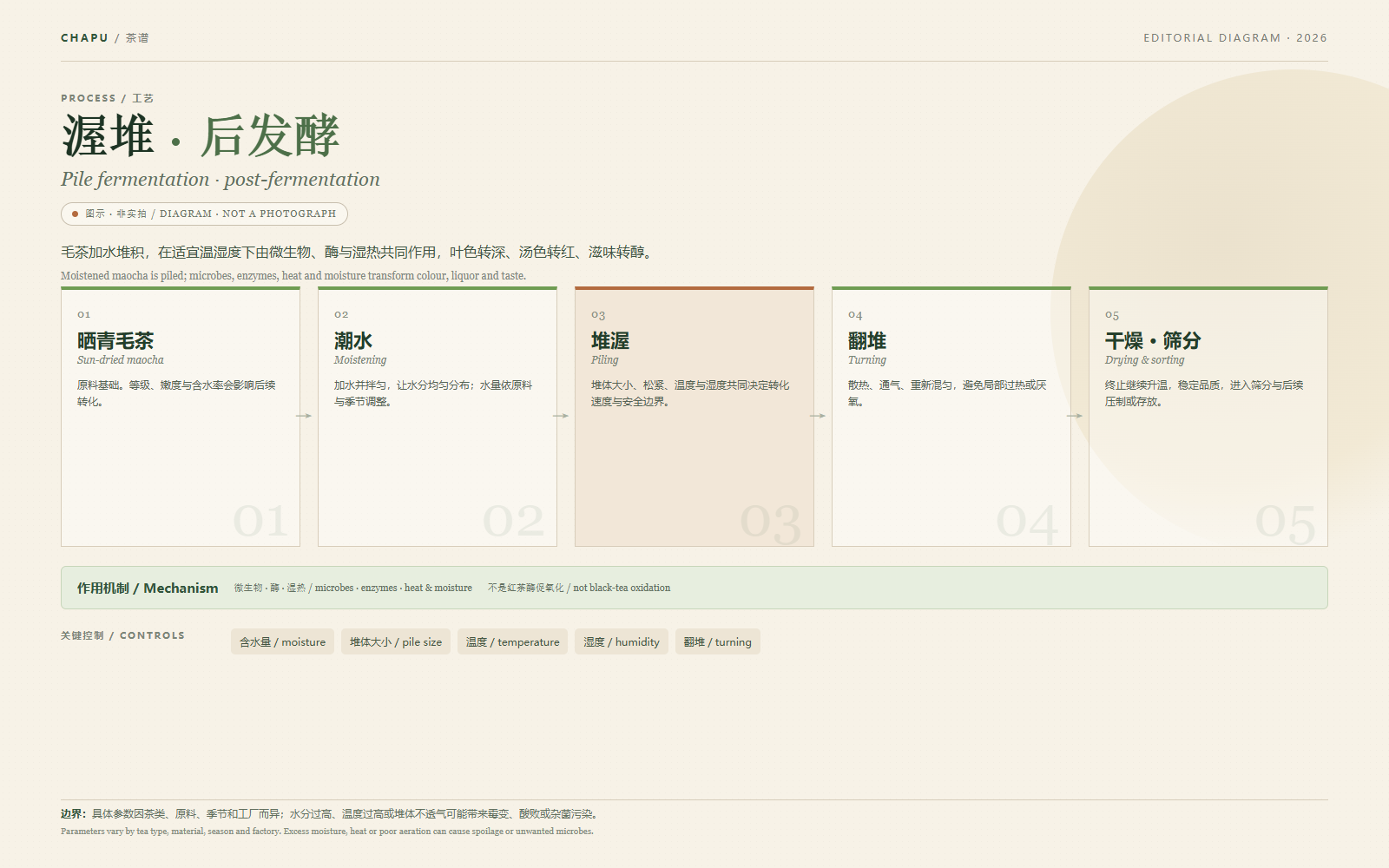
Anhua dark tea usually goes through fixation, rolling, pile fermentation and drying, then sieving, blending, steaming/pressing or basket filling. Pile fermentation is a microbial and hydrothermal post-fermentation that darkens the leaf and deepens the liquor. Fu-brick “flowering” requires controlled temperature, humidity and ventilation; golden flowers do not appear in every dark tea and are not “the more the better”. Failed flowering, contamination or poor storage can damage quality.
Quality and flavour
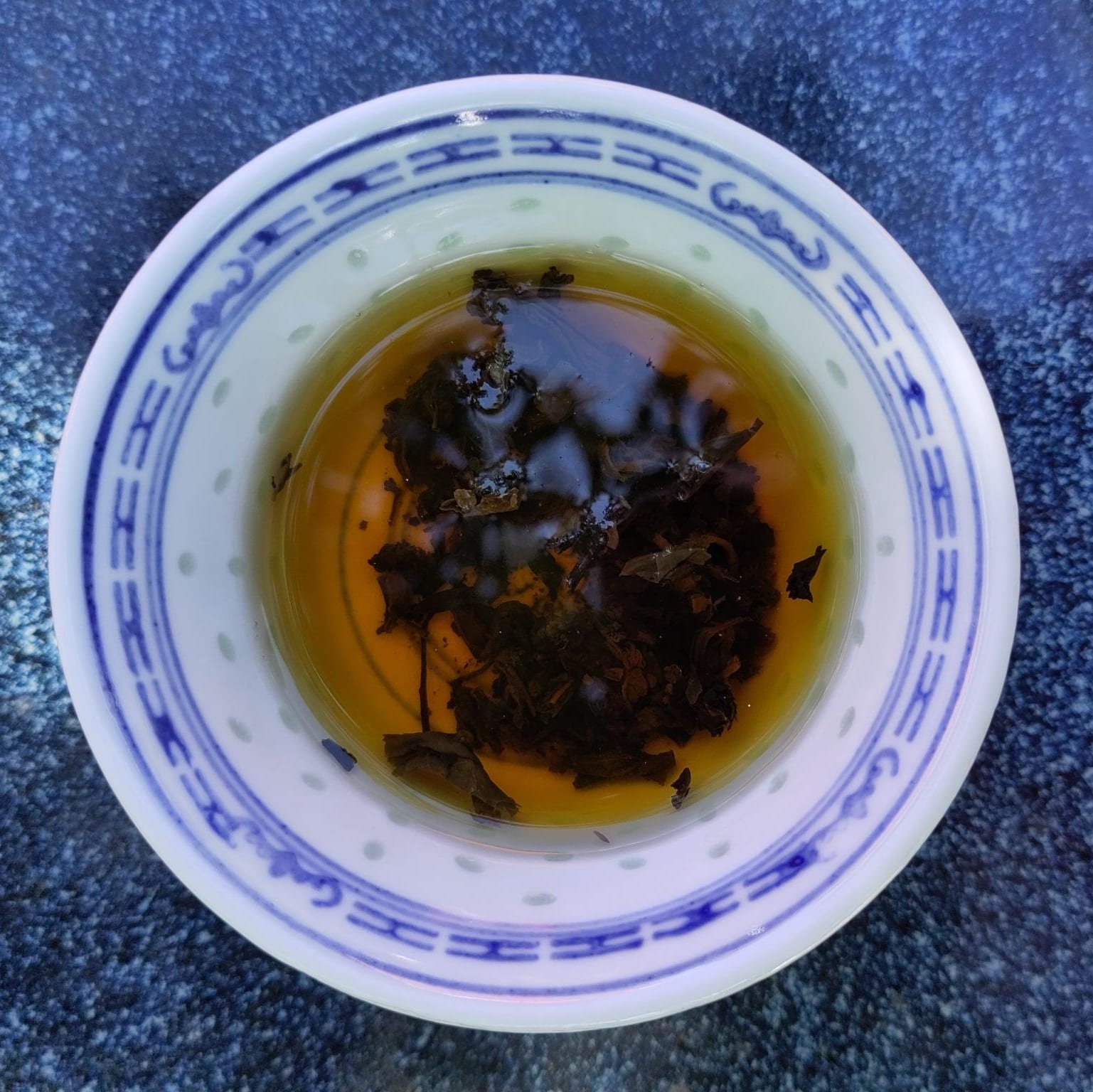
Liquor ranges from orange-red to deep red; taste is mellow, with possible pine smoke, fungal, woody, aged or lightly medicinal notes. Tianjian is usually finer; Fu brick may show floral-fungal notes; Hei brick and Hua Juan are more tightly pressed and suit boiling. Material, pile fermentation, flowering and storage determine style; “golden flowers”, “aged aroma” and “pine smoke” are descriptions, not uniform grades.
History and trade
Anhua dark tea moved through the Zi River, Dongting water system and north-west trade routes, as part of the border-tea and brick-tea system. Old records link it to the Silk Road tea route, border tea and north-west markets; specific routes, dates and volumes need local gazetteers, customs archives and tea-industry records. Anhua dark tea was long border-market oriented and only re-entered broader consumer markets in recent decades.
Common misconceptions
- Anhua dark tea is not Pu-erh. Both are dark teas, but origin, processing and standards differ.
- Do all Fu bricks have golden flowers? No. Flowering depends on processing and storage.
- Is Tianjian the highest grade? It is one product type within the Xiangjian family; grade depends on the standard.
- Does ageing always improve dark tea? No. Material, moisture, storage and hygiene determine the direction.
Related entries
- Anhua Tianjian — a related product (Chinese entry available)
- Yiyang Fu brick — a related product (Chinese entry available)
- Pile fermentation
Sources
- GB/T 32719.1-2016, Dark tea — Part 1: Basic requirements.
- GB/T 32719.5-2018, Dark tea — Part 5: Fu tea.
- DB43/T 657.4-2021, Geographical indication product — Anhua dark tea, Part 4: Fu tea.
- Legacy Hunan tea record, retained for provenance.
This page is an AI-edited translation based on the reviewed Chinese source. It is not a human-expert endorsement.