Scope
Hunan lies south of the middle Yangtze. Its tea gardens follow the Wuling, Xuefeng, Luoxiao and Nanling mountains and the shores of Dongting Lake. By the end of 2024 the province had 3.2642 million mu of tea gardens and produced 285,500 tonnes of tea, both sixth nationally; composite output value reached RMB 113.56 billion, fifth nationally. Tea exports reached 49,000 tonnes and USD 140 million, third and fourth nationally. Hunan black tea exports have ranked first in China for several years; in January–April 2025 the province exported 20,000 tonnes worth USD 52.776 million, up 53.85% and 39.21% year on year. Hunan is not an Anhua-dark-tea monoculture: Yueyang yellow tea, western Hunan greens, southern Hunan bitter tea, eastern Hunan smoky tea and Changsha scented tea form a multi-category landscape.
Geography and terroir
Hunan is ringed by mountains on three sides and opens northward. The Wuling, Xuefeng, Nanling and Luoxiao ranges enclose hills, basins and the Dongting Lake plain. The climate is subtropical monsoonal: spring warms quickly and brings concentrated rain, summers are hot and humid, autumns cool, and mountain areas are misty in winter. Red, yellow, yellow-brown and purple soils dominate; slope drainage, valley moisture and mountain mist are common terroir factors. Anhua sits in the northern Xuefeng Mountains, with deep valleys and dense streams. Junshan is a small island in Dongting Lake, where lake moisture and island microclimate matter. Guzhang and Baojing lie in the Wuling interior, with strong differences in elevation and aspect. Shimen and Taoyuan occupy the transition from the Wuling Mountains to the Dongting plain. The low hills of southern and eastern Hunan warm earlier in spring. Aspect, shade, soil and farm management vary sharply from garden to garden; "Hunan is humid" explains very little.
Main tea areas
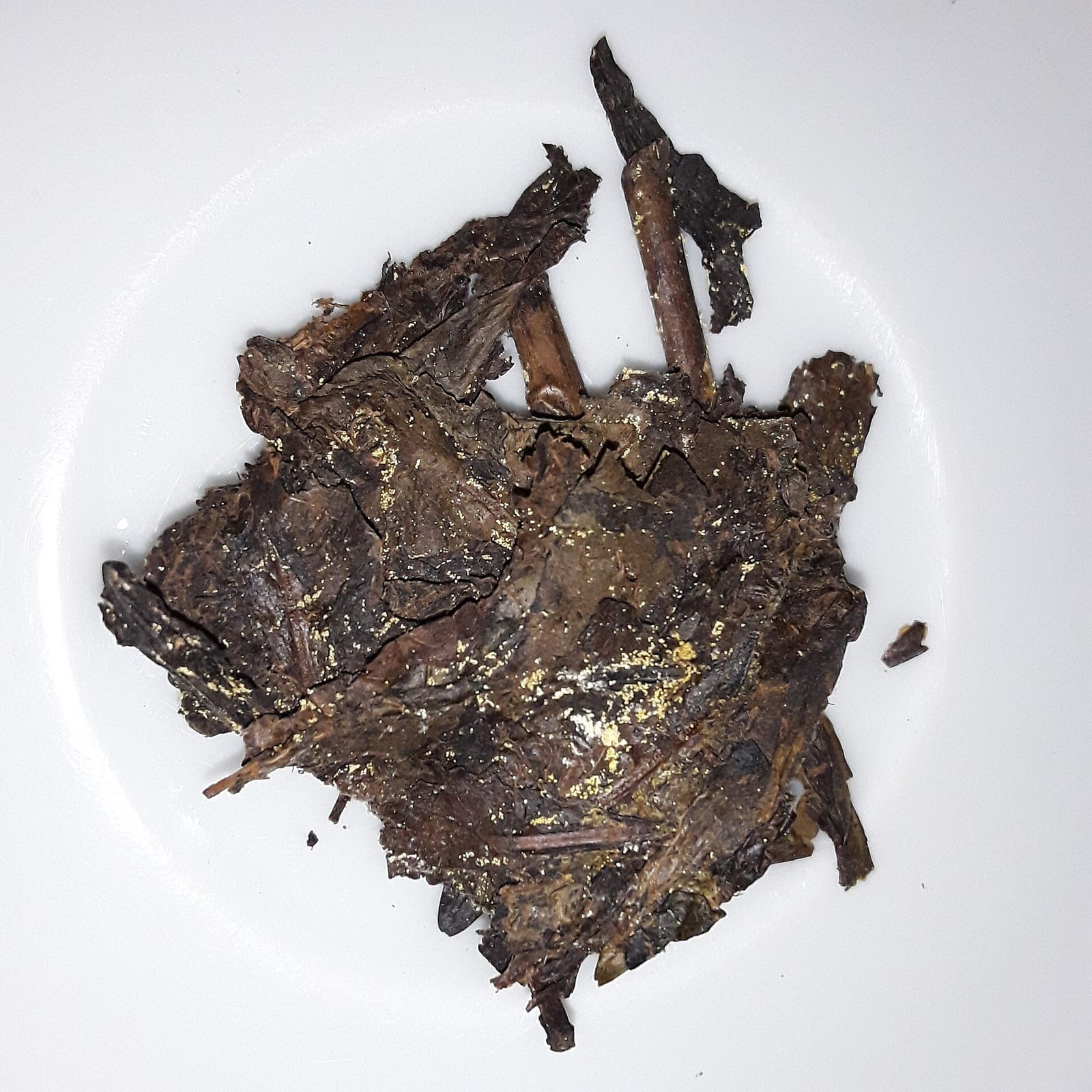
- Anhua–Taojiang–Yiyang (dark-tea core): the centre of Anhua dark tea, covering Anhua, Taojiang and Yiyang. Tianjian, Gongjian, Shengjian, Fu brick, Hei brick, Hua brick and Hua Juan form a product family; Fu brick's "golden flowers" require specific temperature and humidity during fungal growth.
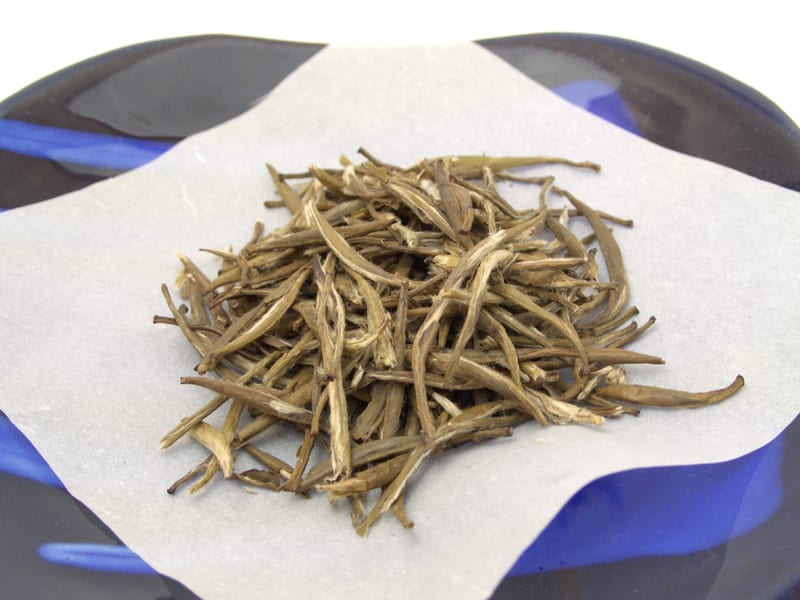
- Yueyang–Junshan–Linxiang (yellow tea and green tea): Junshan Yinzhen comes from Junshan Island in Dongting Lake; Yueyang yellow tea, Beigang Maojian and Linxiang Baishi Maojian form a yellow-and-green belt.
- Western Hunan–Guzhang–Baojing–Jishou (green tea and black tea): the core of Guzhang Maojian, Guzhang black tea and Baojing Golden Tea, where Wuling mountain gardens and valleys interlace and spring buds emerge early.
- Changde–Shimen–Taoyuan (green tea, black tea and wild tea): Shimen Yinfeng, Taoyuan Yechawang and Shimen black tea occupy the low hills between the Wuling Mountains and Dongting Lake.
- Changsha–Ningxiang–Liuyang (green tea, yellow tea and scented tea): Weishan Maojian, Gaoqiao Yinfeng, Changsha scented tea and export greens, where urban consumption meets processing traditions.
- Chenzhou–Yongzhou–Huaihua (southern Hunan specialities): Jianghua Kucha, Tongdao Dong tea, Chenzhou Dongjianghu tea and Daoxian Yunwu form another flavour line in the Nanling mountains and ethnic-minority areas.
Tea types and processing
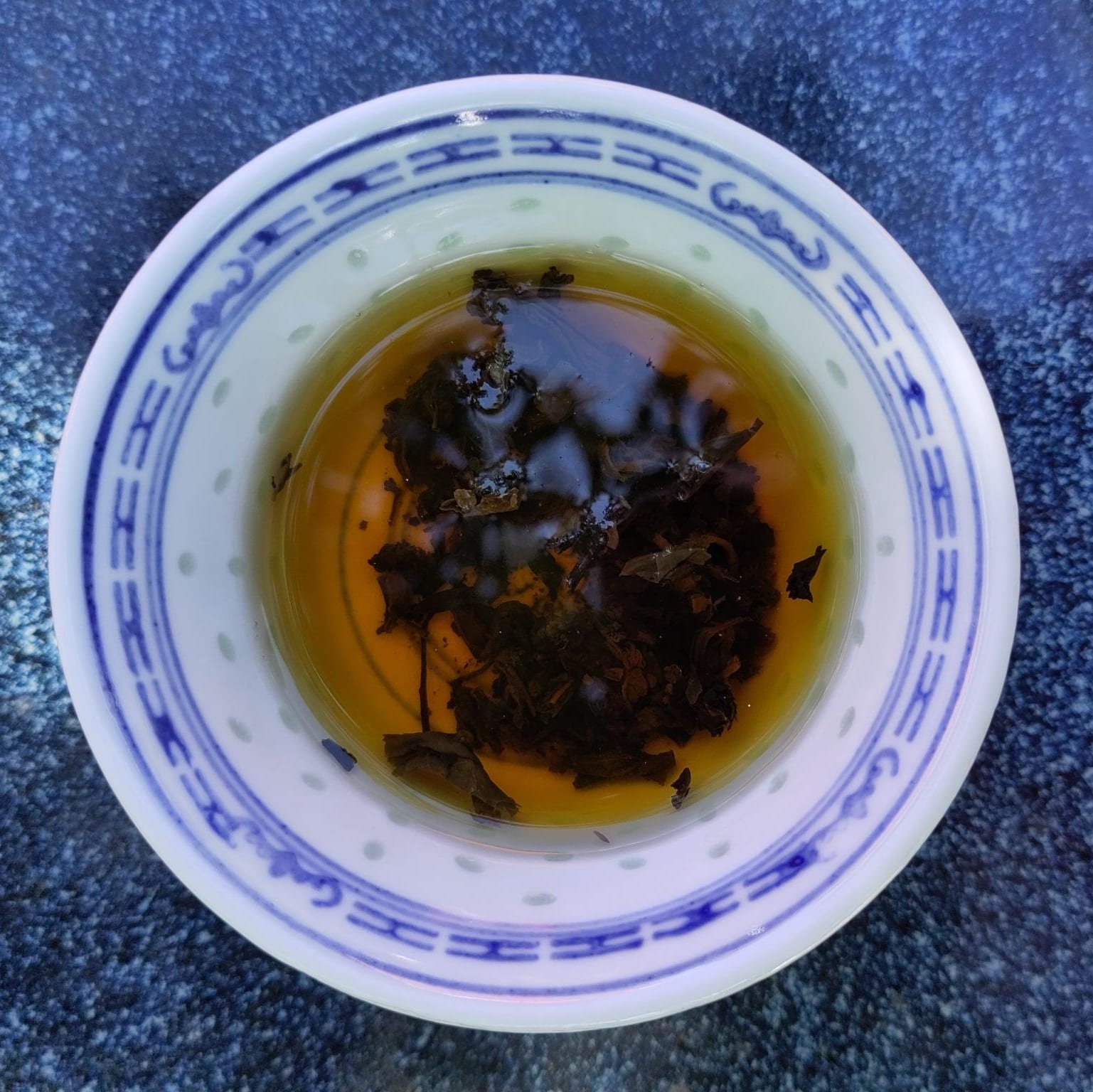
Hunan is dominated by dark, yellow, green and black teas, with scented tea, smoky tea and herbal infusions alongside. Anhua dark tea turns on kill-green, rolling, pile fermentation and drying; some products are also pine-fired, pressed into bricks or rolled into Hua Juan. Fu brick's "golden flowers" are the golden cleistothecia of Eurotium cristatum growing under controlled temperature and humidity; not every dark tea develops them. Junshan Yinzhen uses plump single buds and goes through kill-green, spreading, first drying, menhuang (covered yellowing) and final drying to produce yellow liquor and leaf; Weishan Maojian also belongs to the yellow-tea family. Guzhang Maojian, Baojing Golden Tea, Shimen Yinfeng and Yuanling Jietan follow green-tea processing, with spreading, kill-green, rolling and drying. Hunan black tea relies on withering, rolling, fermentation and drying and is central to exports and branded markets. Pingjiang smoky tea is smoked over pine or wood; its flavour comes from smoke, not pile fermentation. Zhangjiajie Meicha is Ampelopsis grossedentata, and Cili Eucommia tea is Eucommia; neither is a Camellia sinensis tea and neither should be mixed with true tea.
History and market
Tea was recorded in the Anhua area by the Tang–Song period, and dark-tea production and trade expanded in the Ming and Qing; Anhua became an important starting point on the Wanli Tea Road. Junshan Yinzhen was listed as tribute tea in the Qing, and Yueyang yellow tea developed a stable product lineage. In the twentieth century Hunan black tea, green tea and border-sale dark tea developed in parallel. In 2024 Anhua County had 360,000 mu of tea gardens, processed 86,000 tonnes and generated RMB 26.8 billion in composite output value; 100,000 tea farmers benefited, more than 70 dark-tea processors operated, and the county led 8 national and 17 local standards. Guzhang County had 205,000 mu, 14,300 tonnes and RMB 2.0121 billion in composite value, with the highest tea-garden area per capita in the province. The provincial target for 2027 is RMB 7,500 output value per mu, RMB 26 billion in agricultural output value, more than USD 200 million in exports and more than RMB 150 billion in whole-chain composite value. Area, output, composite value and exports are different measures and cannot substitute for one another.
Common misunderstandings
- Hunan is not only Anhua dark tea. Yueyang yellow tea, western Hunan green tea, Hunan black tea, southern Hunan bitter tea and Changsha scented tea all have stable production areas.
- Junshan Yinzhen is a yellow tea, not a white tea. Its yellow colour comes from menhuang, not from a white-leaf cultivar or white-tea withering.
- Fu brick's "golden flowers" are not ordinary mould. Eurotium cristatum forms golden cleistothecia under controlled conditions; failed fungal growth or contamination is a different matter.
- Dark tea is not unconditionally "better with age". Leaf material, processing, moisture content, storage temperature and humidity and packaging all shape transformation; damp, off-smelling or mouldy tea cannot be rescued by age.
- Meicha, Eucommia tea and Kucha are not the same kind of "tea". They come from different plants and must be kept separate from Camellia sinensis products.
Representative teas
The working index contains 23 regional teas. Only the 2 that have passed the public gate are linked here; the rest remain in editorial review.
Further reading and sources
Provincial statistics, production-zone boundaries and historical information are drawn from the sources below. Definitions, grades and processing for individual teas follow their own entries.
- Hunan Provincial People's Government: black tea exports rank first nationally for years as Hunan moves toward a strong tea province
- Hunan 2024 National Economic and Social Development Statistical Communiqué
- Hunan Provincial Department of Agriculture and Rural Affairs: the 'revitalisation code' in a leaf
- Hunan Daily: 2025 Tea Ancestor Festival and Hunan (Guzhang) Tea Culture Tourism Festival press conference