Chapu editorial illustration · CC BY-SA 4.0Tea Bag Industry
Tea Bag Industry is a practical guide. Its job is to turn a choice into steps: setting first, ranges second, troubleshooting last.
GuideReading paths and themed introductions for a first visit.
Chapu editorial illustration · CC BY-SA 4.0Tea Bag Industry is a practical guide. Its job is to turn a choice into steps: setting first, ranges second, troubleshooting last.
Guide
Chapu editorial illustration · CC BY-SA 4.0Tea Blending Guide is a practical guide. Its job is to turn a choice into steps: setting first, ranges second, troubleshooting last.
Guide
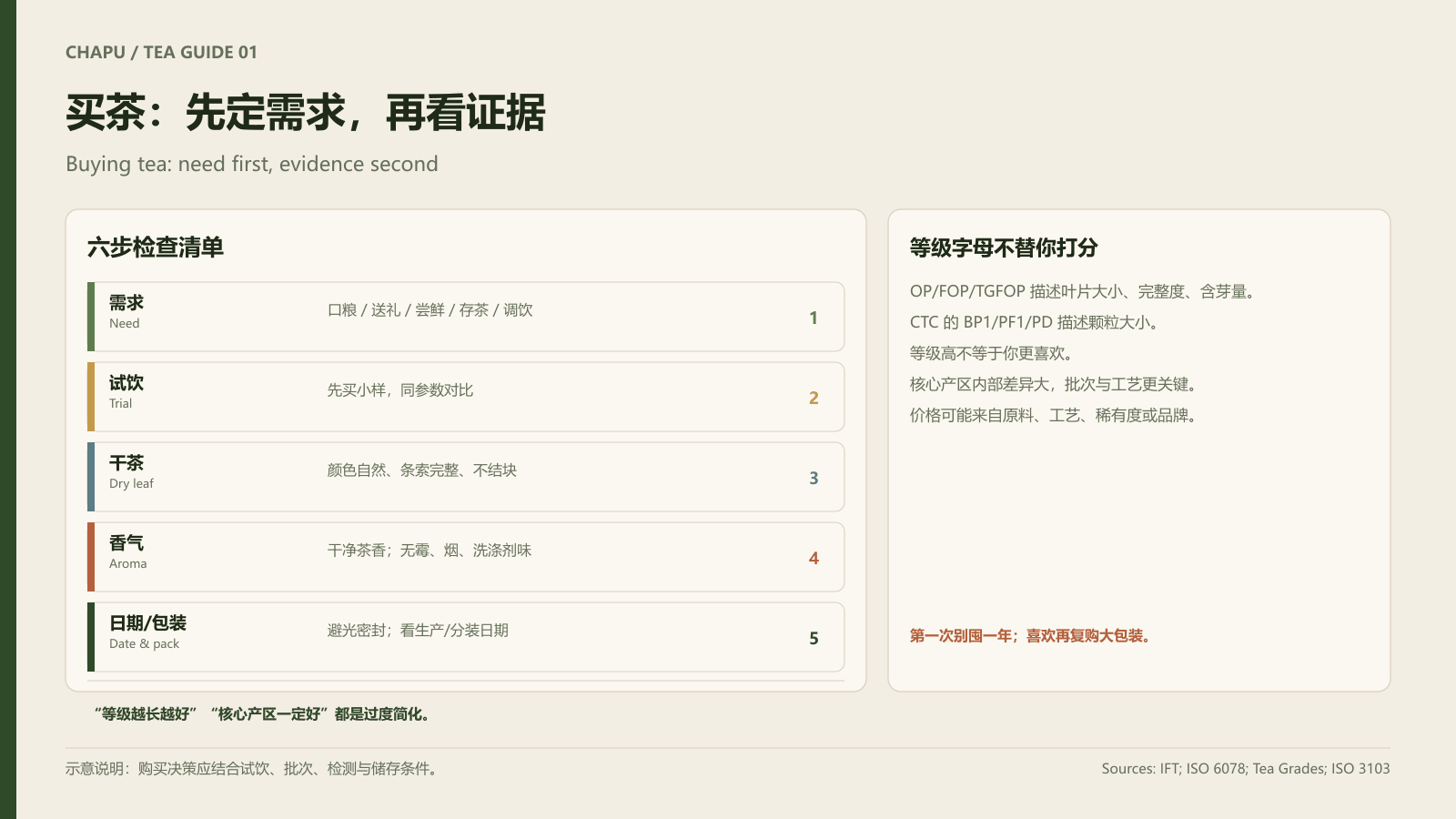
Chapu editorial illustration · CC BY-SA 4.0Buying tea is not memorising grade acronyms or chasing a famous origin. Decide what kind of tea you want, then check dry leaf, aroma, processing, date, packaging and a trial brew. Grade letters describe leaf size and tip content, not the quality in the cup.
Guide
Chapu editorial illustration · CC BY-SA 4.0Tea Category Comparison is a practical guide. Its job is to turn a choice into steps: setting first, ranges second, troubleshooting last.
Guide
Chapu editorial illustration · CC BY-SA 4.0Tea Ceremony Etiquette is a practical guide. Its job is to turn a choice into steps: setting first, ranges second, troubleshooting last.
Guide
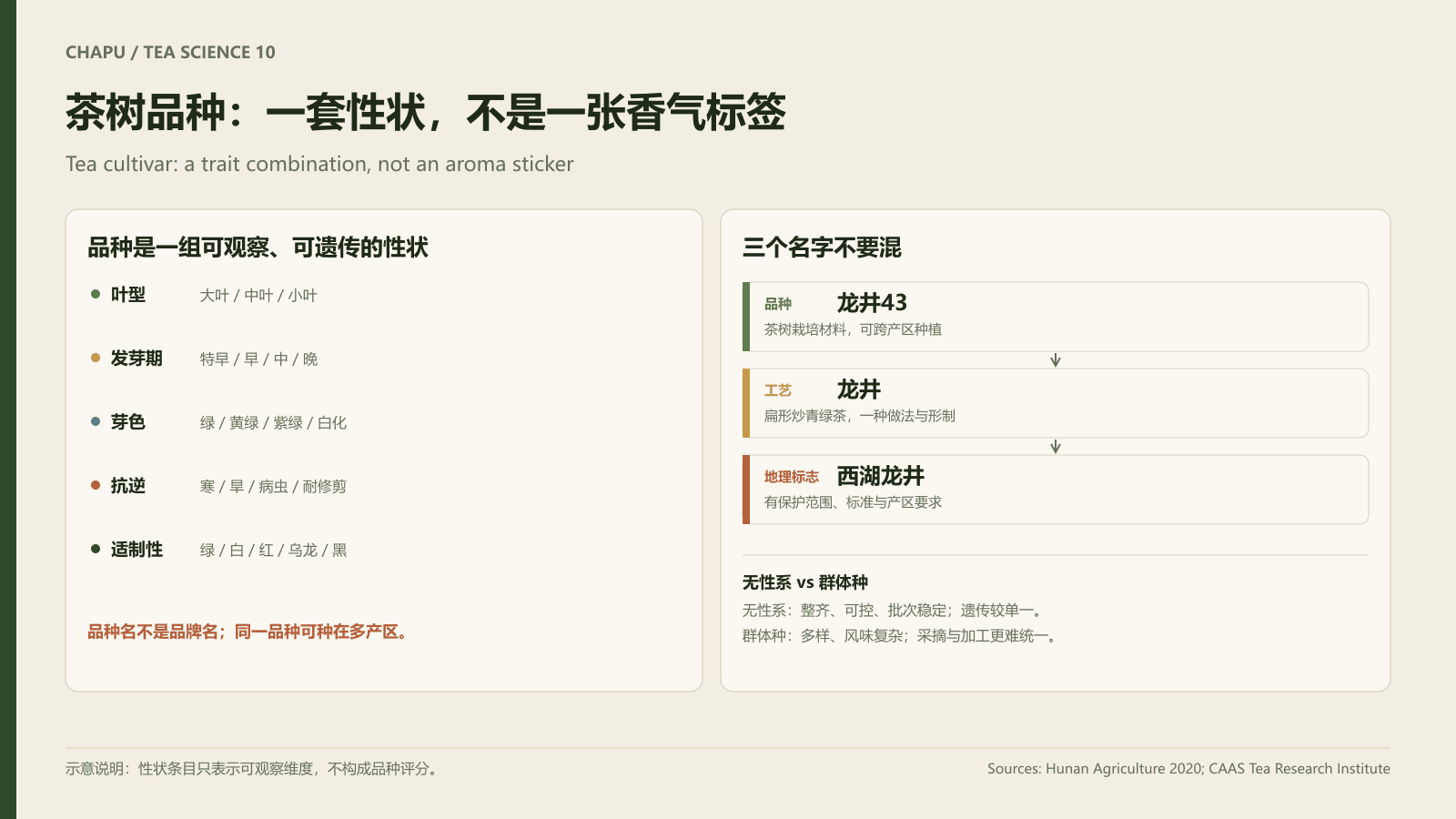
Chapu editorial illustration · CC BY-SA 4.0A cultivar is not a brand and not a tea name. It is a suite of observable, heritable traits: leaf type, flushing time, bud colour, stress tolerance and processing suitability. Keep cultivar, style and geographical indication apart.
Guide
Chapu editorial illustration · CC BY-SA 4.0Tea Cultivar Primer is a practical guide. Its job is to turn a choice into steps: setting first, ranges second, troubleshooting last.
Guide
Chapu editorial illustration · CC BY-SA 4.0Tea Gift Guide is a practical guide. Its job is to turn a choice into steps: setting first, ranges second, troubleshooting last.
Guide
Chapu editorial illustration · CC BY-SA 4.0Tea Grading is a practical guide. Its job is to turn a choice into steps: setting first, ranges second, troubleshooting last.
GuideCore
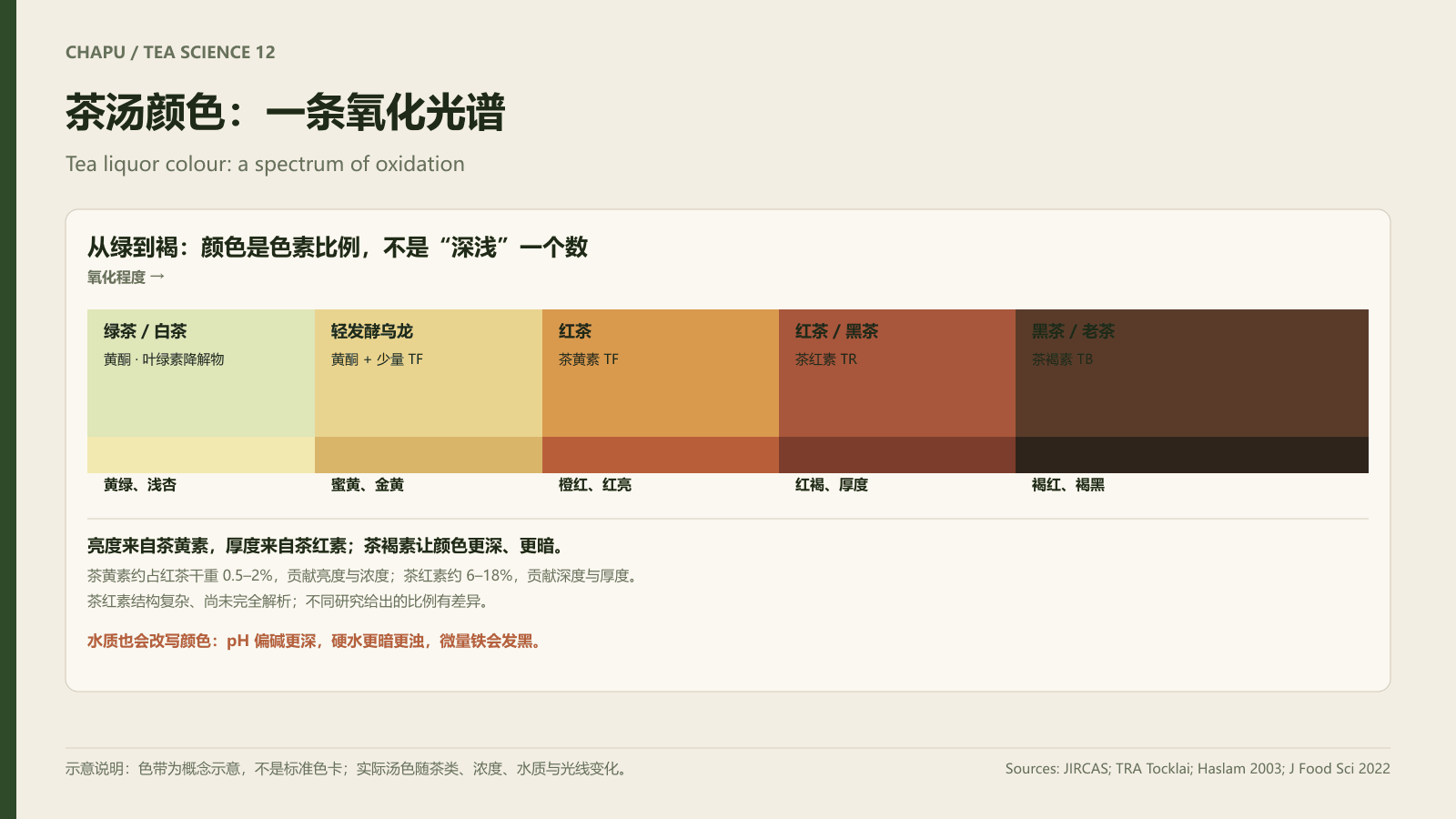
Chapu editorial illustration · CC BY-SA 4.0Liquor colour is not one axis called "depth". It is a spectrum written by pigment composition, oxidation level, concentration and water chemistry. Green-tea yellow-green, black-tea orange-red and dark-tea brown-red come from different ratios of chlorophyll, flavonoids, theaflavins, thearubigins and theabrownins.
Guide
Chapu editorial illustration · CC BY-SA 4.0Tea Market Structure is a practical guide. Its job is to turn a choice into steps: setting first, ranges second, troubleshooting last.
Guide
Chapu editorial illustration · CC BY-SA 4.0Tea Packaging is a practical guide. Its job is to turn a choice into steps: setting first, ranges second, troubleshooting last.
Guide

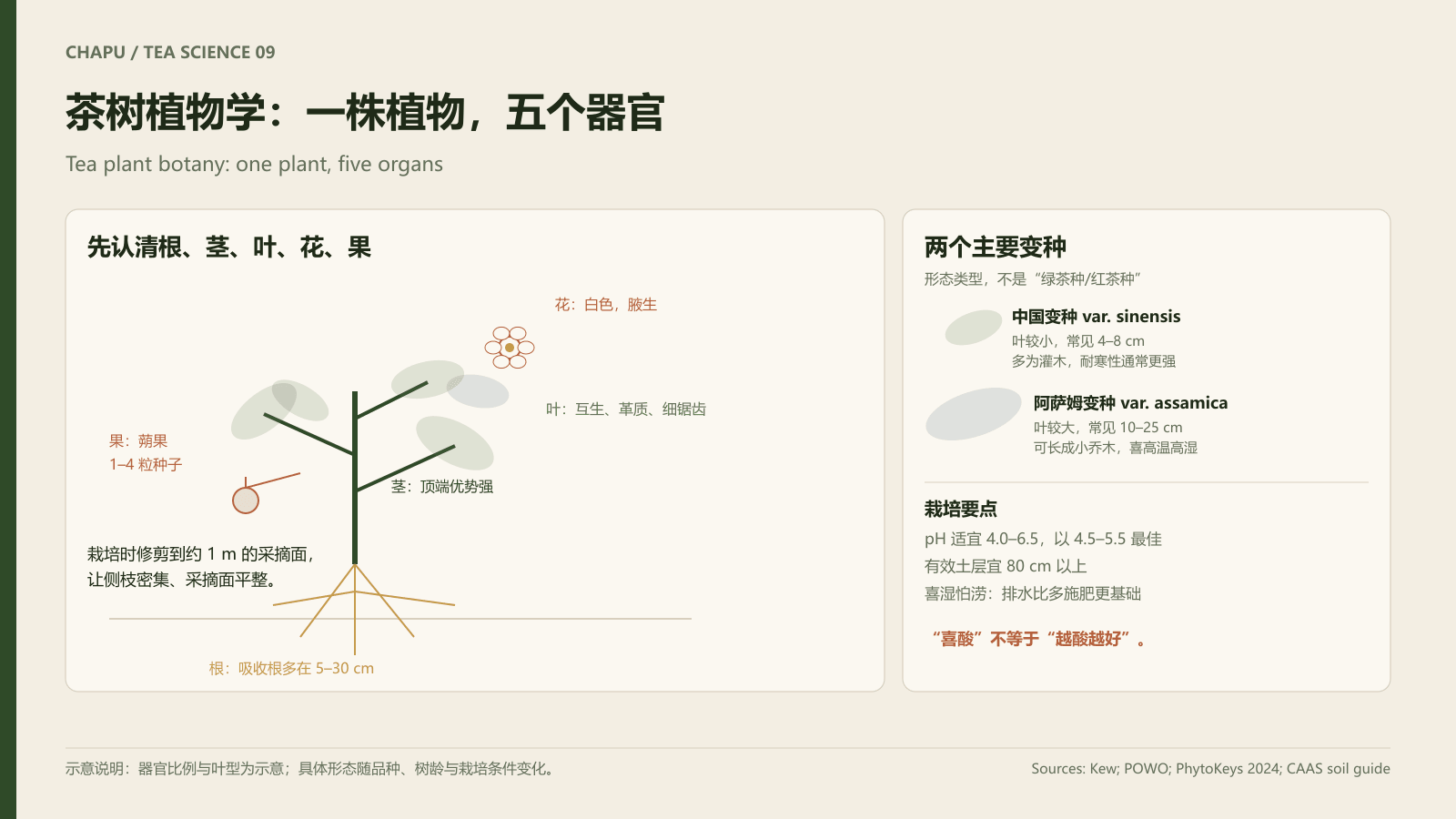
Chapu editorial illustration · CC BY-SA 4.0The tea plant is not any evergreen with tea-like leaves. It is one species in the genus Camellia. Start with root, stem, leaf, flower and fruit, then add the two botanical varieties, the plucking standard and acid soil.
Guide
Chapu editorial illustration · CC BY-SA 4.0Tea Processing Primer is a practical guide. Its job is to turn a choice into steps: setting first, ranges second, troubleshooting last.
Guide
Chapu editorial illustration · CC BY-SA 4.0Tea Regions Primer is a practical guide. Its job is to turn a choice into steps: setting first, ranges second, troubleshooting last.
Guide
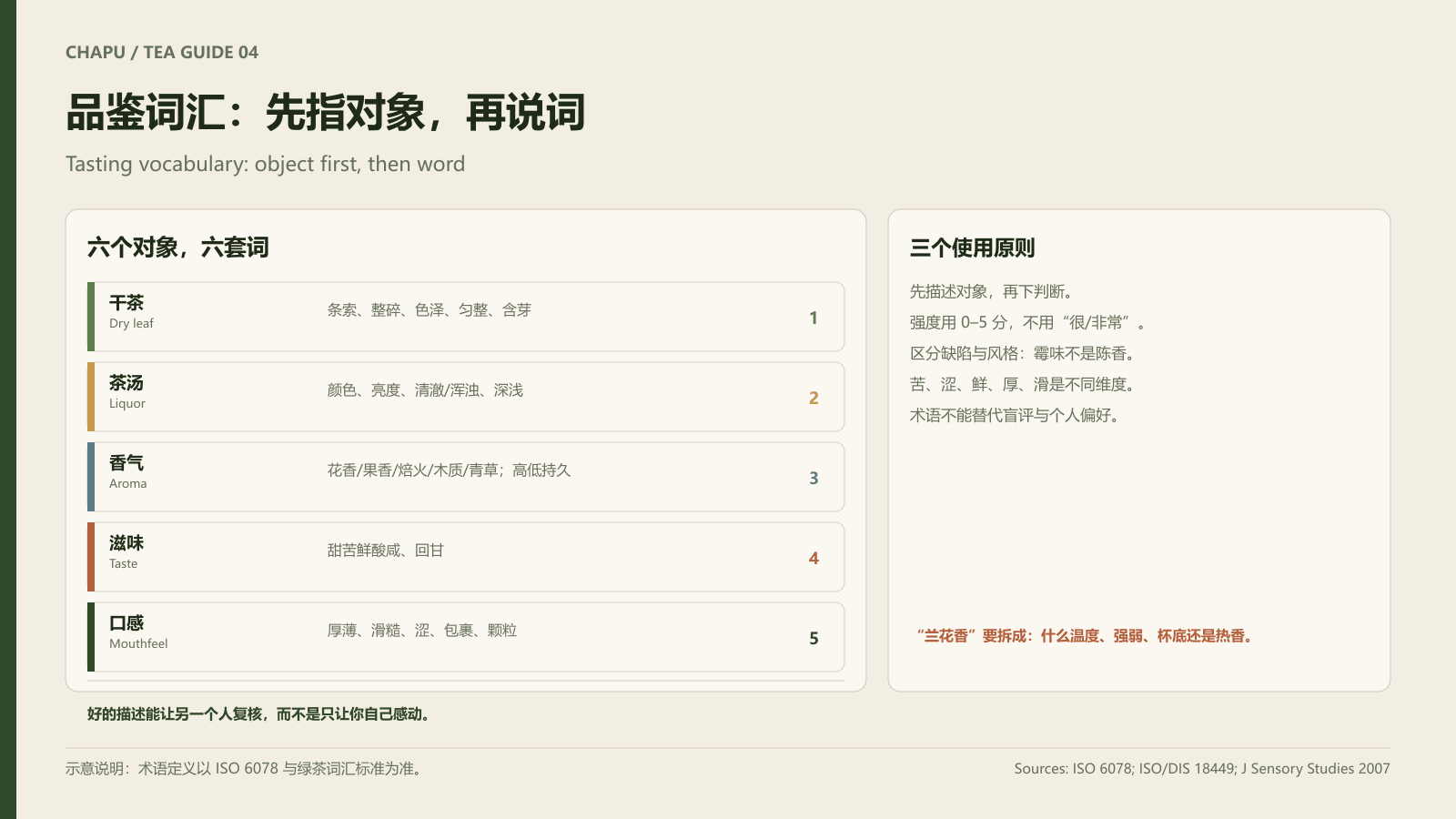
Chapu editorial illustration · CC BY-SA 4.0Tasting vocabulary is not a contest in mysticism. A good description points to a specific object and intensity: dry leaf, liquor, aroma, taste, mouthfeel and infused leaf. Terms such as “orchid” or “rock rhyme” must be unpacked into observable cues.
Guide
Chapu editorial illustration · CC BY-SA 4.0Tea Traceability is a practical guide. Its job is to turn a choice into steps: setting first, ranges second, troubleshooting last.
GuideCore
Chapu editorial illustration · CC BY-SA 4.0Tea Travel Guide is a practical guide. Its job is to turn a choice into steps: setting first, ranges second, troubleshooting last.
Guide
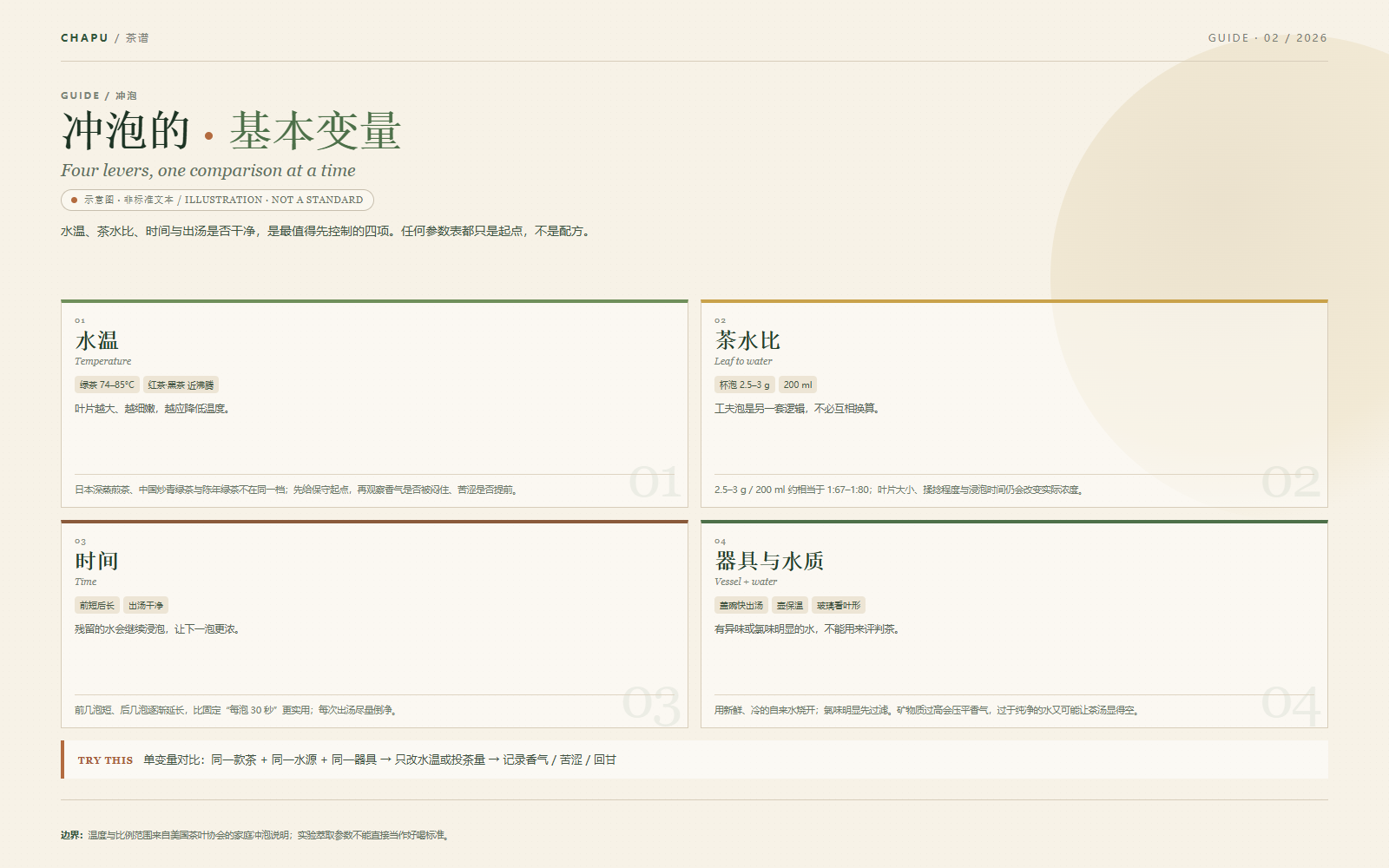
Chapu editorial illustration · CC BY-SA 4.0How water temperature, leaf-to-water ratio, time, vessel and water quality shape a cup, and how to find your own numbers through one-variable comparisons.
Guide
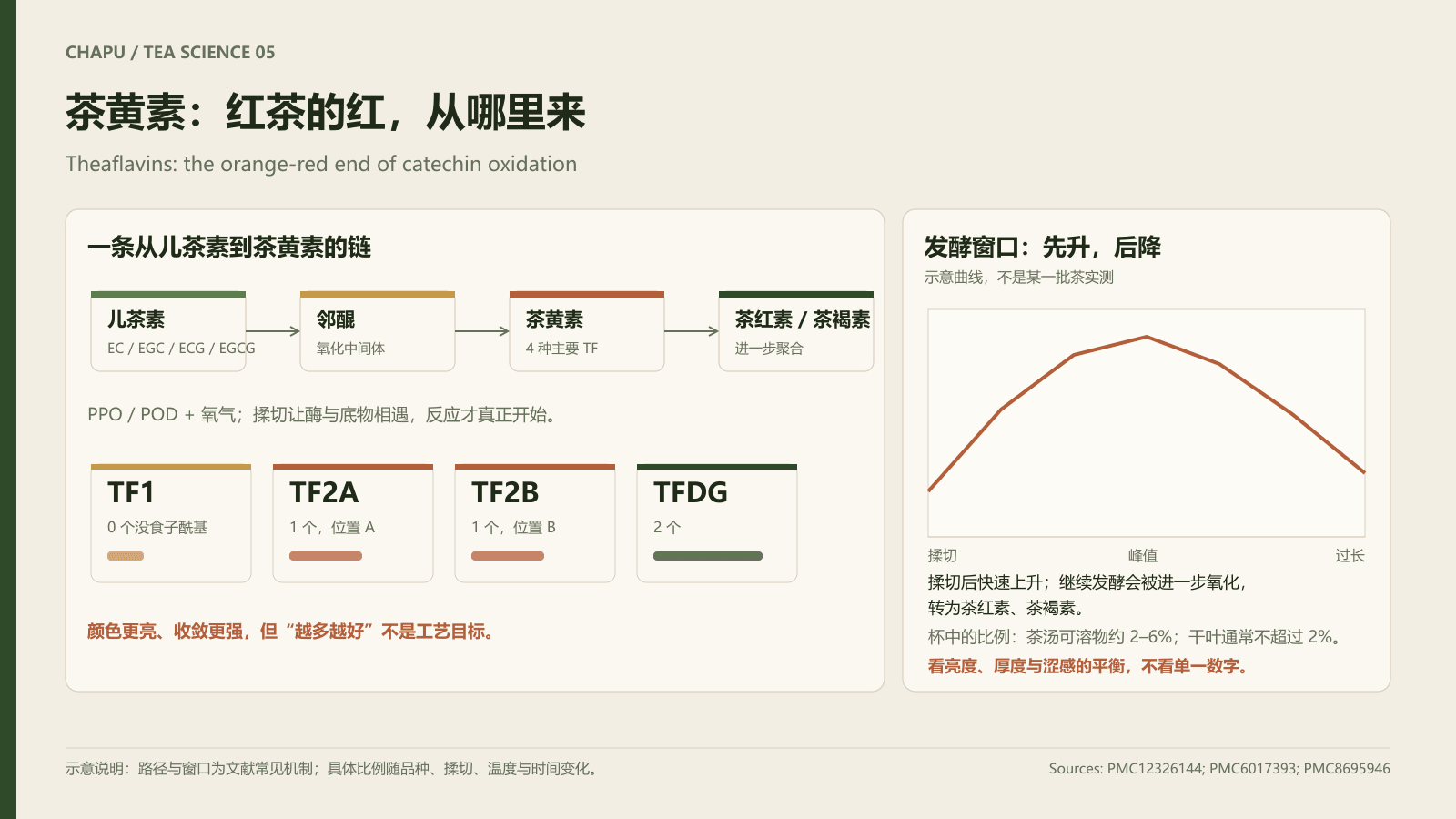
Chapu editorial illustration · CC BY-SA 4.0Theaflavins are orange-red polyphenols formed when catechins oxidise and condense during black-tea fermentation. They shape brightness, body and part of the astringency of the cup — but they are not a single “health ingredient”.
Guide
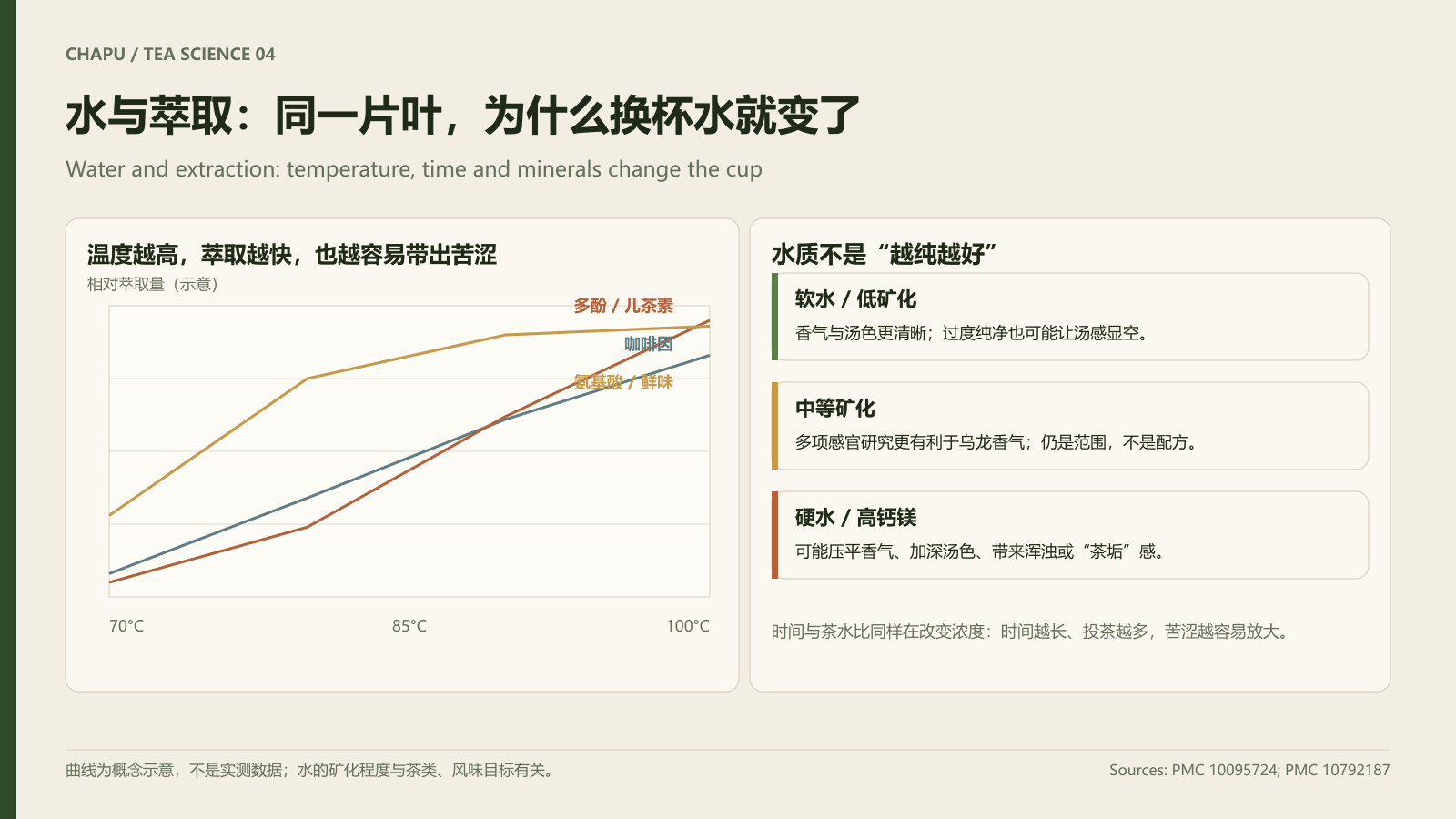
Chapu editorial illustration · CC BY-SA 4.0Temperature, time, leaf-to-water ratio and water mineralisation together determine the strength and flavour of a cup. Hotter water extracts faster, hard water can flatten aroma and darken liquor, but “purer is better” is not the answer either.
Guide
Chapu editorial illustration · CC BY-SA 4.0Tea aroma is not one molecule but a shifting mix of volatiles shaped by cultivar, processing and brewing. Learn to separate grassy, floral, fruity, sweet and roasted notes before asking whether a tea is merely “aromatic”.
Guide