The most common buying mistake is treating information as quality: longer grade letters, a famous origin, a higher price. These signals help, but none decides the cup alone. A better method is to decide what you want, then verify with dry leaf, aroma, processing, date, packaging and a trial brew.
Start with the need
| Need | Look first at | Do not over-weight |
|---|---|---|
| Daily drinking | Freshness, consistency, price, stamina | Rare grades, long stories |
| Gift | Packaging integrity, traceability, batch notes | Over-packaging, unverifiable “master” claims |
| Exploration | Samples, processing character, origin differences | Bulk jars |
| Long storage | Moisture, processing, storage conditions, raw material | “All tea gets better with age” |
| Blending / milk tea | Strength, aroma, price | Premium whole-leaf grades |
Buying a sample is the cheapest way to avoid a bad bulk purchase. Ten grams and 500 grams carry very different risk.
What grade letters actually say
Black tea trade grades such as OP, FOP, GFOP, TGFOP and FTGFOP mainly describe leaf size, wholeness and tip content. CTC grades such as BP1, PF1, PD and Dust describe particle size. They describe physical appearance and sorting, not a flavour score.
- OP: Orange Pekoe, longer whole leaf, usually without tips.
- FOP: Flowery Orange Pekoe, some young leaf and tips; “Flowery” refers to plucking, not floral taste.
- TGFOP / FTGFOP: Higher tip content and finer sorting; the numeral 1 often marks a higher grade within the batch.
- CTC: Crush–Tear–Curl, granular, fast-extracting and strong, common in tea bags and milk tea.
A higher grade does not mean you will like it more. Some prefer the clarity of FTGFOP; others want the strength of CTC. Grade tells you what form you have, not whether it is good.
What dry leaf can show
- Natural colour. A batch should be relatively even. Oily shine, fluorescent brightness or greyish white may suggest processing or storage issues.
- Leaf integrity. Whole-leaf tea should be tightly rolled; a broken tea bag is not whole leaf, so do not apply the same standard.
- Clumping and moisture. It should snap, not feel soft or clumped.
- Clean aroma. Tea aroma, not mustiness, smoke off-notes, perfume or detergent.
- Excess powder. A little is normal; a lot affects brewing and clarity.
Aroma and trial brew
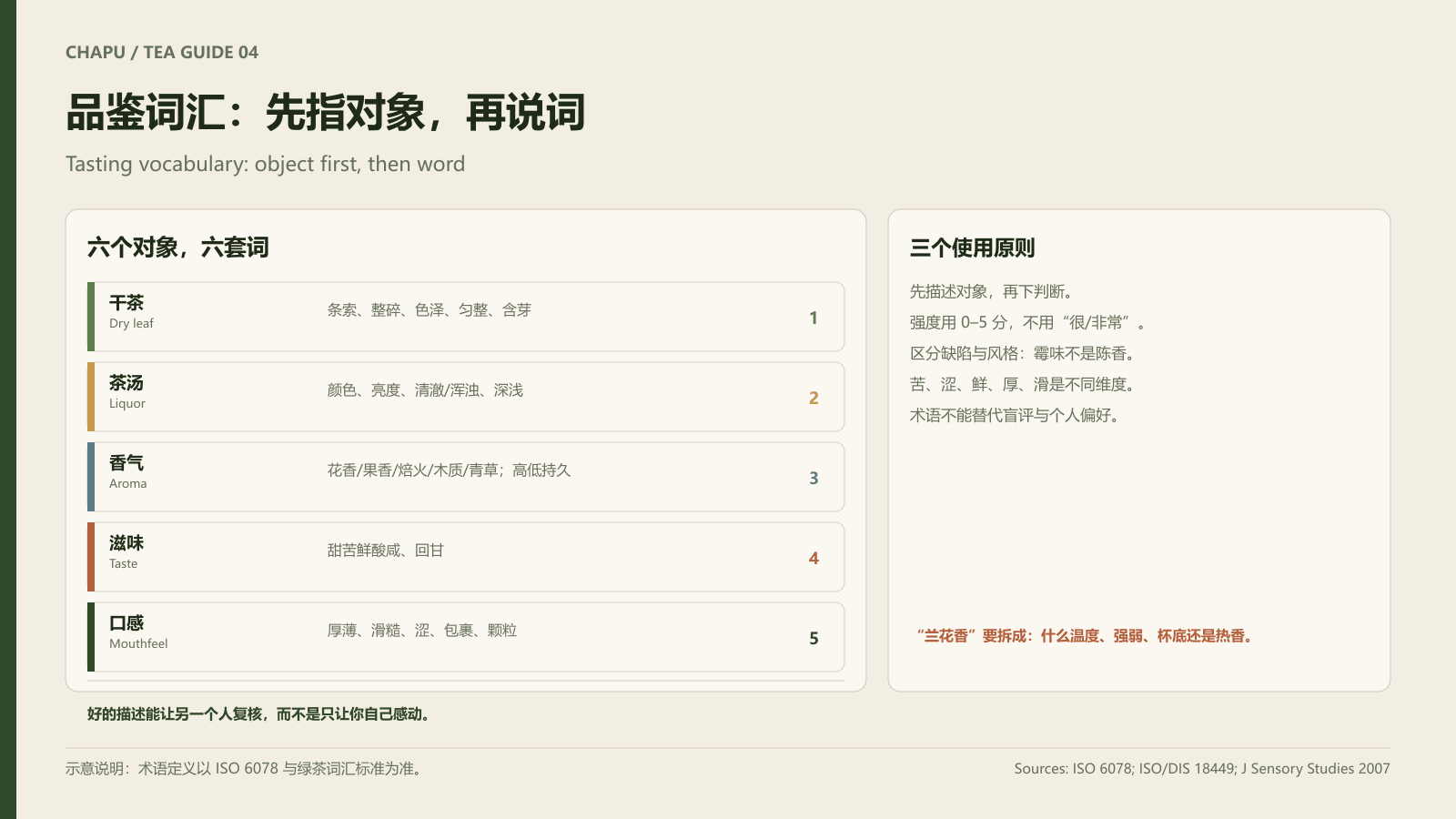
Dry aroma is only the first layer. Brew with one fixed set of parameters: same water, temperature, leaf-to-water ratio, time and vessel. Follow the logic of ISO 3103: control variables before comparing. Taste at least two infusions and check:
- hot, warm and empty-cup aroma;
- liquor clarity and brightness;
- bitterness, astringency, sourness, smoke or mustiness;
- mouthfeel and finish;
- whether the second and third infusions collapse quickly.
A tea that is fragrant only in the first infusion may have surface aroma or incomplete processing; but check whether your water and timing are the real cause.
Date, packaging and source
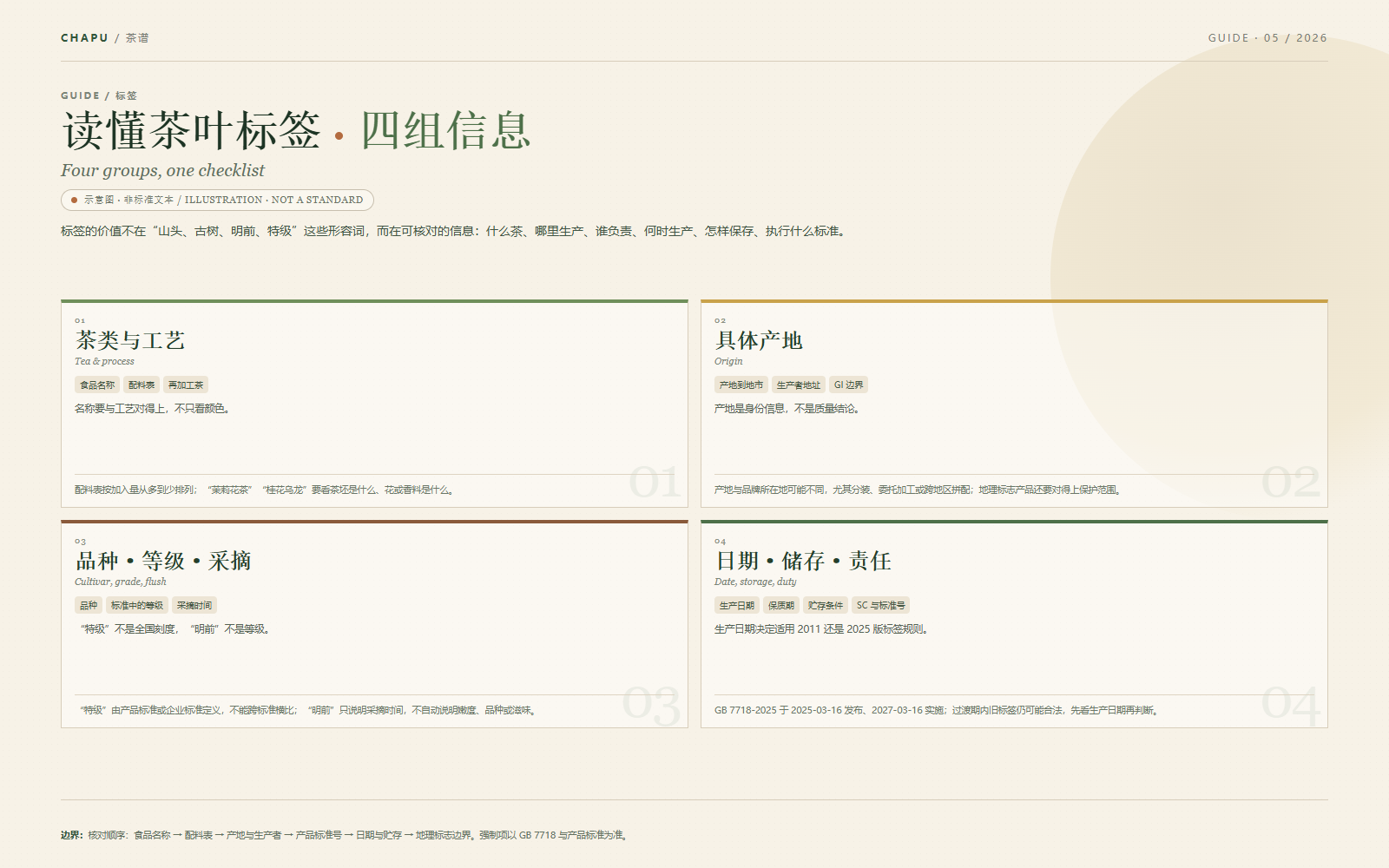
- Production / packing date. Green and light oolong teas are best fresh; black and roasted oolong teas need some rest after roasting; post-fermented tea needs a storage record.
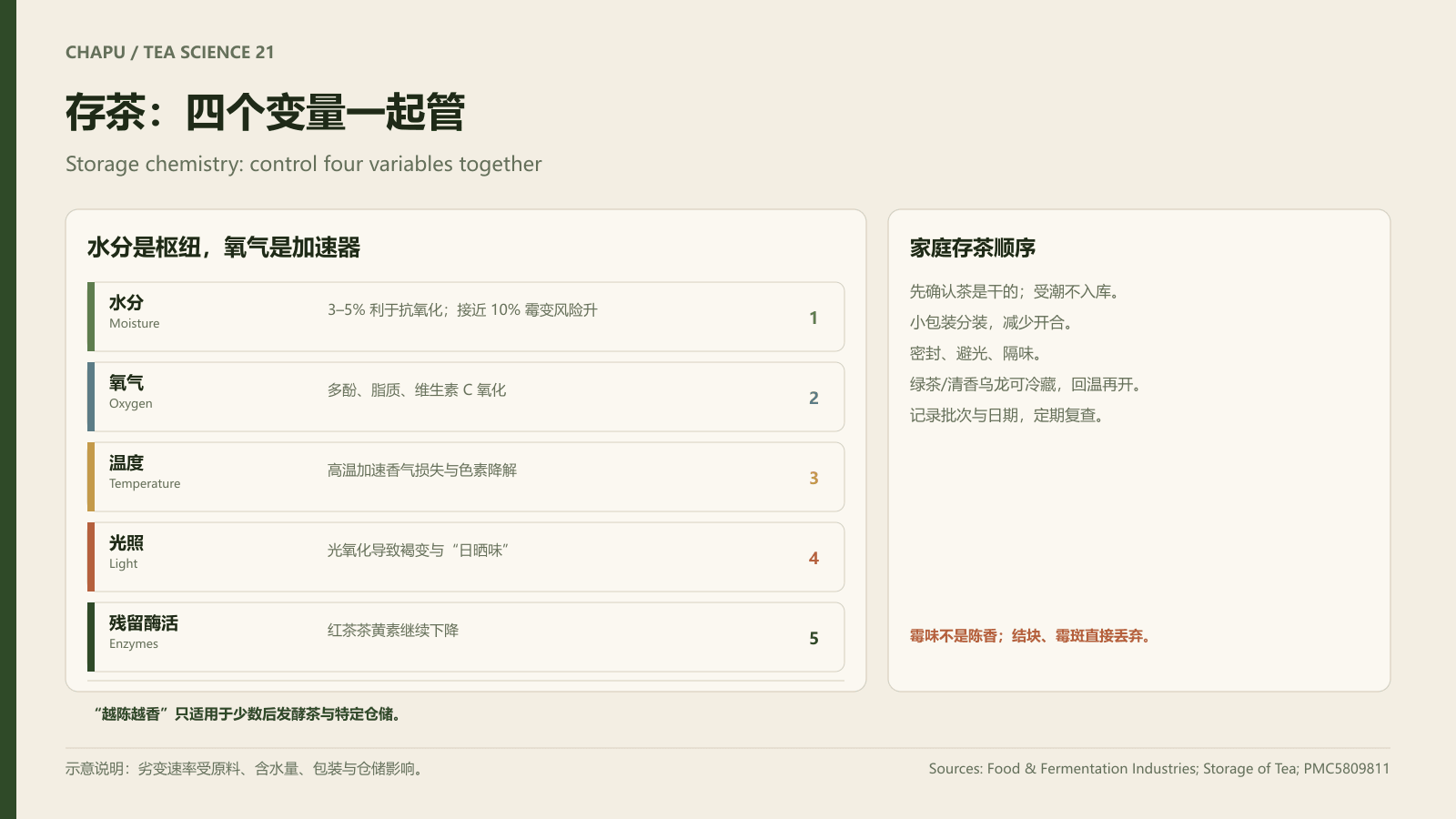
- Packaging. Opaque, sealed and moisture-resistant first; clear bags and paper bags are poor for long storage.
- Source. A seller who can explain origin, cultivar, processing and batch is more checkable than one who only says “old tree / master / core region”.
- Testing. Pesticide, heavy-metal and microbiological reports should show matrix and date, not just a “pass” stamp.
- Price. It may reflect raw material, processing, rarity, packaging or brand; it does not equal your preference.
Four traps
| Trap | Problem | Response |
|---|---|---|
| “Longer grade is better” | Grade describes appearance, not flavour | Taste first; grade as reference |
| “Core region is always better” | Variation within a region is large; batch and processing matter | Check batch and taste |
| “Old tea gets better” | Most tea deteriorates; damp storage moulds | Store only suitable tea; control moisture and oxygen |
| “Organic / zero residue = absolutely safe” | Organic mainly regulates production; not zero residue | Check standard, matrix and source |
A workable buying sequence
- Set type and budget. Decide green / oolong / black / white / post-fermented first, so the shelf does not decide for you.
- Buy samples. Compare at least 2–3, recording brew parameters.
- Taste blind once. Taste before seeing price and label to reduce expectation bias.
- Check dry leaf and packaging. Damp, musty or clumped tea is out.
- Confirm date and storage. Ask production/packing date and recommended storage.
- Re-buy small. Buy a larger pack only after you like it; do not stock a year on the first purchase.
Source boundary
This page can establish: black tea grades mainly describe leaf size, wholeness and tip content; orthodox and CTC are different form systems; dry-leaf colour, structure, aroma, moisture and packaging are useful buying signals; standardised brewing and blind tasting reduce comparison bias.
This page cannot establish: that one grade always tastes better; that one origin or brand is always superior; a fixed price-to-quality ratio. Judge by trial, batch, testing and storage, not a single label.