A label is not an advertisement
The front of a tea packet usually speaks first: mountain name, old trees, pre-Qingming picking, special grade, hand-made. The useful part of the label is not the adjective. It is the checkable information: what kind of tea this is, where it was produced, who is responsible, when it was made, how it should be stored, and which product standard it follows.
Chinese prepackaged-food labelling is governed by GB 7718. The 2011 version requires the food name, ingredient list, net content, producer or distributor name and address, production date, shelf life, storage conditions, production licence number and product standard code, among other items. GB 7718-2025 was published on 16 March 2025, takes effect on 16 March 2027 and replaces the 2011 version. During the transition, producers may follow the old version; food produced from 16 March 2027 must meet the new one. The production date on a packet therefore tells you which rule-set the label was built for.
The 2025 version requires production date and shelf-life expiry date in year–month–day order, strengthens allergen labelling, introduces digital-label rules and tightens food claims. It is not merely “an extra QR code”. It turns the label from a printed surface into an entry point for traceable information.
Group one: tea type and process
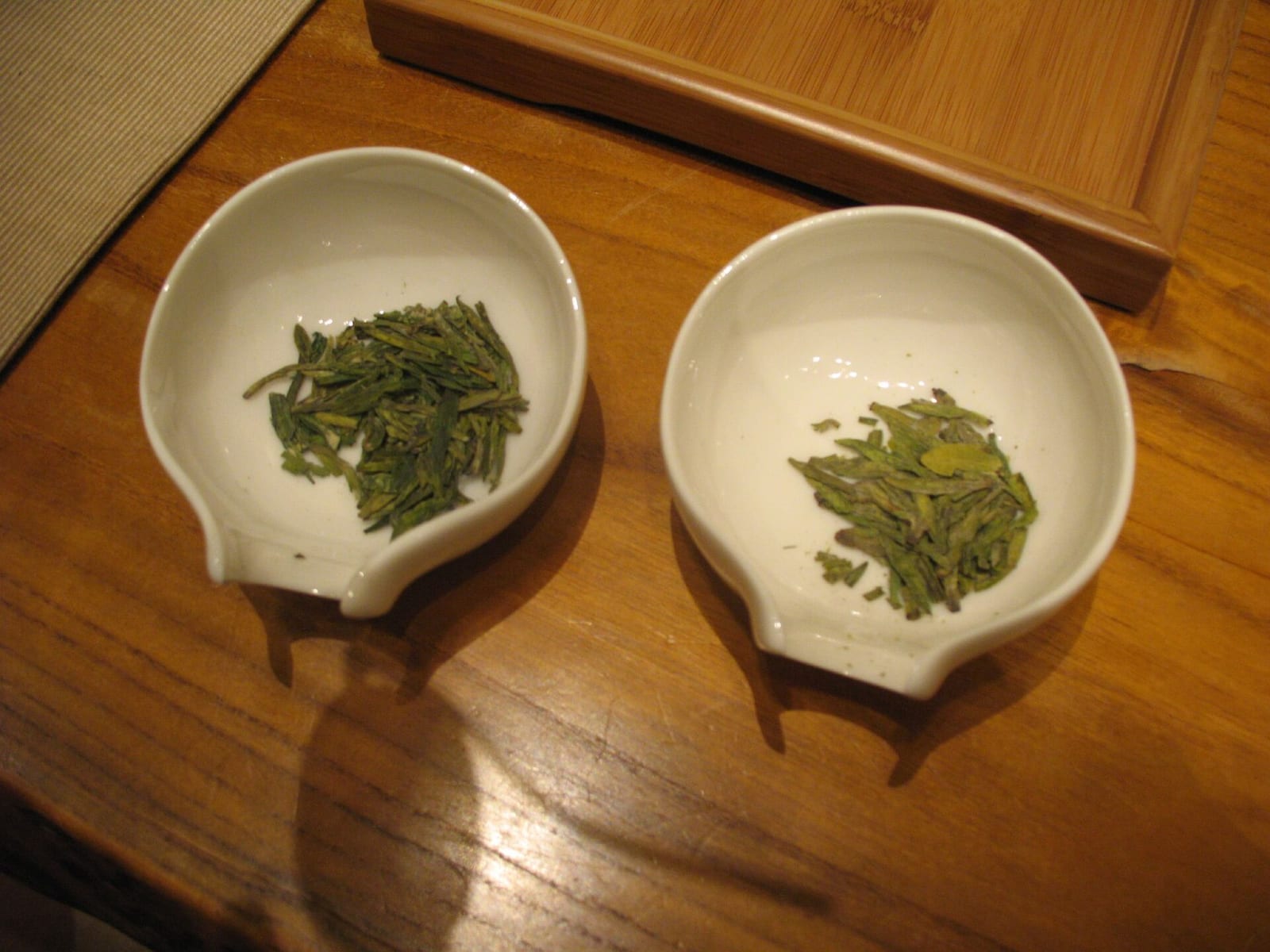
Start with the food name. Green, yellow, white, oolong, black and dark tea are the six basic types, classified mainly by processing technology and product characteristics, not by dry-leaf colour. GB/T 30766-2014 sets out that logic.
If the name is “jasmine tea”, “osmanthus oolong” or “chenpi white tea”, it is usually a reprocessed or flavoured tea. Read the ingredient list: what is the tea base, what flower or spice was used, and is anything else added? Ingredients are listed in descending order of added quantity. That helps you judge whether the floral note comes from scenting, added material or flavouring.
If the name says only “high-mountain tea”, “ecological tea” or “old-tree tea” without a tea type, origin and product standard, it carries little checkable information. These words can be descriptions, but they cannot replace classification.
Group two: specific origin
“Origin” is not the same as “brand address”. GB 7718 requires the origin to be labelled to the prefecture-level administrative division; the producer’s address identifies the responsible entity. The two may differ, especially with repacking, contract manufacturing or blends across regions.
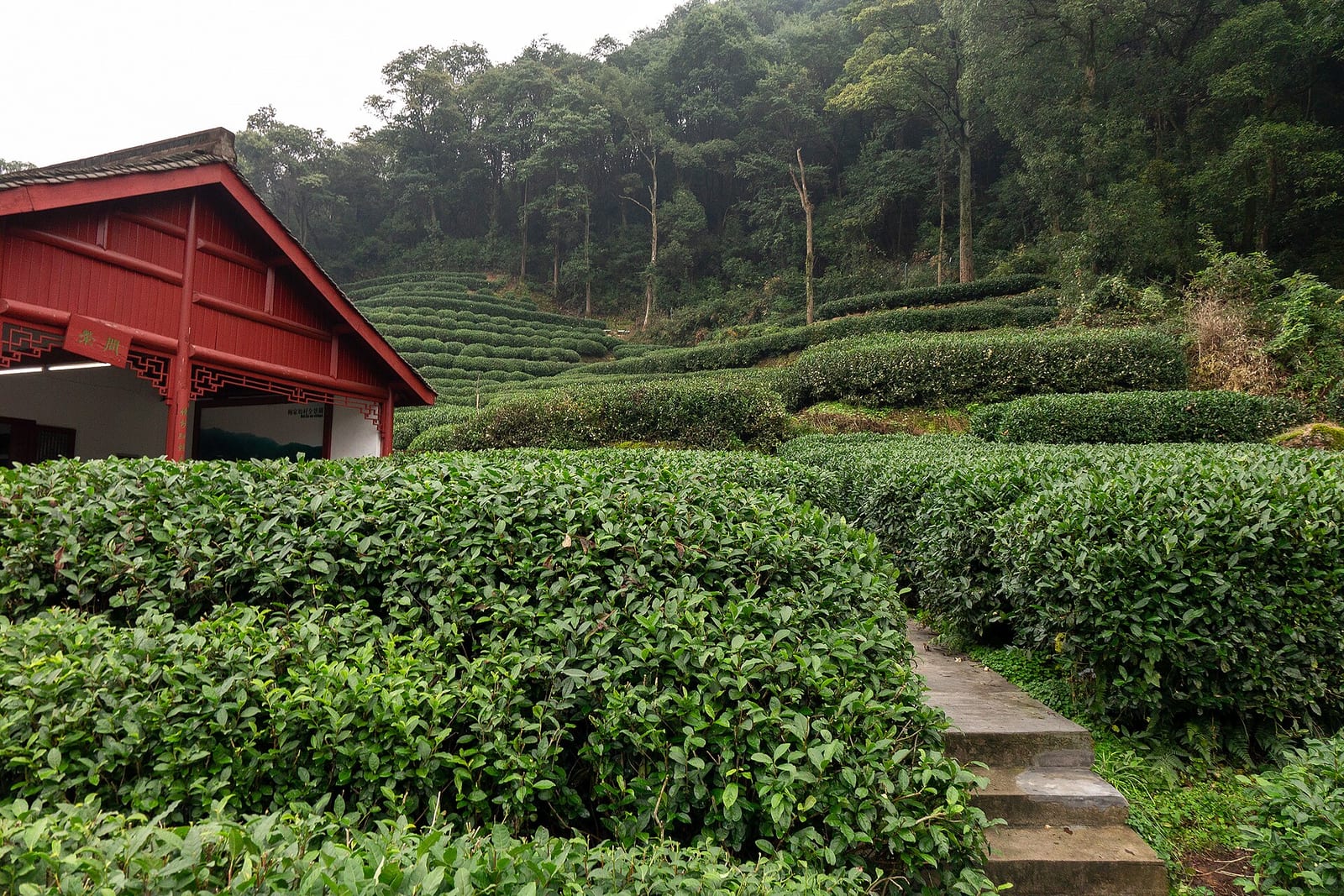
Geographical indication products have an additional boundary. For Longjing tea, GB/T 18650-2008 defines a protected range and product requirements. “West Lake Longjing” is not a name any flat green tea can borrow. When a geographical indication appears on a label, it should correspond to the protected range, the product standard and the relevant rules for use.
“Inside the protected range” still does not mean “this packet is good”. Within one region, cultivar, picking, firing and storage separate one batch from another. Origin is an identity claim, not a quality conclusion.
Group three: cultivar, grade and picking
Cultivar, grade and picking season are not mandatory items on every tea label. Some products name “Longjing 43”, “population cultivar”, “pre-Qingming” or “special grade”. These details are useful, but first ask who defines the term, which standard determines it, and whether it can be checked.
“Special grade” is usually a grade within a product standard or a company standard, not a universal national scale. A “special grade” from one brand, one product standard and one sensory system cannot be directly ranked against another brand’s “special grade”. One company’s top grade may equal another company’s first grade, or may simply be the highest tier in that company’s range.
“Pre-Qingming” is a picking-time description, not a grade. It says the leaf was picked before the Qingming festival; it does not by itself establish tenderness, cultivar, craft or taste. “Old tree”, “wild” and “single tree” often lack a unified legal definition across tea types. They cannot stand alone as proof of quality. Look for the product standard, origin, batch and test information alongside them.
Group four: date, storage and responsibility
Production date, shelf life and storage conditions are hard information. Green tea and light-floral oolong usually benefit from cool, dark, sealed storage. Black tea, roasted oolong and dark tea tolerate time better, but still suffer from damp, odour and heat. “Store at room temperature away from light” does not mean the kitchen counter beside the stove.
The 2025 version adds the shelf-life expiry date to the date display and requires a clear year–month–day order. That saves the consumer from calculating “18 months from the production date”. For older labels, the expiry still has to be worked out from production date plus shelf life. Compliant food produced before 16 March 2027 may remain on sale through its shelf life.
The production licence number and product standard code are lines of responsibility. They do not guarantee a delicious tea, but they point to a producer and a standard if something goes wrong. Loose tea with no producer, no standard and no date is a weak choice for a daily tea.
A checking table
| Question | Where to look | Common misreading |
|---|---|---|
| What kind of tea is this? | Food name, ingredient list, product standard code | Treating colour as tea type; treating flavoured tea as pure tea |
| Where exactly is it from? | Origin, producer address, geographical indication | Confusing the brand’s address with the tea’s origin |
| What cultivar, grade and picking? | Cultivar name, grade, picking date or season | Treating “special grade” or “pre-Qingming” as a cross-brand standard |
| When was it made, and how should it be stored? | Production date, shelf-life expiry, storage conditions | Reading shelf life without reading storage conditions |
| Who is responsible? | Producer or distributor, licence number, product standard code | Looking only at the brand on the front |
Four steps through a label
- Find the tea type. Does the name match the ingredient list? Is it pure tea, flavoured tea or reprocessed tea?
- Find the origin. Is it labelled to the prefecture level, and can it be matched to a geographical indication or a specific region?
- Check grade and picking. Which standard defines these words? Is there batch or test information behind them?
- Check date and storage. Are production date, expiry date and storage conditions complete? Is the package suited to how you will actually keep it?
Only then go back to the front panel: “core mountain”, “master hand”, “ancient process”. If those words are supported by the back of the packet, they mean something. If they only supply atmosphere, treat them as copy rather than a reason to buy.
Sources and status
This page uses GB 7718-2011 and GB 7718-2025 for mandatory label information and the transition, GB/T 30766-2014 for tea-type names, and GB/T 18650-2008 for the geographical indication boundary of Longjing tea. Standards are revised and label rules transition; when reading a particular packet, use the production date and the version in force at that time. All migrated pages are currently marked reviewed, but sources and wording will continue to be revised.