Extent
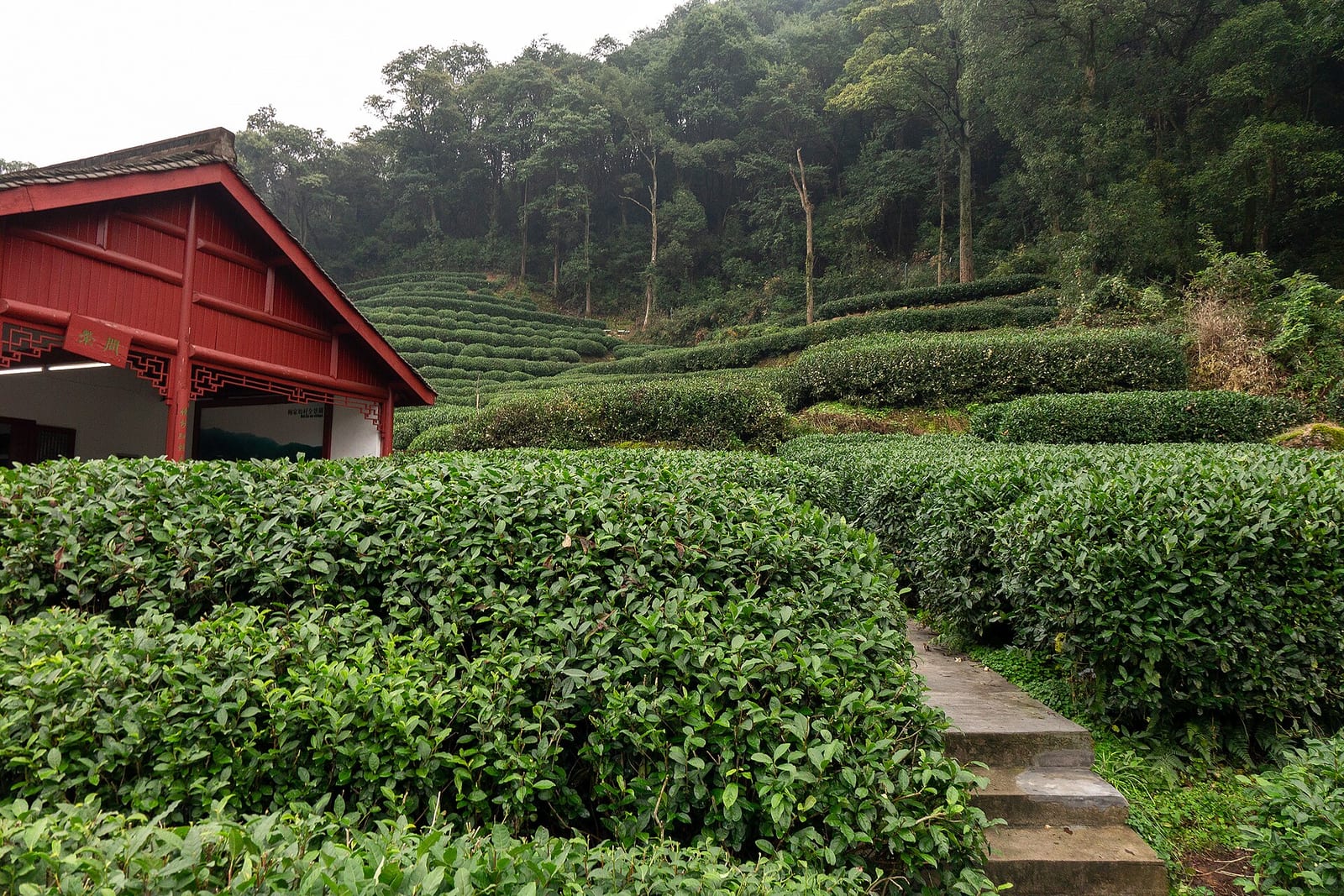
The West Lake tea area lies in and around the West Lake scenic area of Hangzhou, Zhejiang. It is one of the most frequently cited traditional parts of the Longjing tea area. The local labels Shi, Long, Yun, Hu and Mei traditionally refer to Shifeng, Longjing, Yunqi, Hupao and Meijiawu. These are local quality labels, not five separate administrative districts; exact boundaries and protected status should be checked against GB/T 18650-2008 and the geographical indication announcement.
Environment
Low hills and slopes rise around West Lake, with tea gardens mostly at tens to several hundred metres above sea level. Mountains to the north block winter cold, while West Lake and the Qiantang River add moisture from the south; spring is often misty with a marked day–night temperature difference. Soils are mostly sandy and acidic, with good drainage. Site, aspect, shade and soil alter aroma, but a good site cannot replace cultivar, picking and processing.
Cultivars and processing
Suitable cultivars include Longjing population, Longjing 43 and Longjing Changye, as listed in the standard. Fresh leaf is spread, then pan-fired, rested, final-fired and sieved. Hand and machine processing can both produce compliant Longjing. The traditional “ten hand movements” describe actions such as grasping, shaking, pressing and smoothing; actual temperatures and timings vary by factory and product.
Quality and flavour
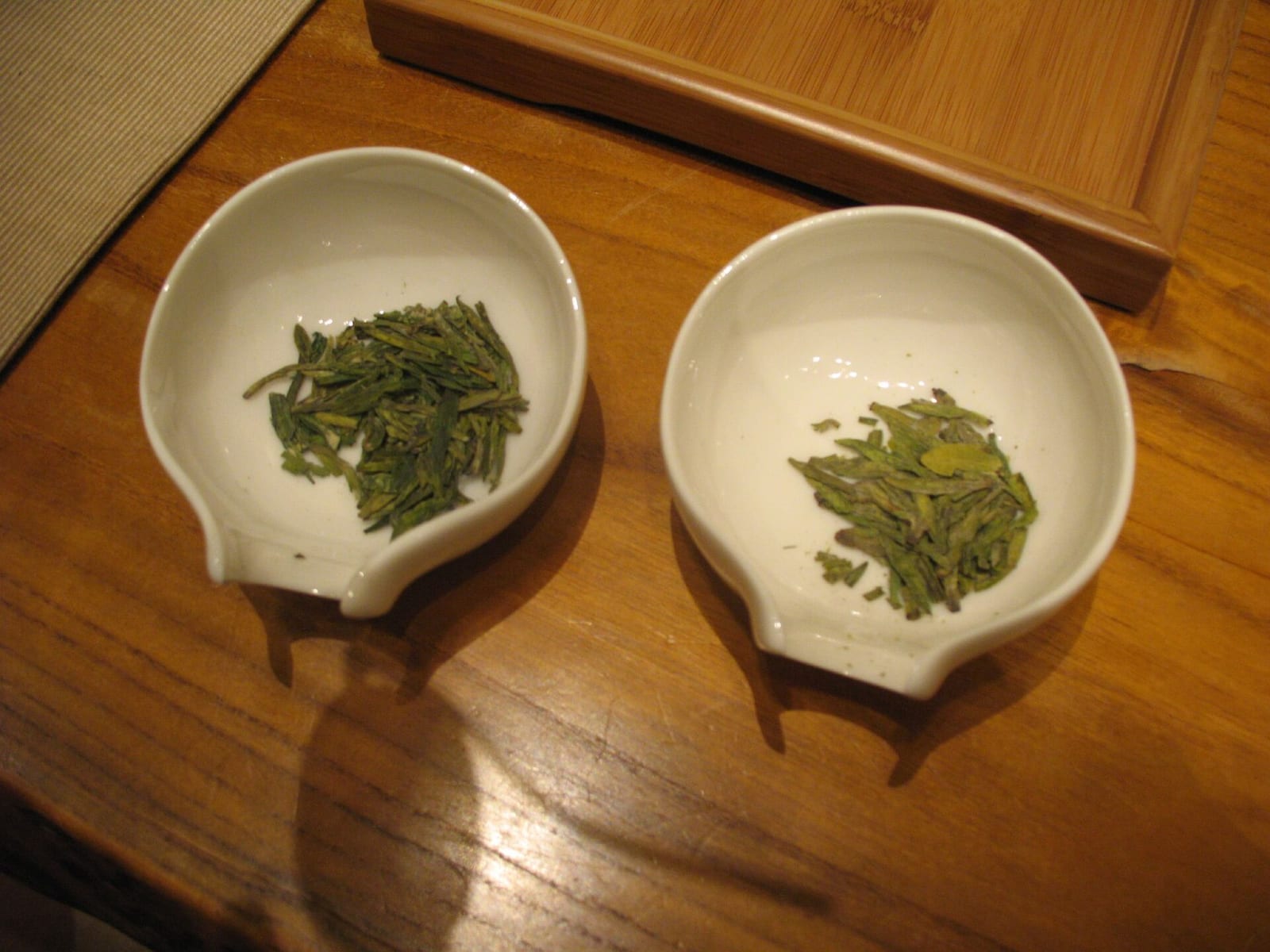
Dry leaves are flat and straight, yellow-green to emerald. The liquor is pale green and bright, with fresh, bean or chestnut aromas, a refreshing taste and a finish that varies with material and processing. The traditional phrase “green colour, rich aroma, sweet taste, beautiful shape” summarises the aesthetic, but aroma type, intensity and durability change with site, cultivar, picking date and processing.
History and boundaries
The Classic of Tea records tea at Tianzhu and Lingyin monasteries in Qiantang, showing documented tea activity around Hangzhou in the Tang. Tea culture among monasteries and literati grew in the Song, and Longjing’s reputation expanded in the Ming and Qing. The Qianlong emperor and the “eighteen imperial tea bushes” at Shifeng are widely told as local lore; details and dates still require archival and gazetteer verification. Longjing’s traditional processing technique is on China’s national intangible heritage list.
Common misconceptions
- West Lake is not all of Hangzhou. Longjing also has Qiantang and Yuezhou production areas; check the standard and GI announcement.
- Shi, Long, Yun, Hu and Mei are not administrative divisions. They are traditional labels.
- Flat shape does not make a tea West Lake Longjing. Cultivar, origin and processing define protected status.
- “Imperial tea” is cultural narrative. It does not replace historical evidence.
Sources
- GB/T 18650-2008, Geographical indication product — Longjing tea.
- Lu Yu, The Classic of Tea.
- Legacy Zhejiang tea record, retained for provenance.
This page is an AI-edited translation based on the reviewed Chinese source. It is not a human-expert endorsement.