
Scope
Zhejiang sits on the southern edge of the Yangtze delta. Tea gardens follow the Tianmu, Kuaiji, Siming, Yandang and Kuocang mountains and the Qiantang and Ou river systems. In 2024 the province had 3.202 million mu of tea gardens, produced 207,000 tonnes of tea and generated RMB 30.34 billion in primary output value. Green tea accounted for 206,600 tonnes, or 89.5% of production. Average output value reached RMB 9,472 per mu, more than 40% above the national average and second among major tea-producing provinces; export volume and value both ranked first nationally. Zhejiang is not a one-note Longjing province: Longjing, Anji Baicha, Pingshui Gunpowder, Huiming, Jingshan, Guzhu Zisun, Kaihua Longding and Pingyang Huangtang together form a multi-category tea landscape.
Geography and terroir
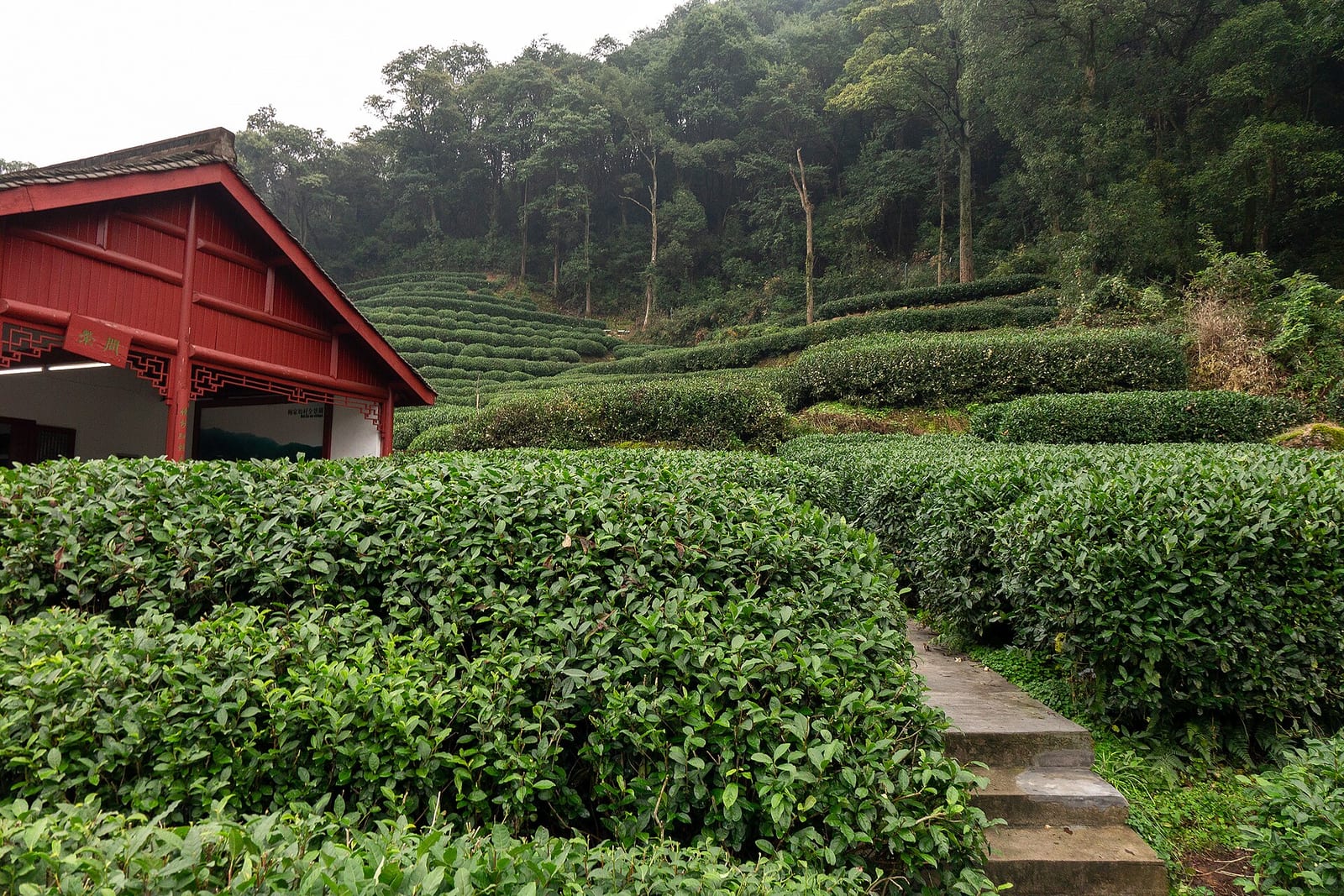
The province slopes from the southwest highlands toward the northeast. The Tianmu, Kuaiji, Siming, Yandang and Kuocang ranges divide the tea gardens into distinct slope and elevation bands. The climate is subtropical monsoonal: springs warm quickly and bring heavy Mei rain, summers are hot and humid with typhoon influence, and autumns cool down. Red, yellow and yellow-brown soils dominate; slope drainage, valley moisture and spring mist are common terroir factors. The West Lake area interleaves hills, water and city, with gardens close to the scenic core. Anji and Changxing combine bamboo groves, streams and low mountain gardens. Southern Zhejiang is warmer earlier in spring, so its picking window opens sooner. Aspect, shade, soil and farm management differ sharply from garden to garden; "water town of Jiangnan" explains very little.
Main tea areas
- Hangzhou–Shaoxing–Jinhua–Taizhou (Longjing country): the protected Longjing area spans the West Lake, Qiantang and Yuezhou production zones, with West Lake as the core. Longjing is also made in Hangzhou, Shaoxing, Xinchang, Shengzhou and Tiantai.
- Huzhou–Anji–Changxing (white-leaf tea and Zisun): the core of Anji Baicha, Guzhu Zisun and Mogan Huangya, where bamboo groves, streams and low mountain gardens interlace.
- Wenzhou–Lishui–Taizhou (early teas of southern Zhejiang): Wenzhou Zaocha, Wuyang Chunyu, Songyang Xiangcha and Jingning Huiming. These gardens come to market early and act as the province's spring vanguard.
- Ningbo–Zhoushan–Jinhua–Quzhou (specialty teas and export greens): Wanghai, Putuo Fo Cha, Kaihua Longding, Jiangshan Lvmudan and Quzhou Yulu, plus Pingshui Gunpowder around Shaoxing and Ningbo.
Tea types and processing
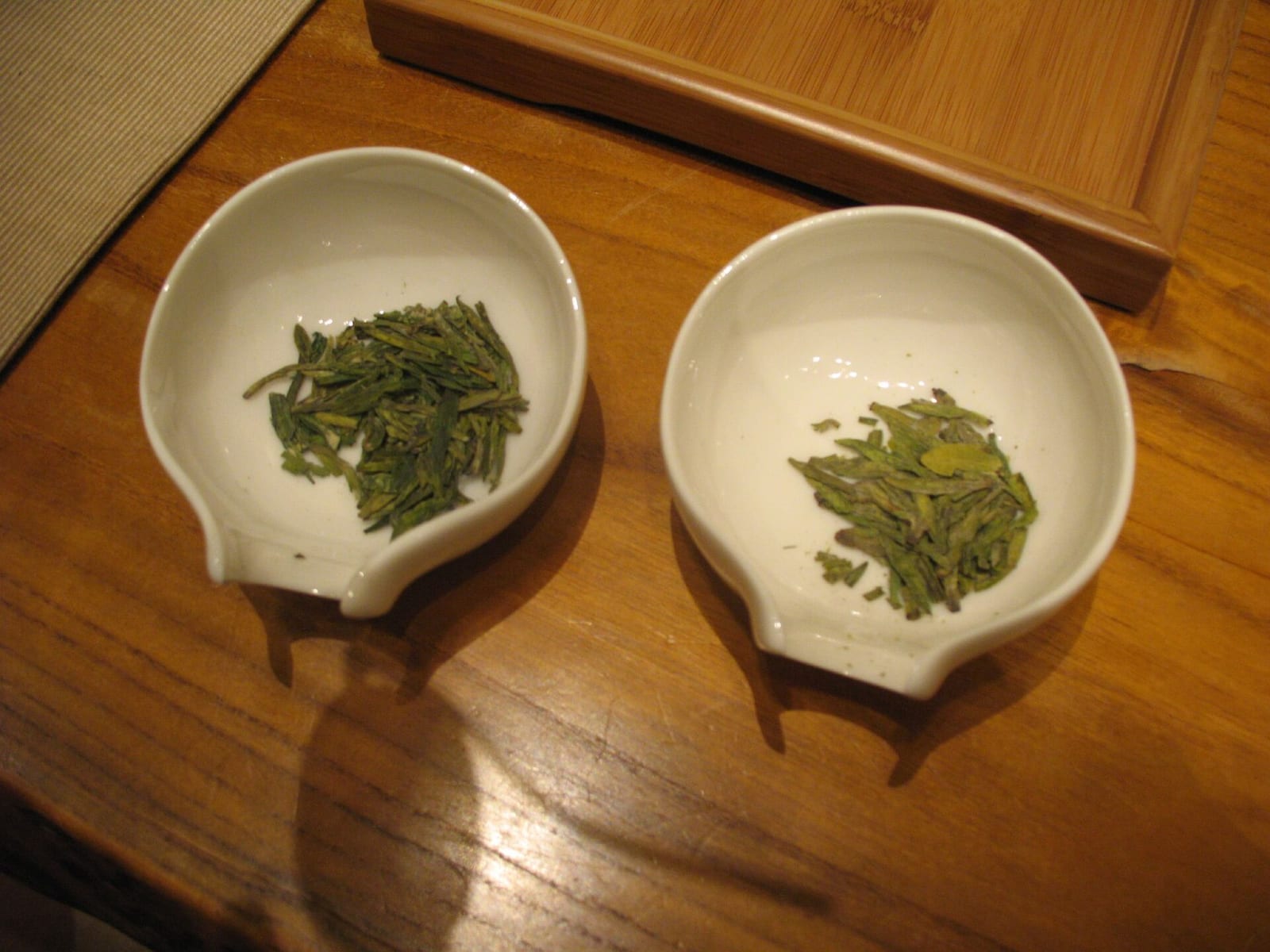
Green tea dominates, while black, white, yellow, dark and reprocessed teas all have a place. In 2024 green tea reached 206,600 tonnes, 89.5% of the total; matcha reached 5,889 tonnes and scented tea 9,906.58 tonnes, up 37.22% and 116.96% year on year. Longjing uses fine buds and leaves and goes through spreading, kill-green, initial pan-firing, resting and final pan-firing. The leaf is pressed flat and smooth in the wok with alternating shake, press, push, lift and settle movements, developing a chestnut or bean aroma. Anji Baicha picks the spring flush of a white-leaf cultivar and processes it as green tea; the pale leaf colour comes from cultivar and cool-season conditions, not from white-tea processing. Pingshui Gunpowder rolls the leaves into pellets for export. Matcha is shaded, steamed and ground for colour and fineness. Yellow tea develops its yellow liquor and leaf through menhuang, a covered yellowing step; black tea relies on withering, rolling, fermentation and drying. Temperature, timing and hand pressure change with leaf grade and product, so no single parameter set fits every tea.
History and market
Lu Yu wrote the Classic of Tea in the Huzhou region, and Guzhu Zisun became a Tang tribute tea. In the Song, the tea banquet and whisked-tea tradition at Jingshan Monastery left a long legacy; in the Ming and Qing, Longjing took shape as a Jiangnan famous tea. Anji Baicha is a modern cultivar story: it was selected from a white-leaf tea plant in Anji in the later twentieth century and developed into a distinctive green tea. In 2024 Longjing production reached 28,600 tonnes and RMB 6.809 billion in output value, 13.8% and 22.4% of the provincial totals. West Lake Longjing's brand value reached RMB 8.435 billion, long ranked first among Chinese tea regional public brands. The province has more than 200 tea brands and over 50 regional public brands; the industry supports 2.16 million jobs and adds RMB 18,300 per tea farmer in primary production. Export, brand, tea tourism and new-style tea drinks together form the market, but output value, brand value and export volume are not interchangeable measures.
Common misunderstandings
- Longjing is not the same as West Lake Longjing. The protected Longjing area has West Lake, Qiantang and Yuezhou zones; West Lake is only one of them.
- Anji Baicha is a green tea, not a white tea. "White" refers to the pale spring leaf of a white-leaf cultivar; the processing is green-tea processing.
- Zhejiang is not only green tea. Black, yellow, white, dark, scented and matcha teas are all produced there.
- "Mingqian" and "Yuqian" are not absolute quality grades. Picking date is one variable among cultivar, elevation, garden management and firing.
- "High mountain and cloud mist" cannot explain quality by itself. Aspect, soil, shade, picking standard and processing must be read together.
Representative teas
The working index contains 46 regional teas. Only the 2 that have passed the public gate are linked here; the rest remain in editorial review.
Further reading and sources
Provincial statistics, production-zone boundaries and geographical-indication information are drawn from the sources below. Definitions, grades and processing for individual teas follow their own entries.
- Zhejiang Provincial Department of Agriculture and Rural Affairs: reply on provincial people's congress suggestion Jin No. 62
- National standards public system: GB/T 18650-2008, Geographical indication product Longjing tea
- Zhejiang University China Agricultural Brand Research Center: Zhejiang: letting the leaf scent fill the garden