
Turkey has one of the world’s highest per-capita tea consumption, yet its gardens sit on a narrow, wet Black Sea mountain strip: Rize, Trabzon and Artvin. Çaykur and private factories, the çaydanlık double pot and the tulip glass make strong black tea the centre of daily social life.
The short answer
Turkish tea is concentrated on the eastern Black Sea coast around Rize, Trabzon, Artvin and Giresun, from sea level to about 1,000 metres, with over 2,000 mm of rain and high humidity. Orthodox and CTC black tea dominate; green and white tea are small. Çaykur is the largest state producer, with private factories alongside. Turks brew strong tea in a çaydanlık, dilute with hot water, serve in a tulip glass and add sugar cubes. Read Turkey by its strong, hot, everyday drinking style first, then region and brand.
Geography and growing conditions
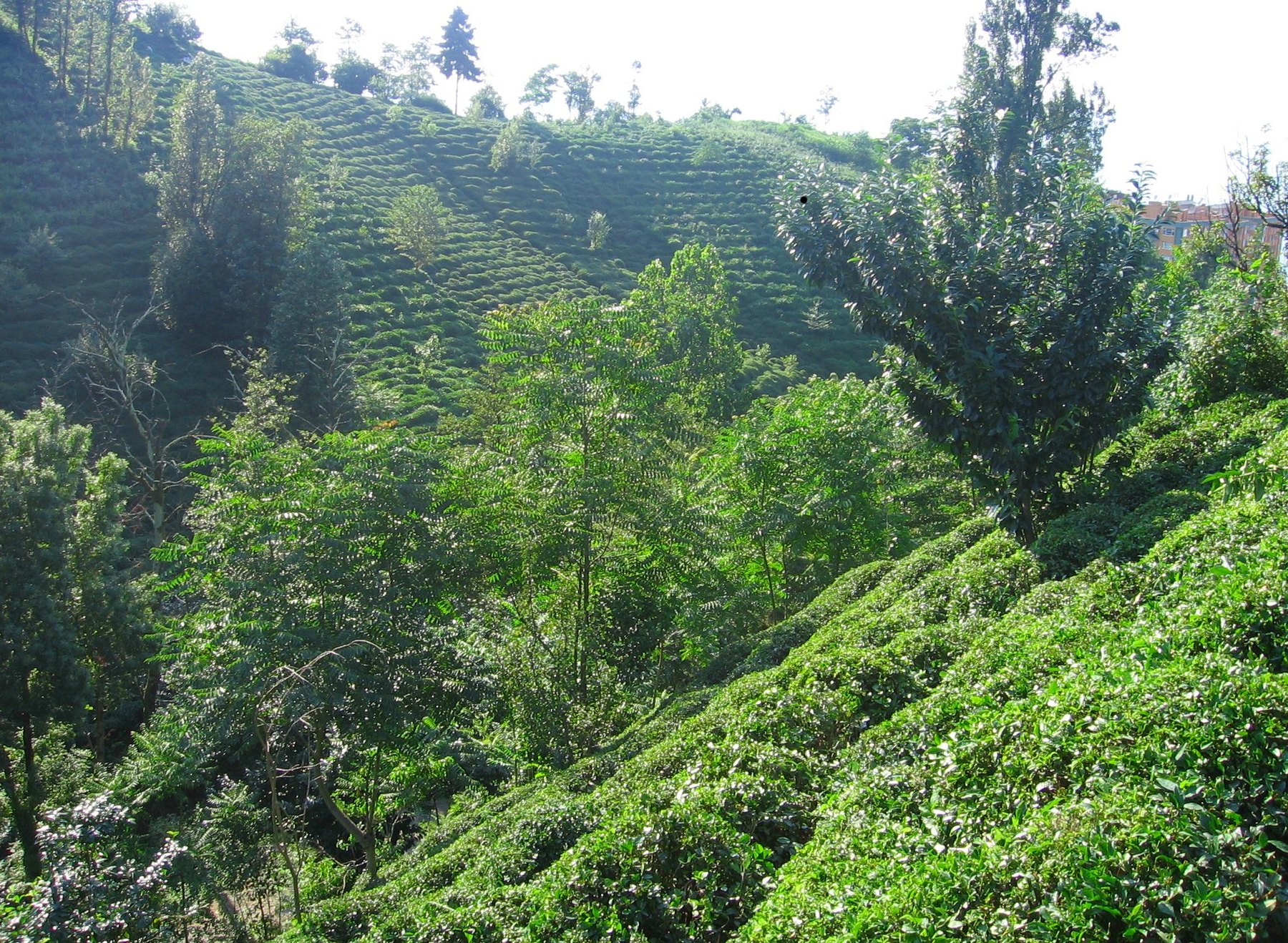
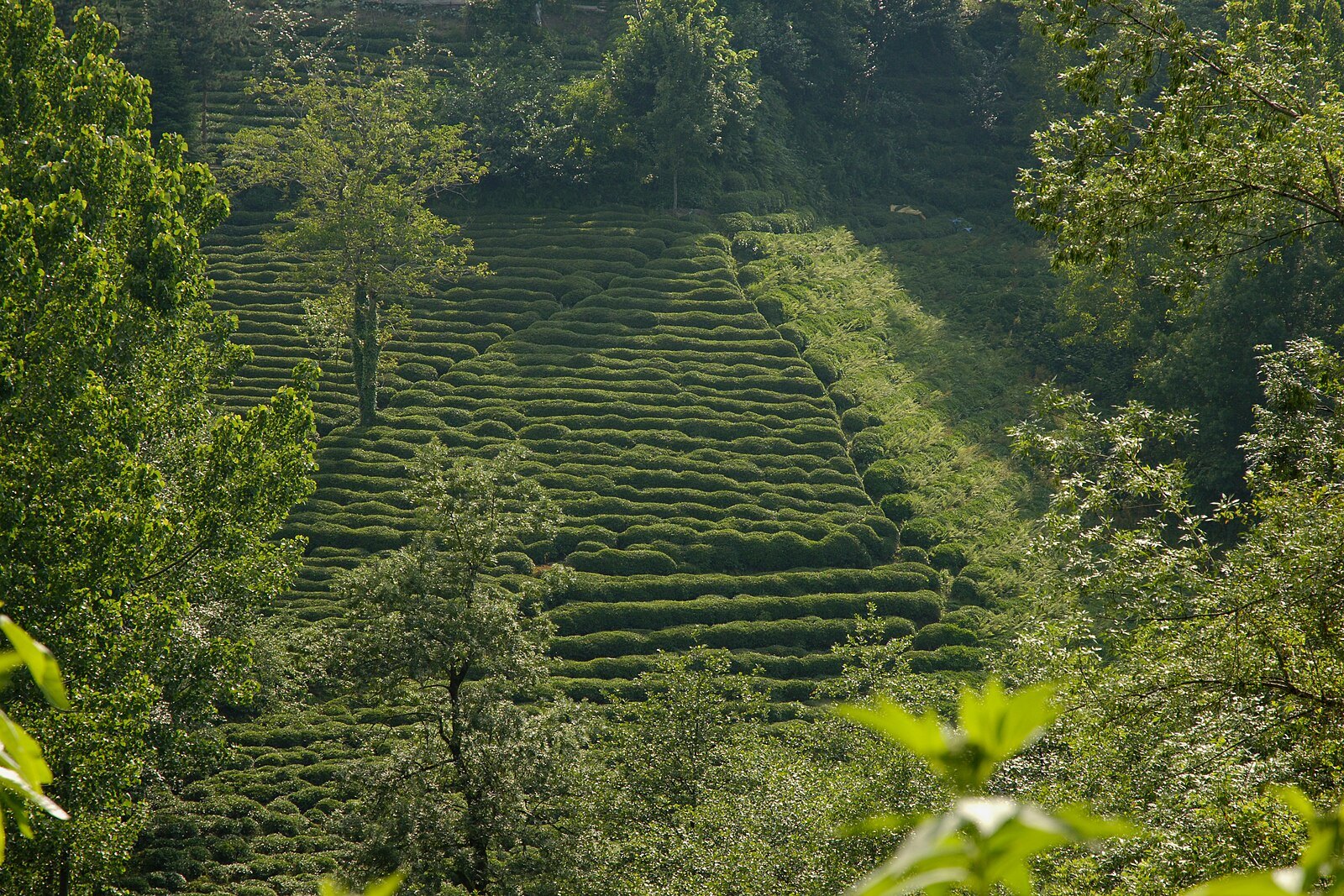
The tea belt faces the Black Sea and backs onto the Kaçkar mountains, with high rain, humidity, cloud and a long growing season. Rize is the core; Trabzon, Artvin and Giresun also grow tea. Gardens run from the coast to about 1,000 metres on steep slopes, making mechanisation and plucking costly. Winter and spring frost are northern risks; intense rain and landslides affect gardens and roads.
The Black Sea climate gives fat buds and strong flavour, but also bitterness; shade, plucking standard and fermentation control decide quality. Most gardens are smallholdings delivering to Çaykur or private factories, with prices shaped by state purchase prices and policy.
History and industry
Tea arrived in Turkey in the late nineteenth and early twentieth century, spread around Rize in the 1920s and gained state factories in the 1930s. Çaykur and private factories coexisted later. The sector is shaped by state policy, purchase prices and cross-border trade, with huge domestic demand and some imports.
Turkey is a major producer and consumer. Rize is the core, Çaykur the largest firm, and private brands and local factories fill the rest. Per-capita consumption is high: tea is central to breakfast, hospitality, shops and offices. Export is limited to nearby markets and diaspora. Prices follow purchase prices, exchange rates and energy costs.
Tea types and flavour
Black tea dominates: deep red, strong, malty and woody, boiled in a çaydanlık and diluted with hot water; sugar cubes are normal. Green and white tea are small and lighter; herbal teas such as linden, sage and mint are also popular. Turkish black tea suits strong, sweet drinking; plain, it can be astringent.
Turkish grades are less fine than South Asian systems, based more on factory, season and brand. Small particles brew fast and suit repeated boiling in the double pot. Strong-to-light ratio is personal taste, not a fixed recipe.
Cultivars and craft
Turkish gardens use Chinese and Georgian introductions plus local selections, mainly for black tea. Processing runs withering, rolling, fermentation, drying and sorting, with some CTC. Black Sea heat pushes growth; plucking standard and fermentation time decide strength and aroma. Smallholders deliver leaf and factories process centrally.
Quality depends on region, season, factory and freshness; state and private brands differ. Buy by dry-leaf colour, aroma and particle, then brewing performance, not the “Rize” label alone.
Market and grades
The market is mainly domestic, with Rize and Çaykur as core brands and prices from everyday loose tea to gifts. Tea is embedded in breakfast, hospitality, shops and offices; coffee and herbal tea compete, but black tea remains national. Export is limited to the Middle East, European diaspora and nearby markets.
Buy fresh black tea with a suitable particle for daily use; a clean, low-astringency batch for plain drinking; a stronger batch for sugar or milk. Factory and brand matter more than the country label.
The cup and brewing
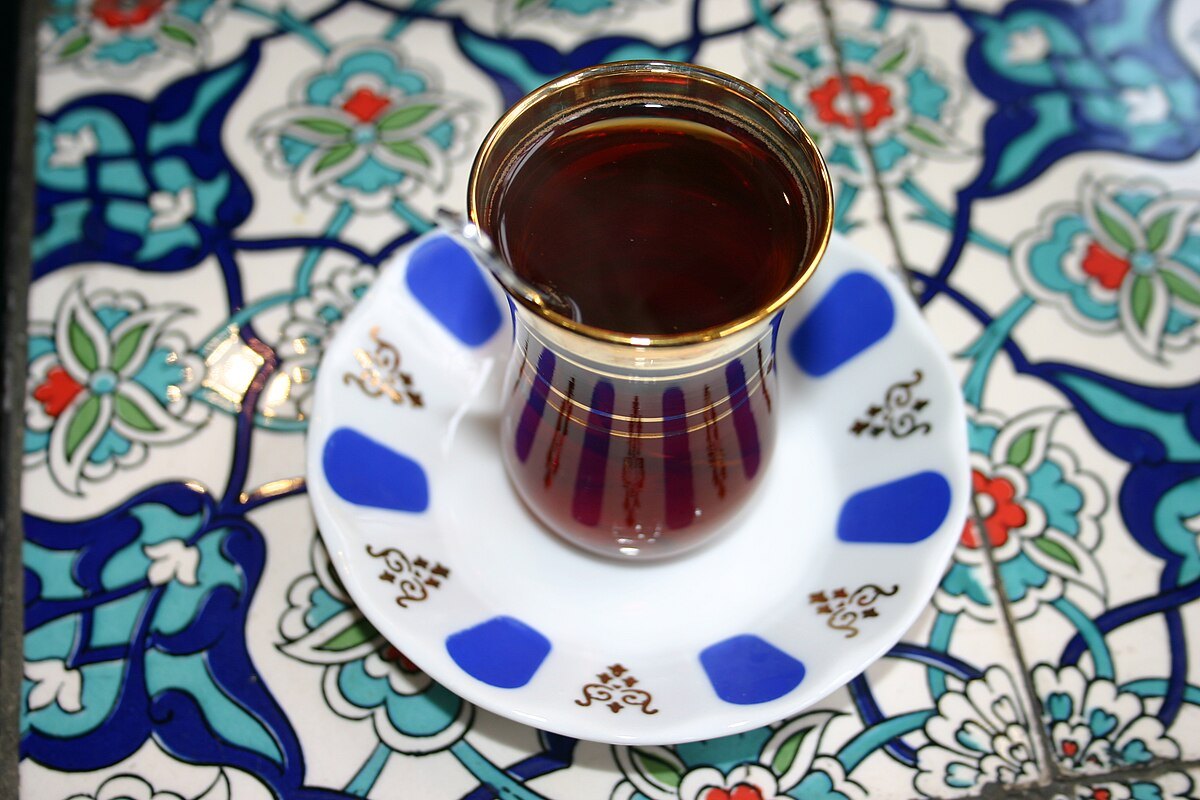
The standard method: water in the lower çaydanlık, leaf and a little water in the upper pot, boiled into strong tea. Pour strong tea first, dilute with hot water, serve in a tulip glass with sugar. Use about 5–8 g per pot and boil 10–15 minutes; strength is set by dilution. Brew green at 80–85°C, white at 85–90°C. Visit Rize from May to September for gardens, factories and Black Sea mountains.
Myths and boundaries
“Turkish tea means Arab mint tea” is a confusion: Turkey drinks plain black tea, while mint tea is another tradition. “Turkish tea is all CTC” ignores orthodox and factory differences. “The çaydanlık is just a prop” ignores that it is the core of strength control. “Rize tea is all Turkish tea” ignores Trabzon, Artvin and Giresun.
Turkey’s tea belt is on the eastern Black Sea coast, not nationwide; administrative borders differ from gardens, and brand or factory cannot replace batch. This page gives structure; tea pages and producers carry grade and price.
Teas in this region
Explore Turkish tea by black, green and herbal; confirm factory and season before brand and brewing.
Further reading
Source boundary
This page is edited from public Turkish tea-industry material, Rize geography and çaydanlık brewing knowledge. Output, price and policy data change over time; use current official sources. The tea belt is limited, but the state/private and drinking system is distinctive, and this page does not exhaust every brand.

