Overview
Ceylon high-grown tea is not a single estate or a single recipe. It is the black tea made in Sri Lanka's central highlands, generally from gardens above about 1,200 metres. The best-known district is Nuwara Eliya, but Uda Pussellawa and Dimbula also produce teas in this elevation band.
High-grown Ceylon is usually brighter and more aromatic than low-grown tea. A good example has a clear golden to amber liquor, a lifted citrus-and-floral nose, a relatively light body and a long, honeyed finish. These are tendencies rather than guarantees: district, monsoon, cultivar, factory and plucking standard all change the result.
The category matters because elevation is one of the first ways Sri Lankan tea is sorted, sold and discussed. It is a useful starting point, not a complete quality score.
Origin and terroir
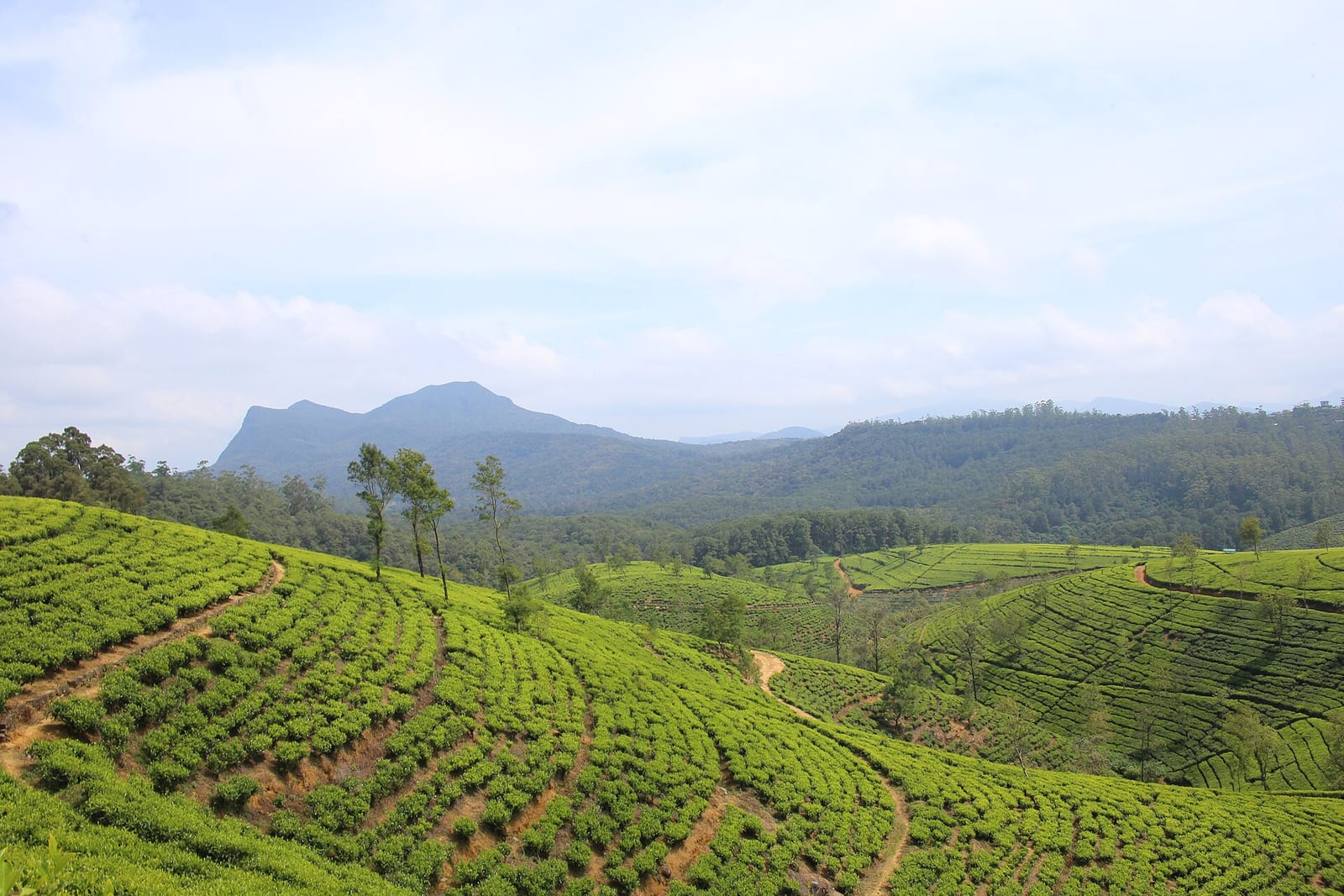
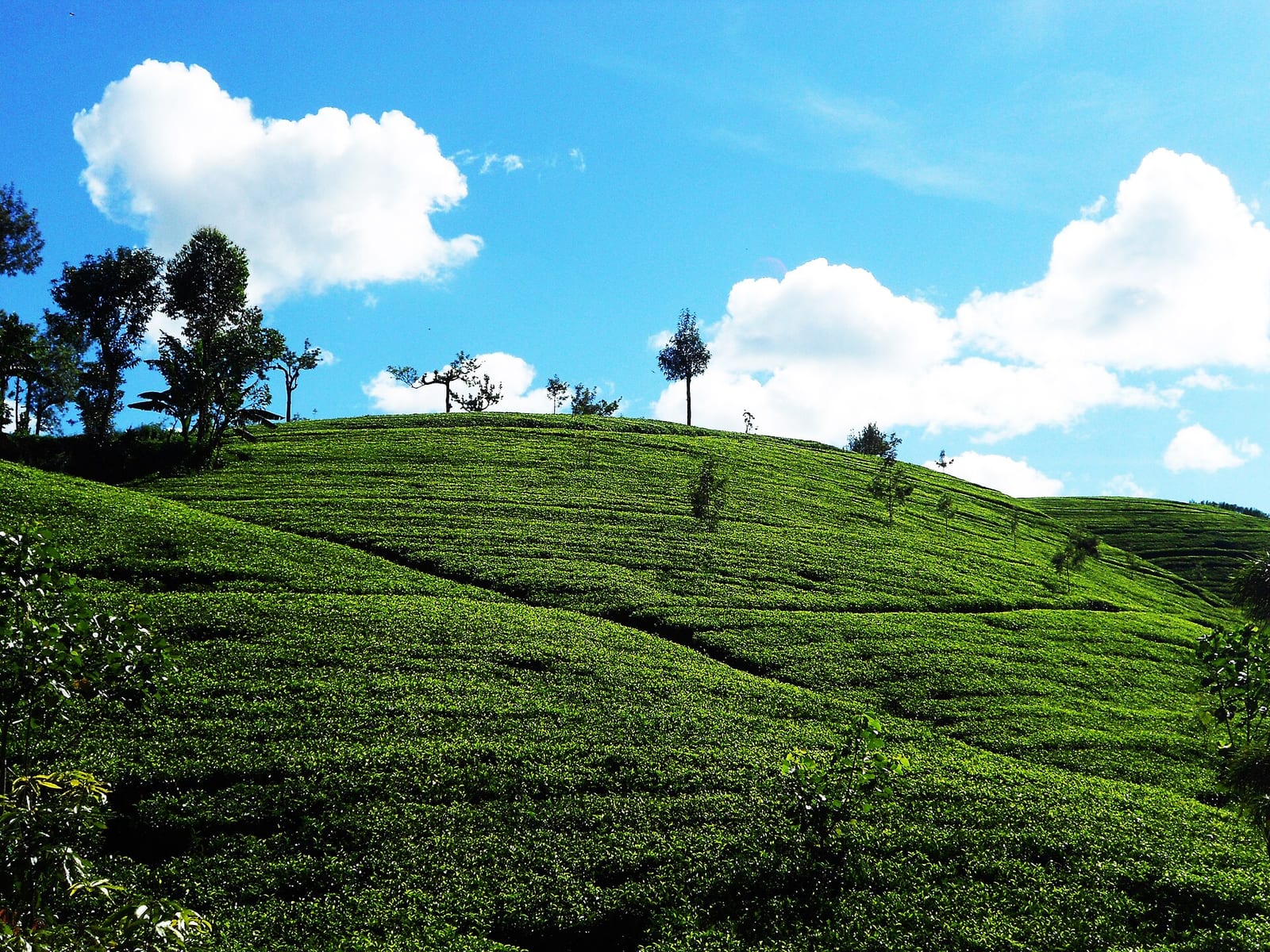
Sri Lanka's tea areas are conventionally divided into high-grown (about 1,200 metres and above), mid-grown and low-grown. Nuwara Eliya sits in the central highlands at roughly 1,800 metres and above; its cool, misty climate has earned it the old colonial nickname "Little England". Mean temperatures are much lower than in the low country, and the combination of strong ultraviolet light, cool nights and slow leaf growth helps produce concentrated aromatics.
Tea gardens in the high-grown districts are scattered across steep slopes, often between about 1,200 and 2,200 metres. The soils are largely derived from weathered granite, with good drainage and an acidic reaction that suits tea. Mist and cloud cover are part of the terroir, not just scenery: they reduce direct sun and slow the maturation of the shoot.
Nuwara Eliya is the most famous name, but it is not the whole category. Uda Pussellawa, to the east, and Dimbula, on the western side of the central massif, have different rainfall patterns and produce different styles. Uva, just outside the classic high-grown band, is often grouped with the high-grown districts in trade language because of its altitude and distinctive dry-season character.
The Lion logo is the official mark of 100% Pure Ceylon Tea. It is administered by the Sri Lanka Tea Board, and since 2011 Ceylon Tea has also had geographical indication protection. In practice, the logo and the GI matter because they distinguish tea produced and registered in Sri Lanka from foreign tea that is merely blended or packed there.
Cultivars
Sri Lankan tea is based on Assam-type large-leaf planting stock together with locally selected cultivars. The Tea Research Institute of Sri Lanka (TRI) has bred and propagated a range of clones suited to different elevations, soils and diseases. TRI 2023, TRI 2025 and DT1 are among the names that appear in estate and nursery literature.
High-grown gardens also use smaller-leaf material and cold-tolerant selections. At altitude, the shoot grows more slowly, the leaf is often smaller and firmer, and the aromatic precursors accumulate over a longer period. That is one reason high-grown tea can taste more fragrant and less heavy than tea from the hot low country.
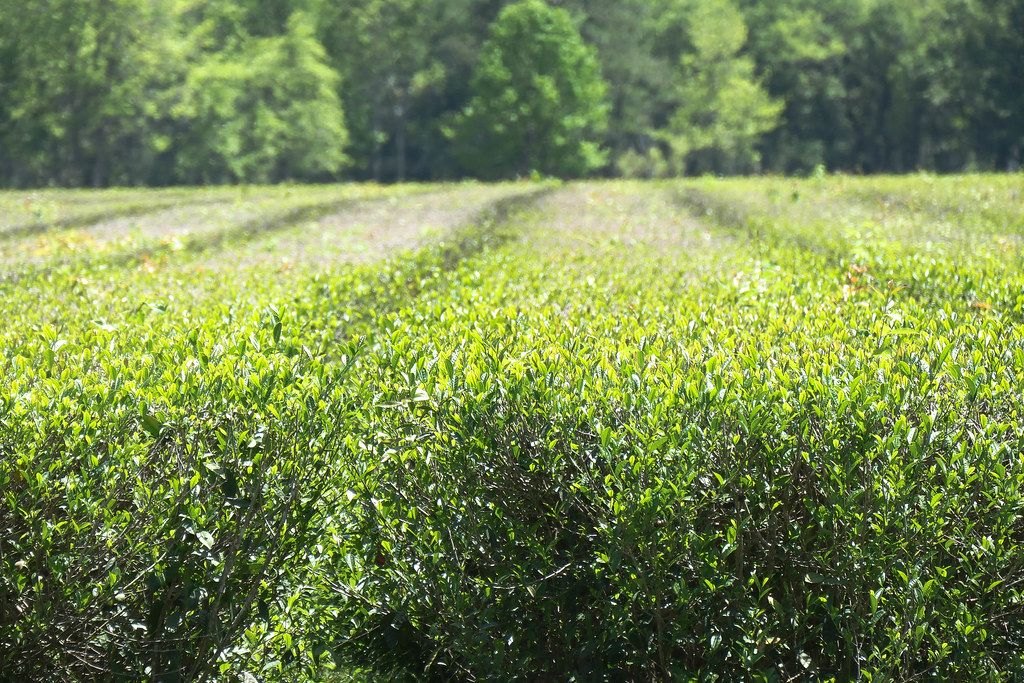
Estate planting is deliberately staggered. Early, middle and late flushing cultivars are interplanted so that the factory receives leaf over a longer season and the estate is not dependent on a single flush. The result is greater consistency from week to week, though it also means that "high-grown" covers a wide range of flavours.
Processing
Ceylon high-grown tea is still made mainly by the orthodox method: pluck, wither, roll, oxidise, dry, sort and remove stalk. CTC (crush, tear, curl) was introduced in Sri Lanka in 1983 and is used for some broken grades, but the orthodox line remains the reference style for whole-leaf high-grown tea.
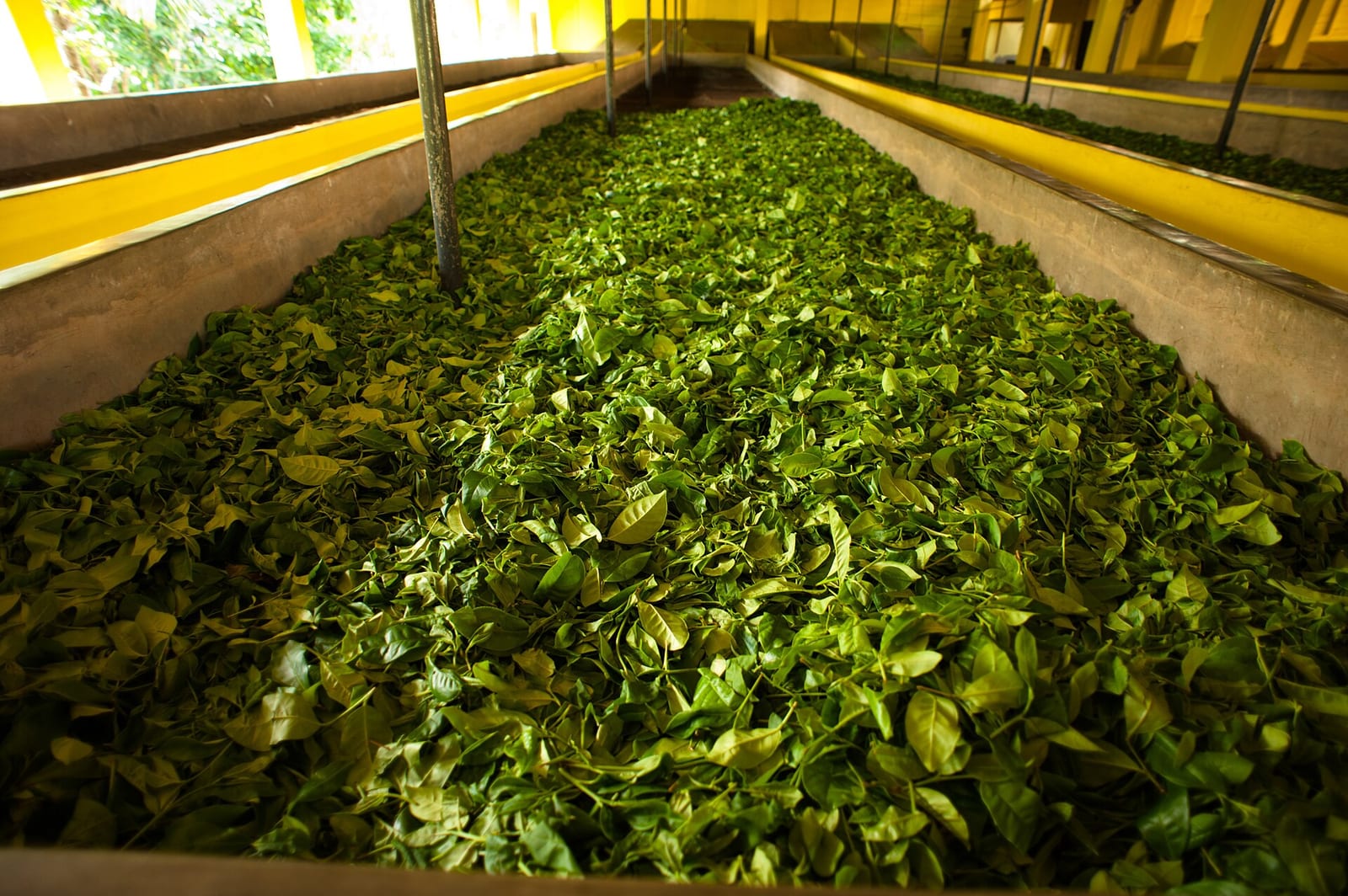
Plucking is selective. Workers take a shoot of two or three leaves and a bud, leaving the rest of the bush to recover. In the factory, withering removes moisture and makes the leaf pliable. Rolling bruises the cells and starts the oxidation that turns green leaf into black tea. The roller operator controls pressure and time; too little pressure leaves the leaf intact, while too much can crush it and lose the clean, wiry style associated with high-grown orthodox tea.
Oxidation is the stage that decides whether the tea stays floral or becomes heavier and more malty. High-grown factories generally aim for a shorter, cooler oxidation than low-grown factories, but the exact timing depends on the leaf, the weather and the factory's own style. After oxidation, hot-air drying stops the reaction and fixes the aroma. The dried tea is then graded by size and sorted; stalk and fibre are removed by hand or by electrostatic and pneumatic equipment.
Slow growth at altitude also means lower yields. A high-grown estate may produce less leaf per hectare than a low-grown estate, which is one reason high-grown tea is often more expensive. The finished tea is hygroscopic and should be stored sealed, cool and dark.
Quality and flavour
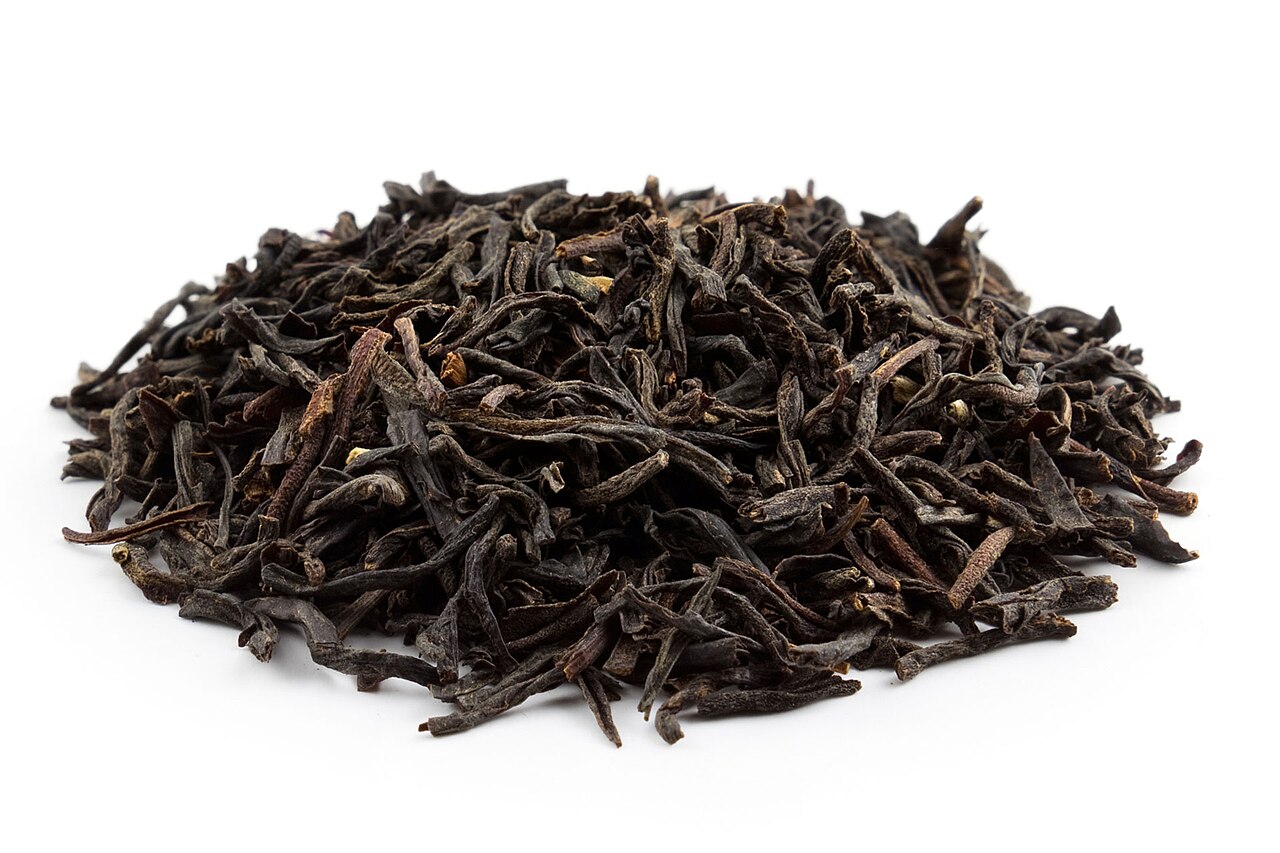
Dry high-grown Ceylon is usually tight, wiry and dark, with a faint sheen rather than a dull black surface. The aroma of the dry leaf is often quiet: a little honey, a little citrus peel, sometimes a green-floral note.
When brewed, the liquor should be bright and clear, ranging from pale gold to deep amber depending on strength. Nuwara Eliya teas tend to be the most floral and delicate; Uda Pussellawa can be a little fuller and more brisk; Dimbula often has a rounded, slightly nutty or honeyed middle. These are broad district tendencies, not fixed rules.
The high-grown signature is lift rather than weight. The tea should feel smooth on the tongue, with citrus-flower and lily-of-the-valley notes, a clean brisk edge and a sweet finish. It should not be flat, muddy or harsh. A little astringency is normal in a strong brew, but it should sit at the edge of the mouth and fade, not dry the throat.
Because high-grown tea is aromatic but relatively light, it is easy to overbrew. Use freshly boiled water, a generous leaf dose and a short infusion; add time rather than more leaf if the liquor is too thin. The same tea takes milk well, but milk will bury the citrus and floral notes that make high-grown Ceylon distinctive.
History
Ceylon tea began as a rescue crop. In the first half of the nineteenth century, Ceylon was one of Britain's most important coffee colonies, and much of the central highlands was planted with coffee. In 1869, coffee rust (Hemileia vastatrix) spread through the island. Coffee trees died in large numbers, estates failed and planters looked for a replacement.
James Taylor, a Scottish planter, arrived in Ceylon in 1852 and worked at the Loolecondera Estate at Galaha. He had already experimented with tea before the coffee crisis. In 1867 he planted nineteen acres of tea at Loolecondera, the first commercial tea garden in Ceylon. A fully equipped tea factory was operating there by 1872, and in 1873 twenty-three pounds of Taylor's tea reached London, the island's first international tea shipment.
The conversion was rapid. By the late 1880s most of the old coffee plantations had been replanted with tea, and technical improvements such as the Sirocco dryer and the tea-rolling machine made commercial production viable. By 1899 nearly 400,000 acres were under tea. Colombo became the trade hub, and the island's tea industry grew into a major export business.
Ceylon Tea was branded and protected in the twentieth century. The Sri Lanka Tea Board registered the Lion logo in 1999, and in 2011 Ceylon Tea obtained geographical indication certification. Official industry history records export revenue passing US$1 billion in 2008 and, at the 150th anniversary in 2017, an industry supporting over one million people.
Timeline
| Period | Event | Note |
|---|---|---|
| 1867 | Taylor plants the first commercial garden | James Taylor plants nineteen acres of tea at Loolecondera Estate, Galaha. |
| 1869 | Coffee rust crisis | Coffee rust spreads through the island and accelerates the shift from coffee to tea. |
| 1872–1873 | First factory and London debut | A complete tea factory operates at Loolecondera in 1872; twenty-three pounds of tea reach London in 1873. |
| 1899 | Tea area approaches 400,000 acres | Most coffee land has been converted; Ceylon becomes an important supplier of black tea to the British market. |
| 1999 / 2011 | Lion logo and geographical indication | The Sri Lanka Tea Board registers the Lion logo; Ceylon Tea receives GI protection in 2011. |
| 2008 / 2017 | Export value and industry scale | Official history records export revenue above US$1 billion in 2008; the 150th anniversary in 2017 notes an industry supporting over one million people. |
Grades and quality cues
Ceylon tea grades follow the international black-tea vocabulary. For high-grown whole-leaf tea, the common grades are OP (Orange Pekoe), FOP (Flowery Orange Pekoe), GFOP (Golden Flowery Orange Pekoe) and TGFOP (Tippy Golden Flowery Orange Pekoe). The more letters, the more tips and young buds are present, but grade is a description of leaf style, not a guarantee of quality.
Broken grades include BOP (Broken Orange Pekoe), which brews quickly and gives a strong, balanced cup, and BOPF (Broken Orange Pekoe Fannings), a smaller grade widely used in tea bags. High-grown BOP can be excellent, especially for a brisk morning cup, but it will not have the floral lift of a well-made TGFOP.
For high-grown Ceylon, the most useful quality cues are brightness in the cup, a clean floral or citrus aroma, a lack of smoke or mustiness, and a finish that sweetens rather than dries. Estate name and grade help, but the year, the monsoon and the factory matter just as much.
Local legends
A popular story in the central highlands concerns Adam's Peak, the island's sacred mountain. It is said that a divine tea bush once grew on the summit, and that the first sunlight of spring drew dew from its leaves; the dew fell into the streams below and gave the highland water its fragrance. The story is local folklore, not a botanical or historical record, but it captures how thoroughly tea has been woven into the landscape's imagination.
Another often-repeated tale links James Taylor with Lu Yu's Classic of Tea. In the story, Taylor is a lonely young planter who keeps a battered English translation of Lu Yu and follows its advice that the best tea grows among broken rocks. The detail is charming, but there is no documented evidence that Taylor owned or read Lu Yu. It is best told as a local anecdote about the meeting of Chinese tea lore and Ceylonese plantation history, not as a verified biography.
References
The sources for this entry are listed in the page footer and in the Chinese version of the entry. They include the Sri Lanka Tea Board, the official Story of Ceylon Tea timeline and the Tea Research Institute of Sri Lanka.