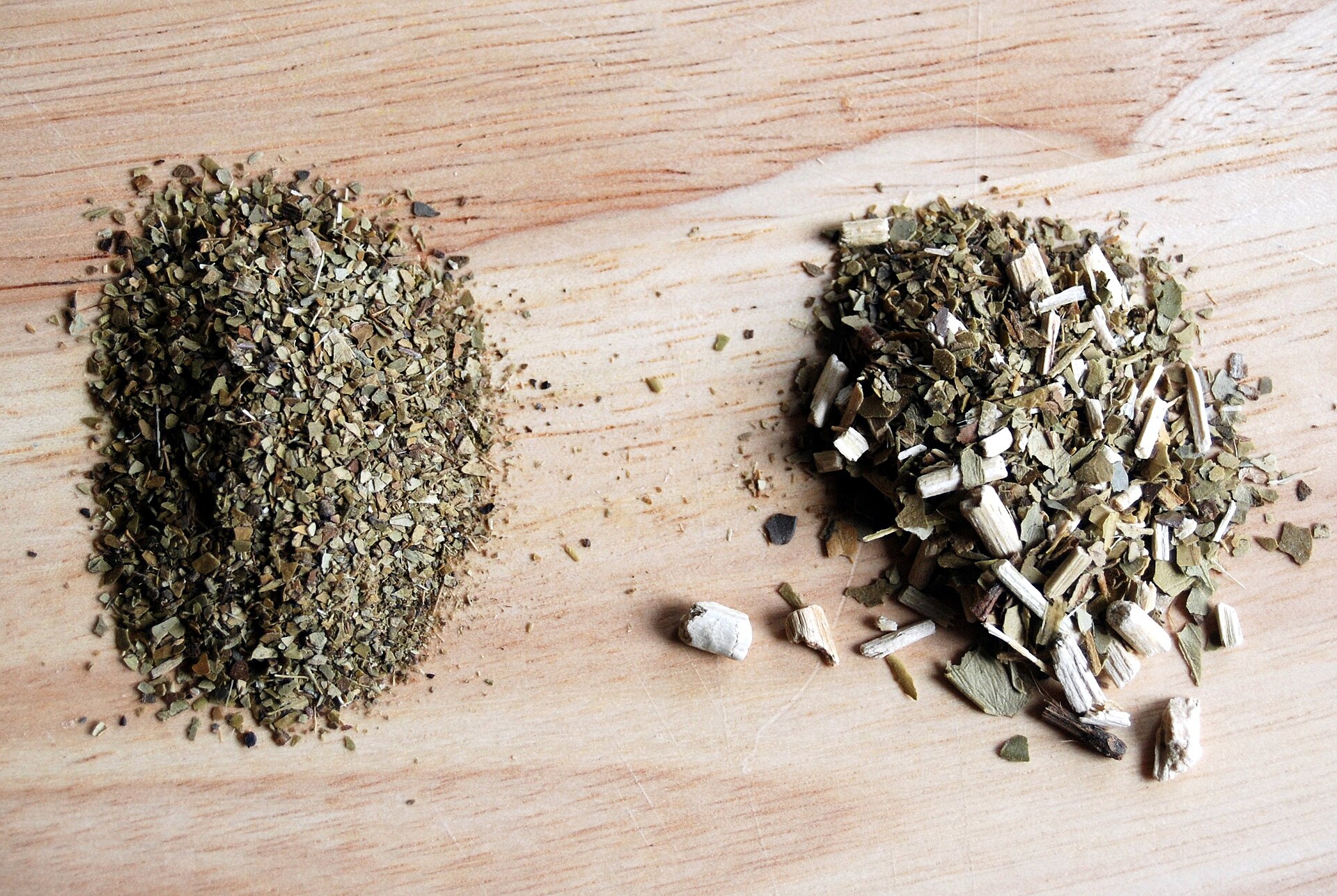
In one sentence
“Con palo” means “with stems”. Argentine and Paraguayan yerba is traditionally a blend of dried leaf and young stem, not pure leaf. Stems make the drink rounder, sweeter and less aggressive, and they keep the bombilla flowing. “Sin palo” — stem-free — is the denser, more bitter alternative.
The 65/35 rule
INYM’s “Yerba Mate Argentina” geographical indication gives the stemmed category a precise boundary:
- leaf (dried, broken or powdered): at least 65%;
- stems, fragments and fibre (coarse or fine): no more than 35%.
This is not a licence to add “anything woody”. It is a defined product class with a floor and a ceiling. Brands vary within that range. More stem usually means a softer, sweeter cup; less stem means a more concentrated, more bitter one.
Why stems belong there
Stems are not waste. They do real work:
- Different solubility: leaf carries most of the bitterness and body; stems add a gentler sweetness and a woody aroma.
- Better flow: stems keep the leaf bed open, so water passes evenly and the bombilla clogs less.
- Lower bite: stemmed mate usually feels less intense than pure leaf, which makes it easier to drink in quantity.
- Cost: the blend is traditional and makes everyday mate more affordable.
What stems do not tell you
The word “con palo” describes a blend category, not a quality grade. A stemmed product can be made from good leaf or poor leaf, from a single estate or from a blend of lots, and it can be lightly or heavily smoked. The label does not tell you the leaf grade, the harvest date, the curing temperature or the age of the pack.
That is why two bags with the same “con palo” wording can taste nothing alike. One may be sweet, grassy and clean; another may be dusty, sour and dominated by smoke. Treat the category as a starting point for choosing a style, then judge the actual leaf with your nose and mouth.
Stems also do not make a tea “light” in caffeine terms. They change the balance of flavour and the draw, but the leaf still supplies most of the caffeine. If you are sensitive, watch how much dry leaf you load, not just the stem percentage.
Flavour
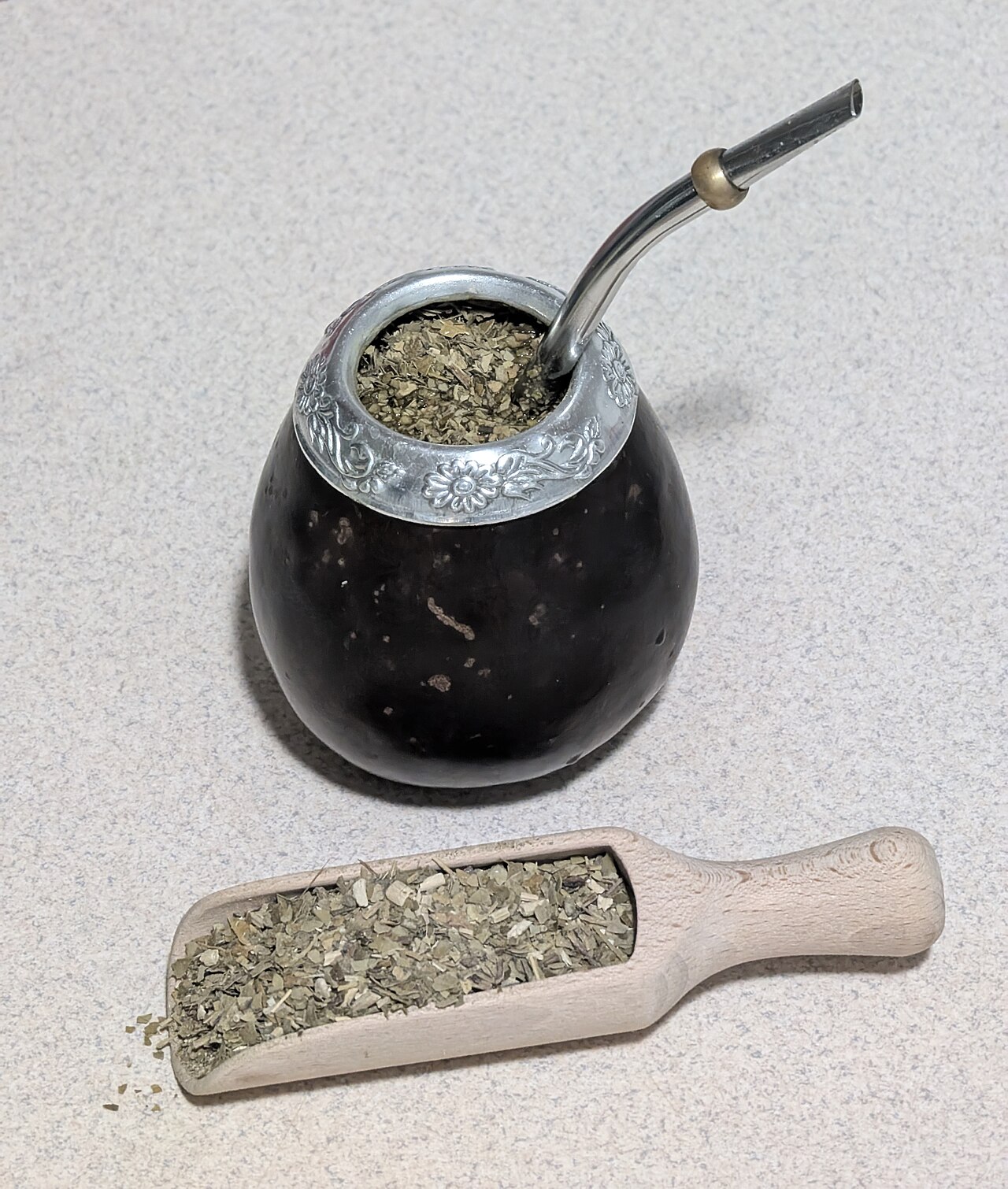
- Dry leaf: dark green broken leaf with pale yellow-brown stems; grassy, hay, light smoke.
- Liquor: yellow-green to amber, usually a shade lighter than stem-free.
- Aroma: grass, wood and gentle sweetness; smoke is typically lower than in pure leaf.
- Taste: round entry, mild bitterness, quick sweetness; low aggression.
- Body: slightly thinner than pure leaf, but smoother and easier.
Brewing
Stemmed mate works in all three traditional forms:
- Hot mate: 70–95°C, 25–50 g, gourd and bombilla; the stems help the draw.
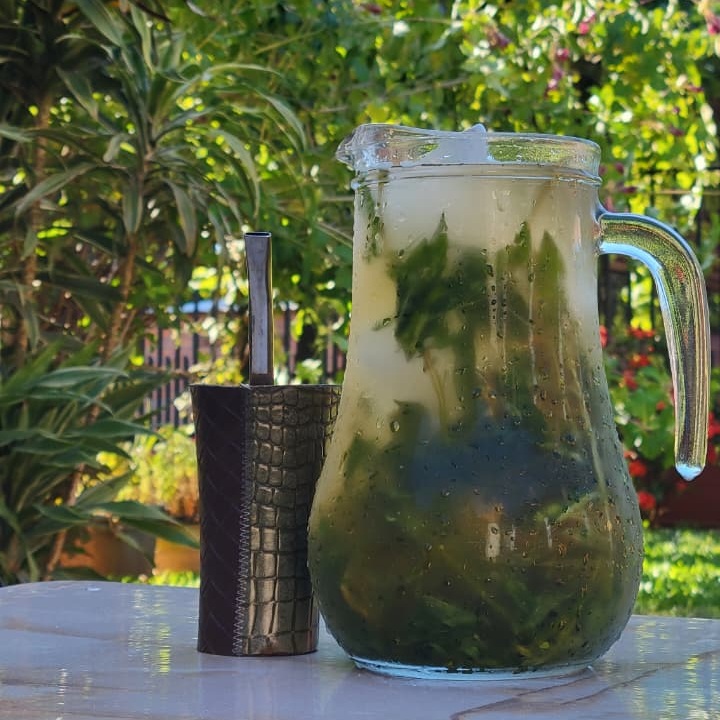
- Tereré: 5–8°C water and ice; a coarse stemmed cut is especially resistant to clogging.
- Mate cocido: boiling water off the heat, 3–5 minutes, then strain; stems make the result softer and sweeter.
Stemmed vs stem-free
| Dimension | Con palo | Sin palo |
|---|---|---|
| Blend | Leaf ≥65%, stems ≤35% | Almost all leaf |
| Flavour | Rounder, sweeter, lower bite | Denser, more bitter, more herbal |
| Body | Smooth, slightly thinner | Thicker, more astringent |
| Best for | Daily drinking, long sessions, tereré | Drinkers who want intensity |
| Market | Common in Argentina and Paraguay | More common in Uruguay |
Buying checklist
- Category: if the pack says “con palo”, it should fit the GI or the brand’s stated blend.
- Origin: Misiones or Corrientes.
- Cut: medium-fine for hot mate; coarse for tereré.
- Aroma: clean grass and light smoke; no mould, acid or sharp tar.
- Taste: stemmed does not mean weak or cheap. A good blend is sweet, clean and long-finishing.
Sources and status
The entry relies on INYM’s geographical-indication release for the 65/35 ratio and on INYM’s technical document for the three brewing methods. Old claims that stems are waste filler, that stemmed mate always has less caffeine, or that it is always sweeter have been softened to “usually” and “can”. The page is reviewed for structure and sourcing, not as a product standard.