In one sentence
Yerba mate is not tea. It is an infusion of the leaves and young stems of Ilex paraguariensis, a holly native to the Atlantic forest of South America. In Argentina, Uruguay, Paraguay and southern Brazil it is drunk with the same social weight that tea carries in China — and Argentina formally calls it the national infusion.
The plant and the place
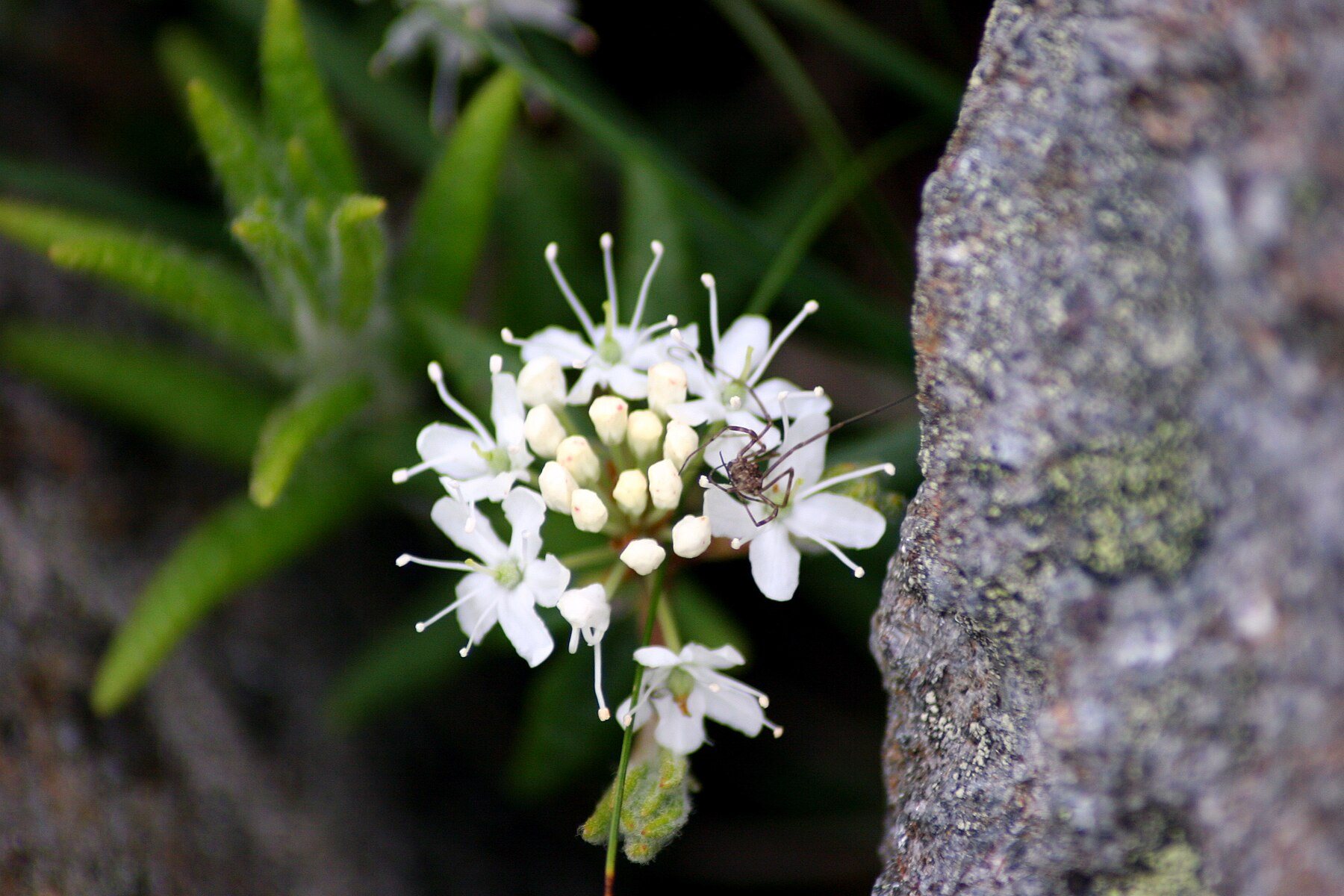
The mate tree is an evergreen holly. In the wild it can reach 12–16 metres; on farms it is pruned to a shrub so pickers can reach the young growth. The leaf is dark, leathery and serrated, and the young stems are processed with it. The infusion contains caffeine and theobromine, which is why it lifts alertness without tasting like Camellia tea.
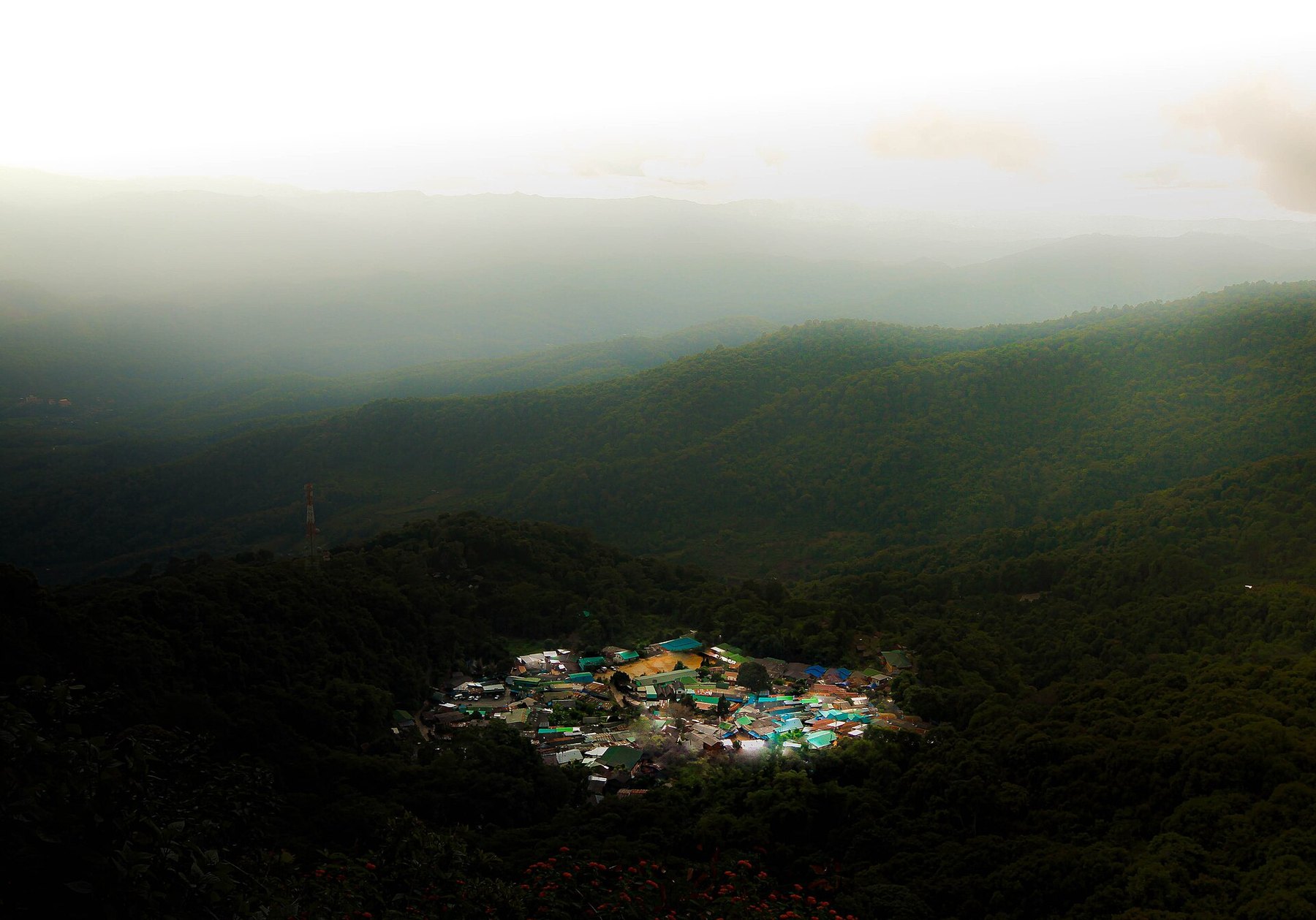
Argentina’s crop is concentrated in Misiones and Corrientes. Misiones is the hotter, wetter, red-earth province on the Brazilian border; Corrientes has large plantations to its north. INYM’s geographical indication, “Yerba Mate Argentina”, covers that two-province area. Soil, rainfall, shade and curing style all shift the final cup.
Three ways to drink it
INYM recognises three traditional forms.
1. Hot mate
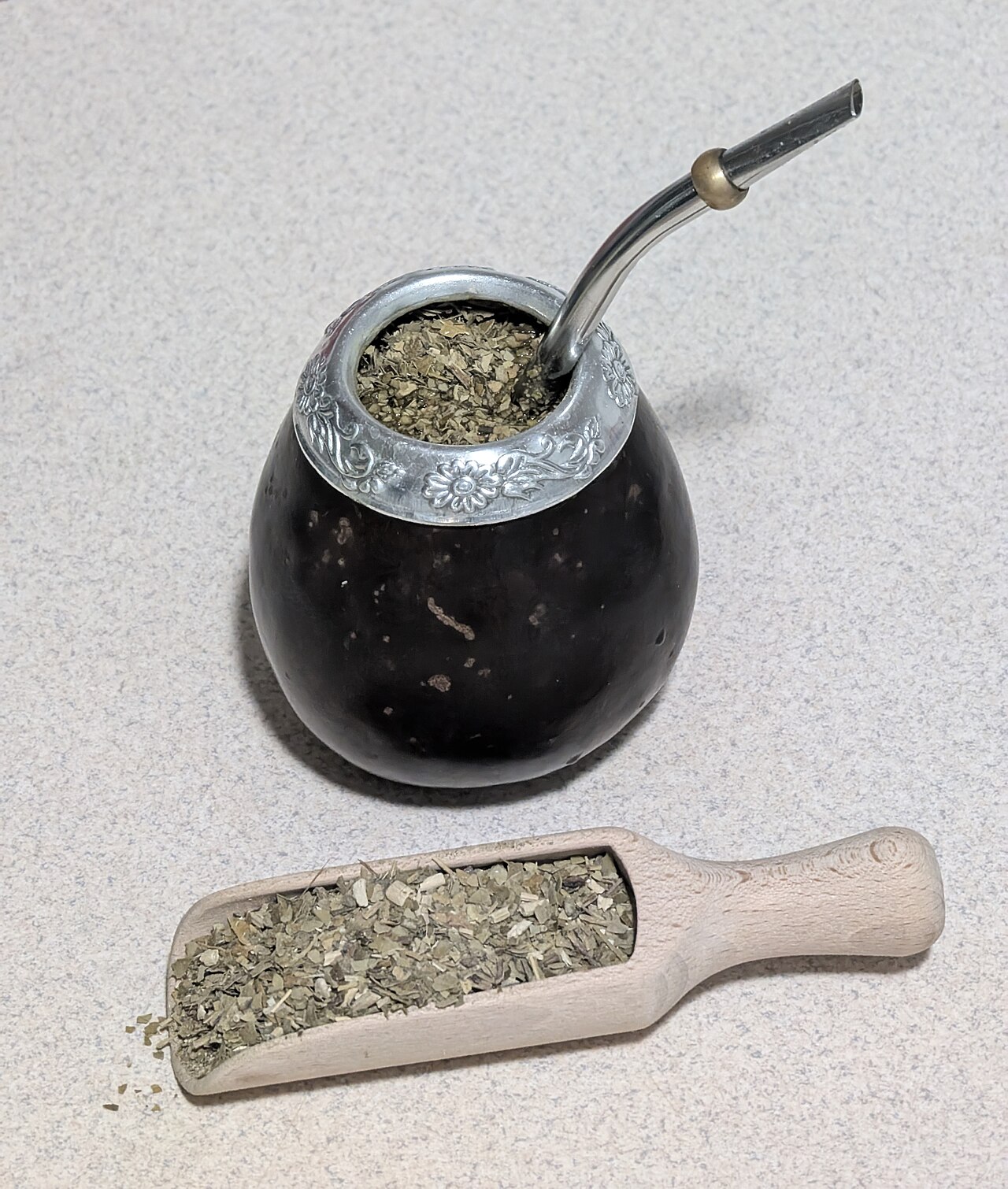
Fill a gourd or metal cup with 25–50 g of yerba, then pour water at 70–95°C and sip through a metal bombilla. The water should not be a rolling boil. One person refills and the cup passes around the group.
2. Tereré
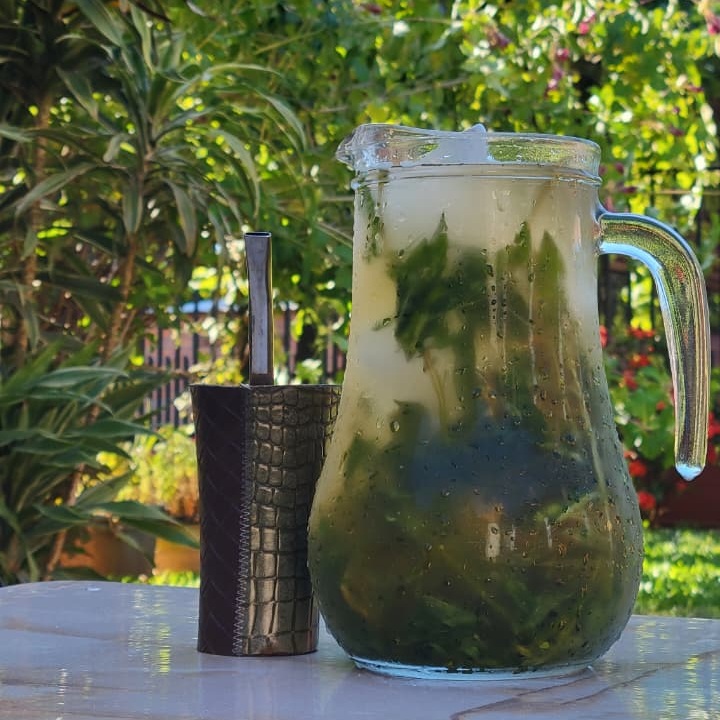
The same leaf and the same tools, but with water at 5–8°C, often with ice, mint, citrus peel or fruit juice. Cold water extracts slowly, so the drink is lighter, cleaner and less bitter than hot mate. It is the standard summer drink in the Argentine northeast, Paraguay and southern Brazil.
3. Mate cocido
Yerba is infused in boiling water, sometimes in a tea bag, sometimes loose, then strained and served in a cup. It is the closest thing in this family to ordinary tea: stronger and more bitter than gourd mate, commonly sweetened or taken with milk.
Stems, leaf and the 65/35 rule
Argentine yerba is sold as con palo (with stems) or sin palo (stem-free). Stems are not filler. They soften the cup, add a woody sweetness and make the draw through the bombilla easier. The geographical indication sets a clear boundary for the stemmed category: at least 65% leaf, and no more than 35% stems, fragments and fibre. Stem-free yerba is almost all leaf — more concentrated, more bitter, and more common in Uruguay.
What it tastes like
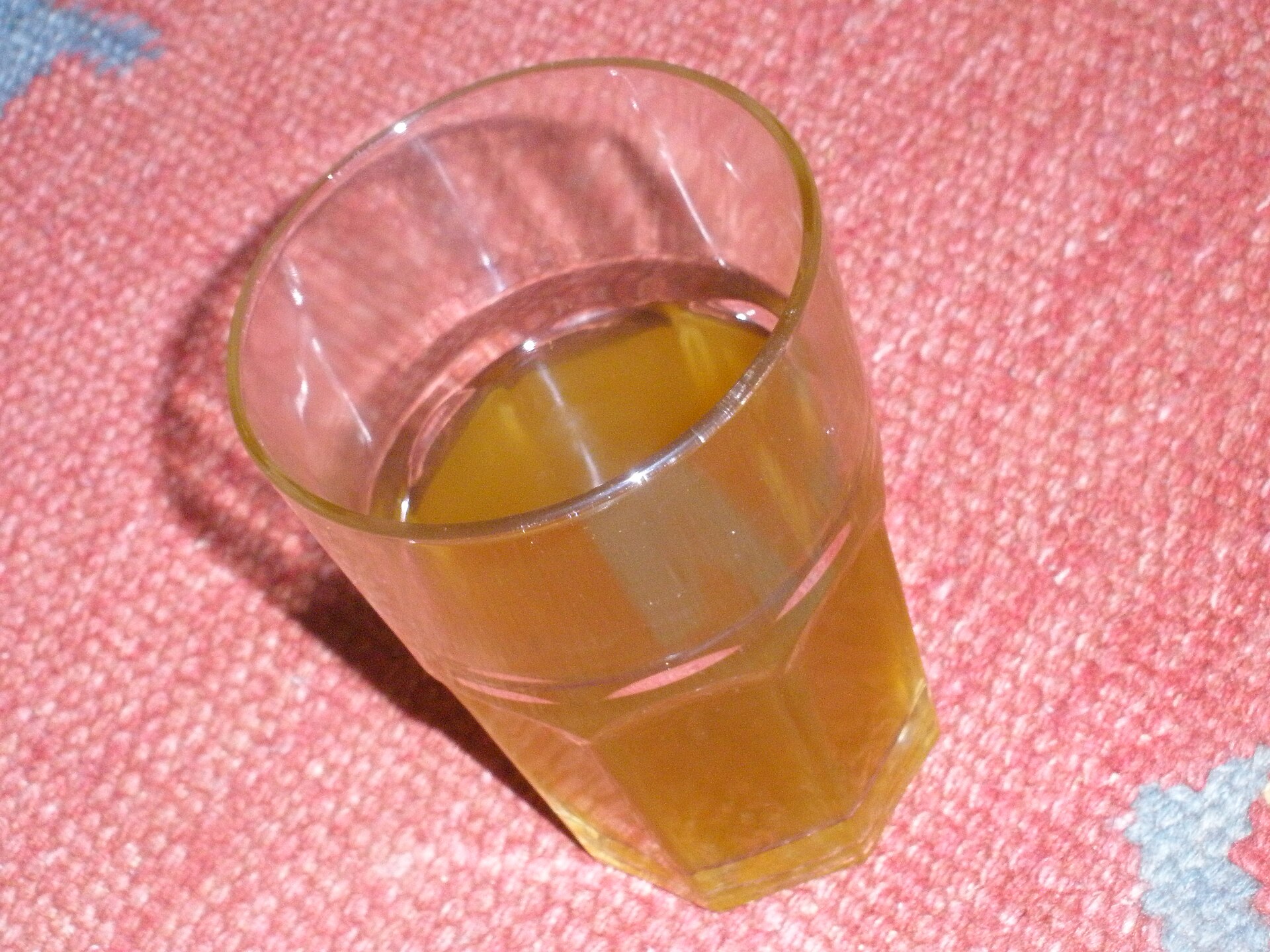
Dry yerba is a mix of dark green broken leaf and pale stems. It smells grassy, hay-like, lightly smoky and sweet. Hot mate is yellow-green to amber, full-bodied and bitter at the front, with a fast, clean sweetness behind it. Tereré is paler and lighter, with the bitter edge reduced. Mate cocido is darker and more tea-like, and it turns bitter quickly if boiled too long.
Good yerba has a clean bitterness that opens into sweetness. It should not smell of mould, acid or sharp tar. Smoke is a style, not a defect — but heavy smoke should be a deliberate choice, not an accident.
Brewing notes
- Hot mate: 70–95°C, never boiling; wet the leaf first, insert the bombilla, then refill along the wall of the gourd.
- Tereré: cold water and ice; use a coarser cut so the bombilla does not clog.
- Mate cocido: boiling water off the heat, 3–5 minutes, then strain. Do not simmer hard for a long time.
- Sharing: the bombilla is communal. Do not share it when you are sick or have mouth sores.
Buying and keeping
Look for the production province, the packer, and — if the packet claims a protected origin — the INYM geographical indication. Choose stemmed or stem-free by taste, not by status. Buy small packs: opened yerba absorbs moisture and smells. Store sealed, dark and dry. Organic versions are covered separately; the certification is about the growing system, not a promise of a better cup.
Cultural place
Mate is a gesture before it is a beverage: one person pours, the cup goes around, everyone says “thank you” when they are done. Guaraní origin stories, Jesuit missions and gaucho campfires all belong to that culture, but this entry treats them as cultural narrative rather than verified chronology. What is documented is the present: mate is a household, workplace and travel habit, and a major Argentine agricultural export.
Sources and status
The entry relies on INYM’s technical document for the three preparations, temperatures, leaf quantity and caffeine figures, and on INYM’s geographical-indication release for the production area and the 65/35 stem rule. Claims from the old draft — household-penetration percentages, a heritage designation, specific Jesuit dates and Guaraní myth details — have been removed or demoted to cultural narrative because this batch did not verify them. The page is marked reviewed for structure and sourcing, not as a final scholarly monograph.