
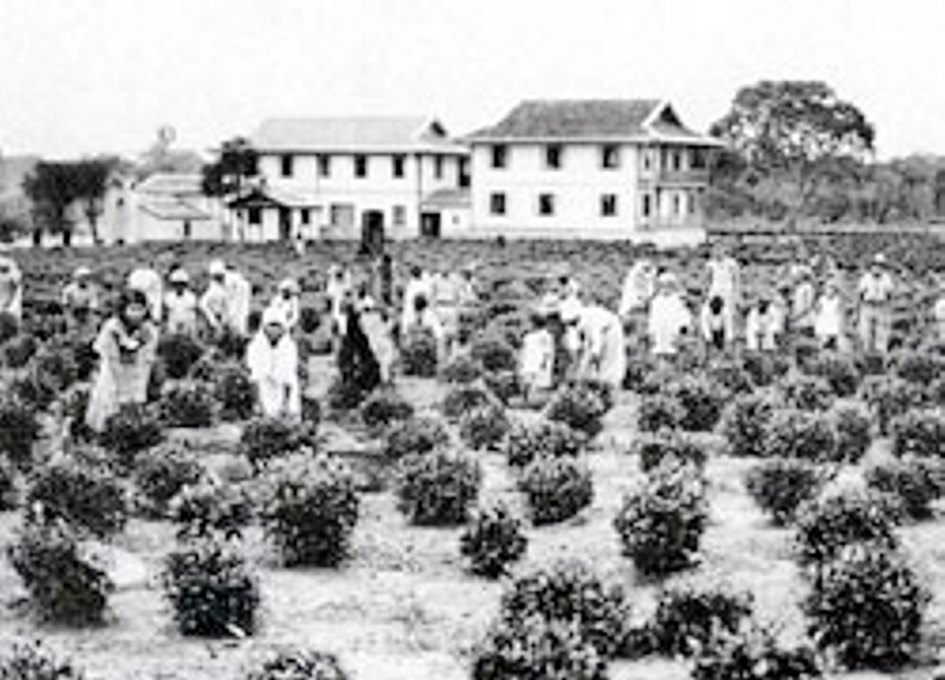
Brazilian tea sits in São Paulo and Paraná: Japanese-immigrant gardens, small black and green tea, and a coffee-dominated market where tea is a supplement.
The short answer
Brazil is not a traditional tea power. Commercial gardens concentrate in São Paulo and Paraná, where Japanese immigrants brought technique and cultivars in the twentieth century. Coffee defines Brazil; tea is small, mainly black and green, and domestic drinking runs on tea bags, iced tea and sweetened tea. Read Brazil by separating Japanese-Brazilian gardens from tea as a supplement to the coffee economy.
Geography and growing conditions
São Paulo and Paraná lie in the southeast, at 500–1,000 metres, mild and wet, with acid red soils. Gardens sit on hills where frost and heavy rain are risks; the Amazon and northeast are too hot and humid for tea. The area is small and competes with vegetables and fruit.
Terroir and craft
Brazilian commercial tea is concentrated in São Paulo and Paraná, introduced with Japanese immigrant technology and cultivars in the twentieth century; the Vale do Ribeira is the core. Assam hybrids and local selections are made mainly into orthodox black and green tea, with a little oolong. Subtropical weather and rain push leaf fast, and processing is medium-scale.
History and industry
Brazil had scattered tea trials in the nineteenth century; after the 1930s, Japanese immigrants established commercial gardens in São Paulo and brought Japanese processing. In the mid-twentieth century Brazilian tea supplied local and export markets; later coffee expansion, urbanisation and imported tea bags reduced the gardens. A few estates and specialty projects remain.
Tea types and everyday drinking
Black and green tea dominate, with small amounts of oolong and white. Japanese-Brazilian gardens often make green tea in Japanese style; black tea goes into local bags and blends. Everyday “chá” is sweetened; iced tea and yerba mate sit alongside, but mate is not Camellia sinensis. Single-estate specialty is rare.
Industry and market
Volume is modest and mostly serves Brazil and South America, with a little export. Japanese-Brazilian communities and specialty factories use a “South American tea” story for niche buyers. Domestic drinking is led by tea bags, sweet tea and mate; tea and mate are separate product lines.
The cup and brewing
Brazilian orthodox black tea is bright red, medium-bodied, with malt, wood and a little flower. Green tea is lighter, with grass and chestnut. Brew black at 90–95°C for three minutes; green at 80°C and fast. Visit the Vale do Ribeira from May to September, allowing for wet-season roads.
Buying and boundaries
Output is small and certification inconsistent; for Japanese-Brazilian garden tea, check estate, year and process. Brew green at 80–85°C with quick pours; black at 90–95°C, with sugar if desired. Yerba mate is a different plant and should not be confused with tea.
Myths and boundaries
“Brazil only has coffee and mate” ignores the Japanese-Brazilian tea sector. Brazil has commercial gardens and factories, but they are small and little known abroad. Mate is another species and culture and should not be counted as Camellia sinensis tea.
From the Rio botanic garden to Paraná
Tea reached Brazil in 1812, when João VI brought plants from China to the Rio botanic garden and recruited Chinese tea workers for trials; climate and labour did not fit, and no industry formed. In the twentieth century Japanese immigrants planted tea around Registro in São Paulo and northern Paraná, making black and green tea. Today the main areas are the Vale do Ribeira and Paraná, mostly smallholder gardens, and output is far smaller than coffee. Brazil is one of South America’s largest tea producers, but domestic drinking is dominated by tea bags, iced tea and yerba mate.
Paraná gardens are tied to Japanese immigrant communities and cooperatives, and picking and processing remain small-batch. Prices are low and brands weak; specialty tea goes mainly to high-end local buyers and export.
Paraná picks from October to April and stops in the wet season.
Teas in this region
Further reading
Source boundary
The tea area is only a few parts of the southeast, not nationwide; coffee and tea are not substitutes. Japanese-Brazilian garden history is real, but scale is limited; this page does not inflate Brazil into a South American tea power.

