What it is: a valley tradition, not a brand
Vale do Ribeira lies in southern São Paulo state. Its tea belt is usually associated with Registro, Pariquera-Açu and Sete Barras. “Vale do Ribeira black tea” describes a regional production tradition, not a trademark and not a protected geographical indication. The public record contains large factories, family farms, organic smallholdings and agroforestry plots. They share a valley name, but not one cultivar list, one processing specification or one sensory standard.
In 1984, state law 4.067/84 gave Registro the title “Capital Estadual do Chá” (State Tea Capital). That is a state honour, not a national quality grade, and it does not mean that the valley is Brazil's only tea area.
History: 1913 seedlings and the 1930s peak
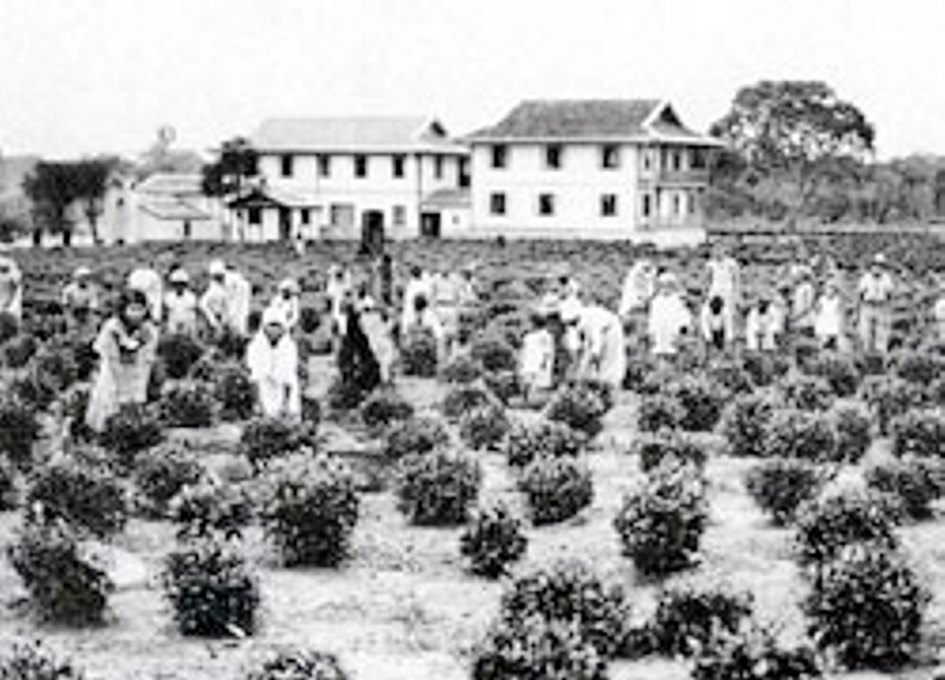
The São Paulo legislature's account begins in 1913, when Japanese immigrant Torazo Okamoto brought Assam tea seedlings from Sri Lanka and planted them around Registro. In the 1930s, Japanese immigrant growers expanded the valley to about 5,000 ha, 600 producers and 40 processing plants, with roughly 90% of the tea exported. Those are historical peak figures, not today's acreage.
A 2003 article from the São Paulo Institute of Agricultural Economics gives a second set of numbers for comparison: in 1983–94, the São Paulo tea area averaged 5,376 ha and 46,694 tonnes; in 1995–2002 it fell to 3,701 ha and 32,014 tonnes. The article also says about 95% of São Paulo black tea was exported and went into Lipton/Pepsi-Cola and Nestlé/Coca-Cola blends. Vale do Ribeira was therefore primarily an export blending origin, not a district built around single-estate boutique tea.
In the 1980s, international competition and changes in domestic demand closed many factories and shrank the planted area. A 2026 G1 report still calls it a crisis and describes the surviving Amaya factory as Brazil's only large-scale black-tea factory. That “only large-scale” phrase is a media description, not an industry census; Shimada, Yamamaru and other small producers still operate.
Three current cases
Amaya: bulk export and a non-orthodox process. Registro's tourism page says Amaya has more than 80 years of history and makes black tea, green-tea powder and green/black tea bags. The 2025 Rota do Chá report adds scale: 87 ha, 90 tonnes a year, Chá Ypiranga since 1936, a non-orthodox process, and a product range that includes green, black and oolong tea plus blends. “Non-orthodox” describes the processing route, not quality; it means Amaya does not use the full orthodox leaf style.
Sítio Shimada: organic, family-scale, handmade black tea. The same 2025 report says Shimada has 6 ha, averages 500 kg a year, is MAPA-certified organic and makes Chá Dourado from buds only. Registro's tourism page records Ume Shimada reopening a handmade black-tea workshop in 2014 at the age of 87: hand-picking one bud and two leaves, an amber liquor, honey and malt notes, and lychee, peach and apricot fruit. The 2025 report says she was 98 and working with her daughter Teresinha. The ages differ because the reports are from different years; the facts that agree are the 2014 restart and the family-scale handmade production.
Sítio Yamamaru: tea after 28 years of abandonment. Registro's tourism page says Yamamaru is in Sete Barras, that the garden was abandoned for 28 years and then restored, that the tea plants had grown into trees, and that the family prunes and hand-processes them while retaining native trees between the rows. The garden sits inside the Atlantic Forest Biosphere Reserve. The 2025 report adds about 60 kg a year, a 2023 gold medal for black tea at the Concurso Brasileiro de Chás, and management by siblings Miriam and Kazutoshi, who also grow Juçara palm.
These three cases are not interchangeable. Amaya shows that the export-oriented bulk route still exists. Shimada shows that organic family farming can produce a small-batch specialty tea. Yamamaru shows that a tea garden can be restored inside secondary forest rather than cleared and replanted.
Processing and flavour: no single regional profile
The public record does not give one answer to “how Vale do Ribeira black tea is made”.
- G1 describes hand-picking, then steaming, pre-drying, drying, roasting and grinding. That reads more like a green-tea or tea-powder line than a universal black-tea process.
- Shimada's material emphasises hand-picking one bud and two leaves, organic management and small-batch black tea.
- Amaya says only “non-orthodox”; it does not publish full rolling, fermentation and drying parameters.
- The 2003 IEA article says the tea went into international blends, but gives no regional process ratio.
So neither “the whole valley is CTC” nor “the whole valley is orthodox leaf tea” is supportable. The safer formulation is: bulk blending tea and handmade small lots coexist, and the process changes with the producer.
Flavour works the same way. Registro's tourism page describes Shimada's tea as amber with honey/malt and lychee, peach and apricot notes. That is one producer's product description, not a regional cupping result. Export blending tea is usually built for strength, colour and cost, so it can be darker and more direct. No official regional sensory standard was found.
Common misreadings
| Misreading | Problem | Better wording |
|---|---|---|
| “Vale do Ribeira is Brazil's only tea area” | Brazil has other tea areas and producers; the official report calls Registro the largest tea-producing city | “A major black-tea area in southern São Paulo”, not “the only one” |
| “The largest black-tea area in South America” | No cross-border statistic was found | Give the documented historical peak and current producer scale |
| “The whole valley uses CTC” | Amaya says non-orthodox, Shimada makes handmade tea, and G1 describes another flow | “Bulk export tea and small handmade lots coexist” |
| “5,000 ha is the current area” | That is the 1930s peak; IEA gives 3,701 ha for 1995–2002 | Keep peak and current figures separate |
| “Amaya is the country's only tea factory” | G1's phrase is “only large-scale black-tea factory”; small factories and farms remain | Quote the report's wording, not “only factory” |
| “Shimada's honey and lychee notes are the regional standard” | That is one producer's product description | “Shimada describes its tea as…”, not “the valley tastes like…” |
Source boundary
This page confirms that Vale do Ribeira black tea is a regional black-tea tradition around Registro, Pariquera-Açu and Sete Barras in southern São Paulo; that Torazo Okamoto brought Assam seedlings from Sri Lanka in 1913; that the valley reached about 5,000 ha, 600 producers, 40 factories and 90% exports in the 1930s; that Registro received the “State Tea Capital” title in 1984; that the city exported more than US$68 million of tea between 1997 and 2023; that Amaya has 87 ha, produces 90 tonnes a year and has made Chá Ypiranga since 1936; that Shimada has 6 ha, averages 500 kg a year, is MAPA-certified organic and restarted handmade black tea in 2014; and that Yamamaru restored a garden abandoned for 28 years in Sete Barras, uses agroforestry and won a 2023 Brazilian Tea Competition gold medal for black tea.
This page does not confirm the valley's current total tea area, current producer count, a single cultivar ratio, a single processing specification, an official sensory standard, retail prices, caffeine content, or absolute claims such as “Brazil's only” and “South America's largest” without a statistical source. The page image is a historical photograph of a tea plantation near Registro, circa 1930; it is not a current estate or product shot.