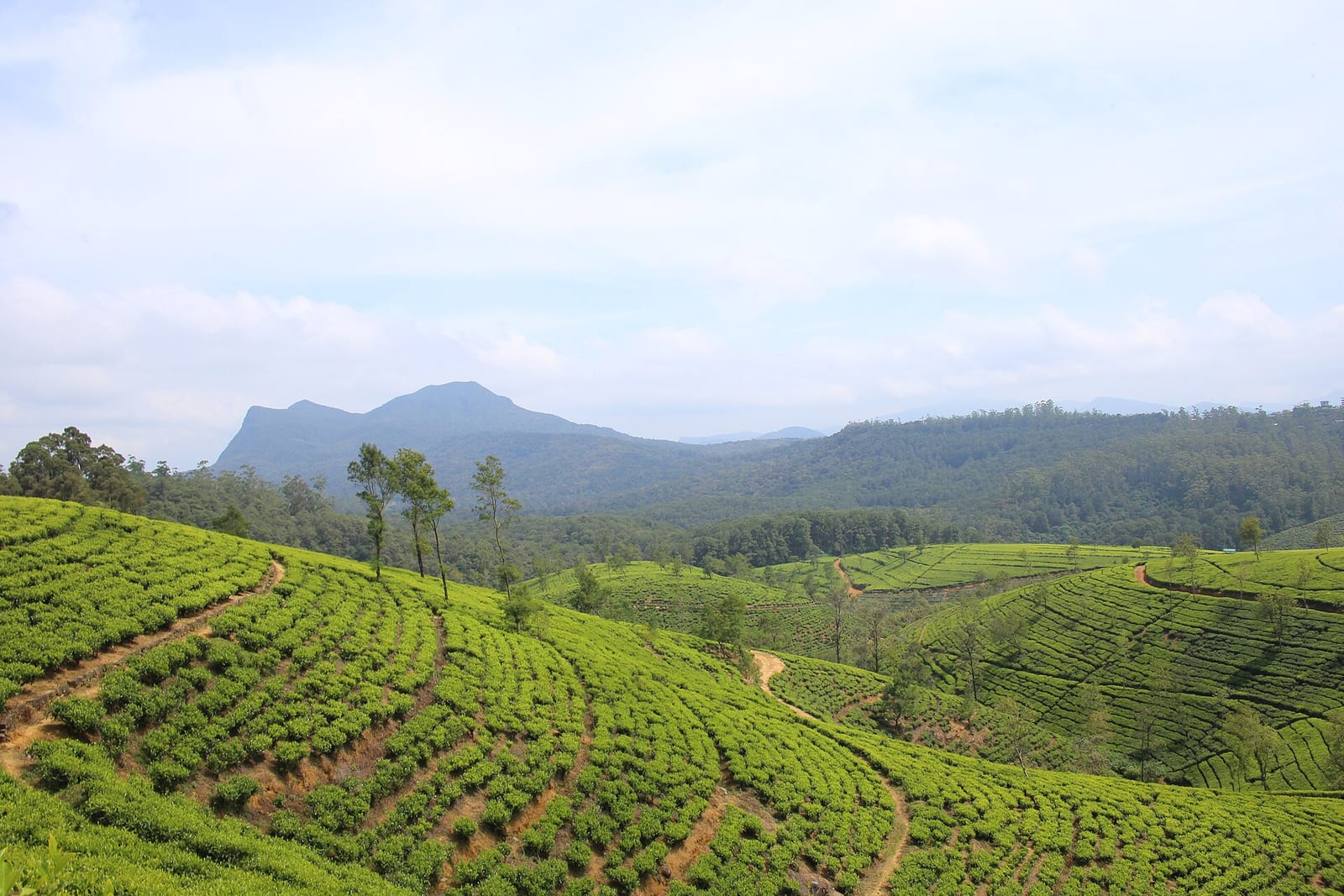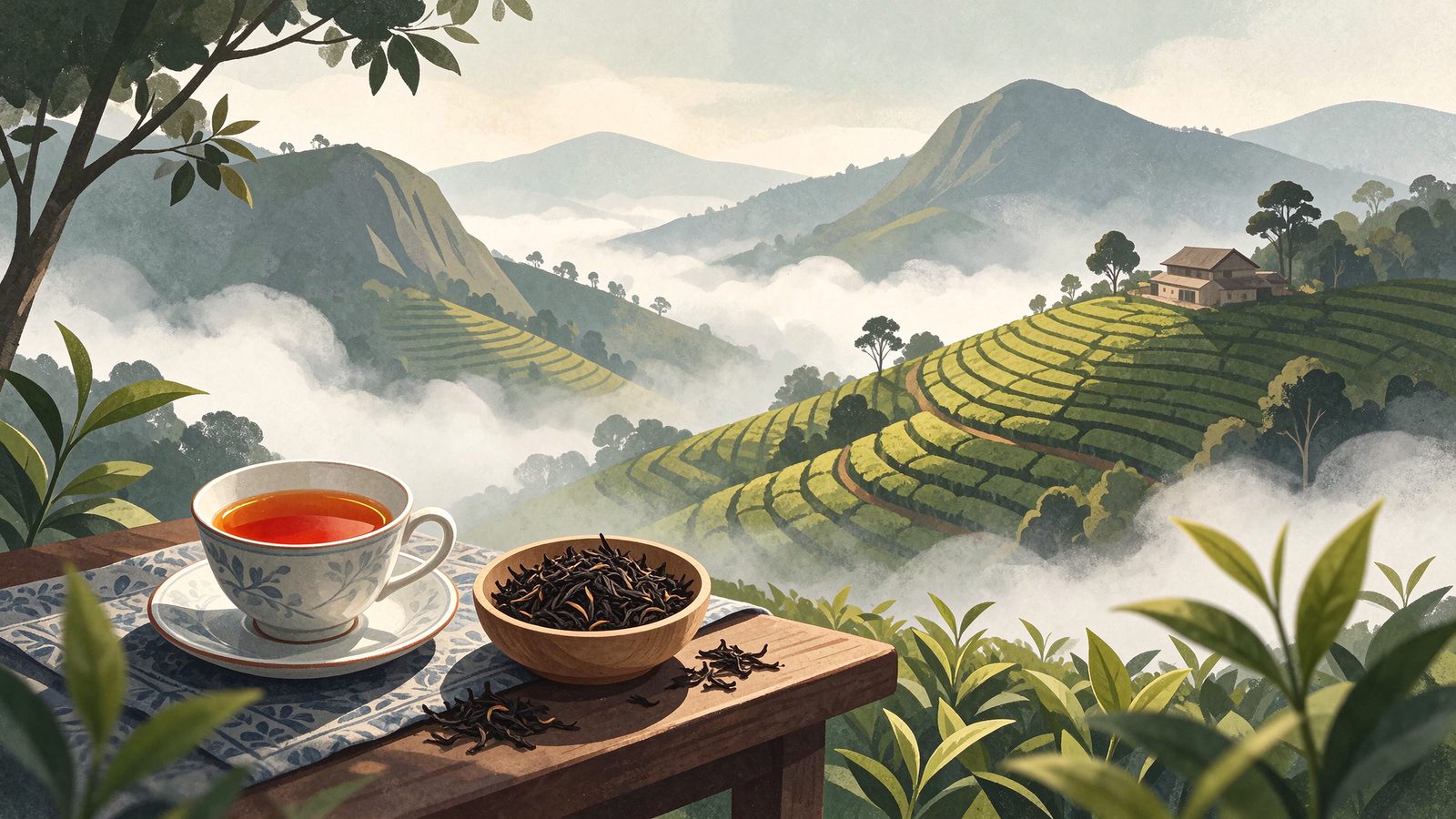
Uva is one of Sri Lanka's seven tea regions, on the eastern side of the central highlands at about 1,000–1,600 m. It is not a cultivar, and not a synonym for “Sri Lankan high-grown tea.” Uva is a regulated regional name: the tea must be grown in the district and manufactured there to use the name.
Origin and identity
Sri Lanka divides tea by elevation into high-grown (above 1,200 m), mid-grown (600–1,200 m) and low-grown (below 600 m). Uva is high-grown, on the eastern side of the central mountains, mainly around Badulla. It is exposed to both the north-east and south-west monsoons. When the moist monsoon is blocked by the central ridge, the dry monsoon crosses the ridge and brings cool, dry “quality season” weather. This double-monsoon microclimate is central to Uva's aroma.
Uva is a black tea, not a green tea. Ceylon black tea is almost entirely orthodox: withering, rolling, fermentation, drying and sorting. Uva liquor is usually bright, copper-red or orange-red, with high floral, fruity or minty aroma and a smooth but structured body. It is not the thick malt of Assam or the light muscatel of Darjeeling; it sits between them, emphasising brightness, aroma and smoothness.
History
Ceylon tea began at Loolecondera estate in Kandy in 1867 and spread to the highlands. Uva became a major district in the late 19th century; Thomas Lipton owned Uva estates and used Uva tea in marketing that helped sell Ceylon tea to the United States. The story comes from the Sri Lankan regional tea pages and shows Uva's place in the export history.
From 1975 the Sri Lanka Tea Board has administered the seven regional appellations. To use “Uva,” the tea must be grown entirely within the Uva agro-climatic region and manufactured there; fresh leaf does not travel well, so each large estate has its own factory. The regional name is not a marketing sticker but a legal definition with minimum standards. Uva, Nuwara Eliya, Dimbula, Uda Pussellawa, Kandy, Ruhuna and Sabaragamuwa make up the seven regions.
Craft and quality
Orthodox processing turns on withering and fermentation. Withering softens the leaf and removes part of the water; rolling breaks cells and shapes the strip; fermentation oxidises polyphenols into theaflavins, thearubigins and aroma; drying fixes the result. Uva's quality season usually comes at the monsoon transition, when cool dry winds slow growth and concentrate the leaf, giving clearer aroma. Estate, altitude and slope create wide variation; Uva is not one fixed flavour.
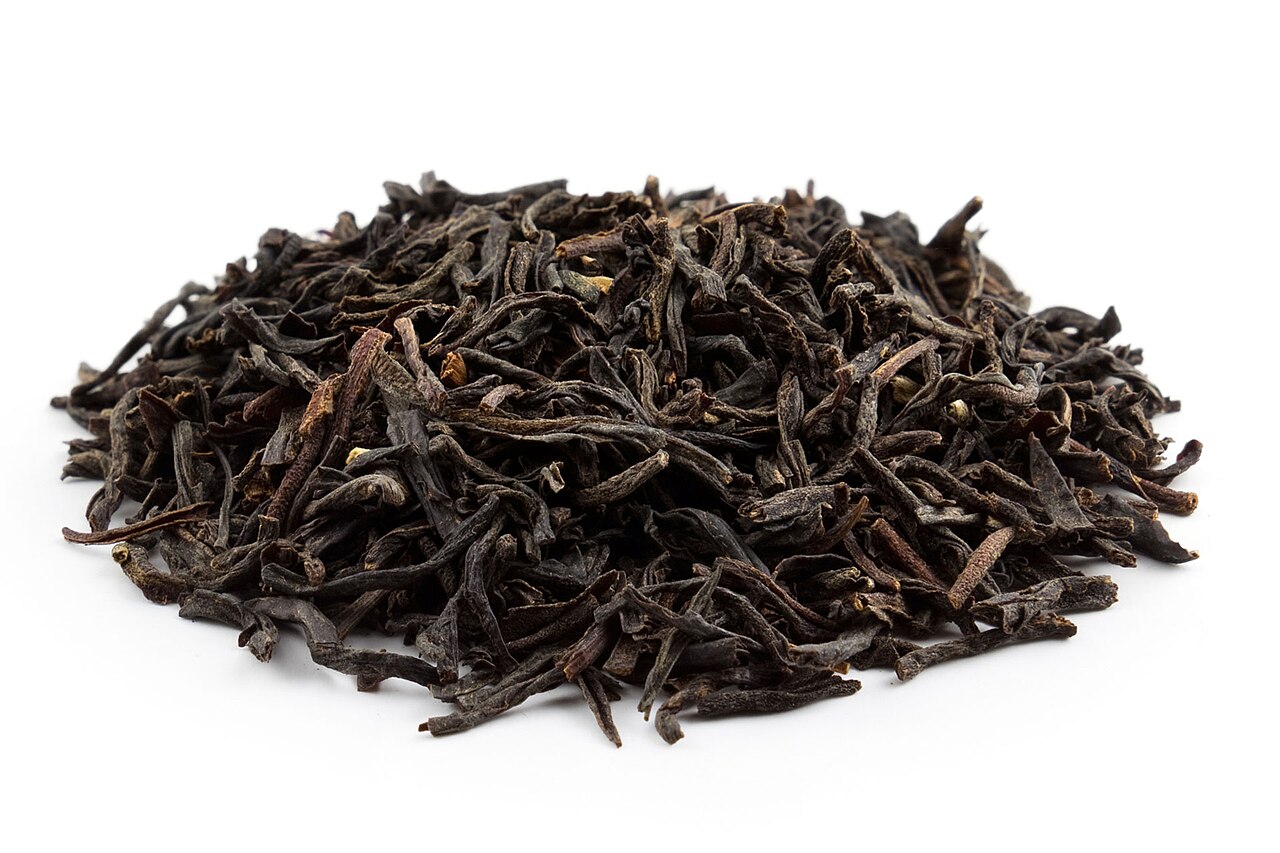
Dry Uva is tight and black; the liquor is bright copper-red or orange-red; the aroma is high and long, with floral, fruity, minty or woody notes; the taste is smooth, full and returning. Grades such as OP, BOP, BOPF and FTGFOP describe leaf size, not an absolute quality ranking; the same grade from different estates can differ greatly. Uva also makes CTC, but traditional high-grown Uva is mostly orthodox.
Brewing and boundaries
Brew at 90–95°C, 4 g to 200 ml in a porcelain pot or gaiwan, 2–3 minutes. Plain brewing shows the floral and minty notes; milk softens astringency but hides some aroma. Do not pour boiling water and leave it too long, or astringency overwhelms the aroma. Cold brew: 5 g to 500 ml cold water, 4–6 hours.
Check origin (Uva), altitude/estate and craft (orthodox or CTC). Uva is a region, not a grade; “Ceylon Uva” is more specific than “Uva,” but it still needs proof of growing and manufacturing in Uva. “All Uva tea tastes of mint” is inaccurate: mintiness is a note in some lots, not a regional standard. It suits plain drinking and afternoon tea, not a thick milk-heavy builders' tea.