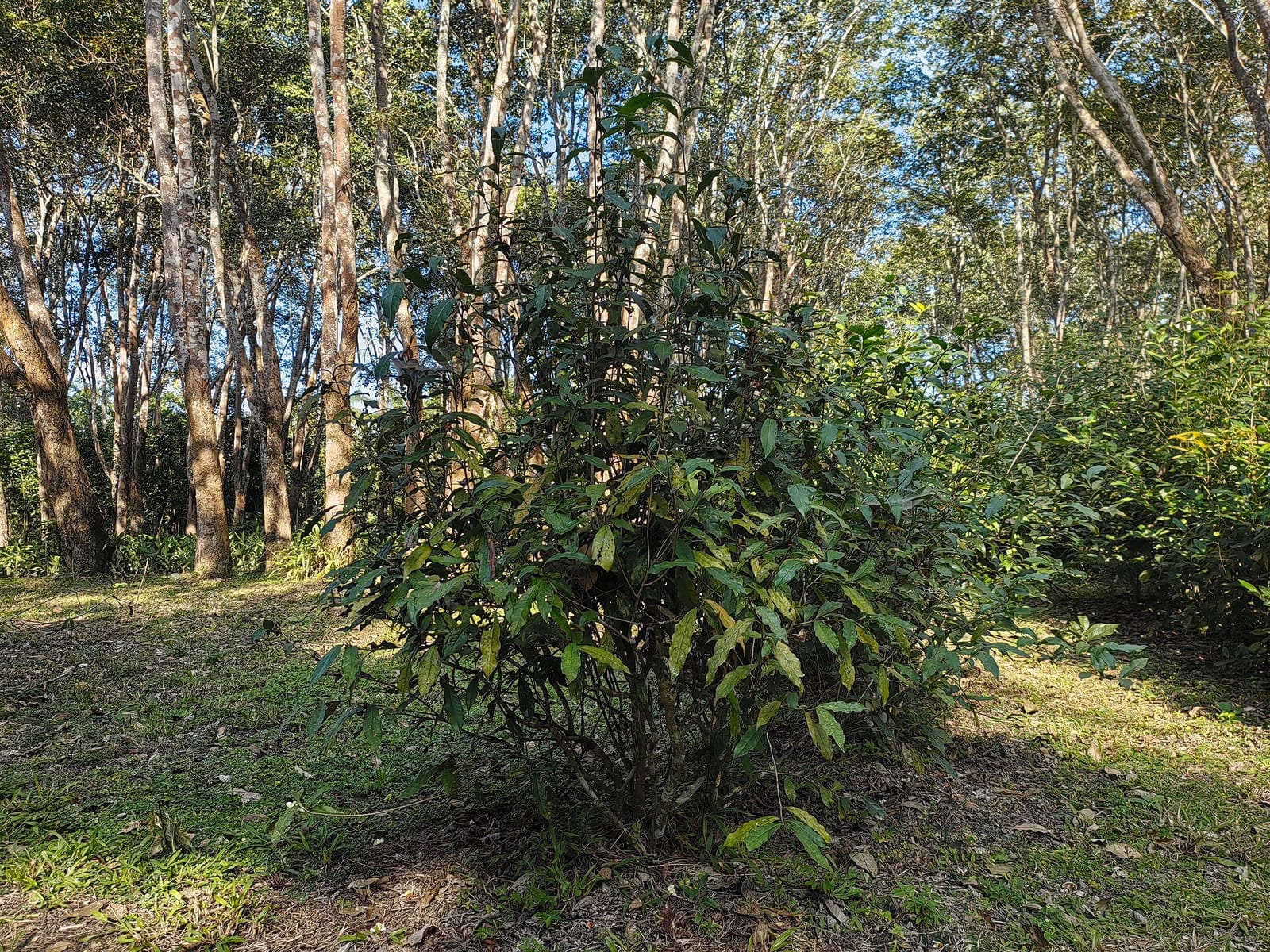
Meitan Cuiya is a flat green tea from Meitan in Zunyi, Guizhou. It is often marketed as “the tea that dances”: the buds unfold in a glass, the leaf is flat and straight, and the liquor is bright green. The name is not a generic word for any flat green tea. It refers to a protected origin, a provincial standard, and a specific processing style.
Origin and identity
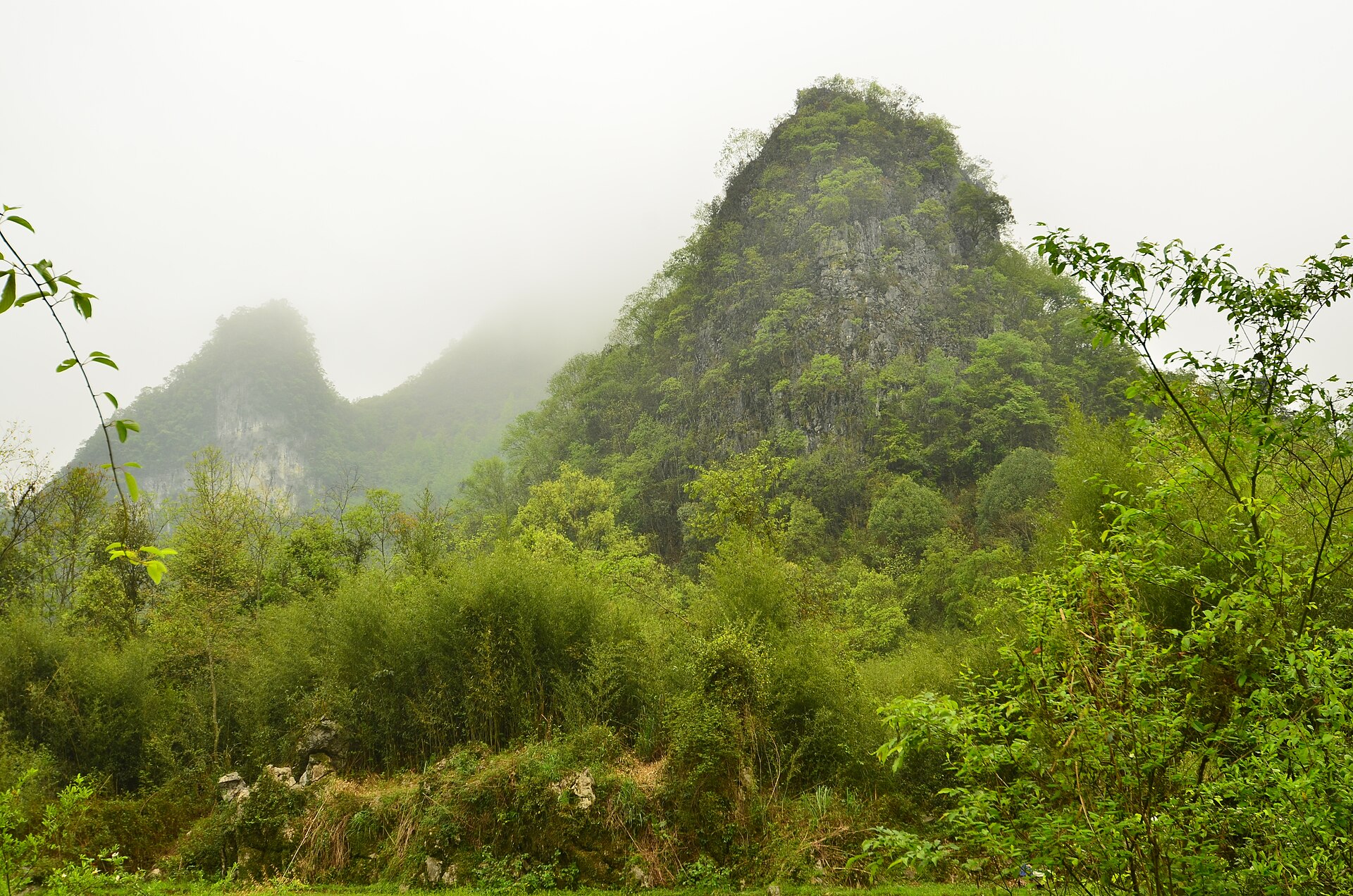
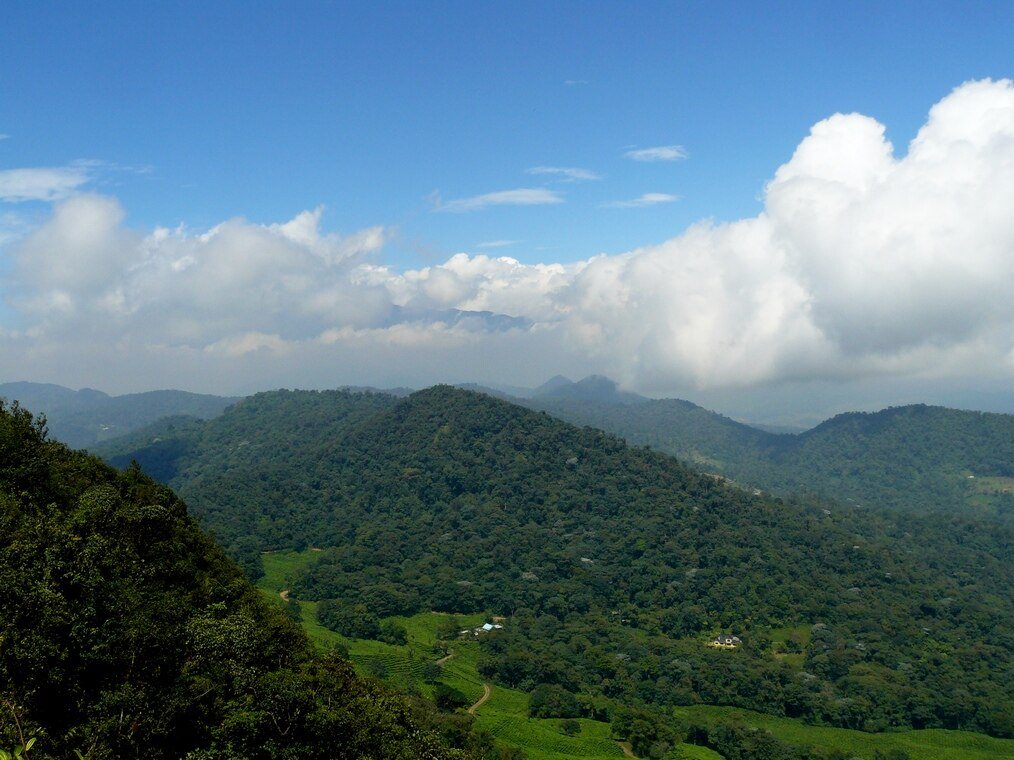
The core is Meitan County, with the geographical indication covering Meitan, Fenggang, Yuqing, Zheng'an, Daozhen and Wuchuan. The main area sits around 920 m, with an annual mean near 15°C, more than 1,100 mm of rain, about 284 frost-free days and high forest cover. The standard requires 700–1,600 m, yellow or yellow-brown soil, pH 4.5–6.5, at least 1.0% organic matter and a soil layer of at least 50 cm.
It is a green tea, not a black tea or a white tea. The standard defines it as a flat green tea made from suitable small- and medium-leaf cultivars in Meitan and similar nearby areas, with the character “tender, fresh, fragrant, rich and mellow.” It is often confused with West Lake Longjing. Both are flat green teas, but the cultivar, origin, firing and shaping methods, and standards differ.
History
Local records trace tea in Meitan to the Tang dynasty. Lu Yu's Classic of Tea mentions tea from Si, Bo, Fei and Yi prefectures, and modern Meitan lay within ancient Yi. Qing and Republican-era gazetteers mention “Meitan Eyebrow Tip” tea as a tribute. That tea is treated as the predecessor of today's Meitan Cuiya.
The modern turning point came in the 1930s and 1940s. In 1939 the National Agricultural Experiment Station established a tea experiment station in Meitan. In 1940 Zhejiang University moved inland to Meitan and brought Longjing pan-firing skills. Local makers combined those skills with Guizhou's small-leaf material, gradually producing the flat, straight shape. In 1954 the tea was named “Meijiang Tea”; in 1958 it was evaluated alongside West Lake Longjing and described as distinctive rather than inferior. The name later became Meitan Cuiya. A certification mark was filed in 2005 and approved in 2007; geographical indication protection followed in 2014, and the making craft entered Guizhou's provincial intangible heritage list in 2015.
Craft and quality
The standard flow is spreading, fixing, carding, shaping, de-hairing and aroma lifting. For the top grade, fresh leaves are spread 8–15 cm thick for 4–10 hours; fixing is at 180–200°C for 8–10 minutes; carding at 80–120°C for 2–3 minutes; shaping at 80–110°C; de-hairing at 60–80°C for 30–50 minutes; aroma lifting at 120–150°C for 4–12 minutes, down to no more than 5.5% moisture. Traditional hand methods use several pan temperatures and ten hand movements, but the goal is the same: press the leaf flat, straighten it, remove fuzz and keep a tender aroma.
The top grade is flat, straight, even and yellow-green; the liquor is tender-green and bright; the aroma is clean, tender or chestnut-like and lasting; the taste is fresh or fresh-mellow; the infused leaf is bright yellow-green and tender. Lower grades are less even, less aromatic and less full. Chestnut aroma is normal, not a defect, and “bean aroma” is not the only acceptable profile.
Brewing and boundaries
Use a glass or white porcelain gaiwan at 80–85°C, about 3 g to 150 ml. Rinse for 10–20 seconds, fill to seven-tenths, and steep for 1–2 minutes. Boiling water can turn the tender aroma cooked and bring out bitterness. The second infusion can be 40–60 seconds, the third slightly longer.
When buying, check origin and GI, picking date, and whether the flat shape looks natural. Perfectly uniform, unnaturally bright green leaves and a perfume-like aroma are warning signs. “Rich in zinc and selenium” describes the soil, not a health benefit. “Dancing tea” describes leaf movement, not grade. Drink it plain; milk and sugar obscure the profile, and long hot steeping flattens it.
Source boundary
Origin, site conditions, picking, process parameters and sensory thresholds come from DB52/T 478-2018 and the Guizhou Agriculture Department and Meitan County pages. Historical dates, the 1939 experiment station, the 1940 university move, the 1954 naming, the 2007 mark and the 2015 heritage listing come from the Meitan County and provincial brand pages. Brand value and award counts are promotional narratives, not independent proof of quality.