Scope
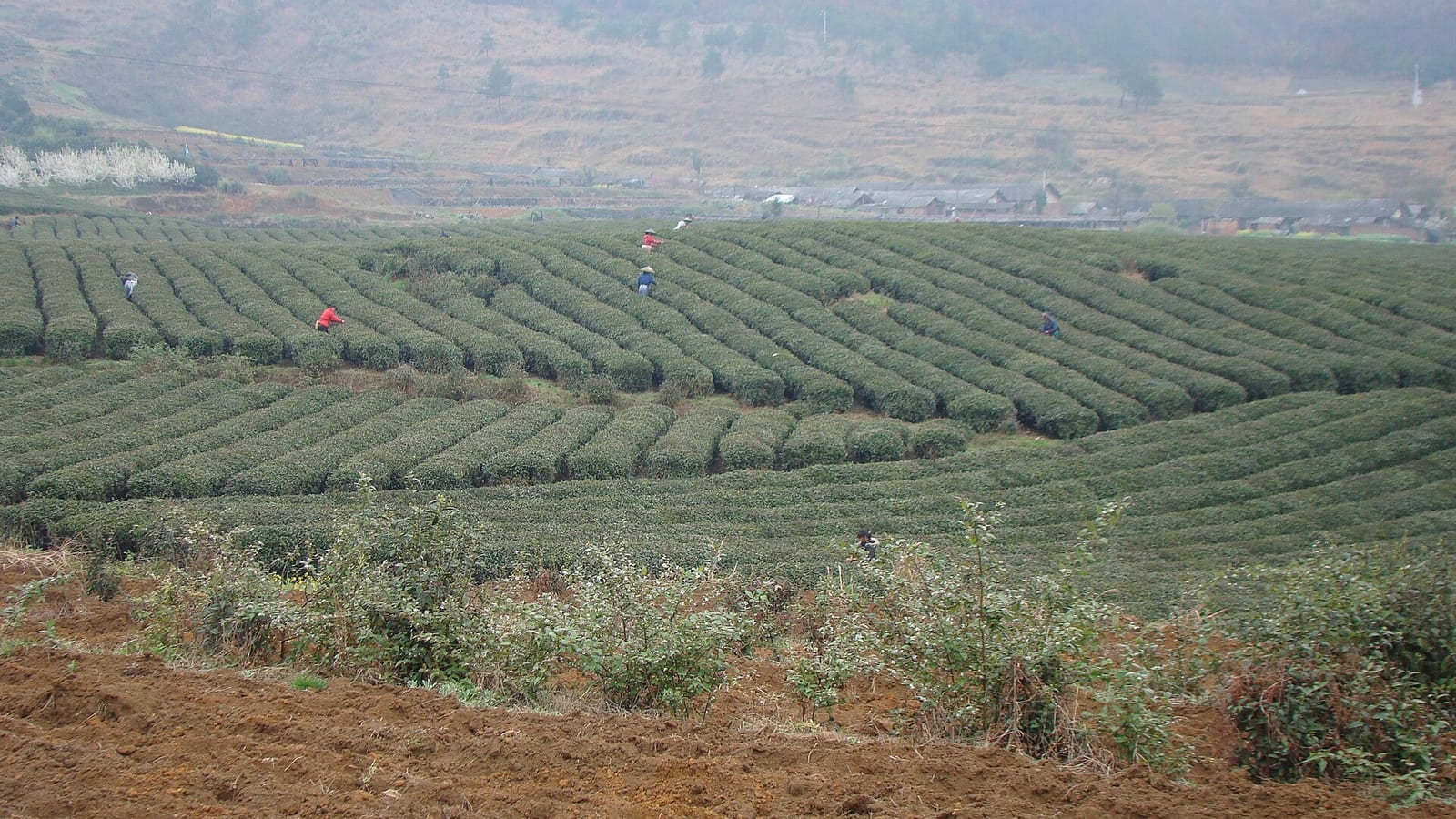
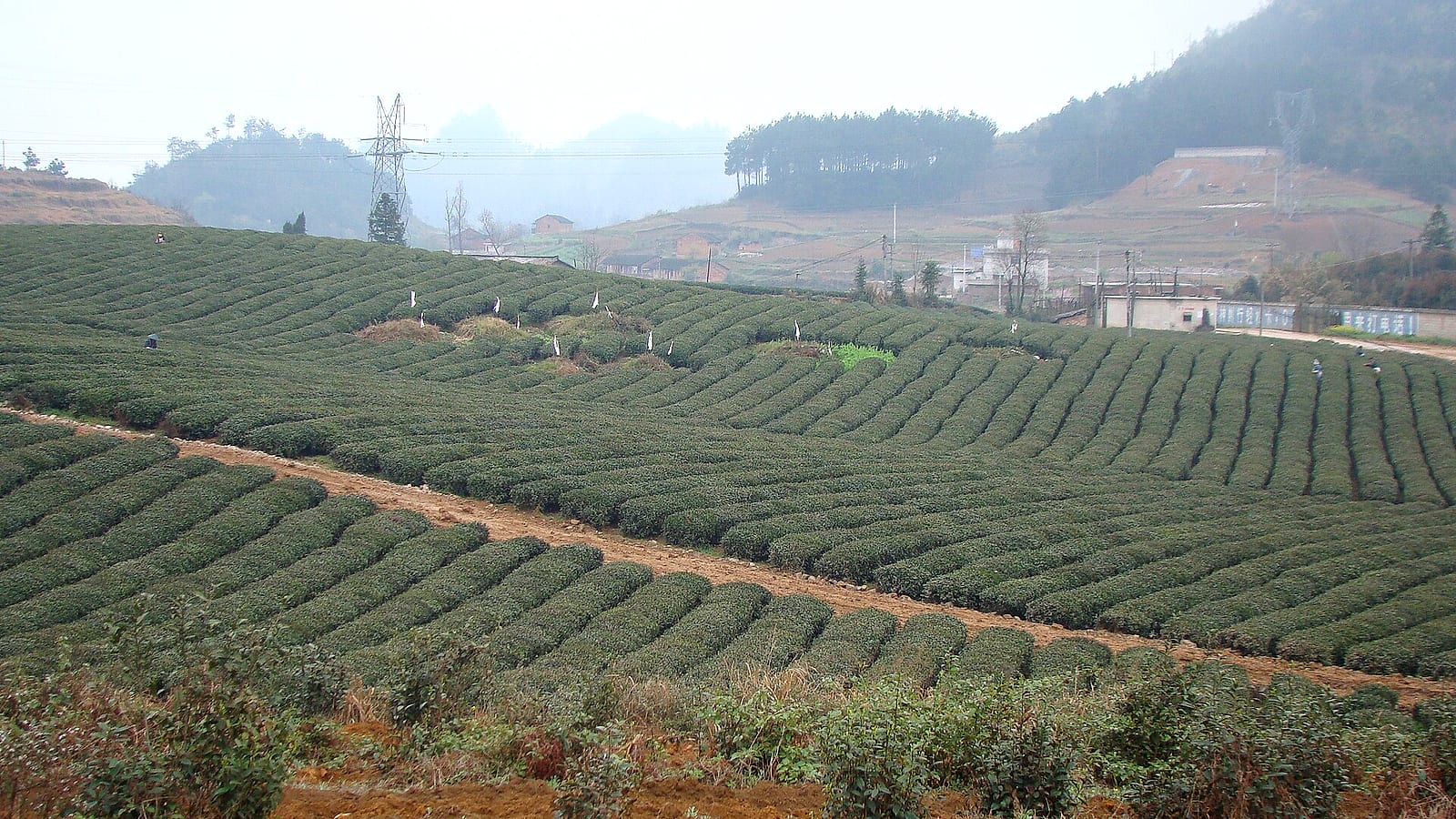
Guizhou sits on the eastern Yunnan–Guizhou Plateau. Tea gardens follow the Dalou, Wuling, Miaoling and Wumeng mountains and the Wu, Qingshui, Hongshui and Chishui rivers. By the end of 2024 the province held 7 million mu of tea gardens, among the largest in China; output reached 307,700 tonnes, primary output value RMB 41.57 billion and composite output value more than RMB 90 billion. More than 6,000 tea processors and cooperatives operated, including 11 national key leading tea enterprises. Guizhou matcha exports ranked first nationally; Duyun Maojian ranked 13th among Chinese tea regional public brands by value; and Meitan County ranked first among national key tea counties for five consecutive years. Guizhou is not a green-tea monoculture: Zunyi black tea, Pu'an black tea, Fanjingshan matcha, ancient-tree tea and Kuding tea together form a multi-category landscape.
Geography and terroir
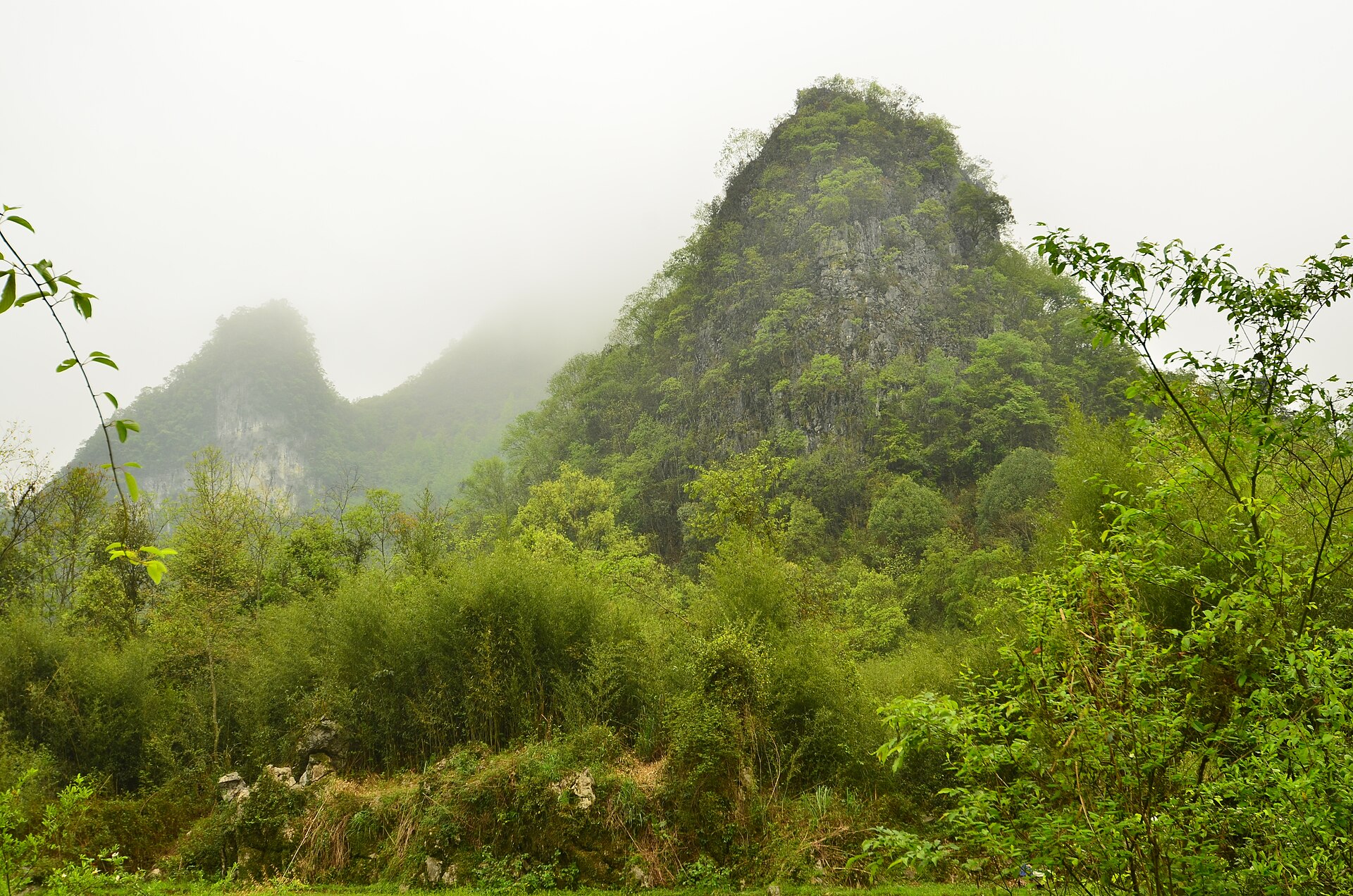
Guizhou occupies the eastern slope of the Yunnan–Guizhou Plateau. Mountains and hills cover most of the province, karst landforms are widespread, and river valleys cut deeply between scattered basins. The climate is subtropical monsoonal: winters are mild, summers are cool rather than hot, cloud and mist are frequent and sunshine is limited. Spring warming comes early, but late frost remains a risk. Yellow, red, yellow-brown and purple soils dominate; acid soils, slope drainage and forest shade are common terroir factors. Meitan and Fenggang in Zunyi consist of low, broad hills and basin floors. Duyun and Guiding in Qiannan sit in the Miaoling mountains, where mist and river valleys interlace. Shiqian, Yinjiang and Yanhe in Tongren lie in the Wuling interior, with high forest cover around Fanjingshan. Pu'an and Qinglong in Qianxinan are higher, with ancient tea trees and mountain gardens side by side. "High elevation, low latitude, much cloud" is a common combination, but aspect, altitude, soil and shade differ sharply from garden to garden; "plateau mist" explains very little by itself.
Main tea areas
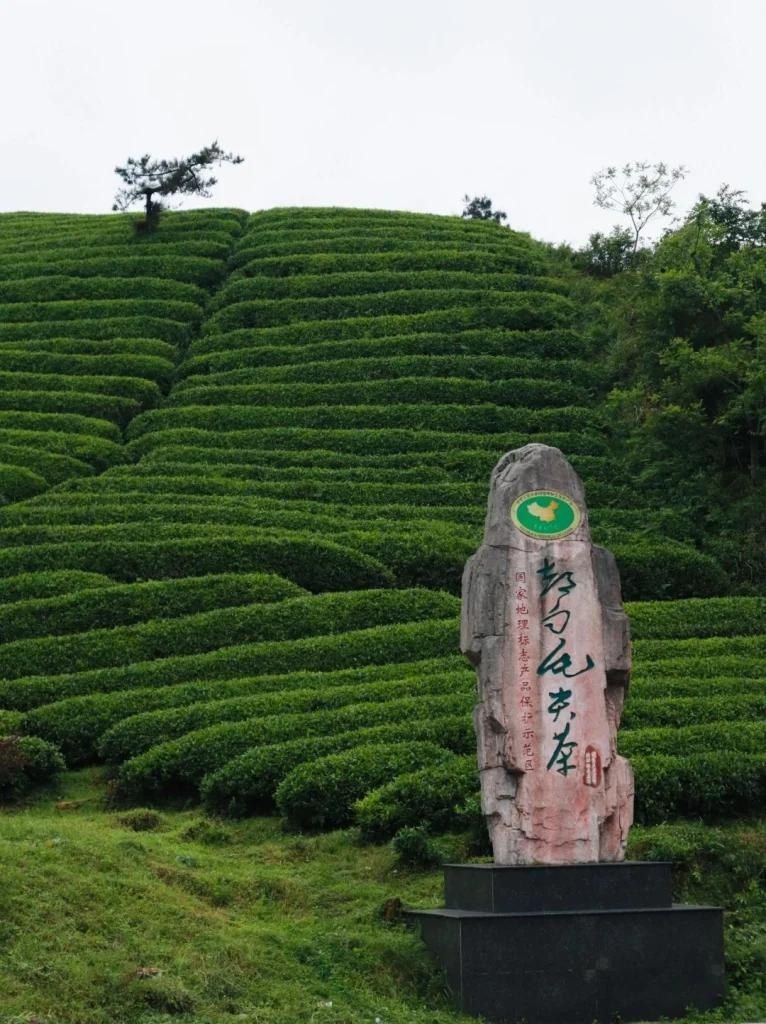
- Zunyi–Meitan–Fenggang–Zheng'an–Yuqing (green tea, black tea and new tea drinks): the core block of Guizhou tea. Meitan Cuiya, Fenggang zinc-selenium tea, Zheng'an white tea, Yuqing Kuding tea and Zunyi black tea cluster here; Meitan was also home to the 1939 Central Experimental Tea Farm and to Zhejiang University during its wartime westward migration.
- Qiannan–Duyun–Guiding–Pingtang (Duyun Maojian and Guiding Yunwu): Miaoling mountain gardens. Duyun Maojian, Guiding Yunwu and Pingtang green tea rely on fine buds and fresh aromas; mist, valleys and acid yellow soils are common.
- Tongren–Shiqian–Yinjiang–Yanhe (Taicha, Fanjingshan greens and matcha): the Wuling interior. Shiqian Taicha, Yinjiang Fanjingshan Cuifeng, Yanhe ancient tea and Fanjingshan matcha create a landscape of green tea, matcha and ancient-tree tea.
- Qiandongnan–Leishan–Liping (Yinjiu tea and Miaoling greens): Leishan Yinjiu tea, Liping green tea and ethnic-minority tea customs; elevation and forest cover vary widely, so picking windows are staggered.
- Qianxinan–Pu'an–Qinglong (ancient-tree tea and black tea): Pu'an ancient tea, Pu'an black tea and Qinglong green tea; ancient-tree resources and early spring greens are the two poles of this line.
- Guiyang–Anshun–Bijie (urban consumption and high-mountain greens): Yang'ai Maofeng, Duobei tea and Bijie high-mountain green tea, close to consumers and also used for high-elevation garden and processing trials.
Tea types and processing
Green tea dominates, while black tea, matcha, ancient-tree tea and herbal infusions all have a place. Duyun Maojian, Meitan Cuiya, Fenggang zinc-selenium tea, Zheng'an white tea and Guiding Yunwu follow green-tea processing: spreading, kill-green, rolling, shaping and drying. Zheng'an white tea uses the spring flush of a white-leaf cultivar and is processed as green tea, not as white tea. Zunyi black tea and Pu'an black tea follow withering, rolling, fermentation and drying. Guizhou matcha is shaded, steamed, cooled and ground, with colour, fineness and umami as the priorities; matcha is a tea product, not a Japanese-only category. Ancient-tree tea emphasises tree age and mountain ecology, but "ancient tree" does not mean wild, and does not guarantee better quality. Shiqian Taicha is a local population cultivar, mostly made into green tea. Yuqing Kuding tea and Zunyi small-leaf Kuding belong to other plants, not to Camellia sinensis. Temperature, timing and hand pressure change with cultivar, grade and product.
History and market
In 1939 the Central Experimental Tea Farm was established in Meitan, and Zhejiang University's wartime migration to Meitan brought it into contact with local tea production. Meitan Cuiya developed from Longjing pan-firing techniques applied to local leaf. Duyun Maojian had a reputation by the Ming and Qing, Guiding Yunwu appears as tribute tea in local gazetteers, and Shiqian Taicha continues through a local population cultivar. In 2024 Guizhou produced 307,700 tonnes of tea, up 7.0%; primary output value reached RMB 41.57 billion, up 5.3%; composite output value exceeded RMB 90 billion; harvested tea area was 5.3939 million mu. Zunyi's new-tea-drink cluster reached RMB 718 million in output value in 2024. Brand values for Meitan Cuiya, Fenggang zinc-selenium tea, Zunyi black tea, Zheng'an white tea and Yuqing Kuding tea were RMB 4.573 billion, RMB 3.917 billion, RMB 2.79 billion, RMB 2.113 billion and RMB 693 million respectively. Area, output, primary value, composite value and brand value are different measures and cannot substitute for one another.
Common misunderstandings
- Guizhou is not only green tea. Zunyi black tea, Pu'an black tea, matcha, ancient-tree tea and Kuding tea all have stable production.
- Duyun Maojian is not every "Maojian". It has a specific origin and processing; Maojian from other counties is a different product.
- Matcha is not Japanese-only. Guizhou produces and exports matcha at scale; shading, steaming and grinding are the processing core.
- Ancient-tree tea is not wild tea, and not automatically superior. Tree age is one variable among cultivar, ecology, picking and processing.
- Kuding tea is not a Camellia sinensis tea. Yuqing Kuding and Zunyi small-leaf Kuding come from other plants and are not the same category as green or black tea.
Representative teas
The working index contains 17 regional teas. Only the 3 that have passed the public gate are linked here; the rest remain in editorial review.
Further reading and sources
Provincial statistics, production-zone boundaries and historical information are drawn from the sources below. Definitions, grades and processing for individual teas follow their own entries.
- Guizhou Provincial Department of Agriculture and Rural Affairs: 17th Guizhou Tea Industry Expo press conference
- Guizhou 2024 National Economic and Social Development Statistical Communiqué
- Guizhou Provincial People's Government: breaking development constraints and writing a harvest picture
- Guizhou Provincial Department of Agriculture and Rural Affairs: reply to CPPCC proposal No. 1230