A regional GI, not a company brand
Guiding Yunwu Tribute Tea is a nationally protected regional green tea from Guiding County, Guizhou. Its core production area is Yunwu Town. It is not one factory's trademark and not a single-estate tea: authorised producers in Guiding County use the regional name if they meet the cultivar, origin and processing requirements, and their teas can differ in flavour and price.
The geographical-indication timeline is clear:
- September 2010: national GI product certification by the Ministry of Agriculture;
- July 2013: geographical indication certification mark from the State Administration for Industry and Commerce;
- 2024: Guiding selected as one of China's key tea counties; the tea entered the second batch of the national famous, special and new agricultural products list.
These are two different protections. GI product certification protects the origin-cultivar-process identity; the certification mark protects the right to use the name. They are not the same certificate.
Place and industry: 255,600 mu, 11,807 tonnes
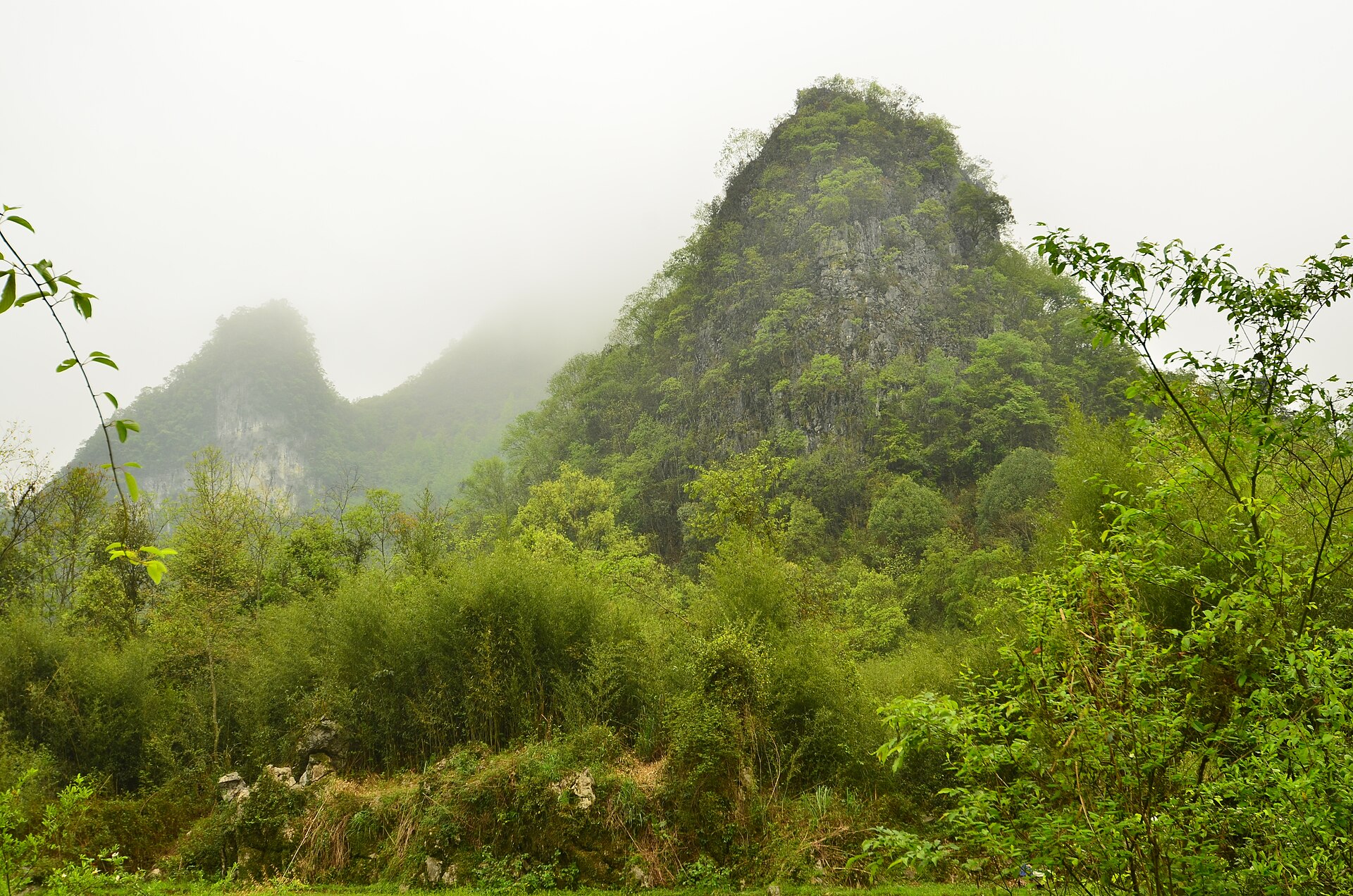
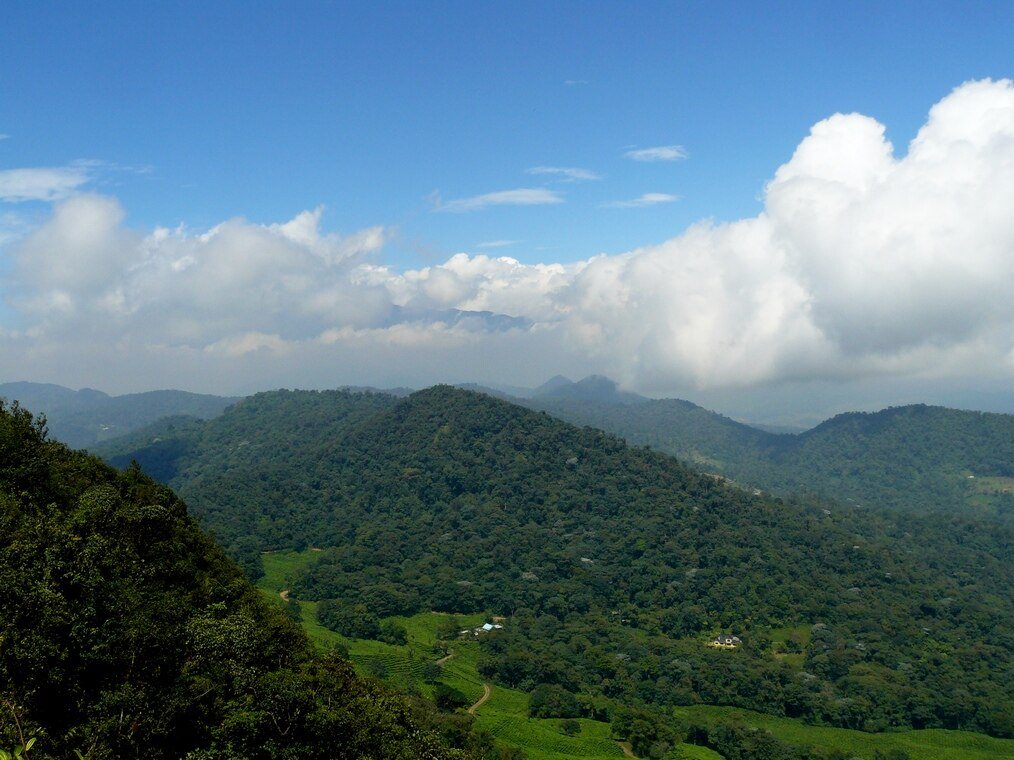
The Yunwu mountain area of Guiding is over 1,500 m, near 26°N, with frequent cloud and mist, limited sunshine and a marked day-night temperature difference. The 2024 figures are:
| Indicator | 2024 figure |
|---|---|
| Total tea garden | 255,600 mu (about 17,040 ha) |
| Area in production | 247,300 mu (about 16,487 ha) |
| Annual output | 11,807 tonnes |
| Year-on-year | up about 5.35% from 11,208 tonnes in 2023 |
| Primary-sector output value | about RMB 580 million (Xinhua) |
Xinhua rounds the output to 11,800 tonnes; the county figure is 11,807. They are the same order of magnitude. The RMB 580 million figure comes from Xinhua. Do not combine it with other provincial or prefecture reviews that use a different statistical scope; mixing them would invent an “official” number that does not exist.
Yunwu Town is the core. In March 2025 the town held its spring-tea opening and opened the Baicheng village fresh-leaf trading market. That is a sign that Guiding's tea economy runs through a town-level leaf market, not only through tea-garden tourism.
History: 2,000 years of tea, 1,000 years of tribute
The county and the Qiannan Agriculture Bureau give the framework: 2,000-plus years of tea growing, 1,000-plus years of tribute tea, 500-plus years of Buddhist tea. The timeline comes from local gazetteers and the tribute stele, not from a modern marketing campaign.
The documentary sequence runs like this:
- In 793, during the Tang Zhenyuan era, the local administration sent tea and other products as tribute;
- The Jiajing edition of the Guizhou Tongzhi (1522–1566) says: “Of all the tea districts in Guizhou, Guiding's Yunwu Mountain is the most famous; the yield is tiny and the tea is extremely hard to obtain”;
- In 1790, the Qianlong court allocated 420 taels of silver to Niaowang Miao farmers to expand production and erected the “Wangu Liufang” stele on Yunwu Mountain, known as the tribute-tea stele;
- In 1805, a production-boundary stele defined the origin area;
- In the Guangxu era, Guizhou governor Lin Shaonian presented two caskets of “Guiding bud tea”, one for the Empress Dowager and one for the emperor.
The county describes Guiding as “the only court tribute tea recorded on a stele in China”. That is a county-level official statement. This page records it with attribution; it does not turn it into a national academic consensus. The stele can document the Qing court relationship; it cannot prove that every leaf from the Tang dynasty entered the palace.
Cultivar and grades: Niaowang, four levels
The cultivar base is Guiding Niaowang, selected from the seedling tea population of Niaowang village. In June 2014 it passed provincial review as an improved local cultivar, approval number Qian Shen Cha 2014002. The standard and county materials treat it as the main raw material for Guiding Yunwu Tribute Tea.
DB52/T 547—2017 divides the product into four grades:
| Grade | Raw leaf standard | Sensory profile (standard summary) |
|---|---|---|
| Zhengong (Tribute Grade) | Single bud, or one bud with one freshly opened leaf | Tight, fine, curled, white-haired; bright tender green; persistent tender aroma; fresh and brisk |
| Special Grade | One bud with one leaf | Relatively tight, curled, visible hair; bright green; tender aroma; fresh and mellow |
| Grade 1 | One bud with two freshly opened leaves | Tight, slightly curled, some hair; yellow-green and fairly bright; clean aroma; mellow |
| Grade 2 | One bud with two leaves, or one bud with three freshly opened leaves | Compact, slightly curled, some hair; yellow-green and somewhat bright; pure aroma; straightforward mellow |
These are product grades, not altitude or tree-age grades. “Zhengong must be ancient-tree tea” has no basis in the standard: the grade is defined by leaf tenderness, sensory quality and chemical indicators.
Guiding Xueya is a separate product name. The provincial government page says it uses one bud and one freshly opened leaf picked 7–21 days after the spring flush from the Niaowang cultivar and is finished by a mechanised “nine-step” process. Xueya is not the top grade of the Yunwu Tribute Tea grade system, and the two names should not be merged.
Flavour and brewing
The standard sensory description is: curled and white-haired, silver-green in dry leaf, clear green-yellow liquor, rich aroma, strong and brisk taste, lasting sweetness, tender green-yellow leaf base. That is the style produced by the local cultivar and the green-tea process: aromatic and substantial, not a thin, sweet water.
The official material does not give one gram, temperature and time set. As an editorial starting point, try 3 g tea, 150 ml water, 80–85°C, 1–2 minutes. Zhengong and Special Grade are tender, so keep the water cooler; Grade 1 and Grade 2 can take 85°C and a slightly longer steep. These are editorial suggestions, not part of the GI standard.
Common misreadings
| Common shorthand | Problem | Better wording |
|---|---|---|
| “Lu Yu named Guiding Yunwu” | No verifiable passage in the Classic of Tea | Do not cite Lu Yu; cite local gazetteers and the stele |
| “Ancient-tree yield” | No ancient-tree production statistic | Say 2,000-plus years of tea growing, not ancient-tree volume |
| “Specific amino-acid or selenium content” | No standard or test report supplied | Use only the standard's sensory and chemical indicators |
| “Yunwu Tribute Tea is Guiding Xueya” | Xueya is a separate product name | Yunwu Tribute Tea is the regional brand; Xueya is a product |
| “All Guiding Yunwu is handmade” | Xueya uses a mechanised nine-step process | Traditional and mechanised processes coexist |
Source boundary
This page can confirm: Guiding Yunwu Tribute Tea is a regional GI green tea from Guiding County; the core area is Yunwu Town; it received national GI product certification in 2010 and a GI certification mark in 2013; in 2024 the county had 255,600 mu of tea gardens, 247,300 mu in production, 11,807 tonnes output, up about 5.35%; Xinhua gives about RMB 580 million in primary-sector output value; local records describe 2,000-plus years of tea growing, 1,000-plus years of tribute tea and 500-plus years of Buddhist tea; the 1790 “Wangu Liufang” stele records a 420-tael allocation; the main cultivar is Guiding Niaowang, approved as a provincial improved variety in 2014; DB52/T 547—2017 grades the product into Zhengong, Special Grade, Grade 1 and Grade 2.
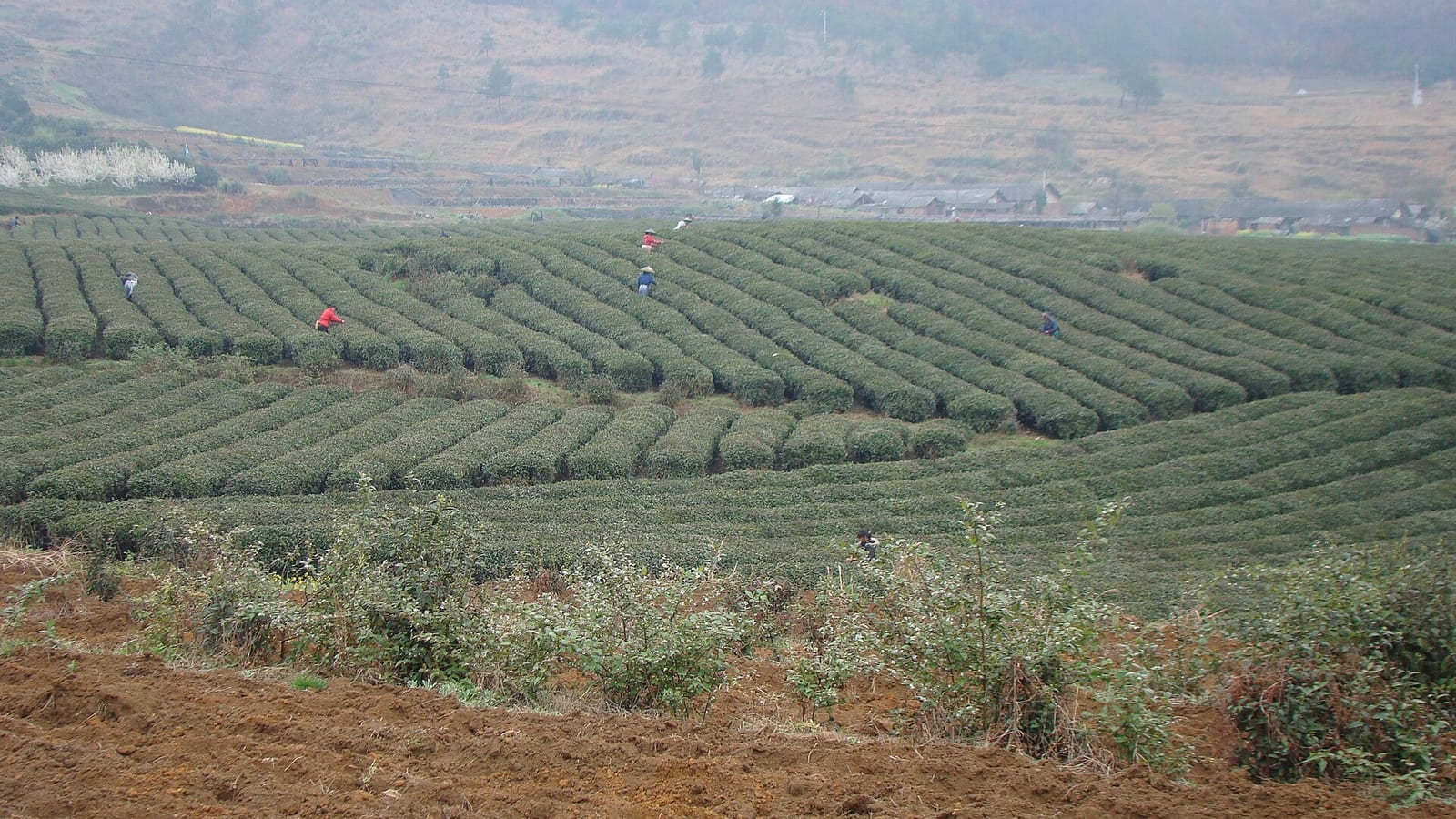
This page does not confirm: retail prices of individual authorised companies, exact garden altitudes, ancient-tree counts, amino-acid or selenium content, or the picking date of each lot. The image is a tea garden at Niuchang, Duyun, Guizhou, not a Yunwu Mountain tea garden in Guiding.