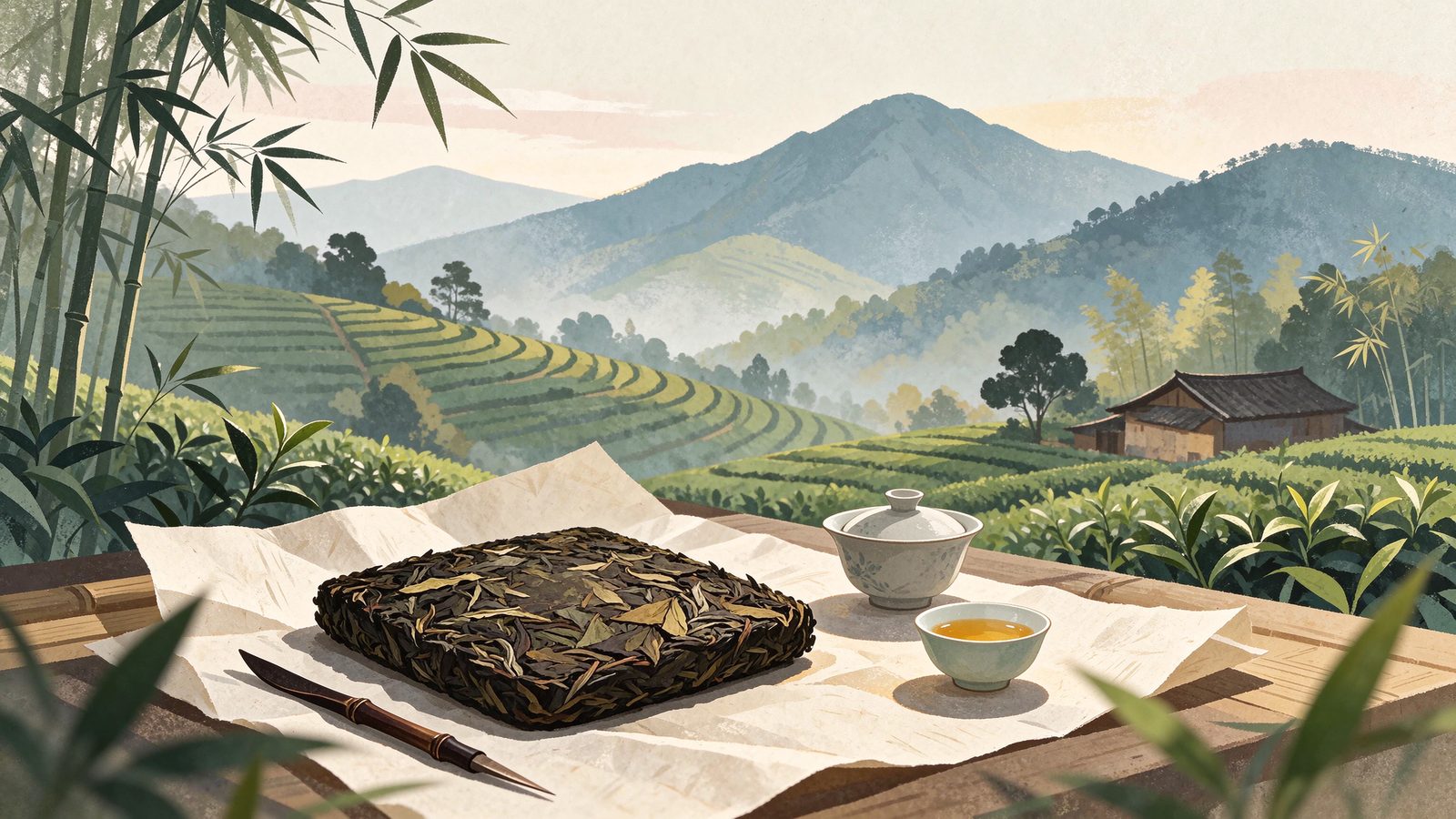
Zhangping Shuixian cake oolong comes from Zhangping in Longyan, Fujian. It is also called “Shuixian tea cake,” “paper-wrapped tea” or “square tea.” It is easy to mistake for ordinary loose tea pressed into a block: in fact, pressing is a separate shaping step after withering, fixing and rolling, and the small square cake is part of the craft, not just packaging.
Origin and identity
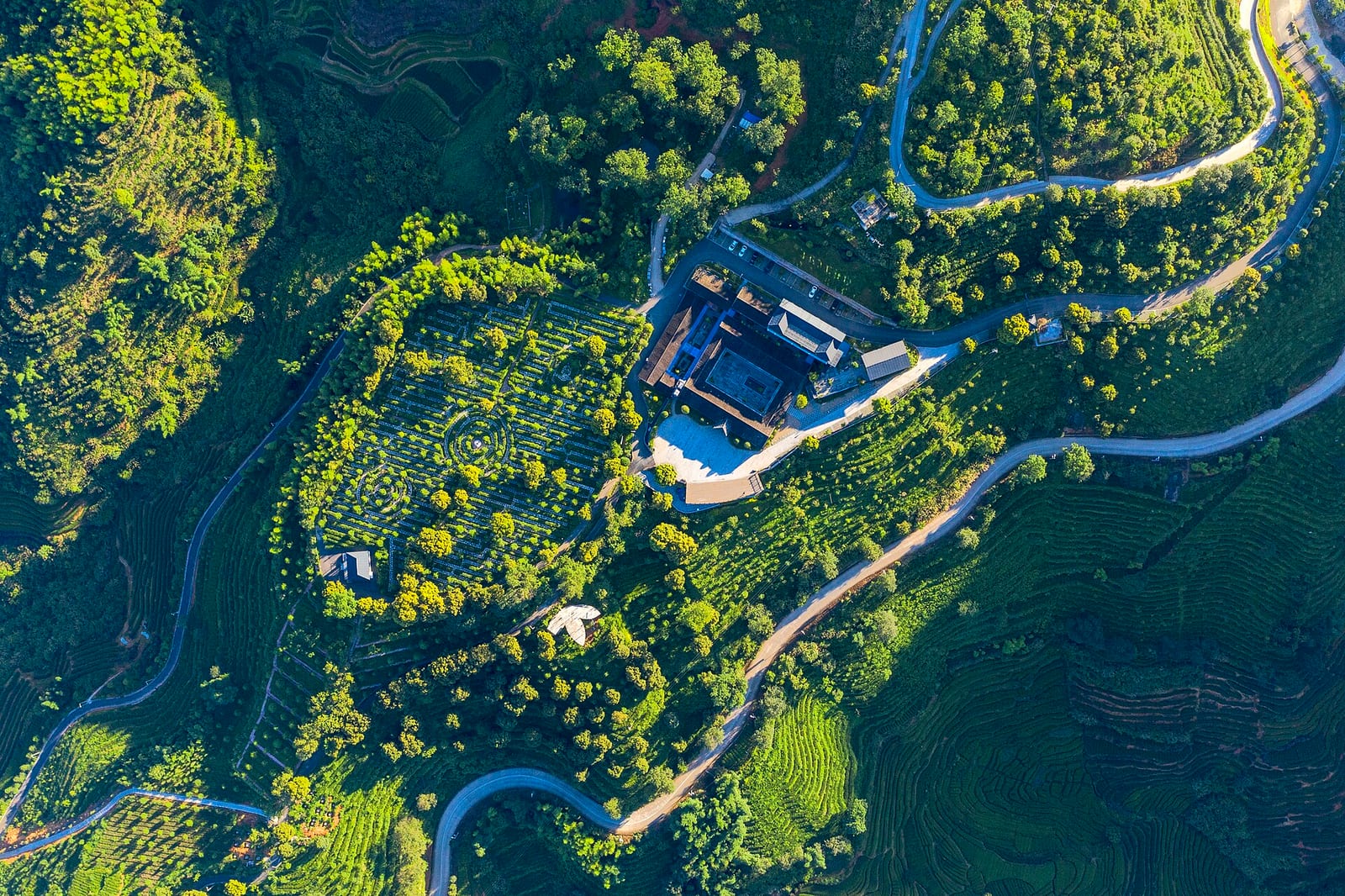
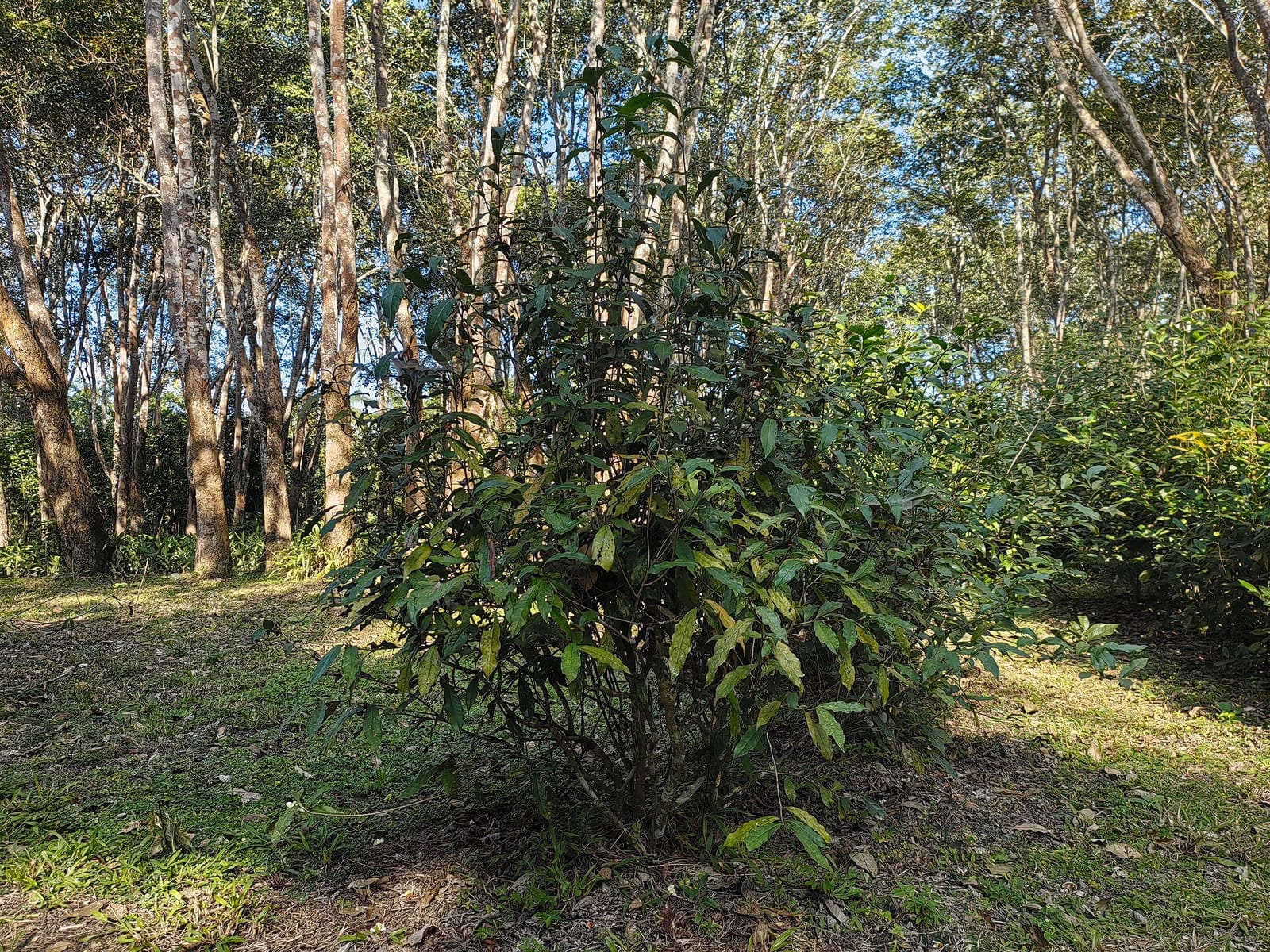
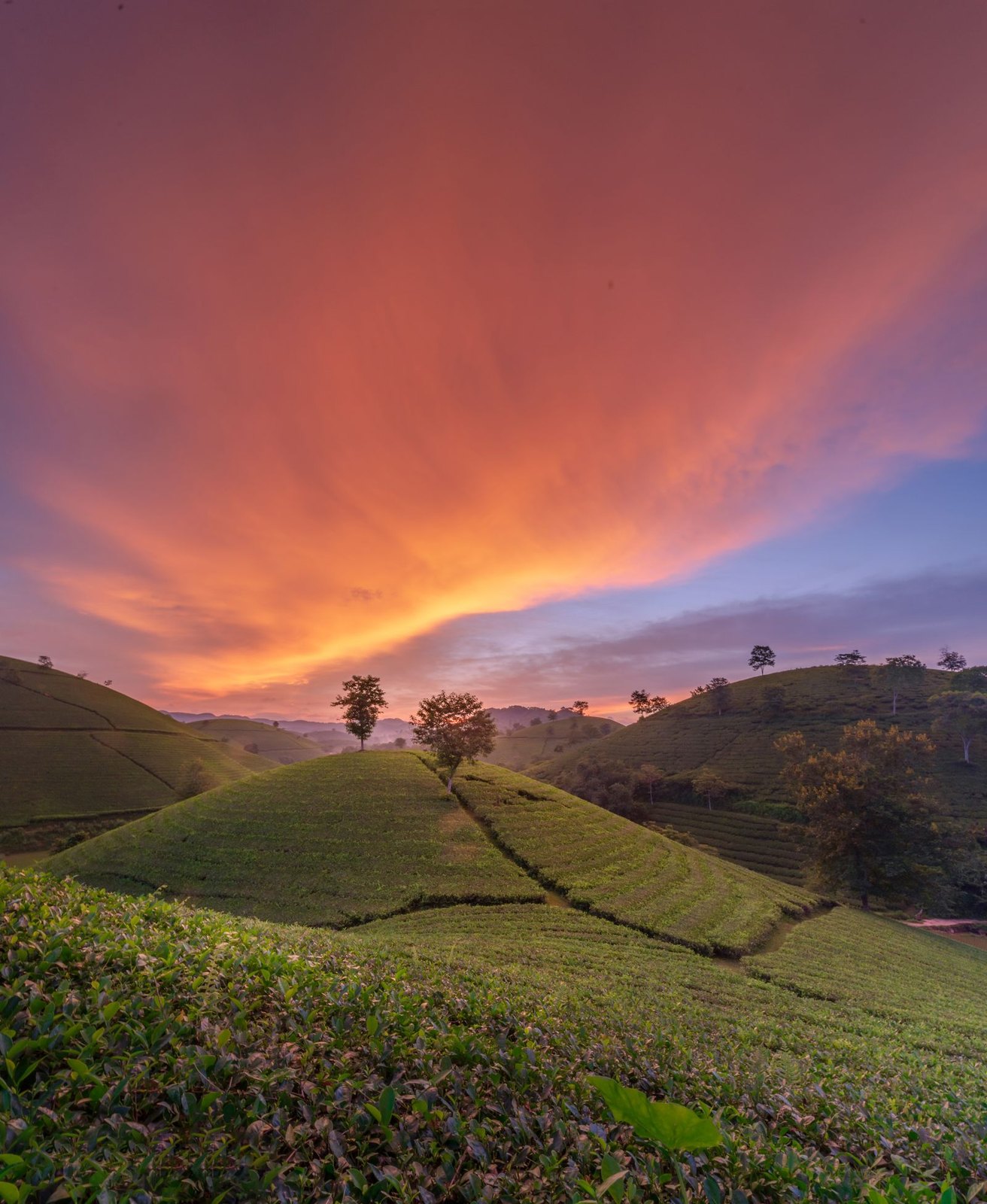
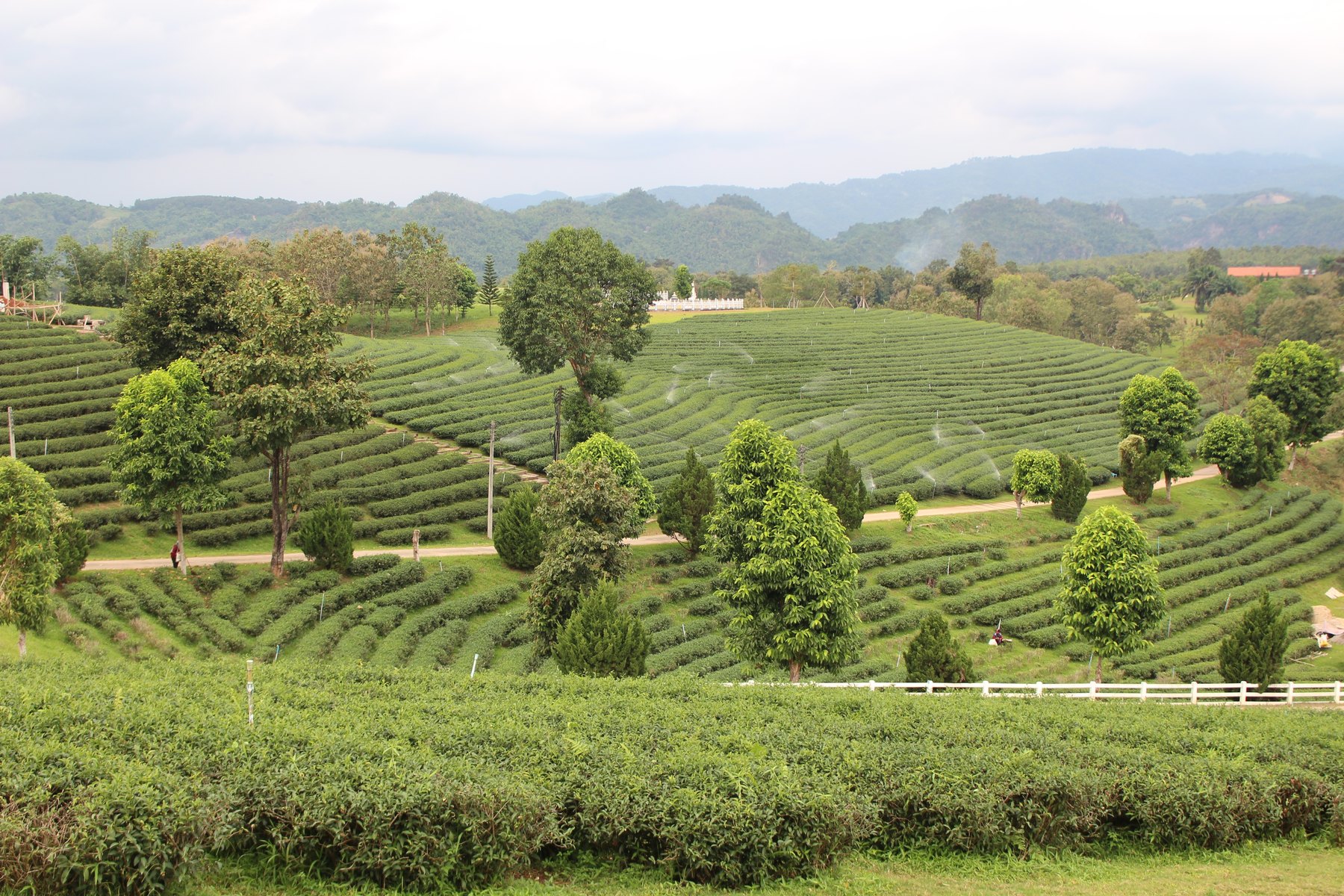
The main area is Nanyang and Shuangyang towns in Zhangping, with the original village identified as Dahui in Xikou, Shuangyang. Zhangping sits between the mid-subtropical and south-subtropical zones, with ample sun and rain, mild winters, cool summers and cloudy hills. Official sources describe it as one of Fujian's three wild-tea bases and list it among “China's famous tea townships” and key tea-producing counties.
It is an oolong, not a green tea or a post-fermented dark tea. The craft borrows from Wuyi rock tea and southern Fujian Shuixian, combining northern and southern Fujian green-making techniques. The result is a leaf with a green center and red edge, and an aroma often described as orchid- or osmanthus-like. The product is a small square cake, dark brown and oily, with a clean dry aroma; the liquor is orange-yellow to golden and clear; the taste is mellow, refreshing, fine and smooth with a clear finish, and the tea withstands many infusions.
History
Local sources say the tea originated in Dahui, Xikou, Shuangyang, with more than a century of history. Early makers brought northern Fujian Shuixian cultivars and southern Fujian green-making methods, adapted them to local climate and leaf, and arrived at the pressed-cake form. This origin account comes from the Fujian Agriculture Department and Zhangping government pages; earlier family lineages and an exact founding year still need local archives.
A gold medal at the 1915 Panama-Pacific International Exposition is the most cited historical marker. From 1981 it won awards in Fujian provincial appraisals; in 2005 it was named a five-star “international tea king” at a China-Japan-Korea tea exchange; later it received national agricultural geographical indication registration and a China Famous Trademark. On 29 November 2022, UNESCO inscribed “Traditional tea processing techniques and associated social practices in China” on the Representative List of the Intangible Cultural Heritage of Humanity; the Zhangping Shuixian craft is one component.
Craft and quality
The core steps are sun withering, cooling, shaking, fixing, rolling, pressing into a square mould and repeated baking. Green-making is judged by leaf and weather: shaking intensity and frequency change with season, climate and leaf maturity, producing a slight edge bruise and oxidation — the “green leaf with red border.” Fixing stops oxidation, rolling shapes the leaf, pressing sets the square form, and repeated baking lowers moisture and lifts aroma.
The cake is flat, square and dark brown; the aroma is high, long and orchid- or osmanthus-like; the liquor is orange-yellow to golden; the taste is mellow, refreshing, fine and smooth; the infused leaf is thick, yellow with a red edge. It withstands many infusions and keeps reasonably well, but it is not a “the older the better” dark tea. As an oolong it continues to oxidize and lose aroma; long storage needs low humidity, darkness and no off-odors.
Brewing and boundaries
A gaiwan is most reliable: 5–6 g to 120 ml at 95–100°C, 20–30 seconds for the first infusion, 15–20 seconds for the second, then gradually longer. The first infusion can be slightly longer to open the cake; if the cake is broken too fine, the liquor comes out too fast and turns bitter. A Yixing pot works but retains heat, so shorten the steep.
Check Zhangping origin, a naturally tight cake and a clean floral aroma. The old claim “the only compressed oolong” is a local promotional phrase; “a rare compressed form among oolongs” is more accurate. Harder is not better: over-pressing blocks opening and storage. Paper wrapping is not a quality marker. Drink it plain; milk and sugar do not suit it.