“Hengxian jasmine tea base” is easy to misread. It does not mean a finished jasmine-scented tea. It means the green-tea body — the “tea blank” — selected in Hengzhou (formerly Hengxian) for scenting with fresh jasmine. The base may come from Fujian, Yunnan, Guizhou or Sichuan; it becomes jasmine tea only after scenting in Hengzhou. Buying base tea and expecting a floral finished tea is the first confusion this page has to clear up.
Origin and identity
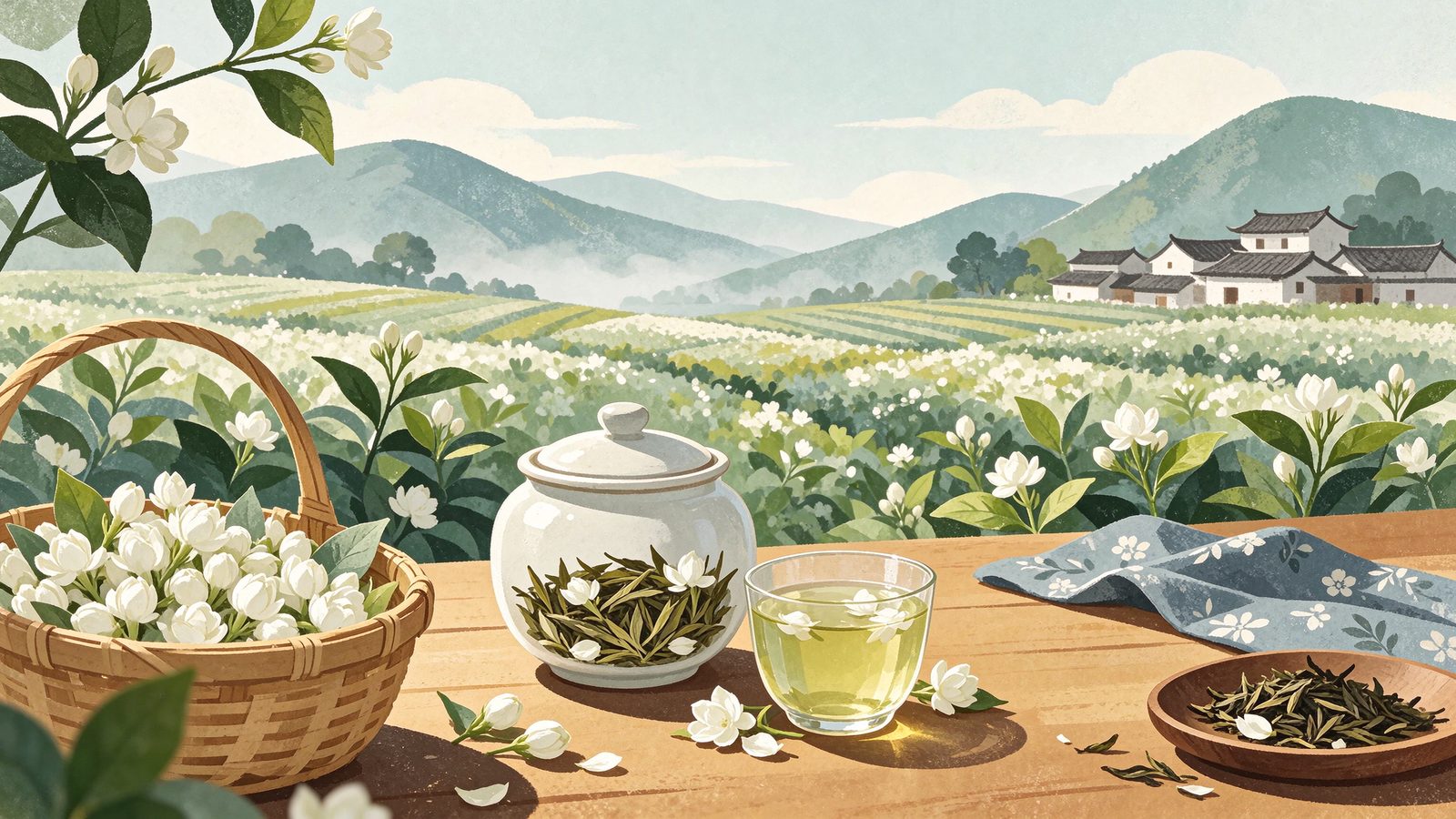
Hengzhou, in Nanning, Guangxi, is one of the world's largest jasmine-flower and jasmine-tea processing centres. In 2024 it had more than 130,000 mu of jasmine, over 110,000 tonnes of fresh flowers and more than 90,000 tonnes of jasmine-tea processing, with a combined jasmine-flower and tea output value above 18 billion yuan. Local figures say Hengzhou accounts for more than 80% of China's jasmine and jasmine tea and more than 60% of the world's jasmine flowers. Large-scale development began in 1978 and has built a processing cluster over four decades.
But “Hengxian jasmine tea base” is not a botanical cultivar or a single Hengzhou garden. It is a supply-chain category: green-tea blanks chosen for the Hengzhou scenting system. The base can be baked, pan-fired or semi-baked green tea. It usually needs some body, a clean aroma, enough extract and the ability to absorb fragrance. Its origin may be outside Hengzhou, or even outside Guangxi.
History and industry
The key date is 1978, when Hengzhou began large-scale jasmine planting and turned a flower crop into a flower–tea–processing–export chain. In 2006 Hengxian jasmine became a national geographical indication product; in 2013 Hengxian jasmine tea followed; in 2020 both entered the China–EU reciprocal GI list, and the tea was among the first protected under the China–EU GI agreement.
Hengzhou's advantage is not just flower volume. It is that flowers and tea meet in the same place in the same time window. Jasmine opens at night, when fragrance peaks; the tea base must be pre-treated to the right moisture, temperature and aroma state. Hengzhou concentrates flower trading, base blending, scenting, sifting, re-firing and packing in one cluster. In 2024 the county also introduced an automated “no-floor” scenting line: tea and flowers mix, scent and sift inside a closed plant, lifting fragrance utilisation from below 50% in traditional methods to above 80%.
Base tea and scenting
Scenting is physical adsorption and aroma transfer, not spraying flavour. The general flow is: re-fire and clean the base, cool it; condition and sift the flowers; blend tea and flowers; build a pile; turn and cool; re-pile; remove spent flowers; re-fire to fix the aroma. High-grade teas may be scented three, five, seven or more times, each with fresh flowers. The flower-to-tea ratio, temperature and time all matter. More rounds do not automatically mean better: a thin base, wet flowers or excessive re-firing can make the aroma dull or distorted.
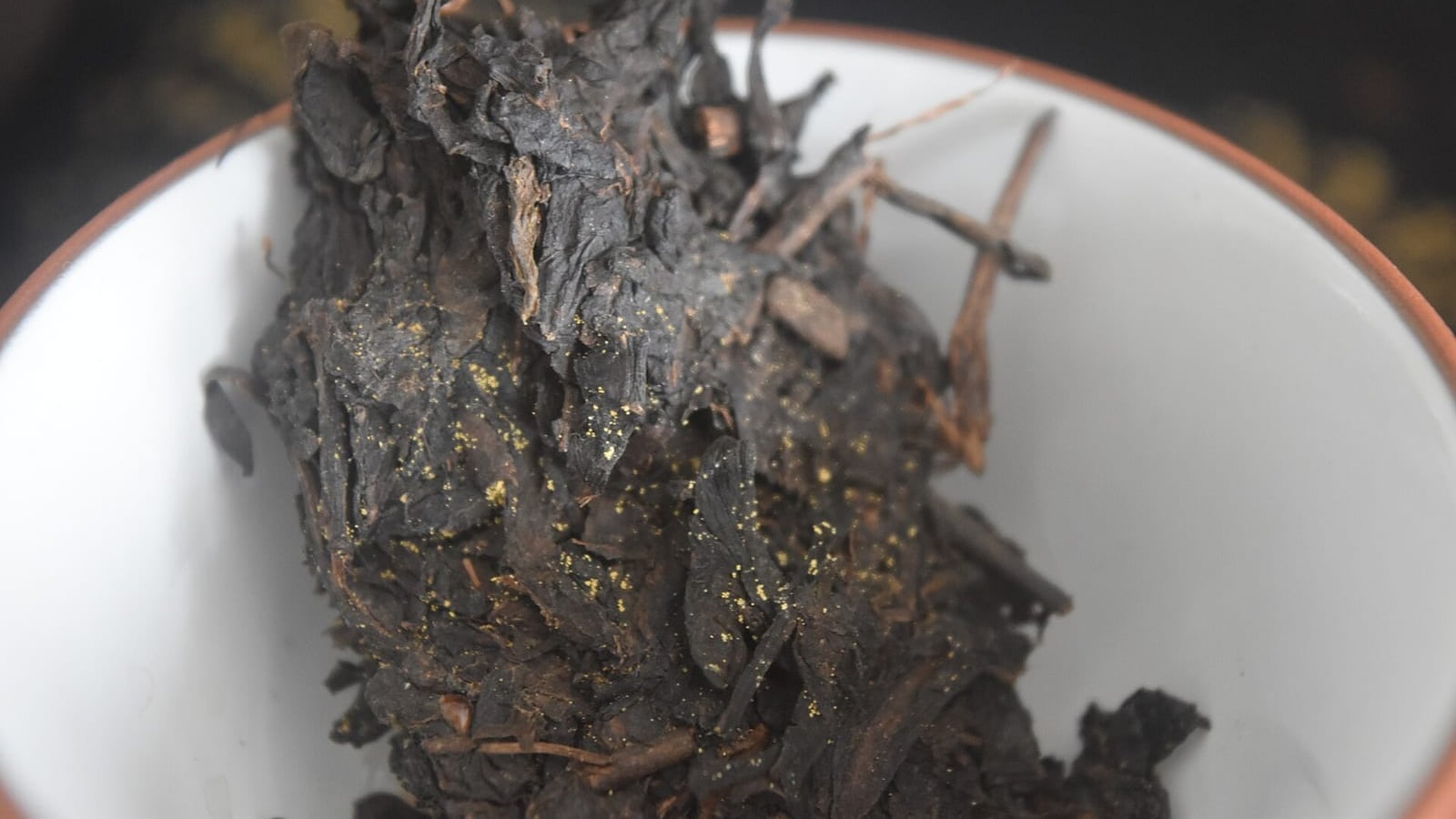
The base sets the floor of the finished tea. Dusty base absorbs quickly but gives a thin body; coarse old leaf absorbs slowly and turns rough; a smoky or mouldy base cannot be rescued by more flowers. A good base is tight, green-glossy, clean-smelling and rich in extract, so it can carry the flower without fighting it. The finished tea is judged by “freshness” of the aroma — whether it smells like a newly opened jasmine, not perfume or soap.
Buying and boundaries
First, check whether you are buying base tea or finished scented tea. Base tea has little jasmine aroma and is not labelled with “how many scentings”; it is for further processing or home scenting, not direct brewing as a floral tea. Finished tea carries scenting rounds, flower grade and aroma type. Selling base tea as “premium jasmine tea” is a category confusion.
Second, base tea is not a synonym for “green tea grown in Hengzhou.” Hengzhou's core is flowers and scenting; the base may come from another province. Third, scenting rounds are not the only grade: fresh aroma, a full liquor and no dullness matter more than a “nine-scenting” number. Fourth, jasmine tea is not “the stronger the better”: perfumed, soapy or cooked notes are defects. Brew at 85–90°C, 3 g to 150 ml, 30–40 seconds for the first infusion, and avoid long boiling-water steeps.
Source boundary
Hengzhou's scale, 1978 starting point, GI dates and scenting line come from Hengzhou and Nanning government pages; national and world shares and export destinations come from the Hengzhou government's reprint of a China Daily report. Base-tea sourcing and scenting are described as industry process variables, not as a claim that all Hengzhou base comes from one famous mountain.