First, the name: an estate and a company, not a tea type
"Guranse" is the Nepali word for rhododendron, and it is also the name of this garden. It does not name a tea type or a protected appellation. It refers to Guranse Tea Estate Pvt. Ltd. in Hile, Dhankuta, eastern Nepal. The estate grows and makes its own tea and also buys green leaf from more than 600 nearby smallholders.
The product range is wide: orthodox black tea, white tea, oolong and green tea. So "what does Guranse taste like" cannot be answered with one word. The black teas are built around muscatel, but the whites, greens and oolongs have their own profiles.
| Item | Detail |
|---|---|
| Name | Guranse / Guranse Tea Estate |
| Type | Tea estate and company; not a tea type |
| Location | Hile, Dhankuta, eastern Nepal |
| Elevation | About 1,000–2,200 m |
| Area | About 290 ha |
| Farmers | More than 600 local households |
| Processing | Mainly orthodox; also white, oolong, green |
| Flavour | Black tea built around muscatel; products vary widely |
| Flushes | Spring (March), summer (June), monsoon (August), autumn (November) |
History: built in the 1990s, not a 1934 Rana estate
Guranse begins in the 1990s, not in 1934.
WIPO says the company was established in 1999 by the Vaidya family. Andrew Gardner, a tea consultant involved in the early build, says he moved to Nepal in 1994 and built the garden from scratch. The dates do not agree exactly, but they both point to the mid-to-late 1990s. Treating one year as the only possible founding date is overconfident; treating 1934 as the founding year is simply unsupported.
The old draft's "1934 Rana prince estate," "Dutch-Nepali joint venture," "five-petal logo" and "ancient-tree clone" stories do not appear in WIPO or Gardner's account. They have been removed. The garden does have young, organic, clonal bushes as well as older tea; but "1930s first-generation Darjeeling clones" is not a verifiable claim.
In 2003 the estate built a factory at Jabire, 18 km from Ilam town, designed by a specialist with experience in Indian tea factories. WIPO's page says the factory has a capacity of 1,200 kg a year. That figure is obviously inconsistent with a 290 ha garden and more than 600 farming households, so this article does not use it. The meaningful scale figures are 290 ha, 1,000–2,200 m and 600-plus households.
Garden and processing: organic, orthodox, four flushes
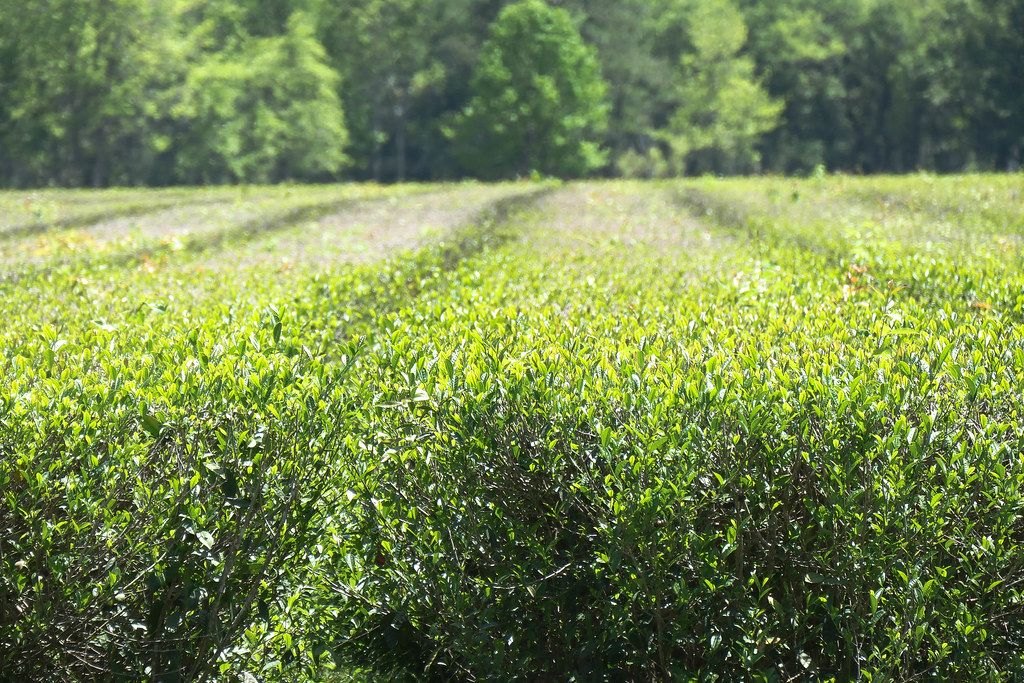
The garden runs from about 1,000 m to 2,200 m. The high blocks grow more slowly and concentrate aroma; the lower blocks crop earlier and more heavily. WIPO records that the estate has been organic from the start, with ISO 9000:2000 from 2001 and NASAA organic certification.
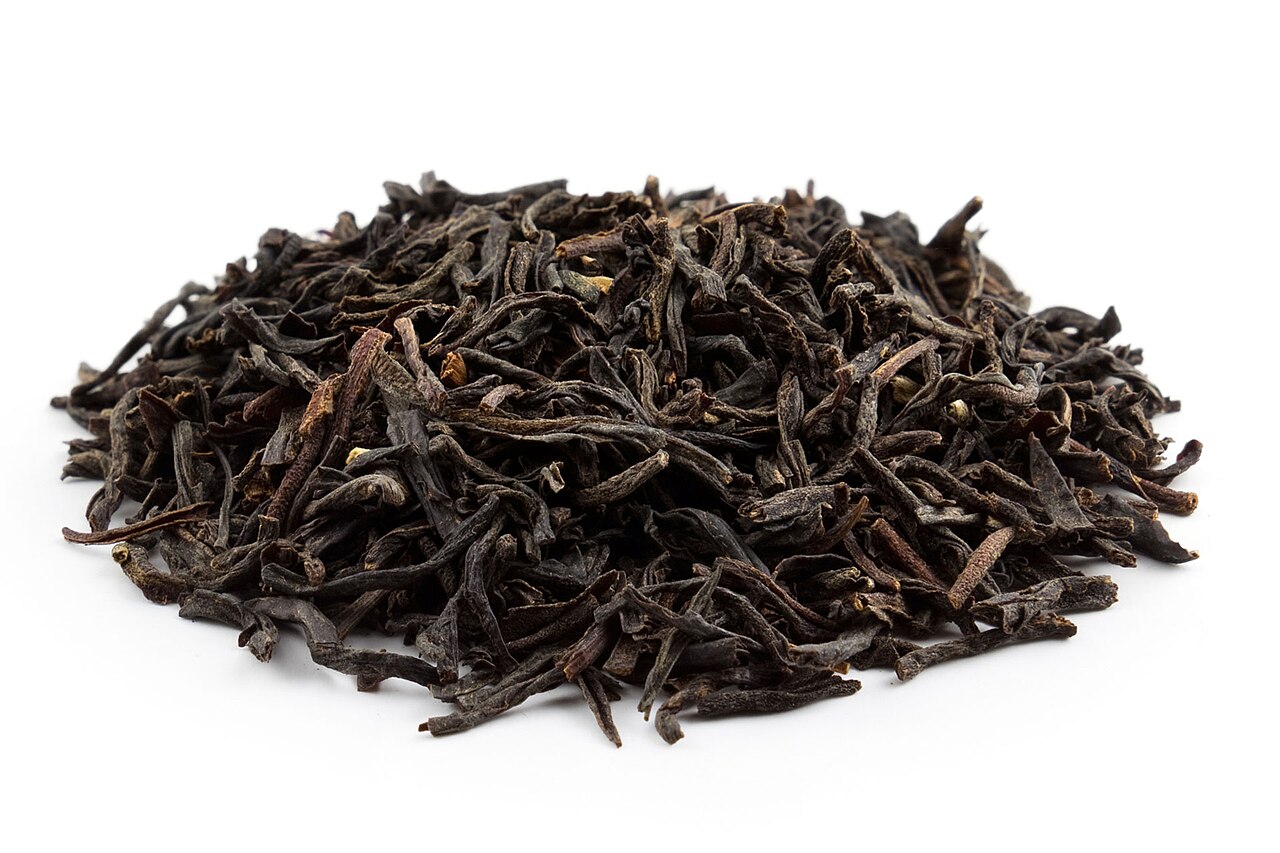
Its main product is orthodox tea: one bud and two leaves, withered, rolled, oxidised and dried into whole-leaf strips. It is not CTC. WIPO explicitly describes the plucking standard as the bud and the second and third leaves. WIPO also notes that Nepali tea areas generally produce green, white and black tea, so Guranse should not be read as a single-product black-tea garden.
There are four main flushes:
- Spring (March): clear aromatics, fine buds, good for high-grade black and white tea.
- Summer (June): fuller body and stronger muscatel.
- Monsoon (August): more rain, larger leaves, higher strength, often everyday black tea.
- Autumn (November): aromatics return, good for autumn white and autumn black.
WIPO records product names including SFTGFOP, TGBoP, TGOF Fanning and PD-Bust; these are product/grade names from that period, not a complete list of what is sold today. When buying, the current product label and lot information matter more than the estate name alone.
Flavour: muscatel is the spine, not the whole story
The black teas are built around muscatel: a muscat-grape, ripe-fruit and honeyed-floral aroma, often with almond, cedar and a light spice. WIPO describes muscatel as a signature. Spring is brighter and more floral; summer is fuller and more fruit-driven; monsoon is stronger and takes milk well; autumn is sweeter and cleaner.
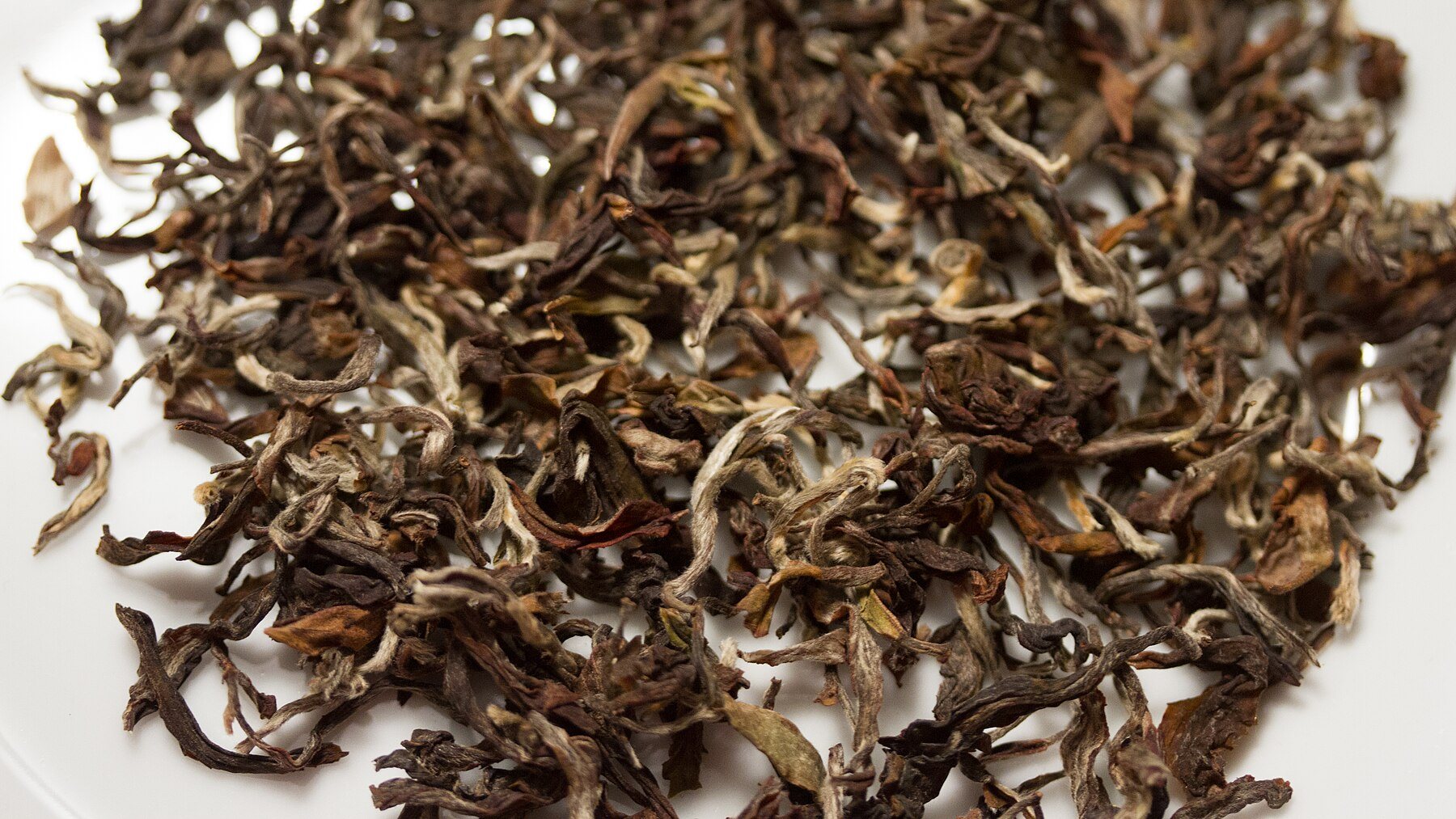
But Guranse is not only black tea. WIPO notes that Nepali tea areas generally include bud white, green and oolong; Guranse's specific white/green/oolong range changes by year. Equating "Guranse" with "muscatel black tea" misses the rest of the range.
Brewing
- Orthodox black: 3 g per 150 ml, 90–95°C, 3 minutes. Spring flush can take 85–90°C for 2.5–3 minutes so the fine aromatics are not flattened.
- White: 3 g per 150 ml, 85°C, 4–5 minutes. A bud-heavy white can go a little cooler.
- Oolong: 3 g per 150 ml, 90°C, 2–3 minutes, for 2–3 infusions.
- Green: 2.5 g per 200 ml, 80°C, 2–3 minutes. Do not use boiling water.
- Monsoon black: 3 g per 150 ml, 95°C, 3–4 minutes; increase leaf slightly if you take milk.
Guranse is not a tea that rewards "brew it strong." Black tea needs muscatel clarity, white tea needs clean floral honey, green tea needs no green off-notes. Too much heat and too long a steep flatten all three.
Buying
- Buy the estate, not a "Guranse tea type." Guranse is a garden and company. Confirm that the product comes from Hile, Dhankuta.
- Check the flush and product name. Spring, summer, monsoon and autumn are different; SFTGFOP, TGBoP and similar are specific product/grade names, not empty grades.
- Check organic certification. WIPO records ISO 9000:2000 from 2001 and NASAA organic certification; ask the seller for current certificates and lot details.
- Check the harvest year. Nepali seasons vary a lot, and different flushes within one year can differ more than two neighbouring estates. This matters especially for white tea.
- Be sceptical of the old stories. "1934 Rana prince estate," "Dutch-Nepali joint venture," "world's highest tea garden" and "ancient-tree clone" are red flags. The verifiable frame is a 1990s estate of about 290 ha at 1,000–2,200 m.
- Start with samples. The range is wide. One black and one white sample is a better first purchase than a large tin of either.
Misconceptions
"Guranse is a tea type."
It is an estate and company. The tea type depends on the product: black, white, oolong or green.
"Guranse was founded in 1934 as a Rana prince's estate."
There is no reliable source. WIPO and Gardner both point to the 1990s.
"Guranse only makes black tea."
It is primarily an orthodox black-tea estate, but WIPO also notes that Nepali tea areas generally produce white, green and oolong; Guranse's specific range changes by year.
"Guranse is the world's highest tea garden."
WIPO calls it one of the highest, not number one. Its elevation is 1,000–2,200 m; not every block sits at 2,200 m.
"Muscatel belongs only to Darjeeling."
Eastern Nepal has a climate close to Darjeeling's, and Guranse's black teas are also marked by muscatel. It is not a copy of Darjeeling, but it speaks a similar aromatic language.
"Organic certification means no pesticide at all."
Organic standards regulate inputs and buffer zones, but certification, lot and testing still matter. Do not rely on the word "organic" alone.
Bottom line
Guranse is a single estate and company in Hile, Dhankuta: built in the 1990s, about 290 ha, 1,000–2,200 m, more than 600 farming households, primarily orthodox, with muscatel as the black-tea signature and white, oolong and green teas along the same range. It is not a tea type, and it is not a 1934 Rana prince estate.