Boseong green tea is a regional name for green tea from Boseong County in South Jeolla, Korea. It is not a single cultivar, and not a synonym for all Korean green tea. Its identity comes from the sea-and-mountain tea terraces, one of Korea's largest green-tea areas, and a craft tradition in which iron-cauldron pan-firing and steaming coexist.
Origin and identity
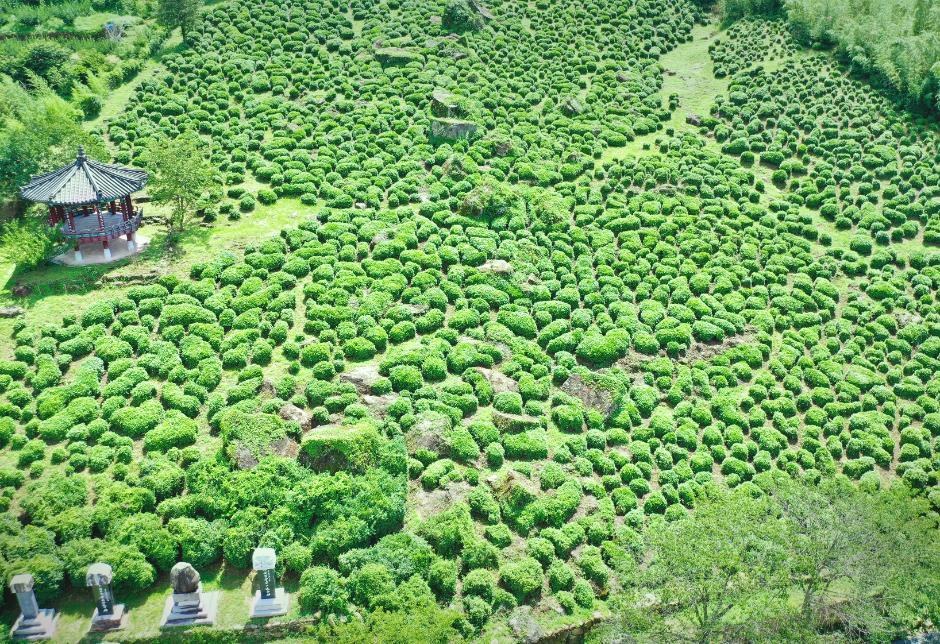
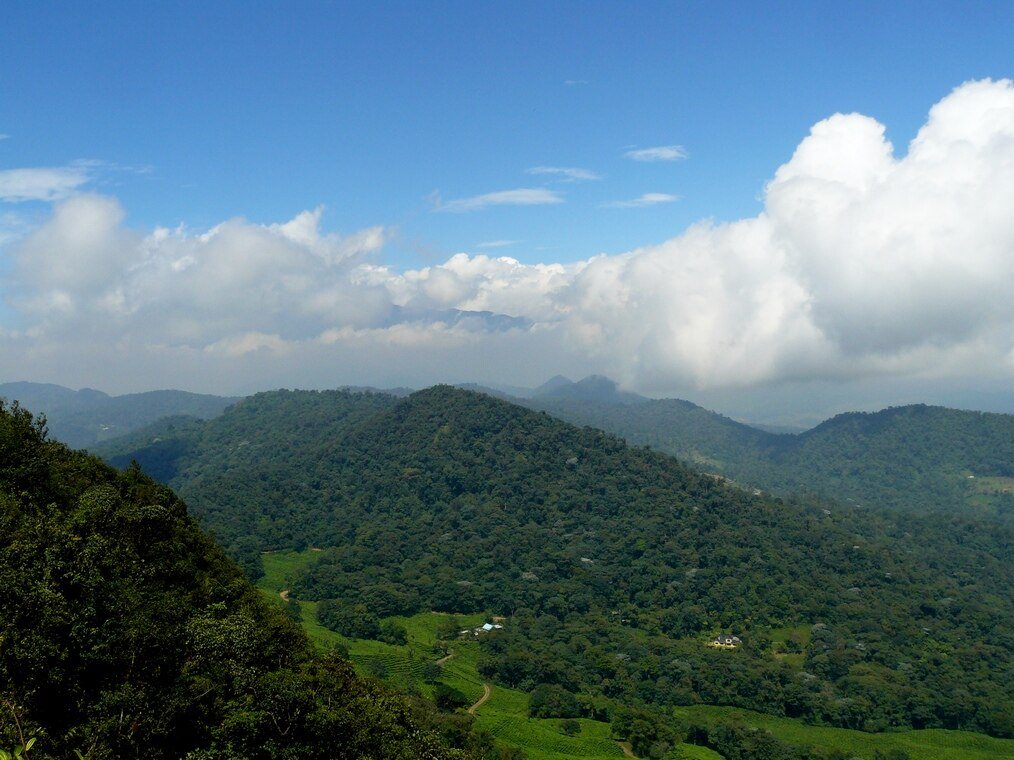
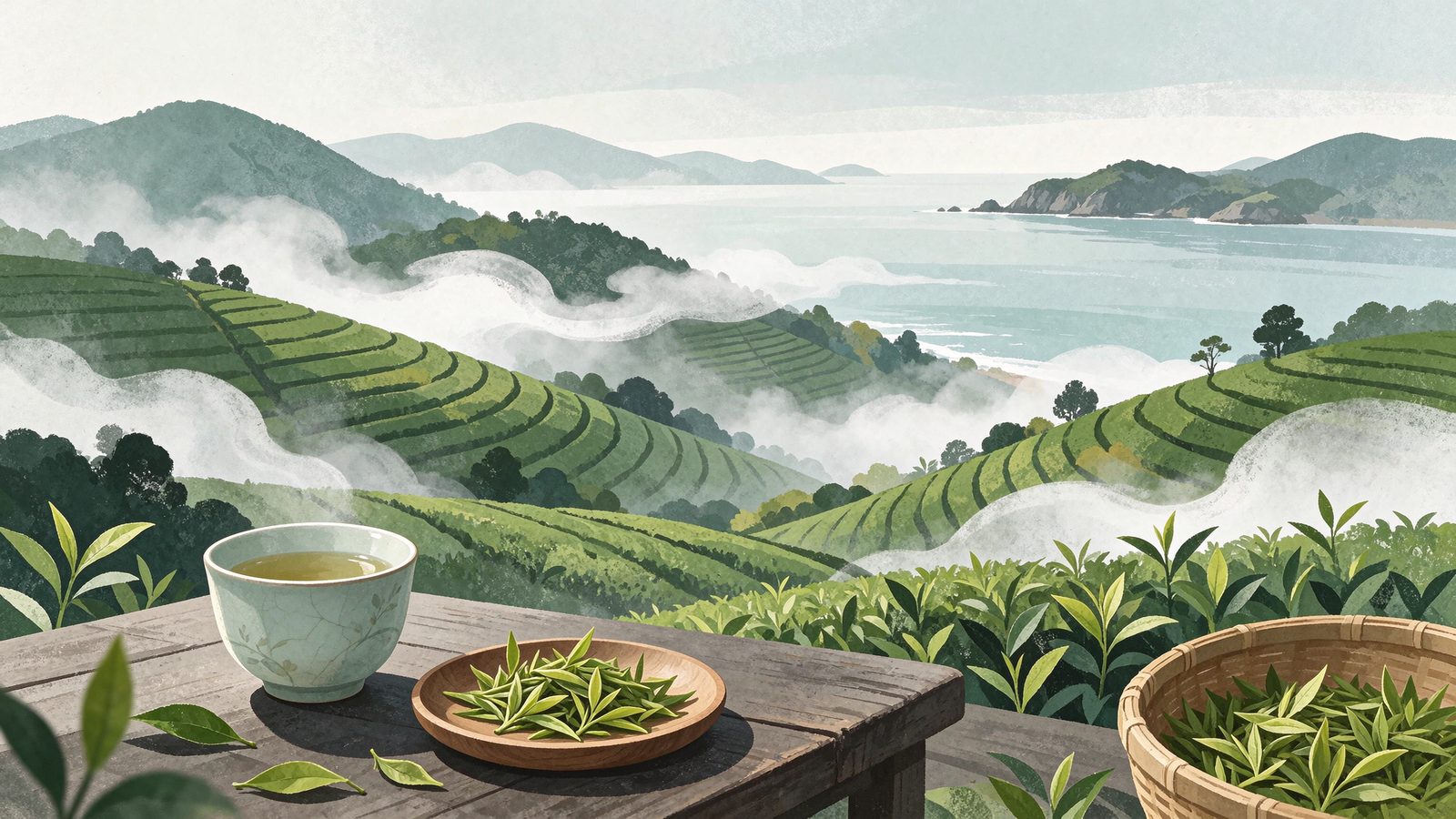
Boseong sits in south-western Korea near the south coast, with tea gardens on slopes between the hills and sea fog. The Boseong Traditional Tea Agriculture site gives 2025 figures: 797 hectares, 573 farms and 1,362 plots. The “Boseong traditional tea agriculture” National Important Agricultural Heritage site covers 304 hectares, with a core in Hoechoen-myeon's Yeoncheon-ri and Yangdong-ri. This is a leading Korean green-tea area, but “Boseong” is a county-level origin, not a cultivar.
It is a green tea (nokcha in Korean). Korean green tea is graded by picking season: Ujeon (before Grain Rain), Sejak (fine sparrow), Jungjak (middle sparrow) and Daejak (large sparrow). Ujeon is earliest and tenderest; Sejak next; Jungjak and Daejak use more mature leaf and give a stronger taste. Earlier is not automatically better; cultivar, garden altitude, fixing and rolling all matter.
History
Boseong's tea history has two kinds of evidence. The Sinjeung Dongguk Yeoji Seungnam and Sejong Sillok Jiriji record tea growing and drinking in the Boseong area; wild tea colonies still exist around Mundeok-myeon's Daewonsa and Beolgyo's Jingwangsa. Place names such as “tea field,” “tea valley” and “tea-field village” survive, showing that tea was not a modern arrival.
The modern industry took shape in the 20th century. During the Japanese colonial period and after the Korean War, Boseong expanded its gardens; in the late 20th century Daehan Dawon and other estates turned hillside gardens into a landscape and, through film and tourism, into a symbol of Korean green tea. In November 2018 the traditional tea agriculture system was designated National Important Agricultural Heritage No. 11, centred on terraced tea farming and the sea-mountain climate. That is a landscape and farming-system designation, not a quality certificate for a particular lot.
Craft and quality
Korean green tea has two fixing families: iron-cauldron pan-firing (deokkeum) and steaming (jeungje). Traditional handmade tea is often fixed in a cauldron above 200°C, rolled on bamboo mats, then fired and rolled repeatedly, developing roasted chestnut, toasted grain and nutty notes. Steaming kills enzymes with steam, keeps the leaf greener and gives a profile closer to Japanese sencha — marine, green, fresh — and suits large-scale production. Boseong has both: premium handmade lines lean pan-fired, large lines lean steamed. Calling all Boseong tea “steamed” or all “pan-fired” is inaccurate.
Pan-fired Boseong tea is usually tight, dark green, with a yellow-green liquor, roasted chestnut and grain aroma, a mellow, sweet finish. Steamed Boseong tea is brighter green, with a greener liquor, grass, marine and fresh-bean notes, and a crisper taste. Ujeon and Sejak are more tender and fresh; Jungjak and Daejak are stronger and more durable, better for large pots or cold brew. A good tea has no smoke, mould or harsh greenness.
Brewing and boundaries
Brew at 70–80°C, 3 g to 150 ml in a glass or porcelain gaiwan. Pan-fired tea takes about one minute for the first infusion; steamed tea 40–60 seconds. Shorten the second and lengthen the third. Boiling water amplifies bitterness; too-cool water hides the aroma. Cold brew can use 5 g to 500 ml cold water for 4–6 hours, though the roasted notes of pan-fired tea fade.
Check origin (Boseong County), craft (pan-fired or steamed) and picking grade (Ujeon, Sejak, Jungjak, Daejak). Boseong is an origin, not a grade. “Korea's largest” or “40% of the country” claims need a source and a year; this page uses the checkable 797 hectares and 573 farms. “Boseong tea cures disease” is unsupported; catechin research is not a therapeutic claim.
Source boundary
Area, farms, plots and heritage extent come from the Boseong Traditional Tea Agriculture site's 2025 data; historical records and place names come from its tea-history page; the pan-fired/steamed distinction comes from its green-tea selection guide; Daehan Dawon landscape figures come from Korea.net. The page avoids unsourced altitude, cultivar-share and output numbers.