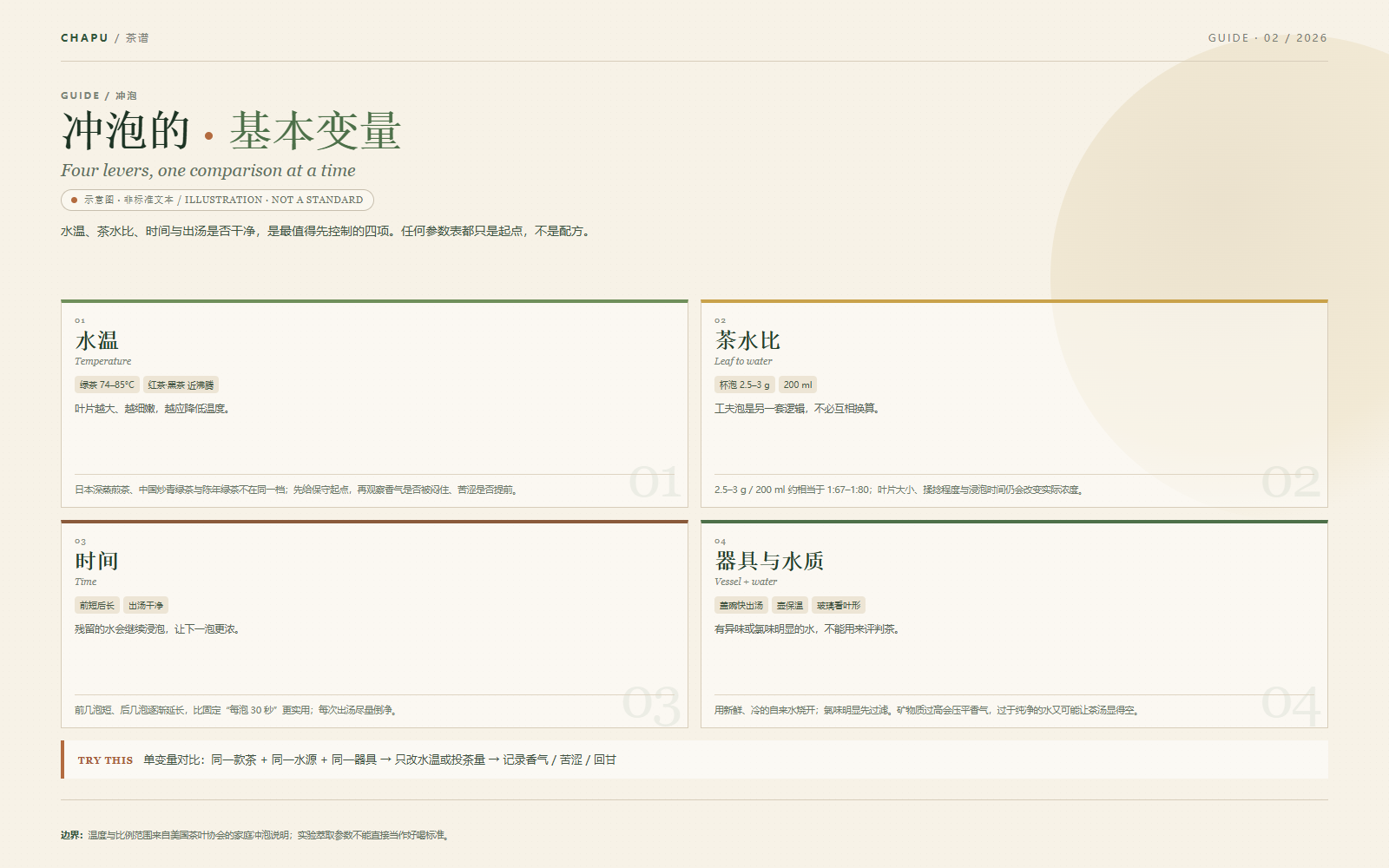
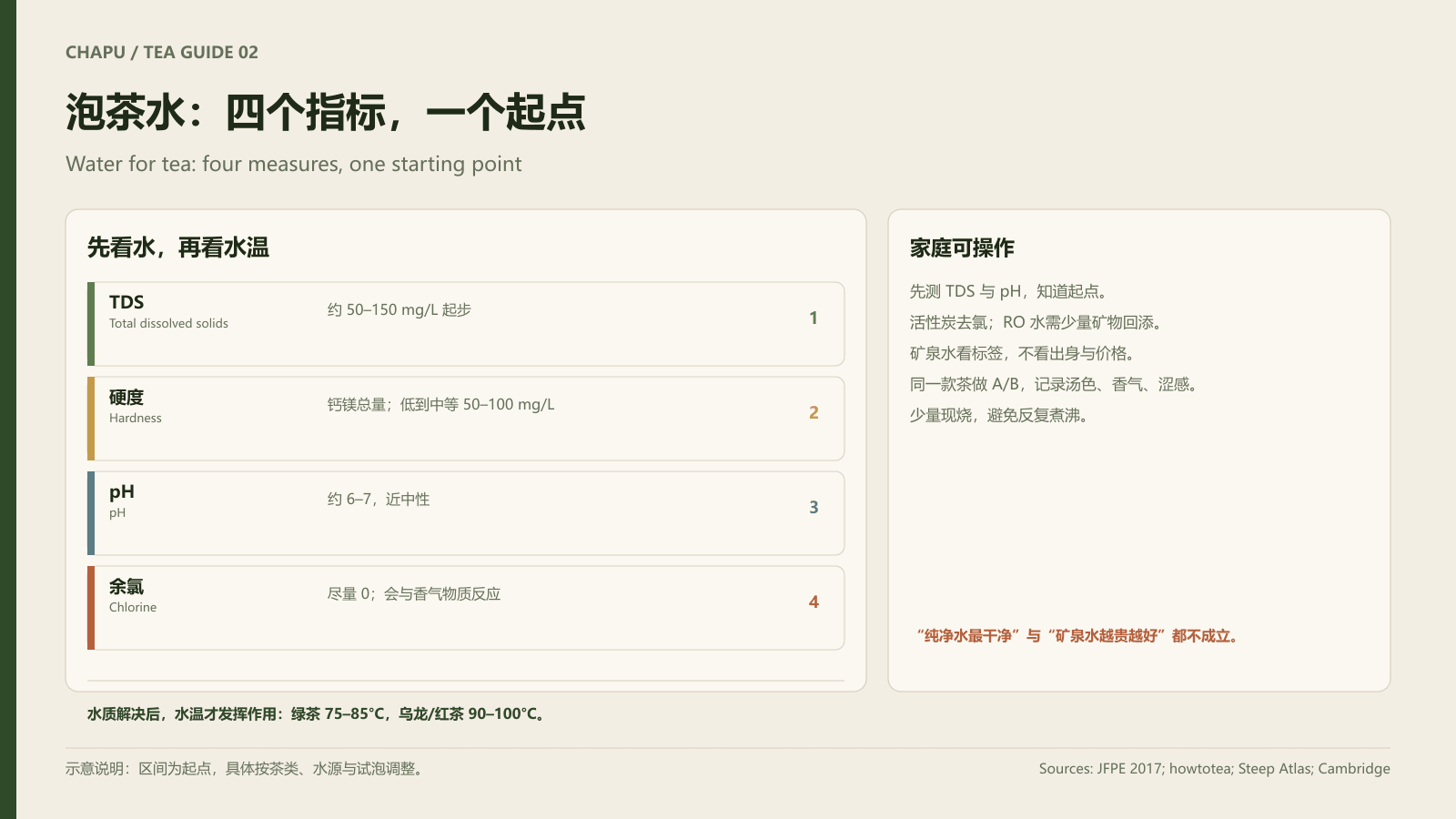
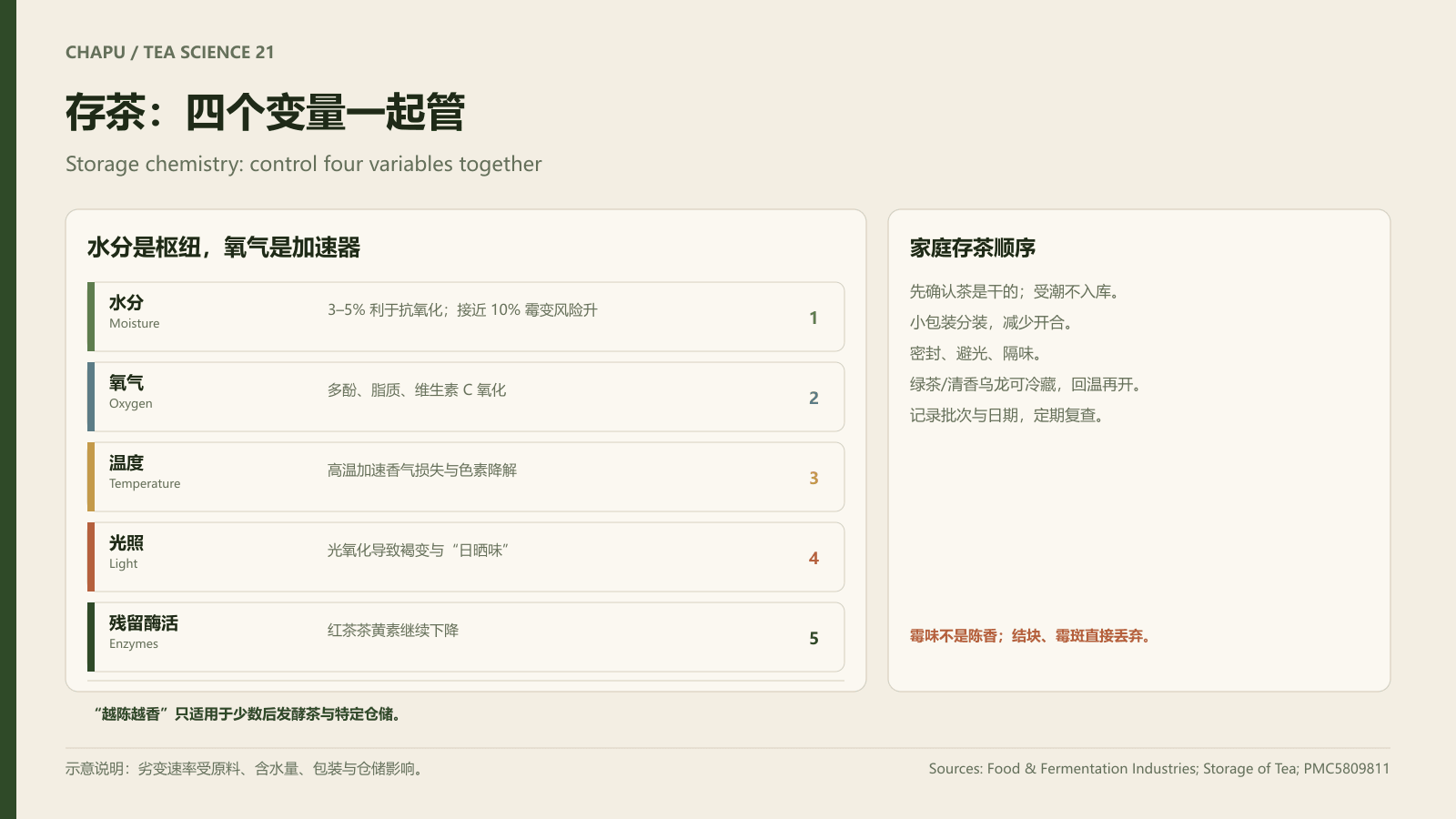
Why is the same tea bitter today and thin tomorrow? Usually the leaf is not the problem; a variable changed: water temperature, leaf amount, steeping time, water quality, vessel, or even whether the cup was rinsed properly. The rule is simple: change one variable at a time and record the result.
Symptom table
| Symptom | Common causes | Try first |
|---|---|---|
| Heavy bitterness / astringency | Water too hot, too long, too much leaf, broken leaf | Drop 5–10°C, shorten 30 seconds, reduce leaf 10–20% |
| Thin, watery | Too little leaf, too short, too cool, water too empty | More leaf, longer time, low-TDS water with some minerals |
| Cloudy liquor | Fine particles, hard water, over-rolling, tea cream on cooling | Less dust, lower-hardness water, observe while warm |
| Weak aroma | Low temperature, damp tea, odorous cup, chlorine | Change water, warm the cup, inspect dry leaf and storage |
| Sour / stewed | Fermentation or storage issue, long keep-warm, over-steeping | Lower temperature and time; check whether it is spoiled |
| Musty / wet cardboard | Damp storage, contaminated packaging | Stop drinking; handle as a food-safety issue |
| Palpitations / insomnia | High total caffeine, empty stomach, late hour | Less leaf, shorter steep, earlier last cup |
| Second infusion collapses | Broken leaf, little leaf, over-extracted first infusion | More leaf, shorter first steep, cooler water |
Bitterness: cool and reduce before “flash brewing”
Bitterness comes from caffeine, catechins and polyphenol–protein binding. Hotter water, longer time and more leaf raise concentration; broken leaf extracts faster. Many people respond to bitterness with a “flash steep”, but if the leaf amount is too high, a fast pour can still be strong and astringent.
Order: cooler → less leaf → shorter time. Change one at a time, or you will not know which worked. Green and white tea: try 80–85°C first; oolong and black: 90–95°C.
Thinness: water, leaf, time
Thinness is not necessarily bad tea. Too little leaf, too short a steep or too cool water leaves soluble solids low. Water that is too “empty” (very low TDS) can also flatten aroma and taste. Add 10% leaf first, then 30 seconds; if still hollow, change to low-hardness water with some minerals.
“Strong” and “thick” are not the same: strength may be bitterness, while body needs soluble sugars, amino acids and pectin.
Cloudiness: tea cream or spoilage
A milky haze after cooling is often tea cream, especially in black tea and hard water; it may disappear on warming. It is not the same as mould or spoilage.
Check with lower-hardness water, less dust, and observe while hot. If cloudiness comes with mustiness, sourness, flakes or a surface film, stop drinking.
Weak aroma: cup, water, storage
Common causes:
- detergent, coffee or spice residue in the cup;
- residual chlorine reacting with aroma compounds;
- damp or over-stored tea;
- water too cool to release volatiles.
Warm the cup, change the water, inspect the dry leaf. If the dry leaf already smells musty or like wet cardboard, the problem is storage, not brewing.
Sourness and mustiness: do not brew your way out
Sourness can come from poor fermentation, long keep-warm, over-steeping or damp storage; mustiness usually means damp storage. Brewing cannot remove mycotoxins or make spoiled tea good. Discard tea with clear sourness, mustiness, clumping or a surface film.
Caffeine sensitivity: count total, not just strength
Palpitations, tremor and insomnia are not always “too strong”. Caffeine extracts quickly from 30 seconds to 5 minutes, so a short steep with a lot of leaf can still deliver a lot. Record leaf grams, cups, time and other caffeine sources; reduce gradually and keep the last cup 8 hours before bed.
A record template
| Item | This brew | Change next time |
|---|---|---|
| Tea / grams | 3 g | 2.7 g |
| Water | 150 mL | same |
| Temperature | 95°C | 90°C |
| Time | 45 s | same |
| Water source | tap | filtered |
| Result | bitter | record |
Three records in a row reveal which variable is doing the work. Without records, “today's mood” easily becomes “the tea changed”.
Source boundary
This page can establish: bitterness, thinness, cloudiness, weak aroma, sourness and caffeine sensitivity usually map to water, leaf ratio, time, water quality, vessel or storage; changing one variable at a time is the effective method; tea cream and spoilage are different.
This page cannot establish: that one symptom always has one cause; that all cloudiness is safe to drink; that parameter changes can rescue spoiled tea. With mustiness, sourness, clumping or suspicious sediment, prioritise food safety.