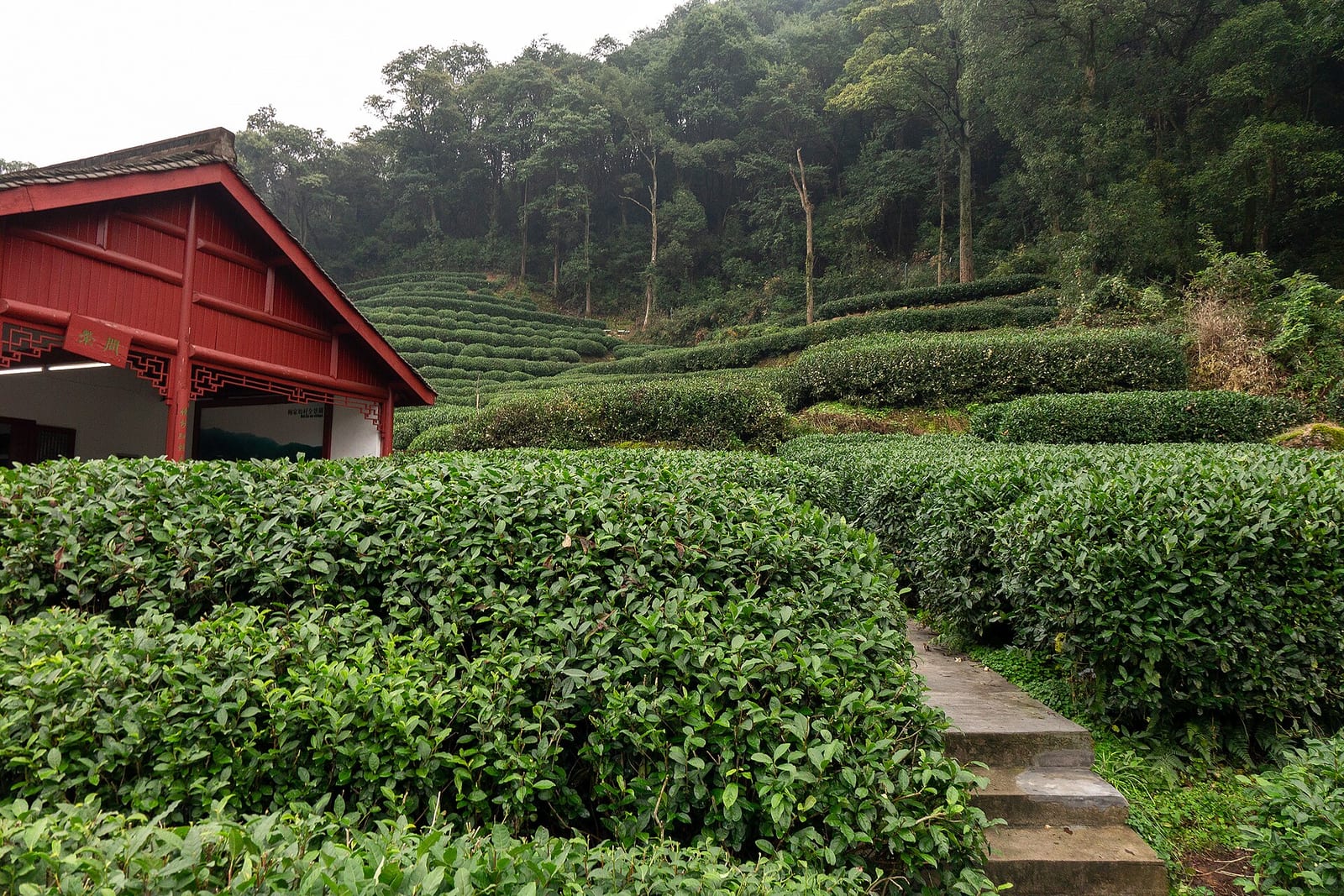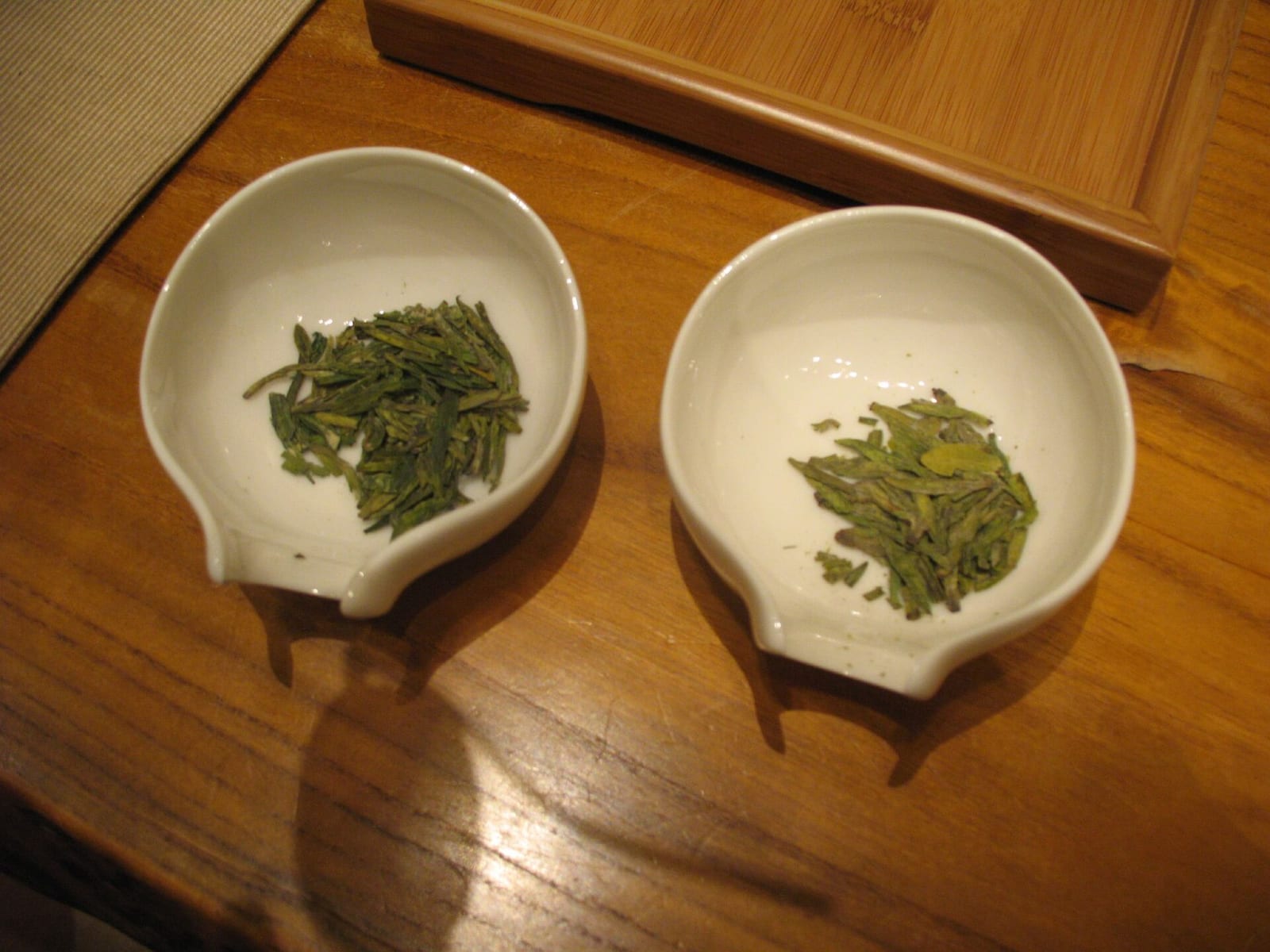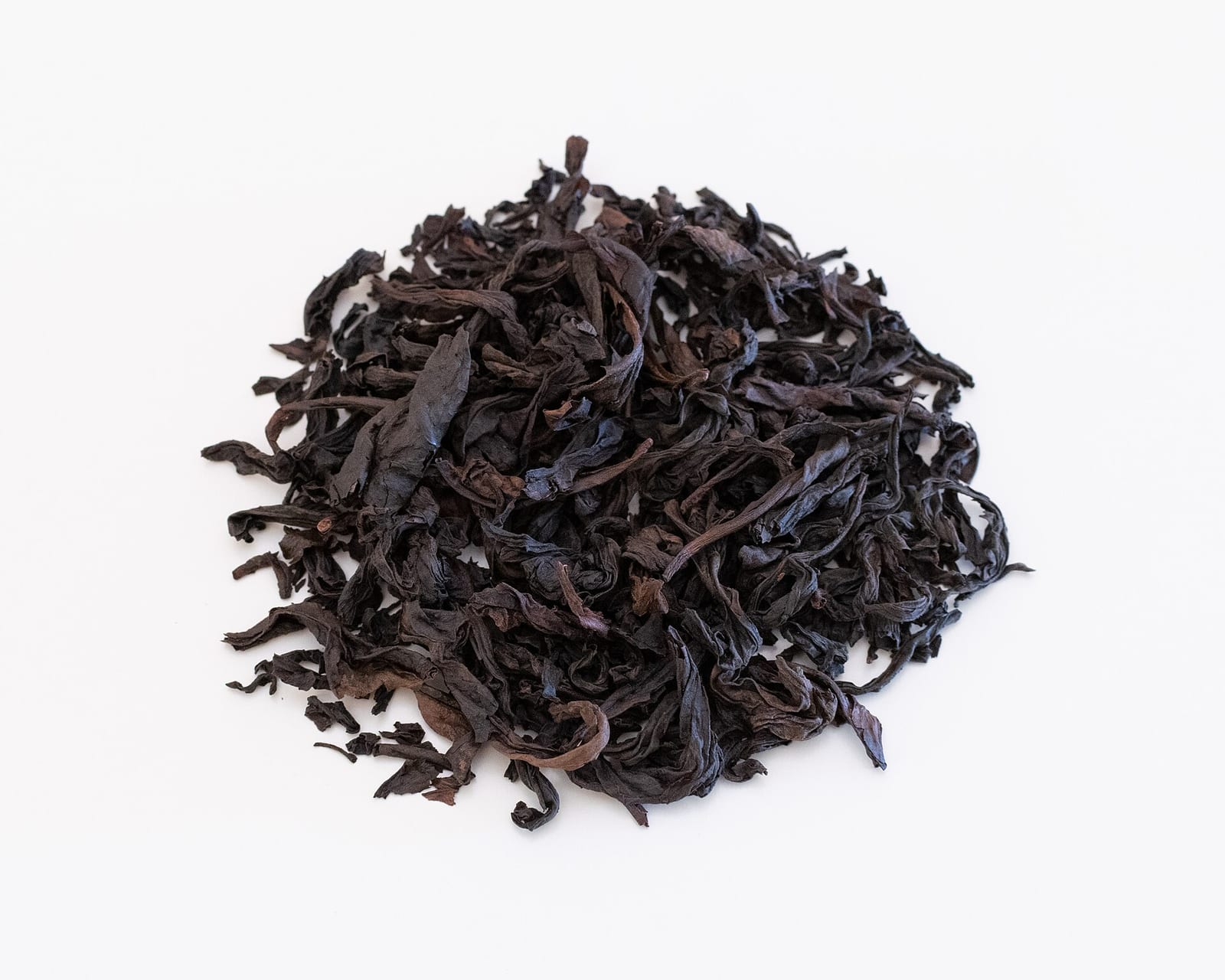
Quntizhong is not one cultivar but a group of tea bushes long grown from seed and naturally hybridised in one place; it is uneven, and often more layered.
The short answer
Quntizhong is a local tea population, not a single clone. It is raised from seed, so bushes differ in shoot, budbreak, aroma and resistance; the unevenness is exactly what gives complex flavour and environmental buffering. The Longjing population, Wuyi caicha, Anxi local groups and Fuding local groups are different populations. Calling “population” a premium label is imprecise: it describes propagation and group structure, not a guarantee of quality.
How it forms
A population grows, flowers and sets seed in the same district over generations; offspring cross naturally and are screened by local climate and soil. There is no single genotype and no single picking date. Early and late bushes, large and small leaves grow together, so the picked leaf is uneven and processing is harder to standardise. A clone, by contrast, is selected from one bush and multiplied by cuttings: even, but genetically narrow.
Flavour and agronomy
The strengths are deep roots, broad adaptation, better stress tolerance and layered aroma and texture; old gardens also carry local soil and microbial history. The weaknesses are uneven budbreak, unstable yield, higher picking and processing cost, and wide batch variation. Populations suit tea with regional character, not cheap, highly uniform commodity tea. Old bush, ancient tree and population are three different ideas.
Examples
The Longjing population is the traditional group of the Hangzhou tea district, with later budbreak and complex aroma. Wuyi caicha is the local population of the Wuyi Mountains and the breeding ground of many named bushes. Anxi local groups include the ancestral material of Tieguanyin and other cultivars. The Fuding population is the soil from which Dabaicha and Dahao were selected. The common thread is place, seed propagation and variation, not one cultivar name.
Processing and market
Uneven leaf means spreading, fixation and rolling must follow the batch; in flat tea, size differences directly affect shape. The market uses “population” to suggest tradition, old flavour and scarcity, but origin, bush management, picking standard and craft set the price. Buyers should look at the product and lot, not the three characters.
Why old gardens are often populations
Farmers once propagated by seed, so offspring separated and the garden became a small gene bank; deep roots reach deeper water and minerals and buffer drought and pest years. Replanting with clones gives an even garden and cheaper picking, but demands steadier fertility, water and pest control. A population is not “unmanaged”; it needs different management: thinning, gap filling, shade and batch picking.
Picking a population garden
Budbreak is uneven, so one calendar date does not work. Pick in batches: early bushes and sunny slopes first, late bushes and shaded slopes later; grade leaf by size within each lot to avoid mixing tender and coarse. Spread and fix each batch separately, adjusting fixation and rolling to leaf thickness. The value of a population is not uniformity but well-handled difference; mixed picking and processing turn that difference into faults.
Population is not old tree
Population describes seed-propagated group structure; old tree describes age. They can overlap but are not synonyms. A young population garden is still a population, and an old clonal garden can still be old. Do not mix “population” with “ancient tree” or “old bush”; ask whether the claim is propagation, age or management.
Brewing
Brew according to the finished type: green tea 80–85°C, oolong 95–100°C, black tea 90–95°C. Population leaf often infuses longer but can also be more bitter; pour quickly at the start and lengthen later. Old-bush or yancha can take hotter water in a gaiwan or zisha pot.
Misconceptions
A population is not one cultivar; it is not automatically better than a clone; and it is not the same as an ancient tree. Population describes breeding structure; ancient tree describes age.