Wuyi caicha is the local population tea of the Wuyi Mountains, not a wild vegetable tea; it is uneven, and it is the source of many named bushes and single bushes.
The short answer
Wuyi caicha is a seed-propagated, naturally hybridised population in the Wuyi Mountains. Bushes, leaves, budbreak and aroma vary widely, and farmers have long selected good single bushes from the group to become mingcong or dancong. It suits Wuyi rock tea, but it is not a synonym for wild tea and not one uniform cultivar with one price. The market uses “caicha” to suggest wild, old or scarce; those are different ideas.
Formation and distribution
Rock valleys, Danxia landforms and forest shade create small, partly isolated environments where tea crosses naturally. Farmers propagated by seed, so offspring separated into many types. Zhengyan, half-rock and river-flat sites differ in soil, light and water, and the same population expresses differently. Caicha is not the property of one cliff, but bushes in the core rock valleys are often treated as a traditional flavour source.
Population and named bushes
The group contains small, medium and large leaves, early and late budbreak, floral, fruity and woody types. Historic selections include Dahongpao, Tieluohan, Baijiguan and Shuijingui; modern growers also select new single bushes. A mingcong is a selection; caicha is the population. Dancong is a broader idea: a single selected line from the group.
Processing and liquor
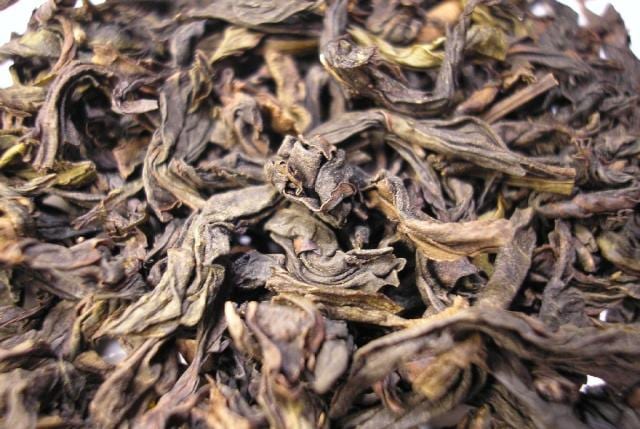
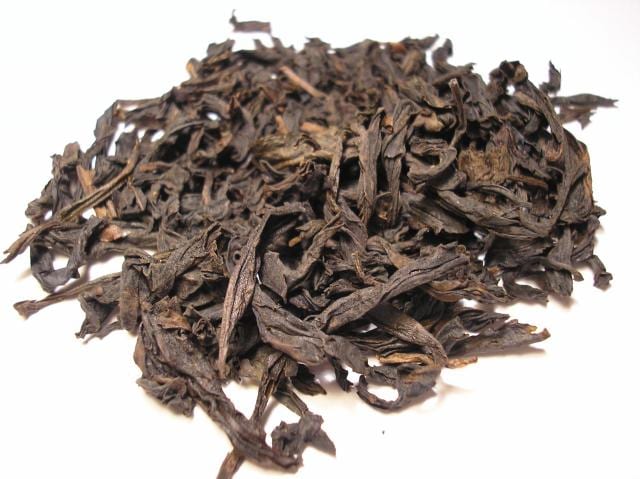
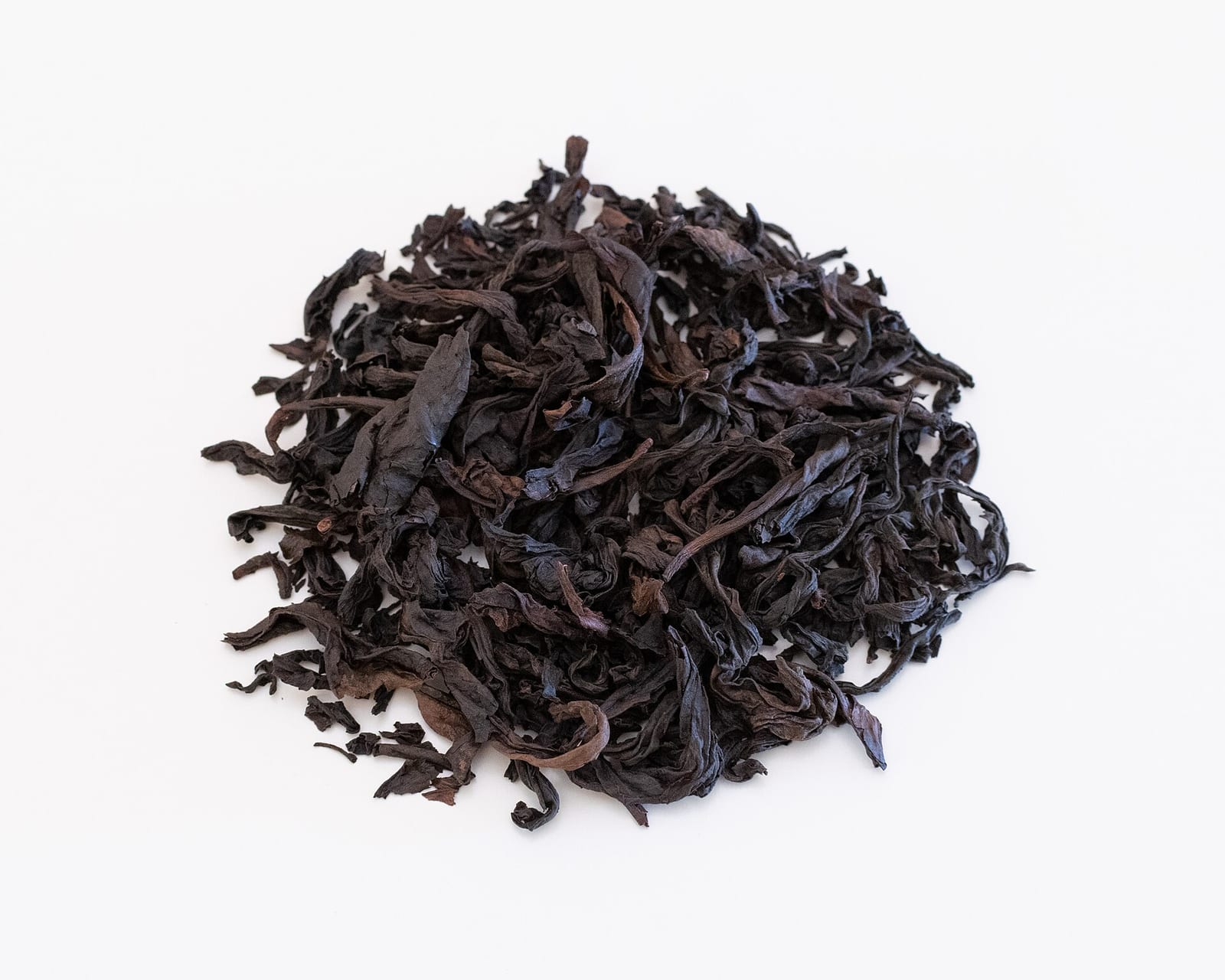
Wuyi rock tea is withered, shaken, fixed, rolled and baked. Caicha leaf is uneven, so shaking must follow the batch; the bake sets style, with light fire preserving flowers and fuller fire developing fruit, wood and rock character. Good liquor is orange to deep orange, with orchid, cassia, fruit and wood layers, a thick entry, long sweetness and a mineral throat feeling. Bitter is not the same as “rock rhythm”; bitterness with unbalanced fire is a fault.
Market and limits
“Caicha” is used to imply tradition, wild growing or old bushes, but it is first a breeding population. Price should follow mountain site, bush management, picking standard, shaking and bake, not the name. Zhengyan has GI and origin rules; river-flat and outer-mountain tea cannot become zhengyan by using the word caicha.
Caicha, mingcong and dancong
Caicha is the population base; mingcong are historic bushes selected from it; dancong is a selected single line, and the word also names Phoenix dancong oolong. A mingcong is not automatically a pure line; many are kept by cuttings. The market mixes the three and can sell ordinary caicha as mingcong. For rock tea, read mountain site, bush name, roast and lot; “caicha” alone does not settle style or grade.
Where rock character comes from
“Rock rhythm” is not a flavouring but a combined impression of site, cultivar, bush age, shaking and bake: a thick entry, aroma that sits in the liquor, lasting sweetness and throat feeling, with a mineral or stone note. Zhengyan soil, light and diurnal range give richer material; weak shaking leaves aroma floating, and over-baking lets fire bury the tea. Caicha is only the raw base; craft must express the site.
Caicha and zhengyan
Caicha is a cultivar population; zhengyan is a mountain-site range. They cannot substitute for each other. Zhengyan caicha can be expensive, and outer-mountain caicha is still caicha; zhengyan can also grow clonal named bushes. For rock tea, read site, bush, roast and lot separately. “Caicha” alone does not prove zhengyan, and “zhengyan” alone does not prove craft.
Brewing
95–100°C in a gaiwan or zisha, 1:20–1:25, quick early pours. Light-fire tea can take slightly cooler water; full-fire tea can take boiling. Rinse the tight strips once. Avoid long stuffing, which amplifies bitterness and fire.
Misconceptions
Caicha is not a wild vegetable tea; it is not all ancient bushes; and it is not automatically better than a named bush. Population and selection are different levels of the same craft.