Overview
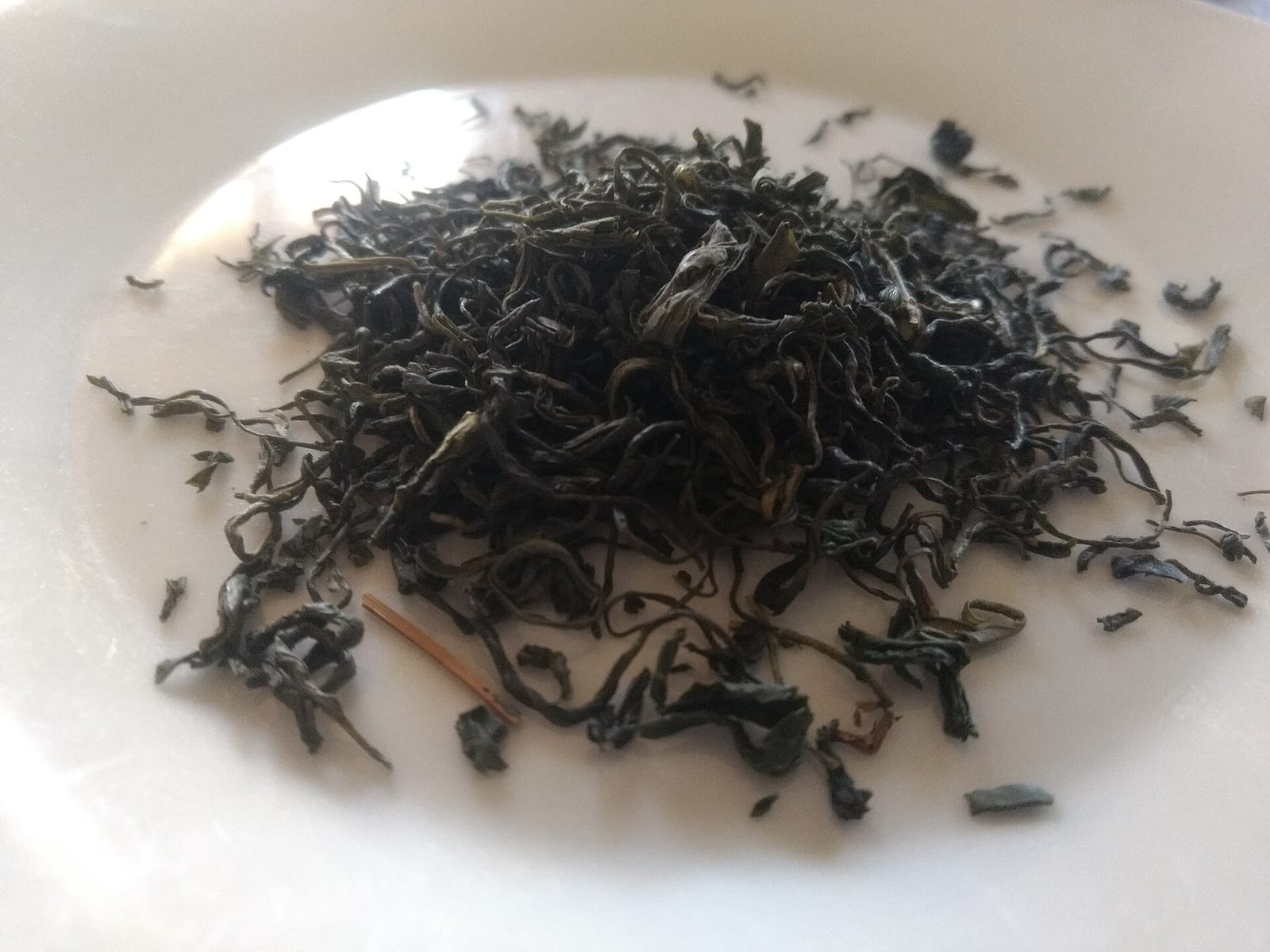
Xinyang Maojian is one of China's ten most famous teas. It is produced in the Dabie Mountains around Xinyang, Henan. The dry leaf is fine, straight, round and smooth, densely covered with white down, and deep green. After brewing, the liquor is bright pale green; the aroma is high and lasting, with a roasted-chestnut note; the taste is full, mellow and sweet in the finish. Its traditional description is "fine, round, smooth, straight, heavily downy, high-aroma, strong-tasting and green in liquor."
Origin and terroir
Xinyang lies at the southern edge of Henan, on the northern slope of the Dabie Mountains and in the upper Huai River basin. It sits near China's north–south transition line, the Qinling–Huaihe line, and is one of the northernmost high-quality green tea regions in the country. The climate shifts from northern subtropical to warm temperate, with four distinct seasons, a mean annual temperature of about 15°C, annual precipitation of 1,100–1,300 mm and a frost-free period of roughly 220 days.
Tea gardens are mostly found at 300–800 m in the lower hills and valleys. The soils are mainly yellow-brown earth and mountain yellow earth developed from weathered granite: deep, loose, rich in organic matter and with a pH of 5.0–6.0. Xinyang Maojian is a geographical indication product. Its protected area covers eight counties and districts: Shihe, Pingqiao, Luoshan, Guangshan, Xinxian, Shangcheng, Gushi and Huangchuan.
The core producing area is traditionally summarized as "five clouds, two pools and one village": Cheyun, Jiyun, Yunwu, Tianyun and Lianyun mountains, plus Heilong Pool, Bailong Pool and Hejia Village. These sites are higher, cloudier and ecologically well protected. Tea from them is called "big-mountain tea" and is generally regarded as the best quality. Tea from lower hills and former paddy fields is called "small-mountain tea" or "field-converted tea" and is considered second.
Cultivar
The main cultivar is the Xinyang population variety, locally called "dry tea" or "osmanthus variety." It is an old local population cultivar: a bush with medium-sized leaves and a mid-season flush. The plant is moderately sized, semi-spreading and densely branched; the leaves are oval, slightly raised and soft.
Its cold hardiness is notable. It can tolerate winter temperatures around −10°C, and its spring flush begins 15–20 days later than in southern regions such as Zhejiang and Fujian, usually around Qingming. The buds and leaves are small but plump and very hairy. The cultivar has relatively high amino acids, above 4%, moderate polyphenols around 28%, and rich water-soluble solids. This is why Xinyang Maojian is so densely covered in white down, which gives the finished tea a silvery sheen.
Farmers also grow introduced cultivars such as Fuding Dabaicha, Longjing 43, Baihaozao and Wuniuzao. These flush earlier and can reach market sooner, but many experienced drinkers regard them as less authentic in "Xinyang flavor" than the local population variety. Restoring and propagating the local cultivar has therefore become an important direction for improving quality.
Processing
Xinyang Maojian is a special pan-fired green tea. Its processing aims for the appearance of "fine, round, smooth, straight and heavily downy" leaves and the internal qualities of "high aroma, strong taste and green liquor."
Picking. The season runs from late March to early May and is divided into three stages: "Pao Shanjian," the earliest pre-Qingming buds; "Yuqian Maojian," picked before Grain Rain; and "late spring tea." The standard is one bud with one leaf, or one bud with two leaves just opening. Buds and leaves must be tender and soft, and fresh leaf is carefully sorted after picking.
Spreading. The leaf is spread thinly on bamboo trays for four to six hours to lose some moisture and grassy odor.
Raw pan. Xinyang Maojian uses a distinctive two-pan process. The first pan is held at 140–160°C; a bamboo brush is used to stir and begin shaping the leaf into strips.
Finished pan. The tea then moves to a second pan at 80–100°C, where it is shaped by hand. Repeated grasping, flicking and shaking straighten, tighten, round and polish the leaves. The hand movements of "grasping and flicking" are the heart of Xinyang Maojian shaping; skilled makers move almost like tai chi.
Drying and finishing. The shaped leaf is thinly spread over a charcoal-fired basket for an initial bake, then rested so moisture can redistribute, then baked again at low temperature. Yellow flakes, stems and broken pieces are picked out by hand. The finished tea must stay below 5–6% moisture. It is delicate: sensitive to light, heat, damp and foreign odors. It is best packed in vacuum-sealed foil pouches and kept at 0–5°C, then drunk soon after opening.
Quality and flavor
The dry leaf is fine, straight, round and smooth, heavily downy and glossy green. The liquor is bright, clear pale green. The aroma is high and lasting, with roasted chestnut and orchid notes. The taste is full, mellow and sweet, fresh and mouth-watering. The infused leaf is tender, even, soft and bright green. Its reputation rests on the combination of fine shape, white down and a strong but clean cup.
History
Tea growing around Xinyang is commonly dated back more than 2,300 years. In the Tang dynasty, Lu Yu's Classic of Tea placed the area within the Huainan tea region and ranked Guangzhou, corresponding to today's Guangshan area, as superior. In the Song dynasty, Su Shi wrote that "among Huainan teas, Xinyang is first." Local tea historians also record a gold medal at the 1915 Panama-Pacific International Exposition, and the making technique was added to China's national intangible cultural heritage list in 2014.
Xinyang's tea history mirrors the development of China's northernmost tea frontier. During the Spring and Autumn and Warring States periods the area belonged to Chu, whose people already drank tea. Archaeological traces of deliberate tea planting in parts of Xinyang date to the Eastern Zhou. Tang dynasty Xinyang entered its first period of growth; Song dynasty tea production expanded and loose-leaf tea from Xinyang was sold to Bianjing and the Jiangnan. War in the Yuan dynasty left many gardens abandoned. Ming dynasty stability allowed recovery, and processing gradually shifted from steaming to pan-firing. Ming tea makers developed the shaping techniques that emphasized fine, round, smooth and straight leaf, laying the foundation for modern Xinyang Maojian. The 1915 exposition brought international attention. After 1949 the tea was listed among China's ten famous teas, and from the 1980s planting and output grew substantially.
Timeline
| Period | Event | Note |
|---|---|---|
| Spring and Autumn / Eastern Zhou | Beginnings of tea growing | Local tea history is commonly dated back more than 2,300 years; the area belonged to Chu. |
| Tang dynasty (618–907) | Lu Yu lists the Huainan tea area | The Classic of Tea places Xinyang in the Huainan region and ranks Guangzhou as superior. |
| Song dynasty (960–1279) | Su Shi praises Xinyang | "Among Huainan teas, Xinyang is first"; loose tea was sold widely. |
| 1915 | Gold medal in Panama | Local records describe a gold medal at the Panama-Pacific International Exposition. |
| 2014 | National intangible cultural heritage | Xinyang Maojian making technique is listed. |
Grades and quality cues
Xinyang Maojian is graded into special, first, second, third and fourth grades.
Special grade. Picked from the core "big-mountain" area before Qingming, one bud with one leaf just opening. The leaf is fine, tight, round, straight and glossy, covered with white down and a silvery-green luster. The liquor is bright, clear pale green; the aroma is rich, high and lasting, with the characteristic roasted-chestnut and bean-flower notes; the taste is full, mellow, fresh and sweet, with a quick return of saliva. The infused leaf is tender, even, soft and bright green.
First grade. Fine, tight, round and straight with white down; bright pale-green liquor; high, lasting aroma; fresh, strong and mellow taste.
Second grade. Tight and straight with some down; green, bright liquor; clear aroma and strong taste.
Third grade. Tight and straight; green, clear liquor; pure aroma and proper taste.
Fourth grade. Fairly tight and straight; yellow-green liquor; balanced aroma and taste.
Special-grade Xinyang Maojian should be fine, round, smooth, straight and heavily downy, with buds like needles and a silvery coat of down. Its "big-mountain flavor" is full and mellow at the first sip, without bitterness or astringency, and with a strong, rapid sweet aftertaste. This is the most distinctive difference between Xinyang Maojian and softer green teas from farther south.
Local legend
A local legend tells of nine fairy maidens. Long ago, the story goes, there were no tea trees around Xinyang. A severe drought struck the Dabie Mountains, destroying the harvest and leaving people hungry and thirsty. The nine maidens in heaven took tea seeds from the imperial tea garden, disguised themselves as village girls and scattered the seeds over Cheyun, Jiyun, Yunwu, Tianyun and Lianyun mountains. Rain followed, the drought ended, and the seeds grew into green tea trees. The people picked the tender leaves, steeped them in water and found the drink sweet and refreshing. Since then Xinyang has been tied to tea. To honor the maidens, tea farmers have long treated the "five clouds, two pools and one village" as the core producing area; the same mountains remain the most famous origins of Xinyang Maojian.
Sources
- GB/T 22737-2008, Geographical indication product — Xinyang Maojian tea: current national standard for the protected area, grades and technical requirements.
- Lu Yu, The Classic of Tea, chapter 8 (“The Eight Sources”): records the Huainan tea region, including Guangzhou, the area around modern Xinyang.
- Legacy Henan tea record (
zh/chinatea/henan.json), retained for provenance.


